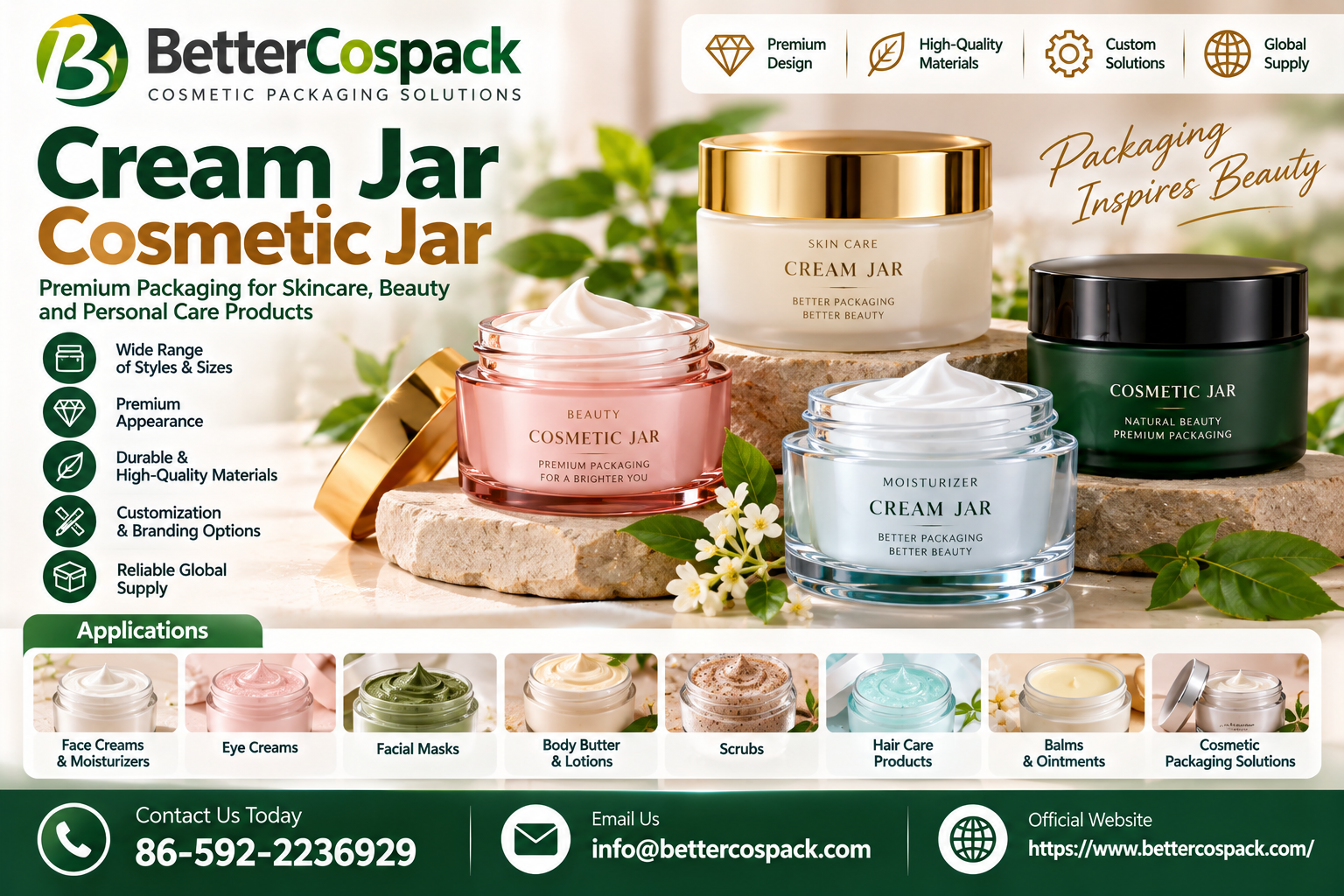
Packaging plays an important role in how skincare products are protected, presented, and experienced by consumers. From moisturizers and face creams to body butters and cosmetic formulations, businesses increasingly focus on packaging that combines functionality, appearance, and product compatibility.
A high-quality cream jar can provide convenient access to skincare formulations while supporting product presentation and everyday use.
Similarly, a well-designed cosmetic jar helps beauty brands create recognizable packaging for different product categories, sizes, and market segments.
For skincare manufacturers, private-label businesses, and cosmetic packaging buyers, understanding materials, closures, customization, and quality requirements is essential when selecting suitable containers.
What Is a Cream Jar?
A cream jar is a packaging container designed to hold cream-based skincare and cosmetic products.
These containers generally feature a wide opening and a removable lid, allowing users to access products with their fingers or suitable applicators.
Cream jars are commonly used for:
- Facial moisturizers.
- Night creams.
- Body butters.
- Cosmetic masks.
- Hand creams.
- Cleansing balms.
- Hair masks.
- Specialty skincare formulations.
Different jar designs offer variations in material, capacity, appearance, closure systems, and product protection.
Choosing the right container depends on the formulation and intended use.
Understanding Cosmetic Jar Packaging
A cosmetic jar is a broad packaging category covering containers used for beauty, skincare, and personal care products.
Cosmetic jars may be manufactured from glass, plastic, acrylic-based materials, or combinations of different components.
Packaging manufacturers may offer standard container designs alongside customized options.
Important design elements include:
- Container shape and dimensions.
- Material selection.
- Jar capacity.
- Lid design and closure compatibility.
- Inner seals or protective liners.
- Surface finishes.
- Branding and decoration options.
The ideal packaging should be selected through product compatibility and performance testing.
Popular Materials Used in Cream Jar Manufacturing
Different packaging materials offer specific advantages and limitations.
Plastic Cream Jars
Plastic jars are commonly used because they offer relatively low weight, design flexibility, and various manufacturing options.
Suitable materials may include polypropylene (PP), polyethylene terephthalate (PET), and PETG.
Glass Cosmetic Jars
Glass containers provide a distinctive appearance and can be appropriate for selected skincare products.
However, their weight and breakage characteristics require consideration.
Acrylic-Style Cosmetic Jars
Acrylic-based packaging can create a polished appearance, sometimes using decorative outer shells.
The material in direct contact with the formulation must be appropriate for the product.
Double-Wall Jars
Double-wall containers use separate inner and outer structures to achieve a particular design or appearance.
Their suitability depends on construction quality and material compatibility.
Cream Jar vs Cosmetic Jar: Understanding the Difference
Although the terms are often used interchangeably, they have slightly different meanings.
| Feature | Cream Jar | Cosmetic Jar |
| Primary purpose | Packaging creams and similar products | Packaging various beauty formulations |
| Common products | Moisturizers, body creams, masks | Creams, balms, scrubs, masks |
| Typical opening | Wide-mouth design | Varies according to product |
| Material options | Plastic, glass, composite designs | Plastic, glass, acrylic-style designs |
| Customization | Capacity, color, lid, decoration | Shape, material, branding, finish |
A cream jar is therefore one common type of cosmetic jar.
Why Packaging Design Matters for Beauty Brands
Packaging influences both consumer experience and product presentation.
Brand Recognition
Distinctive colors, shapes, labels, and finishes help customers identify products.
Product Protection
Appropriate materials and closures can help protect formulations from leakage, contamination, and environmental exposure.
User Convenience
Well-designed lids and openings allow consumers to access products comfortably.
Shelf Presentation
Container shape, decoration, and labeling can influence how products appear in retail environments.
Product Differentiation
Customized packaging can help distinguish products within competitive beauty categories.
How to Select the Right Cosmetic Jar
Businesses purchasing a cosmetic jar should evaluate technical requirements before choosing a design.
A practical selection process includes:
- Identify Product Type: Determine whether the packaging will contain creams, balms, masks, or another formulation.
- Choose Suitable Materials: Assess chemical compatibility and product sensitivity.
- Select Capacity: Match container volume to the intended product quantity.
- Evaluate Closures: Check lid fit, sealing arrangements, and leakage resistance.
- Consider Decoration: Choose suitable printing, labeling, or surface finishing.
- Review Packaging Weight: Consider storage and transportation requirements.
- Request Samples: Evaluate appearance, usability, and compatibility.
- Confirm Production Requirements: Discuss order quantities and delivery arrangements.
Sampling and testing help reduce the risk of packaging-related problems after production.
Customization Options for Cream Jar Packaging
Cosmetic brands often require packaging that reflects their product positioning.
Common customization options may include:
- Custom jar colors.
- Glossy or matte finishes.
- Screen printing.
- Hot stamping.
- Product labeling.
- Decorative lids.
- Customized capacities.
- Brand-specific packaging combinations.
The availability of these options depends on manufacturing capabilities, materials, and order requirements.
Packaging designs should also provide adequate space for applicable cosmetic labeling information.
Quality Testing and Packaging Compatibility
Selecting an attractive cream jar is only one part of responsible packaging development.
The container should also perform under expected storage, handling, and transportation conditions.
Relevant evaluations may include:
Compatibility Testing: Checking whether the formulation interacts with packaging materials.
Leakage Testing: Evaluating the container and closure under relevant conditions.
Closure Testing: Confirming lid fit and repeated-use performance.
Stability Evaluation: Assessing the formulation in its intended packaging over time.
Transportation Testing: Examining packaging performance during handling and distribution.
Wide-mouth containers can expose products to repeated user contact, making formulation preservation, hygiene, and suitable usage instructions important.
Sustainable Packaging Considerations
Beauty brands may also evaluate packaging weight, material selection, and end-of-life management.
Potential considerations include recyclable material choices, reduced material use, refill-compatible designs, and simplified packaging structures.
However, recyclability depends on local collection and processing systems.
A container should not be described as environmentally friendly without evidence supporting the specific claim.
Responsible packaging decisions balance product safety, usability, durability, and environmental considerations.
Choosing a Reliable Cosmetic Packaging Supplier
Businesses sourcing cosmetic jar products should assess suppliers according to more than appearance and price.
Important considerations include material specifications, production consistency, customization capabilities, sample availability, and quality-control procedures.
Buyers should also discuss minimum order quantities, packaging protection, lead times, and commercial terms.
Clearly defined requirements help manufacturers and brands reduce misunderstandings during production.
Frequently Asked Questions (FAQs)
1. What is a cream jar?
A cream jar is a container commonly used for packaging moisturizers, skincare creams, balms, and similar cosmetic formulations.
2. What is a cosmetic jar?
A cosmetic jar is a packaging container designed for various beauty and personal care products.
3. Which material is best for cream jars?
The best material depends on formulation compatibility, appearance requirements, packaging weight, and budget.
4. Are plastic cosmetic jars suitable for skincare products?
Yes, provided the selected plastic is compatible with the formulation and applicable packaging requirements.
5. Can cream jars be customized?
Yes. Depending on supplier capabilities, customization may include color, size, printing, lids, and finishes.
6. What is a double-wall cosmetic jar?
It is a container using separate inner and outer structures, often for decorative or design purposes.
7. Are glass cosmetic jars reusable?
Some glass jars can be reused for appropriate purposes, but safe reuse depends on cleaning, container condition, and intended use.
8. How do brands choose the correct jar capacity?
Capacity should match the product’s fill quantity, formulation characteristics, and packaging design requirements.
9. What affects cosmetic jar pricing?
Material, size, design complexity, decoration, order quantity, and packaging requirements influence cost.
10. How can businesses choose a reliable cream jar supplier?
Compare material quality, product samples, customization options, compatibility testing, quality standards, and delivery arrangements.
Media Contact
Industry: Cosmetic Packaging, Skincare Containers & Beauty Packaging Solutions
Service Enquiries: Cream Jars, Cosmetic Jars, Plastic Cosmetic Containers, Skincare Packaging & Customized Beauty Packaging
Email: info@bettercospack.com
Contact Number: +86-592-2236929
Official Website: https://www.bettercospack.com/