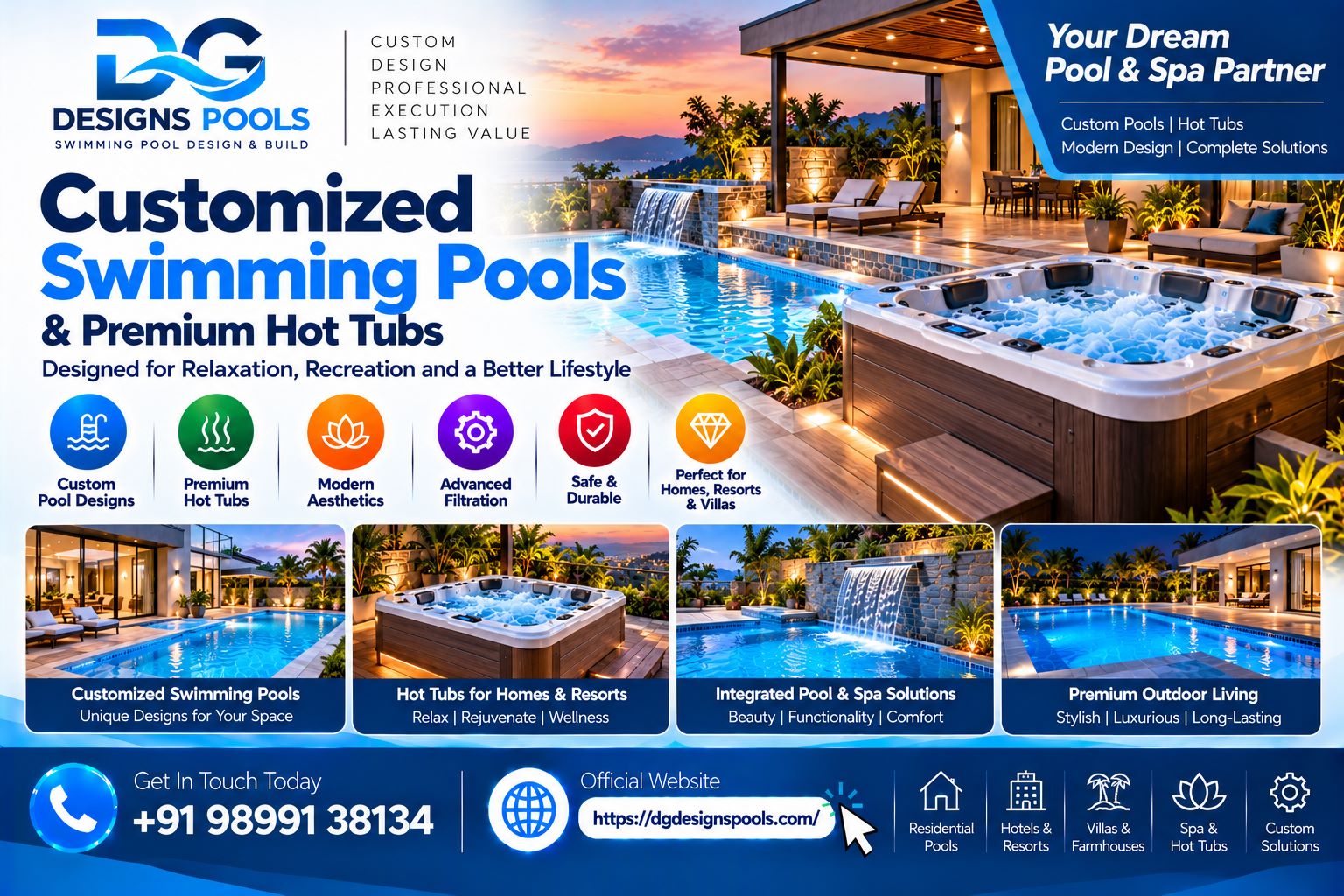
Modern homeowners, hospitality developers, architects, and resort operators are exploring personalized aquatic spaces that combine recreation, relaxation, and architectural appeal. Customized swimming pools offer design flexibility for different properties, while professional hot tub manufacturers provide specialized systems featuring controlled heating, comfortable seating, and water-based relaxation.
From private villas and luxury hotels to farmhouses and wellness retreats, aquatic installations are increasingly considered part of a property’s overall design.
Successful projects, however, require more than attractive finishes. Structural engineering, water circulation, equipment selection, safety, and long-term maintenance are essential considerations.
What Are Customized Swimming Pools?
Customized swimming pools are aquatic installations designed according to specific property dimensions, architectural preferences, intended activities, and functional requirements.
Unlike standard swimming pool designs, customized pools can incorporate distinctive shapes, varying depths, integrated seating, decorative finishes, and selected water features.
Popular Customized Swimming Pool Designs
- Infinity-Edge Pools: Create an attractive visual connection with the surrounding landscape.
- Geometric Pools: Feature contemporary rectangular or angular layouts.
- Freeform Pools: Use organic shapes suited to gardens and natural surroundings.
- Plunge Pools: Provide compact relaxation spaces for suitable properties.
- Lap Pools: Feature elongated layouts intended for swimming exercise.
- Integrated Spa Pools: Combine swimming areas with separately controlled relaxation zones.
Why Customized Swimming Pools Appeal to Property Owners
Customization allows property owners to plan aquatic spaces around their actual requirements.
For residential properties, this may involve balancing swimming space with garden landscaping, outdoor seating, and privacy.
Hospitality projects may require additional attention to guest capacity, accessibility, visual presentation, and maintenance efficiency.
Important Benefits
Architectural Integration: Pool shapes and finishes can complement existing buildings.
Space Utilization: Designs can accommodate suitable compact or irregular spaces.
Personalized Features: Owners can select seating, lighting, and water features.
Recreational Flexibility: Different sections may support swimming and relaxation.
Material Options: Construction methods can be selected according to site conditions.
The final design should always be evaluated against engineering requirements and available budgets.
Understanding the Role of Hot Tub Manufacturers
Professional hot tub manufacturers develop heated aquatic systems designed primarily for soaking and relaxation.
Modern hot tubs may include hydromassage jets, temperature controls, ergonomic seating, filtration equipment, and insulated structures.
Some products are self-contained units, while others are designed for integration into customized outdoor environments.
Essential Hot Tub Features
- Heating Systems: Maintain appropriate water temperatures.
- Hydromassage Jets: Deliver controlled water movement.
- Seating Arrangements: Support comfortable positioning.
- Circulation Pumps: Maintain water movement through treatment equipment.
- Filtration Systems: Help remove suspended particles.
- Control Panels: Manage selected operating functions.
- Insulation: Helps limit unwanted heat loss.
- Safety Features: Support appropriate operation and access.
Combining Swimming Pools and Hot Tubs in One Design
Integrated aquatic spaces can provide separate environments for swimming and relaxation.
A customized swimming pool may serve as the primary recreational area, while an adjacent hot tub provides a dedicated heated soaking experience.
The systems may share certain architectural features, but separate temperature and water-treatment requirements must be considered.
Key Design Considerations
Activity Separation: Swimming areas and hot tubs should have clearly defined functions.
Temperature Management: Hot tubs often operate at different temperatures from swimming pools.
Hydraulic Planning: Pumps, filtration, and circulation systems should suit each installation.
Accessibility: Steps, handrails, and surrounding surfaces must support safe access.
Electrical Safety: Wet-area electrical installations require qualified professionals.
Maintenance Access: Equipment should remain accessible for inspection and servicing.
These considerations help support reliable operation and prevent avoidable design conflicts.
Materials Used in Customized Swimming Pool Construction
Material selection influences appearance, installation methods, and maintenance.
| Material | Common Application | Key Consideration |
| Reinforced Concrete | Highly customized swimming pools | Engineering and waterproofing |
| Fiberglass Reinforced Plastic | Prefabricated pool structures | Design compatibility and installation |
| Acrylic | Selected hot tub shells | Surface finish and structural support |
| Mosaic Tiles | Decorative pool finishes | Installation and cleaning requirements |
| Stainless Steel | Specialized aquatic structures | Suitable grade and corrosion protection |
No single material is appropriate for every project. Selection should reflect operating conditions and engineering specifications.
How Swimming Pool Customization Projects Are Planned
Developing customized swimming pools requires coordination between design and construction professionals.
Step 1: Site Assessment
Evaluate available space, ground conditions, access, and the surrounding building environment.
Step 2: Concept Development
Establish the desired appearance, pool dimensions, water depth, and intended activities.
Step 3: Engineering Design
Qualified professionals determine structural, hydraulic, and electrical requirements.
Step 4: Equipment Selection
Select suitable filtration, circulation, heating, and control systems.
Step 5: Construction and Installation
Complete the project using appropriate materials and installation procedures.
Step 6: Testing and Commissioning
Inspect structural elements, circulation performance, equipment operation, and water-treatment systems before opening.
Safety and Water Quality Considerations
Swimming pools and hot tubs require consistent maintenance and appropriate safety arrangements.
Water treatment should include suitable disinfection, filtration, and monitoring.
Hot tubs deserve particular attention because warm water can increase microbial risks when sanitation is inadequate.
Surrounding surfaces should provide suitable slip resistance, while pool access and circulation outlets must be designed safely.
Children require active adult supervision around aquatic facilities. People with relevant medical conditions should seek professional advice before using heated spa systems.
Choosing Reliable Swimming Pool and Hot Tub Manufacturers
Buyers should evaluate technical expertise, material specifications, project experience, and after-sales support.
Professional hot tub manufacturers should explain heating capacity, filtration requirements, electrical specifications, insulation, and maintenance procedures.
For customized pool projects, buyers should request documented designs, itemized quotations, installation requirements, warranty conditions, and commissioning procedures.
Reliable technical documentation is more valuable than unsupported claims about quality or performance.
Frequently Asked Questions (FAQs)
1. What are customized swimming pools?
They are swimming pools designed according to specific space, architectural, recreational, and functional requirements.
2. Can swimming pools be customized for small spaces?
Yes. Compact pools and plunge pools can suit certain properties, subject to structural and safety requirements.
3. What do hot tub manufacturers provide?
They produce heated aquatic systems that may include jets, seating, filtration, heating, and control equipment.
4. Can a hot tub be integrated with a swimming pool?
Yes. Suitable designs can incorporate separate swimming and spa zones.
5. Which material is best for a customized pool?
The appropriate choice depends on design, budget, site conditions, and maintenance requirements.
6. Are hot tubs suitable for outdoor use?
Yes, when the model is designed for outdoor installation and suitable supporting infrastructure is available.
7. Do customized swimming pools require filtration systems?
Yes. Proper circulation, filtration, and water treatment are essential.
8. Can swimming pools be installed on rooftops?
Only when a qualified structural engineer confirms that the building can safely support the complete installation.
9. What affects customized swimming pool costs?
Pool size, materials, engineering, equipment, finishes, and installation complexity influence pricing.
10. How should buyers select hot tub manufacturers?
Compare product specifications, manufacturing quality, safety provisions, warranties, maintenance requirements, and technical support.
Media Contact
Department: Customized Swimming Pool and Spa Design Communications
Email: abhinav.mishra@hotmail.com
Contact: +91 98991 38134
Official Website: https://dgdesignspools.com/