
As retail systems, industrial devices, and remote business operations become increasingly connected, choosing the right router involves more than comparing wireless speeds.
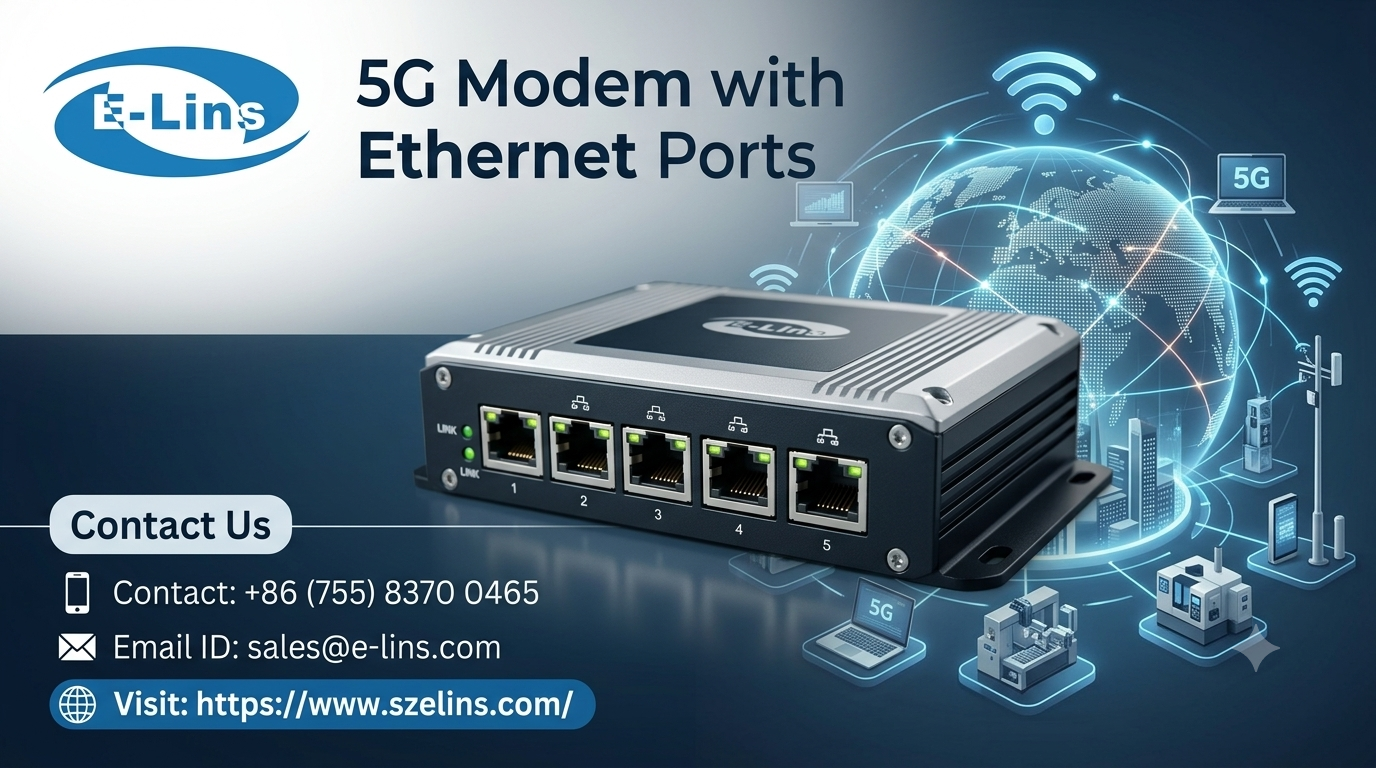
A 4g router with ethernet allows compatible devices to access a cellular internet connection through physical network cables. This arrangement can be particularly useful for equipment requiring a consistent local connection.
Meanwhile, a 4g router with external antenna offers greater installation flexibility by allowing suitable cellular antennas to be positioned where reception conditions may be more favourable.
Together, Ethernet connectivity and external antenna support can help businesses develop practical networking systems for offices, industrial facilities, and remote locations.
The important consideration is how these technologies improve the connection between cellular infrastructure and equipment used in everyday operations.
Why Ethernet Still Matters in Cellular Networking
Wireless connectivity offers convenience, but some business devices benefit from a direct physical network connection.
Payment terminals, industrial controllers, monitoring gateways, and network switches may require Ethernet interfaces for reliable integration.
An Ethernet cable provides a defined connection between a router and a compatible device, reducing dependence on local Wi-Fi reception.
However, a wired connection does not eliminate problems affecting the cellular network itself.
Businesses should therefore consider local network requirements alongside cellular coverage and equipment specifications.
What Is a 4G Router With Ethernet?
A 4g router with ethernet is a networking device that connects to a compatible LTE mobile network and provides one or more physical Ethernet interfaces.
These interfaces allow compatible computers, switches, controllers, or other networking equipment to exchange data through the router.
Depending on the model, Ethernet ports may support different speeds and configurations.
Some routers provide separate WAN and LAN functions, while others include configurable interfaces.
Buyers should confirm port capabilities before purchasing.
Such routers can be useful where fixed broadband is unavailable but connected equipment requires a physical network interface.
Understanding a 4G Router With External Antenna
A 4g router with external antenna supports an antenna arrangement that can be installed separately from the router housing.
This feature may help improve cellular reception in suitable environments.
For example, a router installed inside an equipment cabinet may benefit from a compatible antenna positioned outside an enclosure.
However, performance depends on antenna design, supported frequencies, cable quality, and local cellular conditions.
External antenna support should not be confused with guaranteed network improvement.
The correct installation requires compatible equipment and an understanding of the available signal environment.
How Ethernet and External Antennas Work Together
These features address different parts of a networking system.
An external antenna supports communication between the router and the cellular network.
Ethernet provides a physical connection between the router and nearby compatible equipment.
Consider a remote monitoring installation.
A suitable external antenna may help the router establish a usable cellular connection, while Ethernet connects the router to an industrial monitoring gateway.
The result is a system that combines cellular access with wired local networking.
Both elements must be correctly specified for the intended application.
Applications Across Different Industries
Several commercial environments can benefit from LTE routers with Ethernet connectivity.
Retail Operations: Compatible payment terminals, inventory systems, and selected networking devices may connect through Ethernet.
Industrial Facilities: Monitoring equipment and gateways may use wired local connections alongside cellular communication.
Agricultural Operations: Suitable controllers and data collection equipment can communicate through remotely deployed networking infrastructure.
Construction Projects: Temporary offices may use cellular broadband to connect network switches and authorised business equipment.
Utilities: Distributed monitoring installations may require remote communication through appropriately secured network connections.
Each application requires evaluation of data consumption, cellular coverage, equipment compatibility, and cybersecurity.
Ethernet Router vs External Antenna Router
| Feature | 4G Router With Ethernet | 4G Router With External Antenna |
| Primary Benefit | Wired local network connectivity | Flexible cellular antenna placement |
| Main Interface | Ethernet ports | Compatible antenna connectors |
| Typical Use | Connecting wired business equipment | Improving antenna positioning |
| Important Specification | Port speeds and configuration | Frequency support and connector type |
| Main Limitation | Depends on cellular backhaul performance | Cannot create coverage where none exists |
| Installation Priority | Device and cable compatibility | Antenna location and cable losses |
Some commercial routers include both features, making them suitable for integrated networking applications.
Why Network Planning Is More Important Than Hardware Alone
Purchasing an advanced router does not automatically create a reliable communication system.
Network design should begin with identifying connected devices and their operational requirements.
Businesses should determine whether equipment needs Ethernet, Wi-Fi, or another supported interface.
Cellular service availability, data plans, expected traffic, and power arrangements must also be considered.
For applications where interruptions are costly, suitable backup communication arrangements may be necessary.
A practical network plan helps prevent unnecessary hardware purchases and configuration problems.
Security Considerations for Ethernet-Connected Devices
Physical Ethernet connections do not automatically make a network secure.
Devices connected to cellular routers may still be exposed to cyber threats through misconfiguration or vulnerable software.
Depending on the model, routers may provide firewall functionality, VPN capabilities, or access-control features.
Businesses should use strong administrative credentials, restrict unnecessary services, and maintain supported firmware.
Industrial equipment should also be appropriately separated from general-purpose networks.
Security requirements should be established before connecting operational systems to external services.
Equipment Quality and Installation Requirements
Commercial router performance depends on suitable hardware and correct installation.
Buyers should evaluate power supply requirements, enclosure construction, Ethernet connectors, and operating temperature specifications.
For antenna installations, cable losses and environmental exposure deserve attention.
Outdoor antennas may require appropriate mounting, weather protection, and electrical safety measures.
Where industrial equipment is involved, manufacturers should provide clear specifications and installation guidance.
The reliability of the completed system depends on both equipment quality and installation practices.
Choosing the Right Router Supplier
Businesses evaluating LTE networking suppliers should consider:
- Ethernet Capabilities: Confirm port quantities, speeds, and configuration options.
- Antenna Compatibility: Review connectors and supported cellular frequencies.
- Network Support: Verify operator compatibility and LTE bands.
- Security Features: Assess firmware maintenance and management controls.
- Environmental Requirements: Review power and operating conditions.
- Technical Documentation: Confirm installation instructions and support availability.
Testing representative equipment at the intended deployment location can help identify compatibility issues.
Frequently Asked Questions (FAQs)
1. What is a 4G router with Ethernet?
It is a cellular networking device that connects to a compatible 4G LTE network and provides Ethernet ports for wired local connections.
2. What is the purpose of a 4G router with external antenna?
It allows compatible antennas to be positioned separately from the router, potentially improving cellular reception under suitable conditions.
3. Can Ethernet provide better stability than Wi-Fi?
Ethernet can offer a consistent local connection with less dependence on wireless interference, although overall internet reliability still depends on the cellular network.
4. Can a 4G router support industrial equipment?
Yes. Suitable routers can connect compatible industrial gateways, controllers, and monitoring equipment, subject to technical and security requirements.
5. What should businesses check before purchasing an LTE router?
Important factors include Ethernet interfaces, antenna compatibility, cellular bands, security features, operating conditions, and technical support.
Media Contact
Department: LTE Router and Industrial Networking Enquiries
Contact: +86 (755) 2923 0581
Email: sales@e-lins.com
Official Website: https://www.szelins.com/
Read More:-