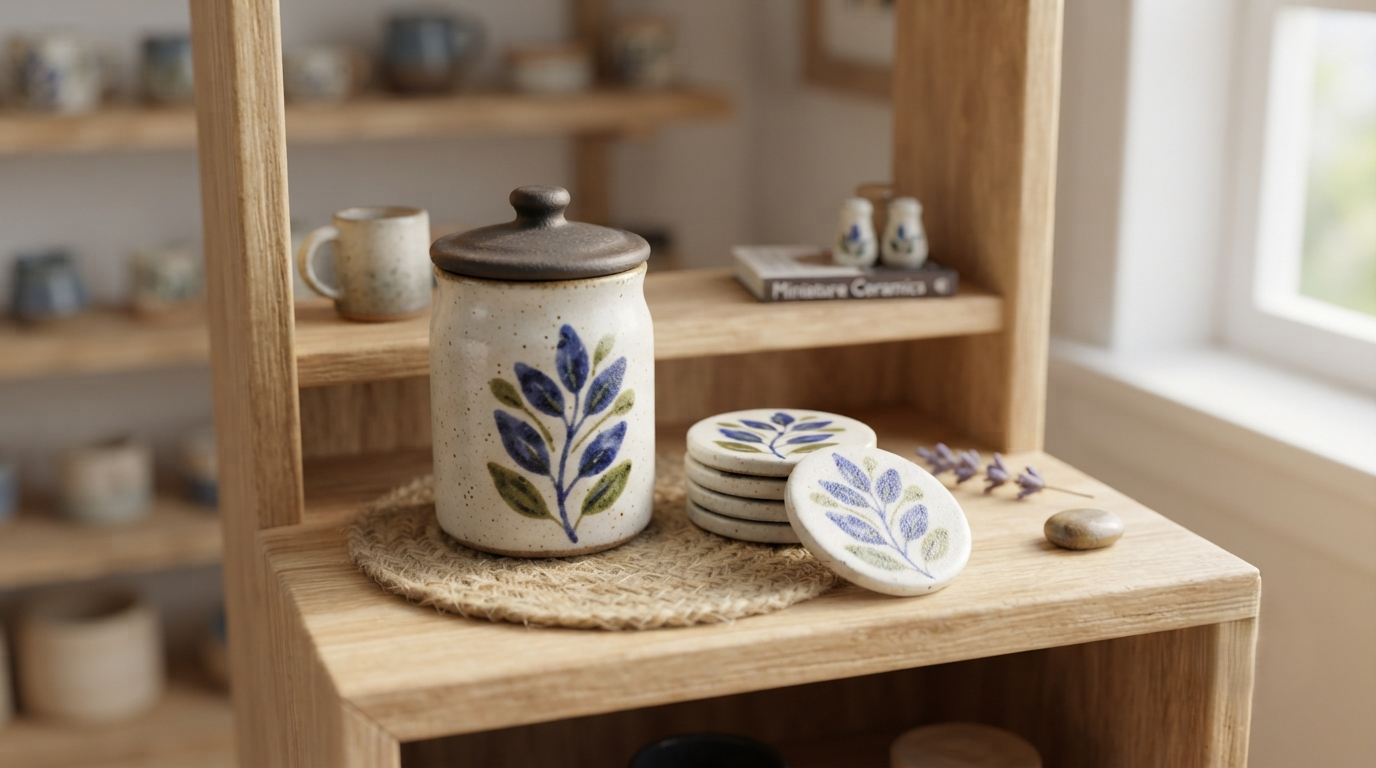
The homeware and lifestyle sector continues to evolve as consumers seek products that offer more than basic functionality. The Ceramic Coaster and Ceramic Canister are increasingly finding a place within this trend, combining practical everyday use with decorative versatility for homes, hospitality environments, retail collections, and gifting applications.
As kitchens, dining spaces, cafés, and workspaces become more design-conscious, even small accessories are being selected with greater attention to materials, finish, durability, and visual consistency. Ceramicware addresses many of these requirements through its adaptable appearance and broad customisation possibilities.
Ceramic Accessories Bring Function and Design Together
Ceramic has a long history in household products, but contemporary manufacturing and decoration techniques have expanded its design possibilities considerably.
A Ceramic Coaster primarily protects furniture from condensation, stains, scratches, and direct contact with drinkware. Today, however, coasters can also contribute to table styling through colours, patterns, illustrations, typography, and customised branding.
A Ceramic Canister, meanwhile, provides convenient storage for suitable dry ingredients while helping maintain an organised kitchen or pantry.
Common storage applications include:
- Tea and coffee
- Sugar and salt
- Spices
- Biscuits
- Nuts
- Dry fruits
- Confectionery
- Other suitable dry foods
This combination of functionality and presentation makes ceramic accessories relevant across both residential and commercial markets.
Ceramic Coaster Develops Beyond Basic Table Protection
The role of the Ceramic Coaster has expanded significantly within contemporary homeware design.
Consumers are increasingly interested in coordinated dining accessories rather than purely functional products. Ceramic surfaces offer considerable flexibility for creating minimalist, colourful, artistic, traditional, or personalised coaster collections.
Practical Features Influence Product Selection
While appearance attracts attention, construction determines everyday performance.
Buyers commonly consider:
- Surface quality
- Thickness
- Flatness
- Edge finishing
- Heat suitability
- Moisture management
- Protective backing
- Ease of cleaning
Protective Backing Adds Practical Value
A ceramic coaster may include cork, felt, rubber, or another protective material underneath.
This layer can help minimise slipping while preventing hard ceramic surfaces from directly rubbing against delicate furniture.
The combination of an attractive upper surface and practical backing can therefore significantly improve the overall user experience.
Ceramic Canister Supports Organised Kitchen Design
Kitchen organisation has become closely connected with interior styling, creating opportunities for products that can remain visible rather than being hidden inside cabinets.
A well-designed Ceramic Canister can provide accessible countertop storage while complementing surrounding kitchen accessories.
Neutral colours may work effectively in minimalist interiors, while patterned or hand-decorated canisters can provide visual character.
Lid Design Remains an Important Consideration
Not every ceramic storage container provides the same level of closure.
Some canisters use decorative loose-fitting lids, while others incorporate silicone or rubber seals to provide a more secure closure.
Consumers seeking enhanced protection against air or moisture should therefore evaluate the specific sealing system rather than assuming every canister is airtight.
Ceramic Coaster and Ceramic Canister at a Glance
| Category | Ceramic Coaster | Ceramic Canister |
| Primary purpose | Furniture protection | Storage |
| Common placement | Tables and desks | Kitchens and pantries |
| Major feature | Protective surface | Storage capacity |
| Key consideration | Backing and stability | Lid and seal |
| Decorative potential | High | High |
| Branding opportunity | Logos and artwork | Logos, labels and patterns |
| Commercial application | Hospitality and gifting | Retail and gifting |
Together, these products can form coordinated homeware collections with consistent colours, artwork, and design themes.
Manufacturing Quality Becomes an Important Purchasing Factor
Quality ceramicware requires careful control throughout production.
The general manufacturing process can involve ceramic material preparation, forming, controlled drying, firing, glazing, decoration, additional firing, finishing, inspection, and packaging.
For a Ceramic Coaster, dimensional accuracy is important because an uneven product may affect the stability of the drinkware placed on it.
For a Ceramic Canister, manufacturers must also consider lid compatibility, rim finishing, container stability, and capacity consistency.
Quality Inspection Can Cover Multiple Areas
Typical inspection considerations may include:
- Cracks or chips
- Surface irregularities
- Glaze consistency
- Dimensional accuracy
- Decoration quality
- Base stability
- Lid fitting
- Protective packaging
Appropriate quality control becomes particularly important when ceramic products are manufactured in large quantities for retail or commercial distribution.
Customisation Creates Opportunities for Brands
Another factor supporting interest in ceramic accessories is their customisation potential.
Retailers, hospitality companies, lifestyle brands, promotional businesses, and private-label companies can develop ceramic products around their individual visual identities.
Potential customisation options include:
- Corporate logos
- Bespoke illustrations
- Custom colours
- Geometric designs
- Floral patterns
- Personalised names
- Promotional messages
- Exclusive shapes
- Coordinated packaging
A customised Ceramic Coaster can become branded merchandise for cafés, hotels, conferences, or corporate events.
Similarly, a customised Ceramic Canister can be incorporated into tea, coffee, kitchen, festive, or premium gifting collections.
Hospitality Sector Creates Additional Applications
Hotels, restaurants, cafés, and catering businesses represent another potential market for ceramic accessories.
Coasters can contribute to table presentation while performing their fundamental protective function. Coordinated ceramic products may also help businesses maintain a consistent visual identity across customer-facing spaces.
Canisters can be considered for suitable storage, presentation, merchandising, or decorative applications depending on the requirements of the establishment.
Corporate Gifting Expands Product Possibilities
Ceramicware also lends itself to gifting because it combines practical value with personalisation opportunities.
Instead of distributing purely decorative promotional items, businesses can create functional products carrying carefully integrated branding.
A set containing a Ceramic Coaster collection alongside complementary ceramic accessories can offer a more coordinated gifting experience.
Design Trends Continue to Influence Ceramicware
Modern ceramic accessories are available in an extensive range of styles.
Popular design directions include:
- Earth-inspired tones
- Matte finishes
- Monochrome palettes
- Botanical illustrations
- Minimalist typography
- Geometric patterns
- Handcrafted appearances
- Textured surfaces
- Nature-inspired motifs
- Personalised artwork
The flexibility of ceramic allows manufacturers and designers to adapt products for traditional, contemporary, rustic, premium, or minimalist interiors.
Consumers Focus on Quality and Practicality
Choosing ceramicware should involve more than selecting an attractive pattern.
For a Ceramic Coaster, consumers should examine stability, surface finish, backing material, dimensions, and suitability for the intended drinkware.
For a Ceramic Canister, capacity, lid construction, ease of access, cleaning requirements, stability, and intended storage application deserve consideration.
When ceramicware will come into contact with food, buyers should select products specifically manufactured and specified for appropriate food-contact use.
Care and Maintenance Support Long-Term Use
Although ceramic is suitable for regular household applications, it remains breakable and requires appropriate handling.
Products should be protected from impacts and sudden drops onto hard surfaces.
Cleaning requirements can vary according to glaze, decoration, and additional materials.
A canister featuring a wooden or bamboo lid, for example, may require different care from an entirely ceramic product. Likewise, printed coasters or products with cork backing may not always be suitable for dishwasher cleaning.
Following the manufacturer’s instructions remains the safest approach.
Frequently Asked Questions
1. What is a Ceramic Coaster?
A Ceramic Coaster is a reusable table accessory placed beneath drinkware to help protect furniture surfaces.
2. What is a Ceramic Canister?
A Ceramic Canister is a ceramic storage container commonly used for suitable dry kitchen and household products.
3. Why are ceramic coasters popular?
They combine practical surface protection with extensive decorative and personalisation possibilities.
4. Can ceramic canisters store coffee?
Suitable food-contact canisters can be used for coffee, subject to the product’s specific storage and sealing characteristics.
5. Are all ceramic canisters airtight?
No. Airtight performance depends on the lid construction and sealing mechanism.
6. Can ceramic coasters be customised?
Yes. Depending on manufacturing capabilities, they can feature custom logos, artwork, colours, patterns, or messages.
7. Are ceramic products suitable for corporate gifts?
Yes. Their practical nature and customisation possibilities make them useful options for branded gifting programmes.
8. What backing can ceramic coasters have?
Common options include cork, felt, rubber, and other protective or anti-slip materials.
9. How should ceramic canisters be cleaned?
Cleaning depends on the glaze, decoration, lid, and additional materials. Manufacturer care instructions should always be followed.
10. What should businesses consider when sourcing ceramicware?
Businesses should evaluate manufacturing quality, dimensions, finishing, customisation, packaging, minimum quantities, intended use, and quality-control requirements.
https://newsgrow.blogspot.com/2026/08/ceramic-coaster-and-ceramic-canister.html