Industrial plastic manufacturers are placing greater emphasis on machinery durability, production stability, and maintenance efficiency. As polymer processing applications become more demanding, the selection of suitable extrusion components has become an important part of manufacturing operations.
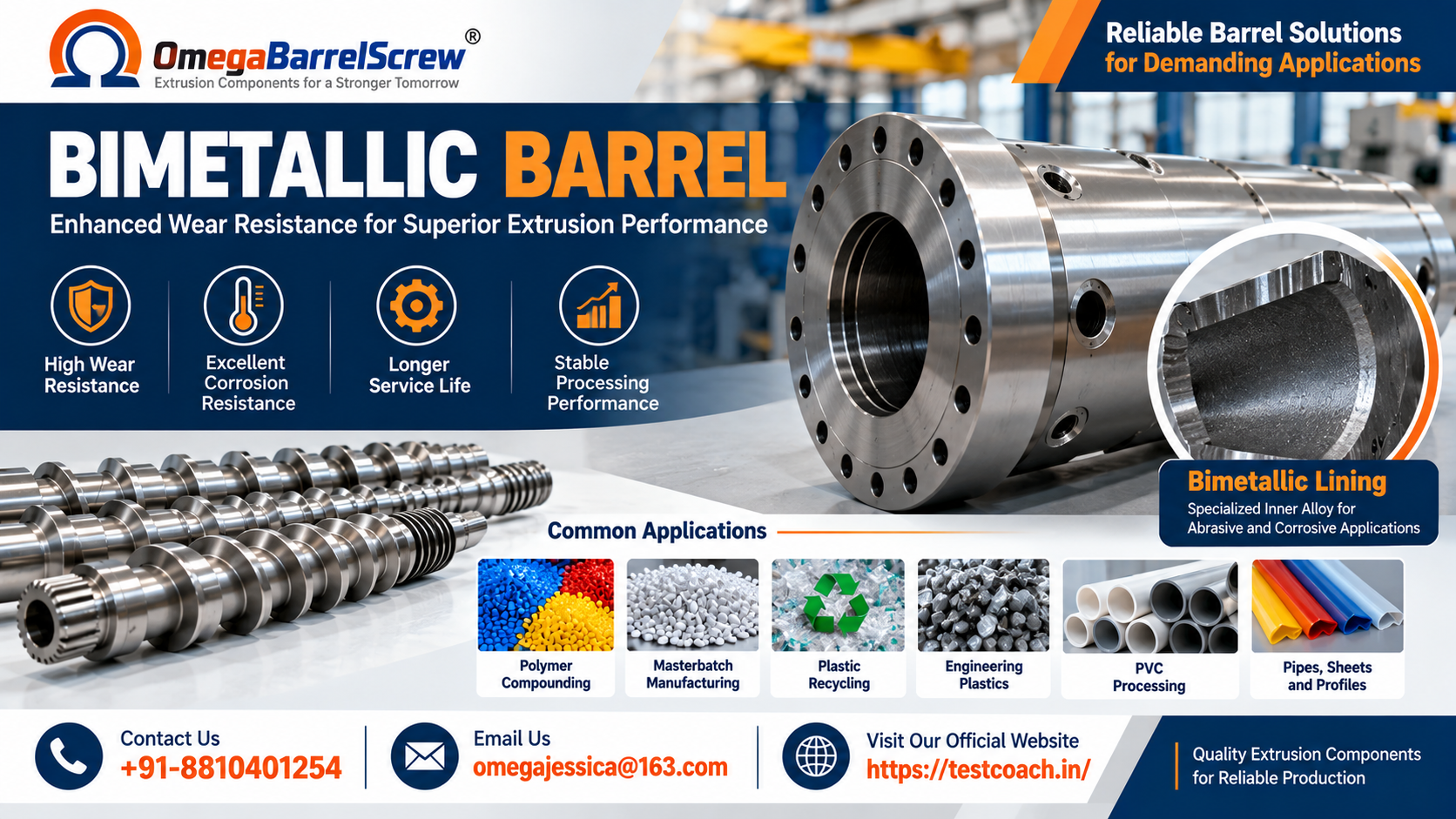
A bimetallic barrel is an engineered machinery component designed to provide improved resistance to abrasion and, with appropriate alloy selection, corrosion in demanding processing environments.
From engineering plastics and masterbatch production to polymer recycling and filled-compound manufacturing, bimetallic technology offers opportunities to improve equipment reliability.
For manufacturers seeking consistent extrusion performance, understanding barrel construction, material properties, technical specifications, and operating requirements is essential.
What Is a Bimetallic Barrel?
A bimetallic barrel is an extrusion or injection molding machine barrel manufactured using two distinct metallic material systems.
Typically, the outer structure provides mechanical strength, while a specialized internal alloy lining provides resistance to particular wear or corrosion conditions.
Unlike a conventional barrel relying primarily on its base material or surface treatment, a bimetallic construction incorporates an engineered protective layer.
Common applications include:
- Plastic extrusion machinery.
- Twin-screw extruders.
- Single-screw extrusion systems.
- Polymer compounding equipment.
- Masterbatch production lines.
- Plastic recycling machinery.
- Engineering plastic processing.
- Selected injection molding applications.
The effectiveness of the component depends on lining composition, manufacturing quality, and compatibility with the processing material.
Why Bimetallic Barrels Matter in Modern Manufacturing
Extrusion machines operate under combinations of mechanical loading, elevated temperatures, and continuous material movement.
These conditions can gradually affect the internal surfaces of processing barrels.
Abrasive fillers, reinforcement materials, and unsuitable feedstock may accelerate wear.
Excessive deterioration can affect screw-to-barrel clearances, potentially contributing to inconsistent output and increased maintenance requirements.
An appropriately specified bimetallic barrel can help address these challenges by providing a more wear-resistant internal working surface.
How Bimetallic Barrel Construction Works
The barrel generally consists of a structural outer body and an engineered internal lining.
Structural Outer Barrel
The outer body provides strength and supports the mechanical and thermal demands of the processing equipment.
Protective Internal Lining
The internal alloy is selected according to required abrasion resistance, corrosion resistance, and operating compatibility.
Precision Internal Bore
Accurate machining helps maintain the dimensional relationship between the screw and barrel.
Thermal Performance
Suitable barrel construction must support the machine’s required heating and cooling arrangements.
The lining does not eliminate wear. Instead, it is intended to improve performance under conditions suited to the selected material.
Common Materials and Lining Technologies
Bimetallic barrel construction may incorporate specialized iron-based, nickel-based, or other engineered alloy systems.
The selected composition depends on the polymer formulation and processing environment.
Manufacturing techniques can include centrifugal casting and other specialized lining processes.
Important technical considerations include lining integrity, hardness, dimensional tolerances, and resistance to operating conditions.
A harder surface is not automatically the most suitable option.
Certain applications require a balance between abrasion resistance, corrosion performance, and mechanical compatibility.
Bimetallic Barrel vs Nitrided Barrel
Manufacturers frequently compare bimetallic and nitrided barrels when selecting replacement components.
| Feature | Bimetallic Barrel | Nitrided Barrel |
| Construction | Structural body with specialized alloy lining | Steel barrel with hardened surface layer |
| Wear resistance | Tailored through lining material | Depends on nitriding and base material |
| Corrosion resistance | Application-specific alloy selection | Depends on material and environment |
| Typical applications | Demanding polymer processing | Suitable general extrusion applications |
| Initial cost | Often higher | Often lower |
| Durability | Depends on conditions and specifications | Depends on conditions and specifications |
The correct selection requires comparing expected operating performance with total ownership costs.
Industrial Applications of Bimetallic Barrel Technology
Engineering Plastic Compounding
Reinforced engineering polymers may contain abrasive ingredients that increase component wear.
Masterbatch Manufacturing
Pigments and mineral fillers can create demanding processing environments.
Plastic Recycling
Recycled polymers may contain contamination or inconsistent feedstock that affects equipment durability.
PVC Processing
Selected PVC formulations may create challenging thermal or corrosive conditions, requiring suitable material specifications.
High-Filler Polymer Production
Highly filled compounds may benefit from specialized wear-resistant barrel materials.
How to Choose the Right Bimetallic Barrel
Manufacturers should review several factors before making a purchase.
- Machine Compatibility: Confirm the extruder model and installation requirements.
- Barrel Dimensions: Verify internal diameter, length, and mounting details.
- Lining Composition: Select appropriate abrasion and corrosion resistance.
- Polymer Formulation: Consider fillers, additives, and processing temperatures.
- Screw Compatibility: Confirm suitable clearances and component interaction.
- Manufacturing Accuracy: Request dimensional inspection information.
- Quality Documentation: Review available material and manufacturing records.
- Technical Support: Discuss installation, replacement, and maintenance requirements.
A correctly specified component should support both machinery compatibility and production objectives.
Reducing Maintenance Costs Through Better Component Selection
Equipment wear can generate expenses beyond the replacement cost of a barrel.
Potential consequences include production interruptions, additional maintenance labor, reduced throughput, and inconsistent product quality.
When suitable for the application, a wear-resistant barrel may help extend replacement intervals.
However, manufacturers should compare overall costs using actual operating conditions.
Relevant measurements include operating hours, inspection results, maintenance frequency, and acceptable production output.
These records provide a stronger basis for purchasing decisions than unsupported service-life promises.
Quality Control and Preventive Maintenance
Reliable performance requires appropriate inspection and maintenance procedures.
Operators should monitor processing temperatures, machine load, production consistency, and unusual operating behavior.
Periodic inspection may reveal changes in internal bore dimensions or evidence of abnormal wear.
Contaminated feedstock and incompatible processing conditions should be addressed promptly.
All maintenance must follow appropriate equipment shutdown and lockout procedures.
Frequently Asked Questions (FAQs)
1. What is a bimetallic barrel?
It is a machinery barrel combining a structural metal body with a specialized internal alloy lining.
2. Why is a bimetallic barrel used?
It is used to provide suitable wear or corrosion resistance in demanding polymer processing applications.
3. What is the difference between bimetallic and nitrided barrels?
Bimetallic barrels incorporate an internal alloy lining, while nitrided barrels use a surface-hardening treatment.
4. Can bimetallic barrels process abrasive materials?
Yes. Appropriate lining materials can support processing of abrasive-filled polymer formulations.
5. Are bimetallic barrels suitable for twin-screw extruders?
Yes. Compatible designs can be used in suitable twin-screw extrusion equipment.
6. Which industries use bimetallic barrels?
Common applications include plastics manufacturing, polymer compounding, recycling, and selected injection molding operations.
7. What affects the service life of a bimetallic barrel?
Material composition, operating conditions, contamination, equipment design, and maintenance all influence durability.
8. Are bimetallic barrels corrosion-resistant?
Certain alloy linings offer improved resistance to selected corrosive conditions, depending on their composition.
9. Does a bimetallic barrel improve extrusion efficiency?
It may help maintain suitable processing clearances, but overall efficiency depends on the entire extrusion system.
10. How can buyers select a reliable barrel supplier?
Compare technical specifications, material documentation, dimensional accuracy, compatibility, quality inspection, and available support.
Media Contact
Industry: Plastic Processing, Polymer Compounding & Extrusion Machinery
Service Enquiries: Bimetallic Barrels, Extruder Barrels, Twin-Screw Components, Wear-Resistant Linings & Extrusion Machinery Parts
Contact Number: +91-8810401254
Email: omegajessica@163.com
Official Website: https://www.omegabarrelscrew.com/