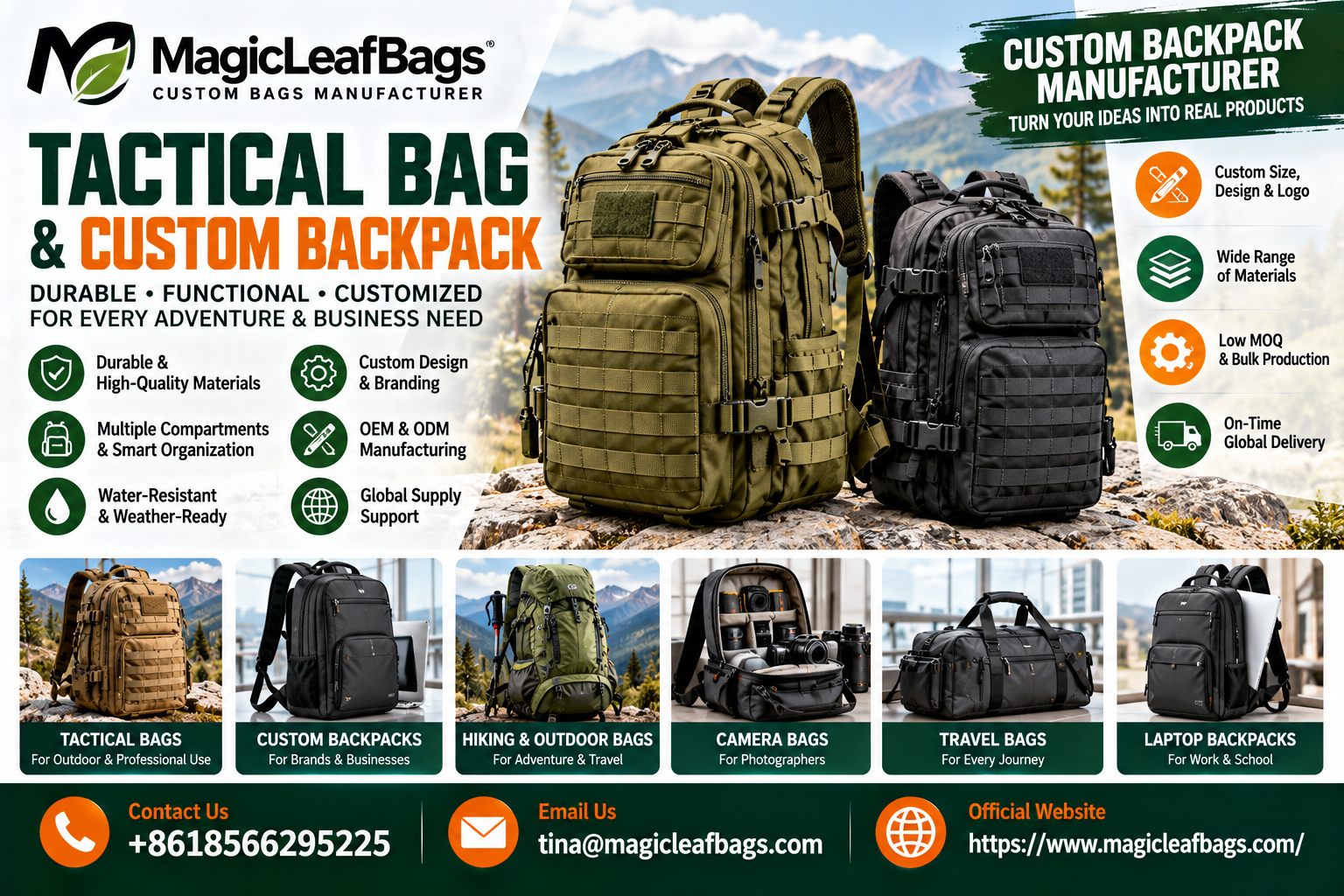
Functional design, product durability, and personalization are becoming important considerations for businesses operating in the outdoor equipment, travel accessories, and bag manufacturing sectors.
A tactical bag offers organized storage, durable construction, and practical carrying features for outdoor activities, professional equipment, and everyday use.
Meanwhile, a custom backpack allows retailers, businesses, and product brands to develop personalized carrying solutions with specific materials, compartments, colors, and branding elements.
As product expectations evolve, manufacturers and wholesale buyers are examining how functional construction and customized design can work together to meet different customer needs.
What Is a Tactical Bag?
A tactical bag is a carrying product designed with an emphasis on organization, accessibility, durability, and adaptable storage.
Originally associated with specialized professional equipment, tactical-style bags are also used for hiking, camping, travel, photography, emergency preparedness, and everyday carrying.
Common design features include:
- Multiple storage compartments.
- Reinforced stitching in selected areas.
- Adjustable shoulder straps.
- Durable zippers and buckles.
- External attachment points.
- Water-resistant fabric options.
- Padded sections for suitable equipment.
The suitability of a tactical-style design depends on the intended activity, weight carried, and individual comfort requirements.
Why Tactical Bags Are Popular for Outdoor Activities
Outdoor users often require bags capable of organizing different types of equipment.
Separate compartments can help keep clothing, electronic accessories, water bottles, and personal essentials accessible.
Some models incorporate webbing attachment systems that allow compatible pouches or accessories to be added.
However, these features should be selected according to practical needs rather than appearance alone.
For longer activities, weight distribution, shoulder padding, and ventilation can be as important as fabric durability.
A comfortable carrying system helps reduce unnecessary strain, particularly when equipment is transported for extended periods.
What Is a Custom Backpack?
A custom backpack is a bag designed or personalized according to specific customer requirements.
Customization can involve external appearance, materials, dimensions, compartment arrangements, and branding.
Common applications include corporate merchandise, outdoor retail collections, promotional products, travel accessories, and educational institutions.
Businesses may request personalized logos, embroidery, printed graphics, custom colors, or specialized internal pockets.
More advanced projects can involve creating an original backpack design using technical drawings and approved samples.
The level of customization depends on the manufacturer’s equipment, minimum order requirements, and available materials.
Tactical Bag vs Custom Backpack: Key Differences
| Feature | Tactical Bag | Custom Backpack |
| Main focus | Functional organization | Personalized design |
| Typical applications | Outdoor, travel, equipment storage | Retail, business, travel, promotions |
| Common features | Multiple pockets, webbing, reinforced areas | Custom colors, logos, compartments |
| Material choices | Durable woven fabrics | Fabrics selected for intended use |
| Buyer priorities | Access, strength, comfort | Branding, functionality, consistency |
The categories can overlap. Businesses may commission custom-designed tactical backpacks with personalized features.
Materials Used in Modern Bag Manufacturing
Material selection influences product weight, durability, appearance, and maintenance.
Polyester: Commonly used in backpacks because it offers practical performance and various fabric constructions.
Nylon: Available in durable woven forms suitable for demanding carrying applications.
Coated Fabrics: Certain coatings can improve resistance to moisture under specified conditions.
Mesh Materials: Frequently used for ventilation panels and organizational compartments.
Webbing and Reinforcement: Support straps, handles, and selected attachment points.
Fabric quality must be considered alongside stitching, zipper construction, hardware, and overall design.
Importantly, water-resistant bags are not necessarily waterproof. Resistance depends on fabric construction, seams, closures, and testing conditions.
Customization Opportunities for Business Brands
A custom backpack can become part of a company’s product identity or promotional strategy.
For outdoor brands, customization may involve fabric colors, internal organizers, and functional features.
Corporate buyers may prefer understated logos, laptop compartments, and coordinated branding.
Retailers developing private-label collections can explore exclusive designs that reflect their intended customer audience.
Before production, businesses should confirm artwork placement, material availability, dimensions, and acceptable manufacturing tolerances.
Quality Control in Tactical and Custom Backpacks
Bag manufacturing quality involves more than the external appearance of a finished product.
Important inspection areas include seam construction, strap attachment, zipper movement, buckle performance, and compartment dimensions.
Representative load testing can help evaluate carrying performance under intended conditions.
Manufacturers may also assess color consistency, printing durability, and visible defects.
Physical samples should be reviewed before large-volume orders, particularly when a product includes customized compartments or complex construction.
How to Choose a Reliable Backpack Manufacturer
Businesses purchasing bags for retail or wholesale distribution should evaluate both production capabilities and communication.
Important considerations include:
- Material Specifications: Confirm fabric types and construction requirements.
- Design Capabilities: Review customization and sample-development options.
- Product Quality: Inspect stitching, zippers, straps, and hardware.
- Comfort: Evaluate fit and weight distribution.
- Branding Options: Confirm printing, embroidery, and label placement.
- Order Requirements: Discuss minimum quantities and production schedules.
- Quality Standards: Establish inspection criteria before manufacturing.
Clear technical documentation helps buyers communicate expectations and reduce production inconsistencies.
Sustainability and Long-Term Product Value
Durable bags can support longer product use when they are appropriately maintained and repaired.
Businesses may investigate recycled-content fabrics, replaceable components, and designs that reduce unnecessary materials.
However, sustainability depends on sourcing, manufacturing processes, durability, and end-of-life management.
Environmental claims should be supported by relevant evidence.
A well-designed product that remains functional over time can offer practical value beyond short-term visual trends.
Frequently Asked Questions (FAQs)
1. What is a tactical bag?
It is a carrying bag designed with practical storage compartments, durable construction, and accessible organizational features.
2. What is a custom backpack?
It is a backpack personalized or manufactured according to specific design, material, and branding requirements.
3. Are tactical bags suitable for everyday use?
Yes. Many tactical-style bags are suitable for commuting, travel, and everyday equipment organization.
4. Which materials are commonly used in tactical bags?
Nylon, polyester, coated fabrics, webbing, and durable hardware are common materials.
5. Can custom backpacks include company logos?
Yes. Depending on manufacturing capabilities, logos can be embroidered, printed, or incorporated through customized labels.
6. Are all tactical bags waterproof?
No. Some are water-resistant, but waterproof performance requires specific construction and verification.
7. Can tactical backpacks be customized?
Yes. Manufacturers may offer custom colors, compartments, materials, and branding options.
8. What determines backpack durability?
Fabric properties, stitching, zipper quality, strap construction, hardware, and usage conditions influence durability.
9. What affects custom backpack manufacturing costs?
Materials, dimensions, design complexity, branding methods, order quantities, and shipping arrangements affect pricing.
10. How can businesses select a reliable bag supplier?
Compare samples, product specifications, quality controls, customization capabilities, and commercial conditions.
Media Contact
Industry: Bag Manufacturing, Outdoor Accessories, Travel Products & Wholesale Backpacks
Service Enquiries: Tactical Bag, Custom Backpack, Outdoor Bags, Private-Label Backpacks & Customized Carrying Solutions
Contact Number: +8618566295225
Email: tina@magicleafbags.com
Official Website: https://www.magicleafbags.com/