
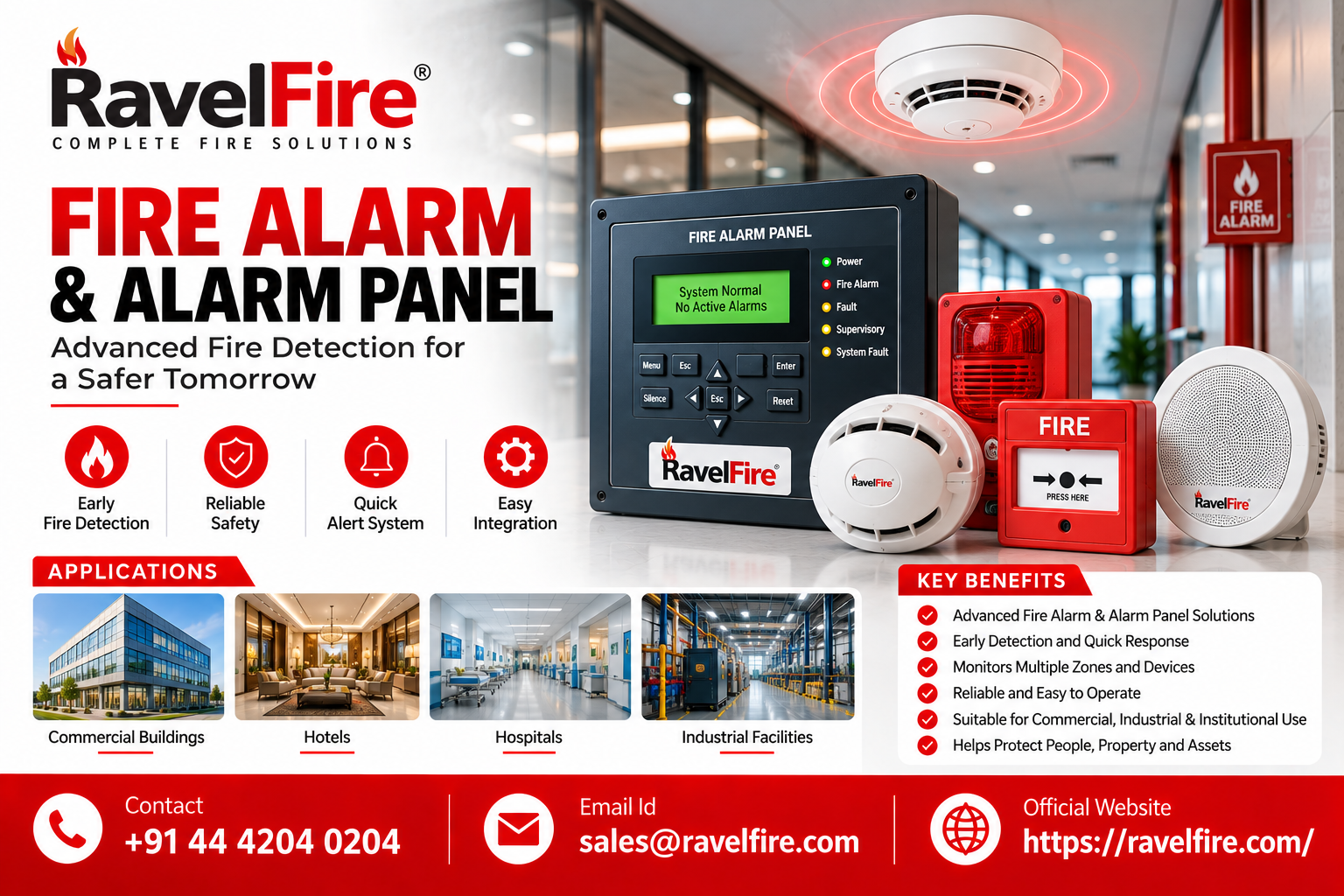
The effectiveness of a building’s fire protection strategy depends not only on detecting hazards but also on how successfully the detection system communicates an emergency and supports an appropriate response.
A professionally designed fire alarm system helps identify potential fire conditions and warn occupants through suitable notification equipment.
At the center of many installations, an alarm panel receives signals from connected detection devices, identifies relevant alarm conditions, and coordinates the system’s programmed responses.
For commercial properties, industrial facilities, educational institutions, and residential developments, understanding how these components work together is essential for establishing dependable fire safety arrangements.
Why Fire Alarm Systems Are Essential for Building Protection
Fire hazards can develop in different areas of a building, including electrical rooms, storage spaces, kitchens, and manufacturing environments.
A suitable detection system provides an important layer of protection by identifying specified fire-related conditions.
However, detection equipment must work alongside evacuation procedures, emergency communication, and other appropriate safety measures.
This makes coordinated system design an important responsibility for property owners and fire protection professionals.
What Is a Fire Alarm System?
A fire alarm system is an arrangement of compatible devices designed to detect potential fire conditions, process signals, and provide appropriate warnings.
Depending on the approved design, the system may include several components.
Essential Fire Alarm Components
- Smoke Detectors: Identify smoke-related conditions through suitable sensing technologies.
- Heat Detectors: Respond to specified temperatures or temperature changes.
- Manual Call Points: Allow occupants to initiate an alarm manually.
- Alarm Control Panel: Processes incoming signals and coordinates approved system functions.
- Sounders and Strobes: Provide audible and visual notifications.
- Power Supply Equipment: Supports system operation under specified conditions.
Each component must be selected according to the building’s safety requirements and system design.
Understanding the Role of an Alarm Panel
An alarm panel acts as the central control and indicating unit within a compatible fire detection system.
It receives information from connected devices and determines the appropriate response according to its programmed configuration.
For example, when a smoke detector enters an alarm condition, the panel may identify the relevant zone and activate designated warning equipment.
Main Functions of Fire Alarm Panels
Alarm Indication: Displays relevant fire alarm conditions.
Device or Zone Identification: Helps authorized personnel locate the affected area.
Fault Monitoring: Identifies specified equipment or circuit abnormalities.
Notification Activation: Controls compatible warning devices.
System Supervision: Monitors selected operating conditions.
Event Information: Provides operational information where supported by the panel model.
The precise capabilities depend on the equipment specifications.
Conventional and Addressable Alarm Panels
Two established approaches are used in many fire detection installations.
| Feature | Conventional Panel | Addressable Panel |
| Detection identification | Generally identifies zones | Can identify individual devices |
| Device communication | Uses compatible zone circuits | Uses compatible addressable communication |
| Typical application | Suitable for selected smaller or simpler installations | Suitable for installations requiring detailed device identification |
| Fault information | Depends on circuit and panel design | May offer more detailed device-related information |
| Selection criteria | Building requirements and approved design | Building requirements and approved design |
Neither approach is automatically the best choice for every property.
A qualified designer should evaluate occupancy, building layout, applicable requirements, and maintenance needs.
Why Cause-and-Effect Planning Matters
A fire alarm system must respond appropriately when specific detection devices activate.
These responses are established through a cause-and-effect strategy.
For instance, an approved design may require a detector signal to activate particular notification devices or communicate with other compatible building safety systems.
Such functions must be carefully documented and tested.
Incorrect programming or poorly coordinated system interfaces can affect emergency communication.
Professional commissioning is therefore essential.
How Fire Alarm Systems Support Emergency Management
A fire detection system provides information that can help authorized personnel recognize and respond to potential emergencies.
However, occupants must also understand the building’s evacuation procedures.
Clear exits, appropriate signage, occupant training, and accessible emergency instructions contribute to an effective response strategy.
Facilities with complex layouts may require additional emergency communication arrangements.
An alarm panel supports this process by coordinating the approved detection and notification functions, but it cannot replace effective safety planning.
Selecting Fire Alarm Equipment for Different Buildings
Fire protection requirements vary according to building use.
Commercial Offices: Detection and notification arrangements should reflect occupancy and building layout.
Industrial Facilities: Equipment selection must account for operational hazards and environmental conditions.
Educational Institutions: Clear alarm notification and appropriate evacuation arrangements are important.
Hotels: Detection strategies should consider guest rooms, shared areas, and building access arrangements.
Warehouses: Storage configurations, ceiling characteristics, and ventilation may influence detector selection.
The final design should follow an appropriate fire risk assessment and applicable regulations.
Why Installation Quality Influences Reliability
Even suitable equipment may perform inadequately when incorrectly installed.
Detector positioning, wiring arrangements, power supplies, and control panel configuration all influence system performance.
Installation professionals must confirm that the selected devices are compatible and positioned according to the approved design.
Important commissioning activities include verifying detection signals, fault indications, notification operation, and approved system interfaces.
Accurate documentation is equally important for future maintenance.
The Importance of Maintenance and System Readiness
A fire protection system must remain operational under its specified conditions.
Dust accumulation, damaged wiring, unsuitable modifications, and equipment faults can compromise reliability.
Routine inspection helps identify such problems.
Maintenance should include appropriate detector testing, control equipment checks, notification device verification, and examination of relevant power supplies.
Building managers should also maintain service records and arrange professional investigation of reported faults.
An unresolved fault should never be ignored simply because the system appears normal.
Evaluating Fire Alarm Solutions Before Installation
Organizations purchasing a fire alarm system should consider more than equipment cost.
Important evaluation criteria include technical documentation, relevant product approvals, control panel compatibility, installation requirements, and maintenance support.
Buyers should also discuss future building changes and the implications for system capacity.
A dependable installation requires suitable products, qualified professionals, and an appropriately documented safety strategy.
Frequently Asked Questions (FAQs)
1. What is the main purpose of a fire alarm system?
A fire alarm system detects specified potential fire conditions and activates appropriate notifications or other approved responses to support building safety.
2. What does an alarm panel do?
An alarm panel receives signals from compatible detection devices, identifies relevant alarm or fault conditions, and coordinates programmed system functions.
3. What is the difference between conventional and addressable fire alarm panels?
Conventional panels generally identify affected zones, while addressable systems can provide individual device identification using compatible equipment.
4. Can a fire alarm system work without regular maintenance?
Equipment may continue operating, but neglected maintenance can allow faults to remain undetected. Regular inspection and testing are important for dependable performance.
5. How should building owners select a suitable alarm panel?
Selection should be based on building requirements, approved design, device compatibility, applicable regulations, and professional technical guidance.
Media Contact
Department: Fire Alarm Systems and Technical Enquiries
Email: sales@ravelfire.com
Contact: +91 44 4204 0204
Official Website: https://ravelfire.com/