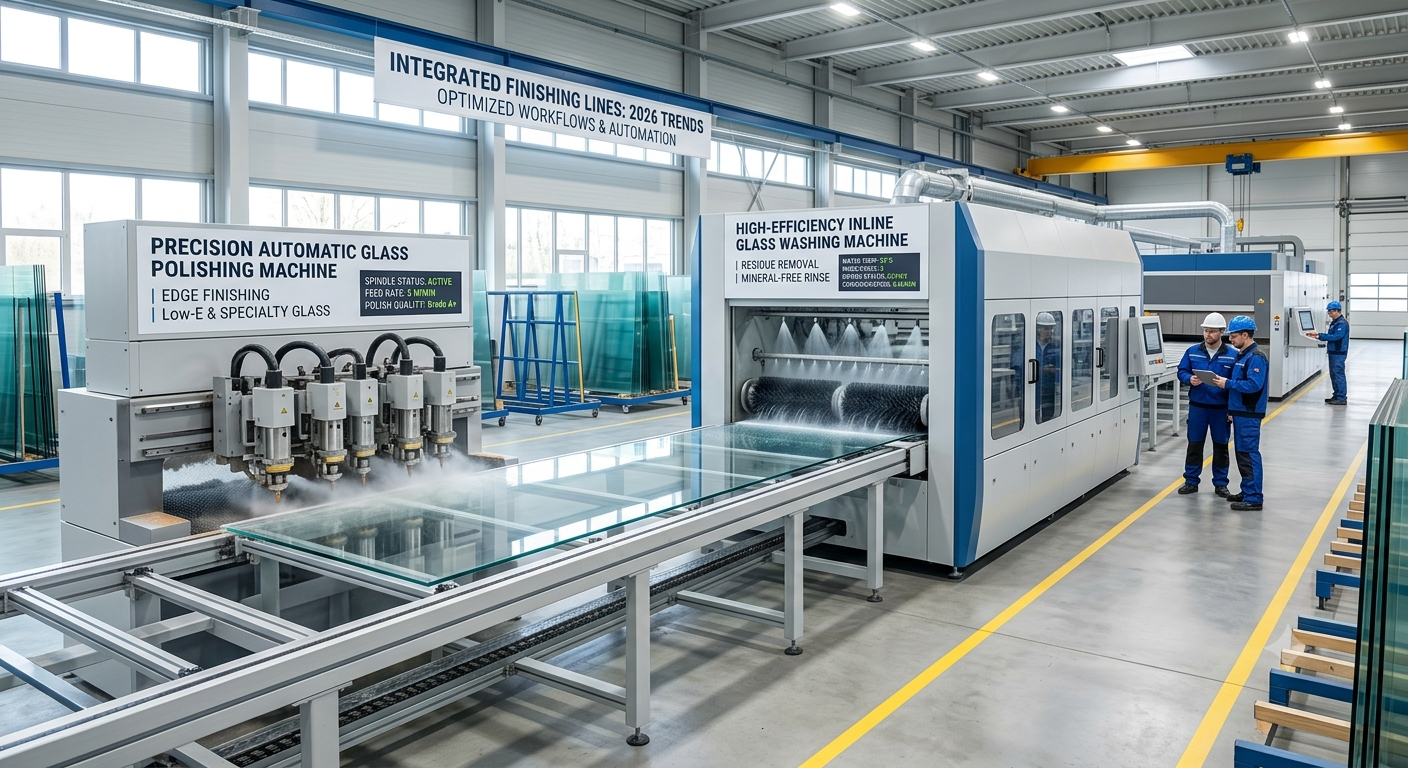
The glass industry has changed significantly with the growth of advanced automation and precision manufacturing. Today, manufacturers are expected to deliver glass products that are not only strong and accurately processed but also exceptionally clean and visually appealing. This is where a glass polishing machine and glass washing machine play an important role.
From architectural glass and shower enclosures to furniture panels, automotive glass, mirrors, and insulating glass units, modern processing equipment helps manufacturers improve productivity while maintaining consistent quality. Although both machines are used in the glass finishing process, they perform different functions and are often used together as part of an efficient production line.
Understanding how these machines work, their advantages, and how to select the right equipment can help glass processors make better investment decisions.
What Is a Glass Polishing Machine?
A glass polishing machine is specialized equipment designed to smooth, refine, and finish the edges or surfaces of glass. After cutting, grinding, or edging, glass may have rough edges, small imperfections, or a dull appearance. Polishing equipment helps create a smoother and more refined finish.
Depending on the machine configuration, polishing can be performed on different types of glass products and edge profiles. Automated systems are particularly useful for manufacturers that need consistent results across large production volumes.
Key Functions of Glass Polishing Equipment
A modern polishing machine may be used for:
- Removing minor surface imperfections
- Smoothing processed glass edges
- Improving edge appearance
- Creating polished edge profiles
- Preparing glass for further fabrication
- Increasing processing consistency
- Reducing manual finishing work
The exact result depends on the machine design, abrasive tools, polishing wheels, glass thickness, and processing speed.
Where Is a Glass Polishing Machine Used?
A glass polishing machine can support production in several industries, including:
- Architectural glass manufacturing
- Interior and furniture glass production
- Automotive glass processing
- Mirror manufacturing
- Shower enclosure production
- Decorative glass fabrication
- Insulating glass manufacturing
- Commercial building projects
For high-volume manufacturers, automation can significantly reduce repetitive manual operations and help maintain uniform finishing quality.
What Is a Glass Washing Machine?
A glass washing machine is designed to clean glass after cutting, grinding, edging, or other processing operations. During manufacturing, glass can accumulate dust, abrasive residue, water marks, fingerprints, and other contaminants.
A washing machine removes these unwanted materials before the glass moves to the next production stage.
How Does a Glass Washing Machine Work?
Most automated glass washing systems combine several stages to achieve effective cleaning. A typical process may include:
- Loading the glass onto the conveyor
- Pre-cleaning or rinsing
- Brushing with specialized rollers
- High-pressure washing
- Clean-water rinsing
- Air drying
- Final inspection
The machine’s brushes and cleaning systems must be selected according to the glass type and application. Sensitive coated glass, for example, may require specialized handling to avoid surface damage.
Why Clean Glass Matters
Cleanliness is essential in glass manufacturing because even small particles can affect the final appearance or interfere with subsequent processes.
A high-quality glass washing machine can help:
- Remove dust and processing debris
- Improve surface cleanliness
- Prepare glass for inspection
- Support coating and laminating processes
- Reduce manual cleaning requirements
- Improve production efficiency
- Maintain consistent product quality
Glass Polishing Machine vs. Glass Washing Machine
Although these machines may operate within the same production environment, their primary purposes are different.
| Feature | Glass Polishing Machine | Glass Washing Machine |
| Main purpose | Edge or surface finishing | Cleaning glass |
| Primary process | Grinding and polishing | Washing and drying |
| Removes | Roughness and imperfections | Dust, residue, and contaminants |
| Typical output | Smooth, refined glass finish | Clean and dry glass surface |
| Key components | Abrasive wheels and polishing tools | Brushes, water systems, air knives |
| Main benefit | Improved finishing quality | Improved cleanliness |
| Common application | Glass fabrication and edge processing | Pre-assembly and post-processing cleaning |
In many modern facilities, these machines complement each other. Polishing improves the physical finish, while washing prepares the glass for clean handling and further manufacturing.
Benefits of Using Automated Glass Processing Machines
Investing in automated equipment can provide several operational advantages.
1. Improved Production Efficiency
Automation allows manufacturers to process more glass in less time. Machines can handle repetitive tasks continuously, helping production teams meet demanding schedules.
2. Consistent Quality
Manual processing can produce variations depending on operator experience and working conditions. Automated equipment offers more consistent processing parameters, helping manufacturers achieve uniform results.
3. Reduced Labor Requirements
A modern glass polishing machine or glass washing machine can reduce the amount of repetitive manual work required. Employees can focus more on quality control, machine operation, and other value-added tasks.
4. Better Workplace Organization
Automated systems can help minimize manual contact with processed glass and improve workflow organization. Proper machine integration may also reduce unnecessary movement between production stages.
5. Higher Product Value
Smooth edges and clean surfaces contribute to the appearance and perceived quality of finished glass products. This can be particularly important for premium architectural and decorative applications.
How to Choose the Right Glass Polishing Machine
Selecting the right machine requires careful consideration of production requirements.
Consider These Factors
- Glass thickness range
- Maximum glass dimensions
- Required edge profile
- Production volume
- Automatic or semi-automatic operation
- Machine processing speed
- Abrasive and polishing system
- Energy consumption
- Maintenance requirements
- Availability of technical support
Manufacturers should also consider future production plans rather than choosing equipment based only on current requirements.
How to Choose a Glass Washing Machine
When evaluating a glass washing machine, manufacturers should focus on cleaning performance as well as compatibility.
Important factors include:
- Glass size: Ensure the machine can accommodate the dimensions commonly processed.
- Glass thickness: Check whether the equipment supports the required thickness range.
- Cleaning system: Examine brush quality, water circulation, and filtration capabilities.
- Drying performance: Effective air drying is essential for preventing water spots.
- Glass compatibility: Consider low-E, coated, laminated, or other specialized glass.
- Production speed: Select a capacity that matches the overall manufacturing line.
- Maintenance: Easy access to brushes, filters, pumps, and other components can reduce downtime.
Integrating Polishing and Washing Into Production
The greatest benefits often come when machines are integrated into a complete glass processing workflow. A typical production sequence may include cutting, edge processing, polishing, washing, inspection, and final assembly.
A well-planned production line can help manufacturers:
- Reduce unnecessary handling
- Improve workflow continuity
- Minimize processing delays
- Maintain consistent product quality
- Increase overall production capacity
Integration should be planned according to factory layout, product specifications, and expected production volume.
Maintenance Tips for Better Performance
Regular maintenance is essential for protecting equipment performance and extending service life.
Recommended Practices
- Clean machine components regularly
- Inspect polishing wheels for wear
- Replace worn brushes promptly
- Check water quality and filtration systems
- Inspect pumps and hoses
- Keep conveyors properly aligned
- Follow manufacturer maintenance schedules
- Train operators in safe machine handling
Preventive maintenance can help identify problems before they develop into expensive production interruptions.
Frequently Asked Questions
1. What does a glass polishing machine do?
It processes glass edges or surfaces to create a smoother and more refined finish while removing certain imperfections caused by earlier processing.
2. What is the purpose of a glass washing machine?
It cleans glass by removing dust, debris, residue, and other contaminants before inspection or further processing.
3. Can polishing and washing machines be used together?
Yes. They can be integrated into a glass processing workflow where polishing is followed by washing and drying.
4. Which industries use glass processing machines?
Architectural, automotive, furniture, decorative, mirror, shower enclosure, and insulating glass industries commonly use specialized processing equipment.
5. Does a glass washing machine also dry the glass?
Most modern systems include an air-drying stage designed to remove water from the glass surface after washing.
6. Can coated glass be processed in a washing machine?
Many machines can handle coated glass, but the equipment must be specifically designed for the coating type and manufacturer’s handling requirements.
7. Why is glass edge polishing important?
Polishing can improve edge smoothness and appearance while preparing the glass for certain applications and subsequent fabrication stages.
8. How often should glass processing machines be maintained?
Maintenance frequency depends on machine usage, production volume, and manufacturer recommendations. Regular inspections are generally essential for reliable operation.
9. What should manufacturers consider before buying equipment?
Production capacity, glass dimensions, thickness range, automation level, machine compatibility, maintenance requirements, and after-sales support should all be evaluated.
10. Can automated machines improve production efficiency?
Yes. Automation can reduce repetitive manual work, improve consistency, and help manufacturers process larger volumes efficiently.
https://newsgrow.blogspot.com/2026/06/glass-polishing-machine-and-glass.html