
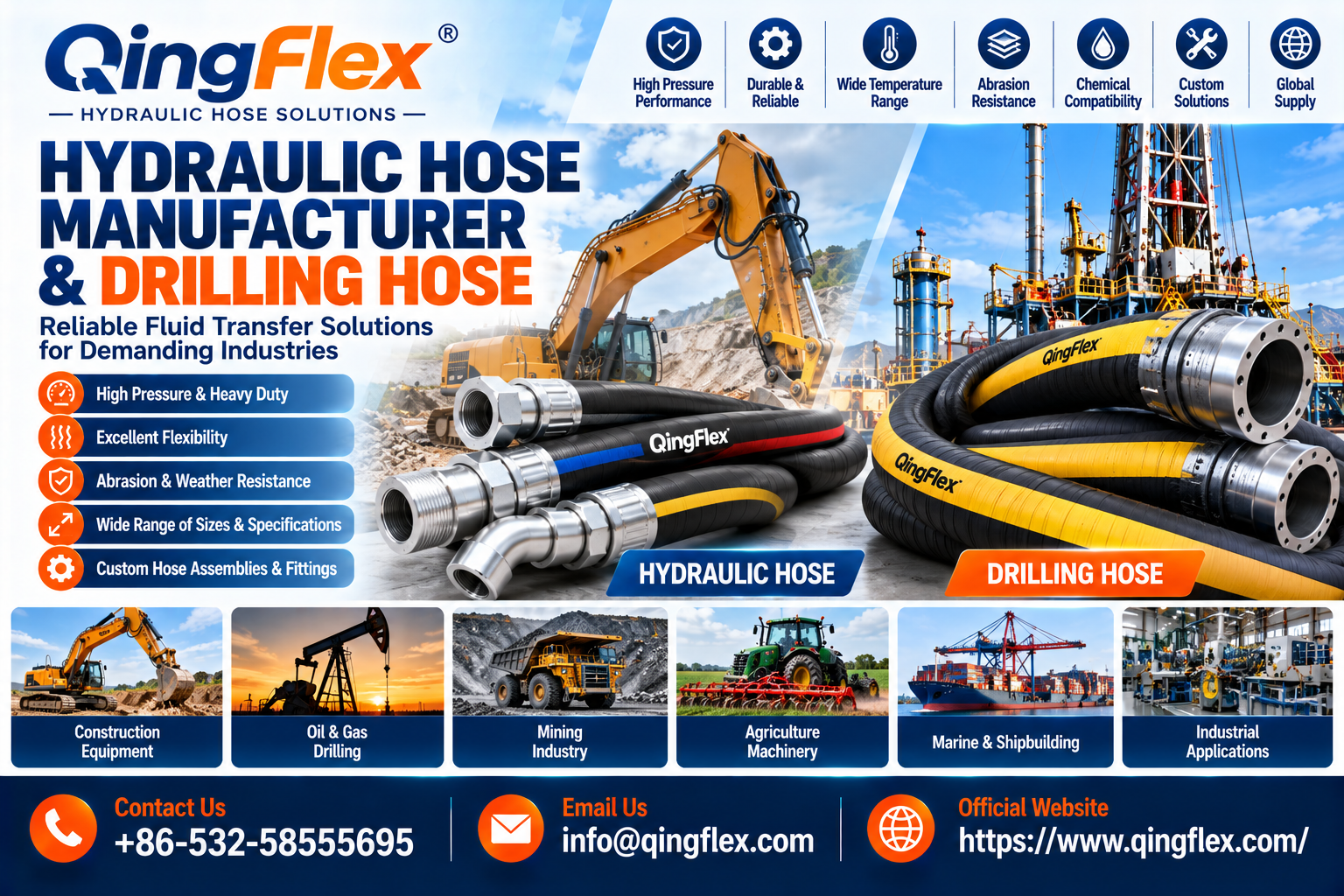
High-pressure fluid transfer is a critical requirement across oil and gas operations, mining, construction, and heavy industrial equipment. As machinery becomes more demanding, businesses are placing greater emphasis on hose reliability, pressure compatibility, operational safety, and product traceability.
A professional Hydraulic Hose Manufacturer plays an important role in supplying engineered hose solutions for fluid-powered systems. Meanwhile, a specialized drilling hose supports the transfer of drilling fluids between compatible equipment in demanding oilfield environments.
For drilling contractors, equipment manufacturers, and industrial procurement teams, understanding hose construction, operating conditions, and quality verification is essential for reducing equipment failures and improving operational reliability.
Why High-Pressure Hose Selection Matters
Industrial hoses operate under conditions involving pressure fluctuations, vibration, mechanical movement, and exposure to demanding environments.
An incorrectly specified hose may develop leaks, experience premature deterioration, or fail under operating loads.
In drilling operations, such failures can interrupt essential processes and create serious safety hazards.
This makes hose engineering an important part of equipment planning rather than a secondary purchasing decision.
What Does a Hydraulic Hose Manufacturer Do?
A Hydraulic Hose Manufacturer produces hoses designed to transfer hydraulic fluids under specified operating conditions.
Hydraulic hoses commonly incorporate several material layers that provide fluid compatibility, mechanical strength, and external protection.
Main Hose Construction Elements
- Inner Tube: Carries the intended fluid and must provide suitable chemical compatibility.
- Reinforcement Layer: Uses appropriate textile, wire braid, or spiral reinforcement to withstand pressure.
- Outer Cover: Provides protection against specified environmental and mechanical conditions.
- End Connections: Allow the assembly to connect to compatible equipment.
- Identification Markings: Communicate relevant specifications and traceability information.
The required construction depends on pressure ratings, fluid properties, temperature exposure, and intended equipment.
Understanding Drilling Hose Technology
A drilling hose is a specialized flexible hose assembly used in suitable drilling operations to transfer drilling fluids under defined pressure and movement conditions.
Drilling environments may require hoses that accommodate vibration, bending, and pressure changes while maintaining fluid containment.
Different configurations include rotary drilling hoses and vibrator hoses, each designed for particular equipment connections and operating conditions.
Important Performance Requirements
Pressure Resistance: The assembly must withstand its specified working pressure.
Flexibility: Suitable construction accommodates intended equipment movement.
Abrasion Protection: External materials help resist appropriate mechanical exposure.
Fluid Compatibility: The hose lining must suit the transferred drilling fluid.
Connection Integrity: Fittings and end connections must match equipment specifications.
Environmental Durability: Materials should be appropriate for installation conditions.
A drilling hose should never be selected solely according to its external diameter or appearance.
Hydraulic Hose and Drilling Hose: Understanding the Difference
Although both products transfer fluids, they have different operating applications.
| Feature | Hydraulic Hose | Drilling Hose |
| Primary function | Transmitting hydraulic fluid power | Transferring suitable drilling fluids |
| Common application | Industrial and mobile hydraulic systems | Oilfield drilling equipment |
| Main fluid | Compatible hydraulic oil or fluid | Compatible drilling mud or related fluids |
| Mechanical conditions | Pressure and equipment movement | Pressure, vibration, and dynamic movement |
| Critical consideration | Pressure and fluid compatibility | Assembly rating and drilling-service suitability |
Not every hydraulic hose is appropriate for drilling operations. The assembly must meet the specific application requirements.
Pressure Surges and Hose Fatigue
One important challenge in drilling operations is fluctuating pressure.
Fluid pumps, equipment movement, and changing operating conditions can place repeated stresses on hose assemblies.
Pressure surges that exceed allowable limits may contribute to deterioration or failure.
Important Engineering Considerations
- Maximum allowable working pressure.
- Expected pressure fluctuations.
- Temperature exposure.
- Minimum bend radius.
- Hose length and routing.
- Mechanical movement.
- Compatible connection design.
Manufacturers and equipment operators should verify these parameters before installation.
Why Hose Fittings Are Critical
The performance of a hose assembly depends on more than the hose body.
End fittings must be compatible with the hose construction, operating pressure, and connected equipment.
Incorrectly selected or assembled fittings can create dangerous failure points.
For a drilling hose, the complete assembly must be evaluated, including its end connections and any required safety restraints.
Assembly work and pressure testing should follow applicable specifications and qualified procedures.
Material Compatibility in Drilling Environments
Drilling fluids can contain different chemicals, additives, and suspended solids.
These characteristics influence the selection of suitable hose lining materials.
An incompatible inner tube may deteriorate even if the hose has an otherwise adequate pressure rating.
Important Compatibility Factors
Fluid Composition: Chemicals and additives can affect hose materials.
Temperature: Elevated temperatures may influence material properties.
Solid Particles: Abrasive content can increase internal wear.
Operating Pressure: Must remain within the assembly’s rated limits.
Cleaning Procedures: Cleaning fluids must also be compatible with the hose.
A qualified Hydraulic Hose Manufacturer should provide relevant product specifications that help buyers assess compatibility.
Hose Inspection and Preventive Maintenance
Industrial hose assemblies require appropriate inspection throughout their service life.
Visible damage may indicate deterioration, but some internal problems are not immediately apparent.
Common Warning Signs
- Cracking or excessive cover wear.
- Leaks near fittings.
- Unusual deformation or swelling.
- Exposed reinforcement.
- Damaged end connections.
- Kinks or installation-related stress.
Hoses showing signs of serious deterioration should be taken out of service and assessed by qualified personnel.
High-pressure leaks are dangerous, and personnel should never attempt to locate leaks using their hands.
Product Traceability and Quality Documentation
Traceability is particularly valuable in demanding industrial environments.
Clear product identification helps operators confirm specifications, review maintenance records, and manage replacement decisions.
Important documentation may include material information, rated operating conditions, assembly identification, and applicable inspection or test records.
For drilling applications, buyers should also verify compliance with the relevant industry specifications required by their equipment and operating procedures.
These measures support informed equipment management and accountability.
Selecting a Reliable Hose Manufacturing Partner
Industrial buyers should evaluate suppliers according to technical capabilities rather than purchase price alone.
Key Procurement Considerations
- Suitable hose constructions and pressure ratings.
- Fluid and temperature compatibility.
- Reinforcement and cover specifications.
- Compatible fittings and assembly methods.
- Quality-control procedures.
- Relevant test documentation.
- Technical communication and support.
Sample evaluation and clear technical requirements can help reduce the risk of unsuitable product selection.
Frequently Asked Questions (FAQs)
1. What is a Hydraulic Hose Manufacturer?
It is a company that manufactures hoses designed for hydraulic fluid transfer under specified operating conditions.
2. What is a drilling hose?
It is a specialized flexible hose assembly used to transfer suitable drilling fluids in oilfield operations.
3. Can ordinary hydraulic hoses be used for drilling?
Not automatically. Drilling applications require hoses specifically suitable for their pressure, fluid, and movement conditions.
4. Why is hose reinforcement important?
Reinforcement provides the mechanical strength needed to withstand specified internal pressures.
5. What is a rotary drilling hose?
It is a hose designed for suitable high-pressure drilling-fluid connections involving equipment movement.
Media Contact
Department: Hydraulic Hose and Industrial Fluid Transfer Solutions
Email: info@qingflex.com
Contact: +86-532-58555695
Official Website: https://www.qingflex.com/