
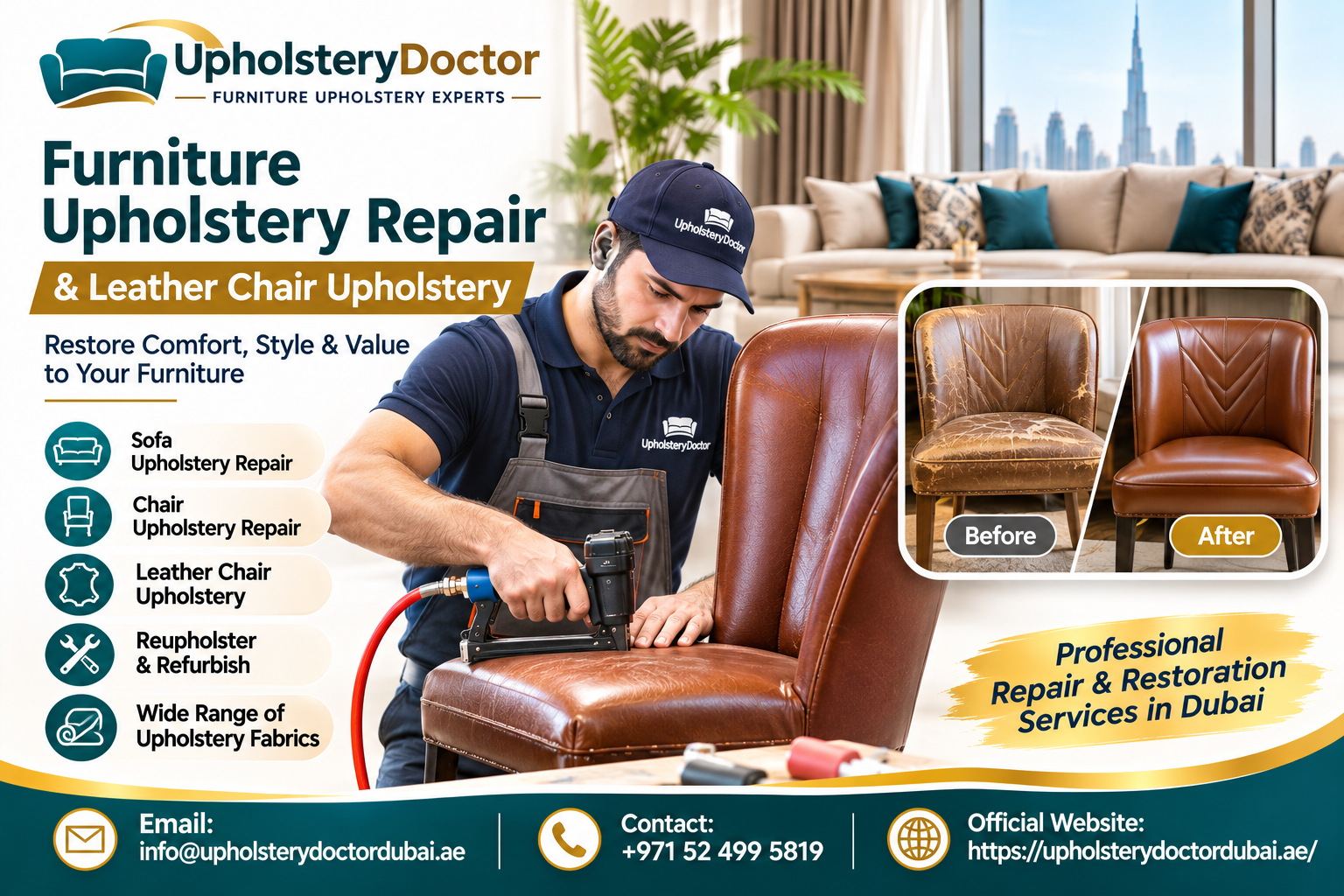
While furniture trends change, many property owners prefer to preserve well-crafted pieces that retain functional, aesthetic, or sentimental value.
Professional Furniture Upholstery Repair offers an opportunity to restore such furniture without unnecessarily replacing its original structure.
Specialized Leather Chair Upholstery is particularly relevant for chairs featuring distinctive shapes, decorative craftsmanship, or premium materials that may be difficult to reproduce.
The emphasis is not simply on making damaged furniture look new. It is on maintaining the character of the original piece while addressing deterioration that affects comfort and functionality.
For homeowners, furniture preservation can become an important part of maintaining a consistent interior design.
Why Older Furniture Can Be Worth Restoring
Not all older furniture is damaged beyond repair. Some chairs retain strong wooden frames, distinctive detailing, and craftsmanship even after their upholstery begins to deteriorate.
Replacing these pieces may mean losing furniture that fits a room particularly well.
Professional restoration allows owners to assess whether the original construction remains suitable for continued use.
Several qualities can make restoration worthwhile:
- Distinctive craftsmanship: Carved frames, decorative details, and unusual furniture shapes.
- Structural quality: Durable frames that remain stable despite worn upholstery.
- Sentimental value: Furniture associated with family memories or personal history.
- Design compatibility: Pieces that complement existing interior arrangements.
- Restoration potential: Furniture that can benefit from new coverings, padding, or selected repairs.
An experienced assessment helps determine whether restoration can preserve these qualities without compromising safety.
Understanding Leather Chair Upholstery Restoration
Leather furniture requires a different approach from conventional fabric-covered seating.
Natural leather develops changes in texture and appearance through regular use. Depending on its finish and condition, some changes may contribute to its character, while others indicate deterioration requiring attention.
Professional Leather Chair Upholstery begins with identifying the leather type and examining the extent of damage.
Minor problems may be suitable for localized repairs, while extensive cracking, deep tears, or deteriorated panels may require replacement.
The restoration process should also consider the existing stitching, cushion structure, and chair frame.
A practical restoration principle explains:
This distinction helps owners avoid unnecessary modifications that could remove valuable original features.
Preserving Original Furniture Character
One challenge in restoring distinctive furniture is deciding how much of the original design should remain unchanged.
Some owners prefer a close reproduction of the original upholstery, while others want a refreshed appearance without altering the furniture’s recognizable shape.
The appropriate approach depends on the condition of the chair and the owner’s objectives.
For a decorative leather chair, preserving original proportions, stitching patterns, and frame details can help maintain visual continuity.
Replacement materials should complement the existing construction.
An unsuitable upholstery material may alter the chair’s appearance or create unnecessary tension around curved surfaces.
Careful planning allows furniture restoration to improve usability while respecting the original design.
Leather Matching Requires Attention to Detail
Replacing selected leather sections can be challenging because leather varies in grain, texture, thickness, and color.
Even materials sold under similar color descriptions may appear different when placed next to existing upholstery.
Before beginning a repair, technicians should consider:
- Color compatibility: Matching the existing shade as closely as practical.
- Surface texture: Selecting an appropriate grain pattern and finish.
- Material flexibility: Ensuring the replacement leather suits the chair’s shape.
- Stitching design: Maintaining consistent seam placement and finishing.
- Wear characteristics: Considering how new material may age alongside older upholstery.
Perfect matching may not always be possible, particularly when the original leather has experienced substantial fading.
Customers should understand these limitations before approving a restoration project.
Cushion Restoration Improves Everyday Comfort
Furniture preservation should not focus exclusively on the visible covering.
Older chairs may develop compressed padding, uneven support, or worn suspension components.
These problems can affect the seating experience even when the upholstery remains attractive.
Professional Furniture Upholstery Repair may therefore include evaluating cushion fillings and underlying support materials.
Suitable replacement padding can improve comfort while maintaining the chair’s intended proportions.
However, excessive changes to cushion thickness may alter the original design or seating height.
The best approach balances improved comfort with the chair’s construction and intended use.
Furniture Restoration for Traditional and Contemporary Interiors
Preserving original furniture does not mean every restored piece must retain an outdated appearance.
A traditional armchair may complement a contemporary living room when its upholstery is selected thoughtfully.
Neutral leather tones can create a restrained appearance, while carefully chosen accent colors may introduce a more distinctive character.
In offices, restored leather chairs can help maintain coordinated reception or executive seating.
In residential interiors, refurbished furniture may become a visual feature that connects older decorative elements with modern surroundings.
The objective is to create balance rather than forcing every furniture piece to follow the same design trend.
Why Professional Assessment Matters Before Restoration
A chair may appear structurally sound while concealing damaged joints or deteriorated support materials.
For this reason, a detailed assessment should precede major upholstery work.
Technicians can examine frame stability, cushion condition, upholstery attachment points, and the extent of surface deterioration.
A useful workmanship principle states:
Professional evaluation also helps establish realistic expectations about appearance, repair costs, and continued serviceability.
Where damage is extensive, replacement may be more sensible than restoration.
Responsible Furniture Preservation and Material Use
Restoring existing furniture can reduce the need to discard usable frames and other components.
This makes refurbishment a practical option for homeowners seeking to make thoughtful furnishing decisions.
However, the benefits depend on the original furniture’s condition, the replacement materials required, and the extent of the work.
Preservation should never compromise structural safety.
When restoration is appropriate, skilled upholstery work can help extend furniture usability while retaining distinctive design elements.
Frequently Asked Questions (FAQs)
1. What is Furniture Upholstery Repair?
Furniture Upholstery Repair involves restoring damaged furniture coverings, stitching, cushioning, and related components to improve appearance, comfort, and functionality.
2. Can old leather chairs be restored?
Yes. Many older leather chairs can be restored if their frames remain structurally suitable. Restoration may involve leather repair, panel replacement, cushioning improvements, or complete reupholstery.
3. Is it possible to match the original leather during repair?
A close match may be possible, depending on material availability, grain pattern, color, and existing wear. Exact matching cannot always be guaranteed.
4. Does Leather Chair Upholstery include cushion replacement?
It can. Depending on the chair’s condition, upholstery restoration may include replacing worn padding or improving internal seating support.
5. When should a leather chair be replaced instead of repaired?
Replacement may be preferable when the frame is severely damaged, restoration costs are excessive, or the furniture cannot safely support its intended use.
Media Contact
Department: Customer Enquiries & Furniture Upholstery Services
Industry: Furniture Upholstery, Leather Chair Restoration & Interior Furnishing
Location: Dubai, United Arab Emirates
Contact: +971 52 499 5819
Email: info@upholsterydoctordubai.ae
Official Website: https://upholsterydoctordubai.ae/