The growing use of smart electronic devices across industrial facilities, commercial buildings, and consumer applications has increased the importance of reliable component protection.
Electronic products often operate in environments where dust, moisture, vibration, and changing temperatures may affect performance. Manufacturers must therefore consider how sensitive internal components can be protected without compromising product functionality.
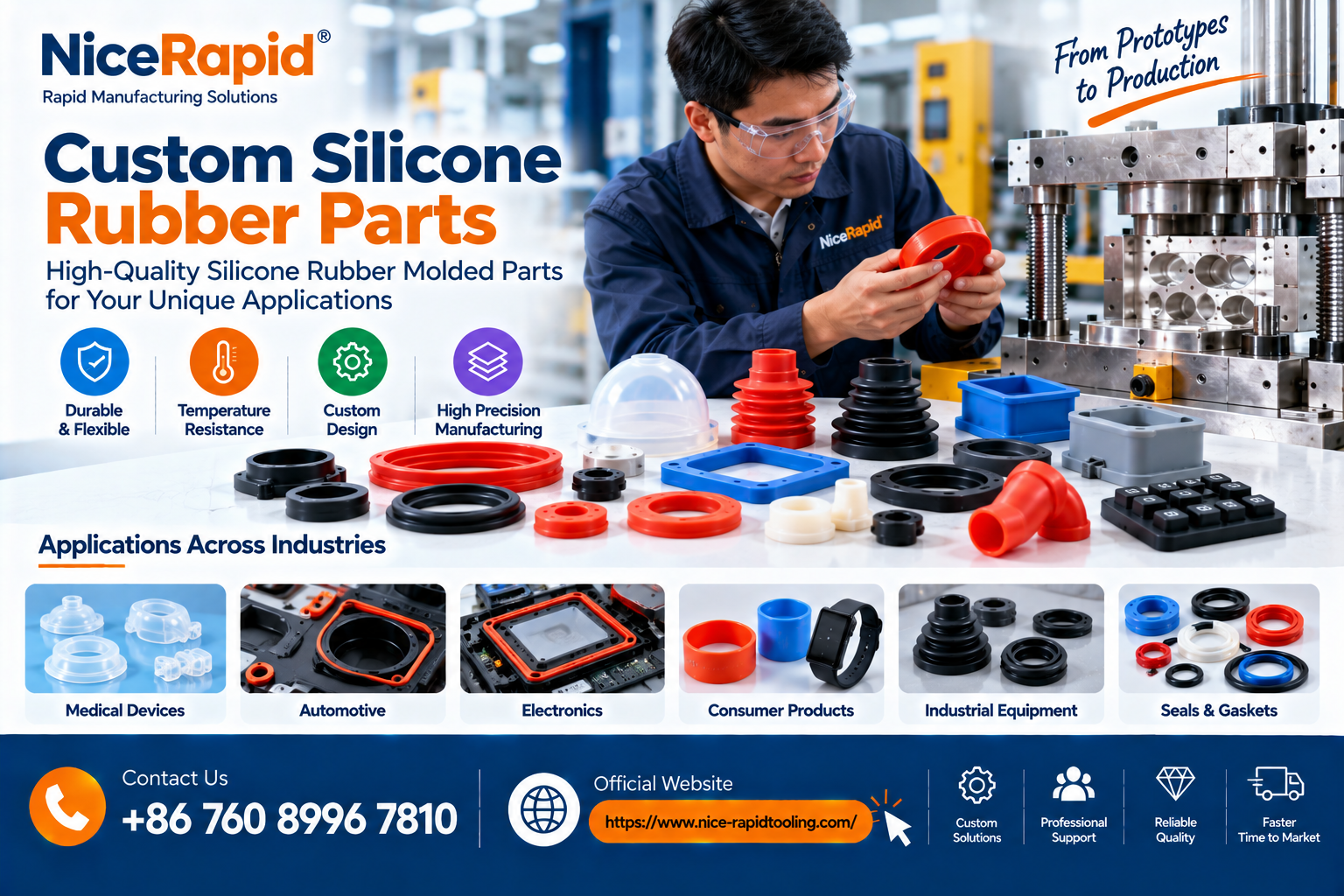
Custom silicone rubber parts provide flexible engineering solutions for selected sealing, cushioning, insulation, and protective applications.
Meanwhile, silicone rubber molded parts enable manufacturers to develop components with specialised shapes and functional characteristics suited to different electronic assemblies.
For electronics manufacturers, equipment developers, and engineering companies, the broader objective is to improve product reliability through carefully designed protective components.
Why Electronic Devices Need Reliable Protection
Smart electronic equipment contains sensitive circuits, sensors, connectors, and other components that may be affected by environmental conditions.
Dust entering an enclosure can create maintenance concerns, while unwanted moisture exposure may damage electrical components.
Mechanical movement and vibration can also affect certain assemblies.
Protective component design is therefore an important part of product development.
Suitable silicone components can help manufacturers address selected environmental and mechanical challenges.
What Are Custom Silicone Rubber Parts?
Custom silicone rubber parts are specially designed components manufactured according to specific dimensions, functional requirements, and material specifications.
Unlike standard rubber products, custom components are developed to fit particular equipment configurations.
Examples include enclosure gaskets, flexible protective covers, connector seals, insulating pads, and vibration-damping elements.
Their performance depends on material formulation, component design, installation conditions, and intended operating environment.
Customisation allows engineers to address requirements that conventional catalogue components may not satisfy.
However, selecting a suitable design requires technical evaluation rather than relying exclusively on the general properties of silicone rubber.
Understanding Silicone Rubber Molded Parts
Silicone rubber molded parts are produced by shaping silicone material within suitable manufacturing tooling.
Depending on the material and component requirements, manufacturing methods may include compression molding, transfer molding, or silicone injection molding.
These processes can produce components with customised contours, sealing lips, flexible walls, and other functional features.
For electronic equipment, molding makes it possible to create components designed around specific housing dimensions.
The selected method should reflect product geometry, required tolerances, material properties, and manufacturing quantities.
Appropriate process control is essential for achieving consistent component quality.
Environmental Sealing in Electronic Enclosures
One important application of silicone rubber is environmental sealing.
A properly designed gasket can help create a barrier between enclosure surfaces.
However, sealing effectiveness depends on several factors, including gasket geometry, compression, housing design, and installation.
A silicone gasket alone does not guarantee that equipment is waterproof or dustproof.
Manufacturers may need to evaluate complete assemblies against relevant ingress protection requirements.
Testing under representative conditions helps determine whether the design satisfies its intended protection requirements.
How Silicone Components Support Vibration Management
Electronic equipment installed in industrial environments may experience mechanical vibration.
Depending on the application, flexible silicone components can help provide cushioning or isolation between selected assembly parts.
Potential applications include protective mounting pads, flexible supports, and contact surfaces.
However, vibration-control performance depends on component geometry, material characteristics, applied loads, and operating conditions.
Engineers must evaluate these factors before selecting a solution.
A material that provides suitable cushioning in one assembly may perform differently under another loading arrangement.
Application-specific validation remains essential.
Common Silicone Applications in Electronic Products
| Electronic Application | Silicone Component | Primary Function |
| Smart Sensor Housing | Custom sealing gasket | Helps limit environmental ingress |
| Industrial Controller | Flexible protective cover | Protects selected exposed surfaces |
| Electrical Connector | Silicone sealing element | Supports connector protection |
| Monitoring Equipment | Cushioning pad | Helps manage contact and vibration |
| Control Panel | Molded rubber keypad | Provides flexible user controls |
| Electronic Enclosure | Insulating component | Supports specified electrical insulation requirements |
Each application requires suitable material properties and appropriate performance testing.
Why Temperature Performance Matters
Electronic devices may operate in environments involving changing temperatures.
Different silicone formulations can maintain useful flexibility across specified temperature ranges.
However, their performance limits vary.
Excessive temperatures, incompatible chemicals, or unsuitable mechanical conditions may affect material behaviour.
Manufacturers should establish the intended operating environment before selecting the silicone grade.
Thermal testing may be required when components are exposed to elevated or changing temperatures.
Material specifications should be assessed alongside the requirements of the complete electronic assembly.
Electrical Insulation and Material Selection
Silicone rubber is used in selected electrical insulation applications because appropriate formulations offer useful dielectric properties.
However, electrical performance depends on material composition, component thickness, environmental conditions, and manufacturing quality.
Engineers may need to evaluate dielectric strength, insulation resistance, and applicable safety requirements.
Not every silicone formulation is suitable for every electrical application.
Material selection should therefore be based on verified technical specifications.
Where equipment is subject to electrical safety standards, the completed product must satisfy the relevant requirements.
Improving Design Compatibility With Precision Molding
A protective silicone component must fit the surrounding assembly correctly.
Even minor dimensional differences can influence sealing compression, connector alignment, or mechanical movement.
Precision tooling helps manufacturers produce components according to defined geometry.
Design engineers should evaluate wall thickness, tolerances, parting lines, and material shrinkage.
These considerations influence manufacturing consistency and component installation.
Early communication between electronic product designers and silicone molding specialists can help identify potential difficulties before production approval.
Why Component Testing Is Essential
A silicone component should be evaluated according to its intended function.
Visual inspection alone cannot demonstrate environmental sealing or electrical performance.
Depending on the application, testing may include:
- Dimensional Inspection: Verifying critical measurements.
- Compression Testing: Assessing deformation and recovery characteristics.
- Environmental Testing: Evaluating relevant exposure conditions.
- Electrical Testing: Confirming required insulation properties.
- Assembly Testing: Checking fit and functional compatibility.
- Durability Evaluation: Assessing performance under representative mechanical conditions.
Testing requirements should reflect the consequences of component failure.
Supporting Product Reliability and Maintenance
Well-designed silicone components can contribute to equipment reliability when properly specified and installed.
For example, a replaceable enclosure gasket may help support maintenance without requiring complete equipment replacement.
However, serviceability depends on the overall product design.
Manufacturers should consider whether protective components can be inspected, removed, and replaced without damaging surrounding parts.
Clear maintenance instructions and component identification can support consistent servicing.
Designing for maintainability is particularly valuable for equipment operating in demanding environments.
Frequently Asked Questions (FAQs)
1. What are custom silicone rubber parts?
They are silicone components designed to meet specific dimensional, mechanical, environmental, or functional requirements.
2. What are silicone rubber molded parts used for in electronics?
They may be used for sealing, cushioning, electrical insulation, protective covers, flexible controls, and connector-related applications.
3. Can silicone rubber provide waterproof protection?
Silicone gaskets can support water-resistant enclosure designs, but waterproof performance depends on complete assembly design and suitable testing.
4. Are silicone components suitable for high-temperature electronic applications?
Certain silicone formulations offer useful thermal resistance, but suitability must be verified against the intended operating conditions.
5. Why is custom tooling important for silicone components?
Custom tooling helps create components with the required dimensions and geometry, supporting appropriate fit and repeatable manufacturing quality.
Media Contact
Department: Custom Silicone Manufacturing and Precision Engineering Enquiries
Enquiry Categories: Custom Silicone Rubber Parts, Silicone Rubber Molded Parts, Electronic Sealing Components, Precision Tooling, Protective Rubber Components, and Industrial Manufacturing.
Contact: +86 760 8996 7810
Email: enquiry@nice-rapidtooling.com
Official Website: https://www.nice-rapidtooling.com/