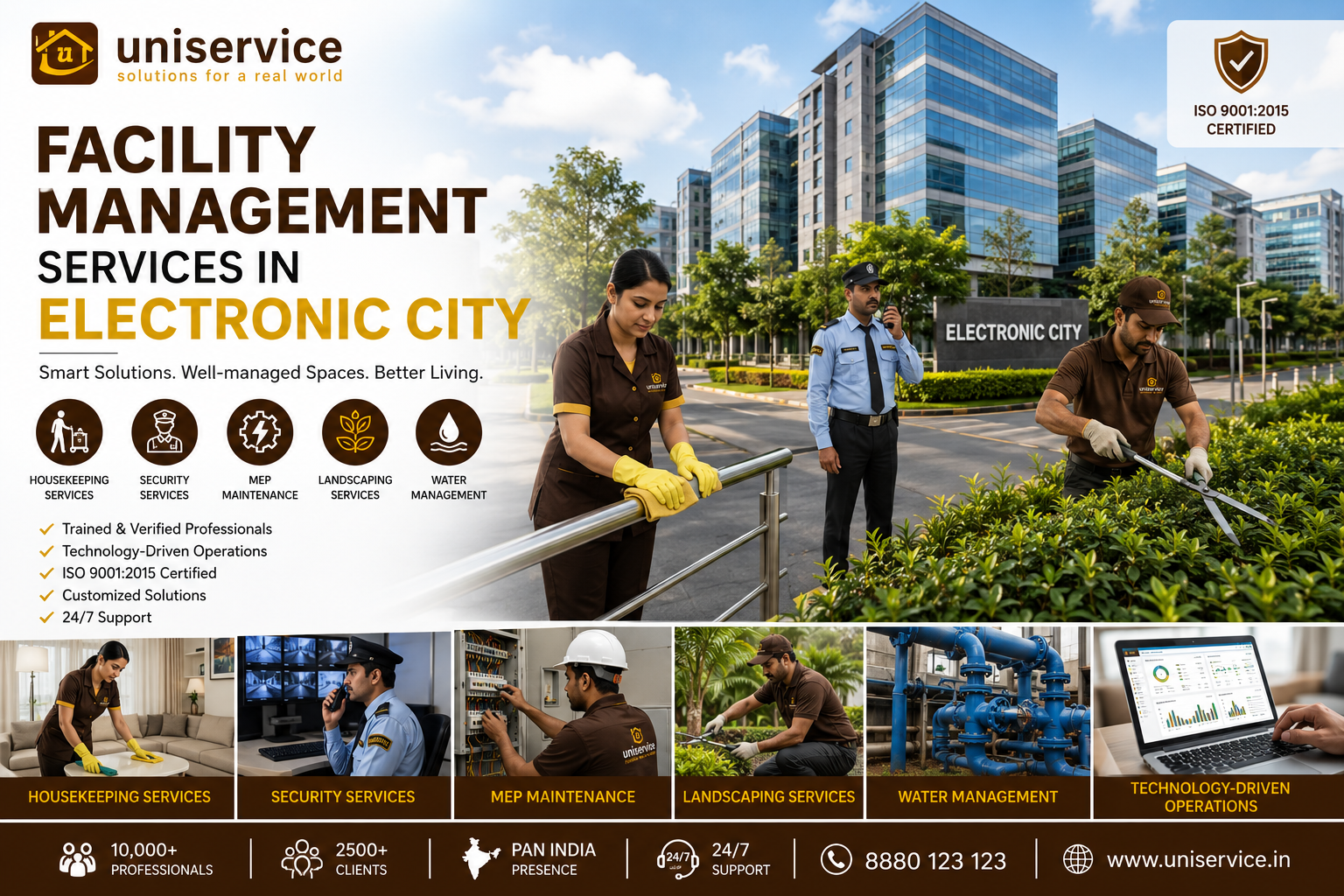
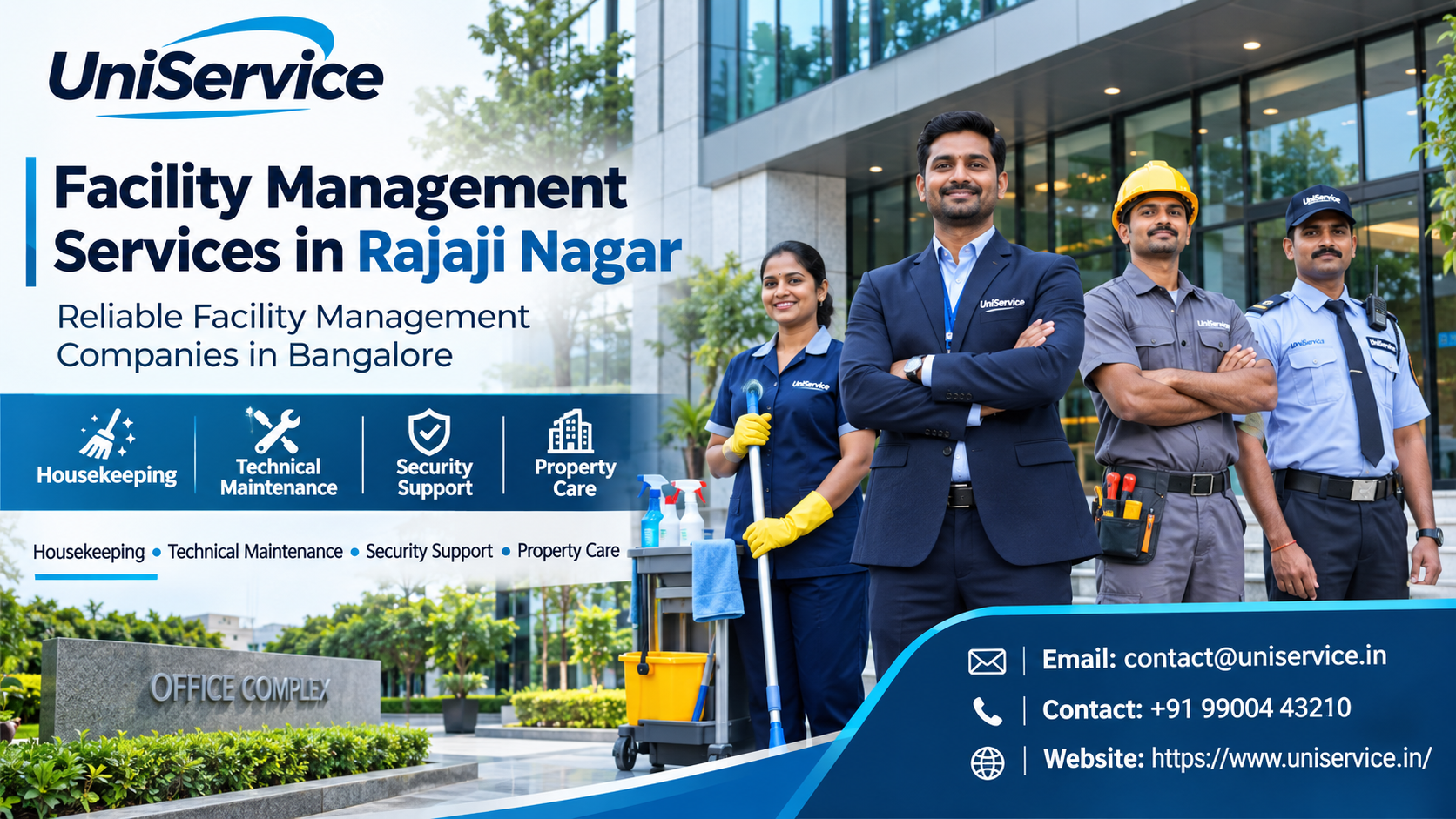
Commercial buildings, residential communities, retail establishments, and corporate offices require more than occasional cleaning and maintenance to remain functional. Property owners and business managers must coordinate multiple activities, including housekeeping, electrical maintenance, plumbing, security support, waste management, and equipment inspection.
This need has created greater interest in professional facility management services in Rajaji Nagar, where different types of properties require organised building operations and dependable maintenance support.
Businesses also compare facility management companies in bangalore to identify service providers capable of managing multiple property responsibilities through structured processes.
The broader objective is not simply maintaining clean premises. Effective facility management supports workplace productivity, operational continuity, asset protection, and better experiences for building occupants.
Why Property Management Requires a Coordinated Approach
A building contains interconnected systems that must function properly.
An electrical problem may affect lighting, while plumbing issues can interrupt washroom operations. Poor housekeeping can also reduce workplace comfort and create avoidable safety concerns.
When different contractors operate without coordination, property managers may struggle to establish responsibility.
Integrated facility management offers a more organised approach by bringing related services under defined supervision.
This approach can help reduce communication gaps and improve operational consistency.
What Are Facility Management Services in Rajaji Nagar?
Facility management services in Rajaji Nagar refer to professional support for maintaining and managing residential, commercial, and institutional properties in the locality.
Services may include housekeeping, building maintenance, technical support, sanitation, vendor coordination, landscaping, and assistance with site operations.
The exact scope depends on the property’s requirements and the provider’s capabilities.
A commercial office may prioritise technical maintenance and workplace cleanliness, while an apartment complex may require common-area housekeeping, water-system maintenance, and security coordination.
A suitable facility management arrangement should reflect these differences rather than rely on a standard service package.
Why Preventive Maintenance Deserves More Attention
Many property problems begin as minor faults.
A leaking pipe, unusual equipment vibration, or damaged electrical fitting may appear manageable initially. However, ignoring developing problems can lead to expensive repairs or service interruptions.
Preventive maintenance involves inspecting equipment and building systems according to an appropriate plan.
It may include checking electrical installations, plumbing components, pumps, ventilation systems, and other relevant infrastructure.
Maintenance schedules should reflect manufacturer recommendations, equipment condition, and applicable safety requirements.
Preventive planning does not eliminate every breakdown, but it can help identify problems before they become more serious.
Housekeeping as an Operational Responsibility
Professional housekeeping contributes to a property’s appearance, hygiene, and usability.
Commercial offices require attention to workstations, washrooms, common areas, and frequently touched surfaces.
Retail properties may require additional cleaning around customer entrances and high-traffic areas.
Residential communities have different requirements involving corridors, lifts, reception spaces, and shared facilities.
Cleaning materials, equipment, and methods should be selected according to surface types and hygiene requirements.
Good housekeeping also requires appropriate staff training, supervision, and safe chemical handling.
Comparing Facility Management Models
Property managers can choose different operational arrangements depending on their requirements.
| Management Model | Main Approach | Suitable Consideration |
| In-House Management | Property owner supervises employees | Direct operational control |
| Multiple Contractors | Separate vendors handle individual services | Specialist service requirements |
| Integrated Facility Management | Coordinated management of several services | Centralised reporting and supervision |
| Technical Maintenance Contract | Focus on building systems and equipment | Engineering-intensive properties |
| Customised Facility Services | Selected services based on property needs | Flexible operational requirements |
The appropriate model depends on building complexity, available resources, and management priorities.
How Facility Management Supports Workplace Productivity
Building conditions influence how comfortably employees and visitors use a property.
Poor lighting, malfunctioning ventilation, inadequate sanitation, and unresolved maintenance complaints can disrupt workplace activities.
Organised facility management helps businesses address these issues through defined responsibilities and reporting procedures.
For example, maintenance requests can be assigned to the appropriate technical team, while housekeeping concerns can be handled through site supervision.
Facility management should therefore be considered part of broader business operations.
Why Vendor Accountability Matters
Properties often depend on outside specialists for equipment servicing, pest management, electrical repairs, and other technical activities.
Without proper supervision, service quality may become inconsistent.
Facility managers can help establish clear responsibilities, documentation requirements, and performance expectations.
Service-level agreements may define response procedures, inspection requirements, and other measurable responsibilities.
However, written agreements are useful only when performance is reviewed.
Regular service assessments can help property owners identify recurring issues and opportunities for improvement.
Technology and Digital Maintenance Records
Digital tools can support more organised facility operations.
Maintenance management software may record complaints, equipment histories, inspection findings, and completed service activities.
This information can help managers identify repeated faults and monitor unresolved requests.
Digital records may also support budgeting and decisions about repairing or replacing equipment.
However, software cannot replace trained personnel or competent technical inspections.
Technology provides the greatest value when information is accurate and staff follow consistent reporting procedures.
Safety and Regulatory Considerations
Property operations must account for applicable building, workplace, fire safety, and environmental requirements.
Facility management teams may assist with inspection coordination, emergency preparedness, maintenance documentation, and contractor supervision.
However, statutory responsibilities depend on the property and applicable regulations.
Electrical repairs, fire protection systems, and other specialised activities should be handled by appropriately qualified professionals.
Property owners should also confirm which responsibilities remain with management, tenants, contractors, or other parties.
Clear accountability is essential for responsible operations.
Choosing Facility Management Companies in Bangalore
Businesses comparing facility management companies in bangalore should assess more than pricing.
Important selection factors include:
- Service Experience: Familiarity with comparable property types.
- Technical Capability: Access to appropriately skilled maintenance personnel.
- Staff Supervision: Defined responsibilities and quality checks.
- Service Flexibility: Ability to accommodate property-specific requirements.
- Reporting Procedures: Clear documentation of completed work and complaints.
- Cost Transparency: Understandable contracts and service inclusions.
An effective provider should explain how services will be delivered, supervised, and evaluated.
Frequently Asked Questions (FAQs)
1. What are facility management services in Rajaji Nagar?
They are professional property support services covering activities such as housekeeping, maintenance, sanitation, technical coordination, and common-area management.
2. Which properties require facility management services?
Commercial offices, apartments, shopping complexes, educational institutions, healthcare facilities, and industrial properties may require different levels of facility support.
3. What do facility management companies in Bangalore generally offer?
Depending on their capabilities, they may offer housekeeping, technical maintenance, vendor coordination, waste management, and integrated property operations.
4. How does preventive maintenance benefit property owners?
It helps identify equipment defects, supports asset reliability, and may reduce avoidable repair expenses and operational interruptions.
5. How should businesses select a facility management provider?
They should evaluate service scope, staff qualifications, supervision practices, reporting systems, contract clarity, and experience with similar properties.
Media Contact
Department: Facility Management and Property Services Enquiries
Enquiry Categories: Facility Management, Commercial Housekeeping, Building Maintenance, Technical Support, and Integrated Property Services.
Contact : +91 99004 43210
Email : contact@uniservice.in
Official Website : https://www.uniservice.in/