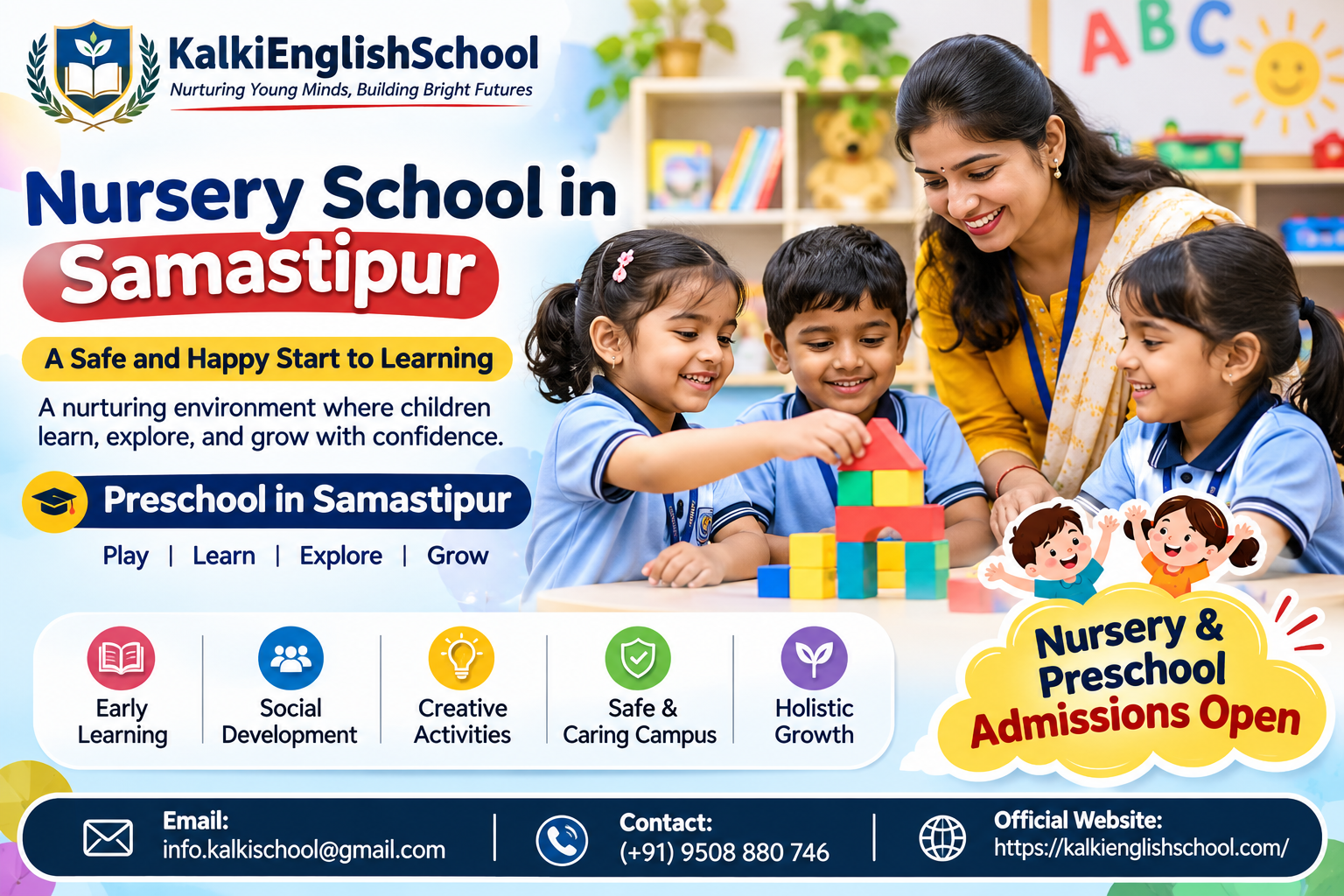
Beyond classroom lessons and basic academic concepts, activities involving movement, coordination, balance, and creative play can contribute to important foundational learning experiences.
For parents searching for a nursery school in samastipur, understanding how physical activities support children’s development can provide a useful perspective when comparing educational institutions.
Similarly, choosing a preschool in samastipur involves evaluating whether children receive appropriate opportunities to explore, move, interact, and develop practical skills through guided activities.
Physical development and early education are closely connected. Simple exercises such as building blocks, drawing, balancing, and playing with appropriate materials can help children develop coordination, confidence, and independence.
For families in Samastipur, Bihar, the focus should be on choosing a learning environment that encourages healthy development while respecting each child’s abilities.
Why Physical Development Matters in Nursery Education
Young children learn through movement, observation, and direct interaction with their surroundings.
Physical activities can support coordination, spatial awareness, and confidence in performing everyday tasks.
For example, arranging blocks helps children practise hand movements, while suitable outdoor games encourage balance and body coordination.
These experiences can also create opportunities for cooperation and problem-solving.
Nursery programmes should therefore provide a suitable balance between guided activities, creative exploration, and opportunities for rest.
What Is a Nursery School in Samastipur?
A nursery school in samastipur is an early education institution that introduces young learners to age-appropriate activities and foundational learning experiences.
Depending on the school’s curriculum, children may participate in drawing, storytelling, music, educational games, and movement-based activities.
These experiences can support communication, coordination, independence, and social interaction.
However, nursery programmes differ between institutions.
Parents should review the actual educational approach, supervision arrangements, and available learning facilities before completing admission.
A suitable learning environment should recognise that children develop different skills at different rates.
Understanding Preschool in Samastipur
A preschool in samastipur provides introductory learning experiences before children progress into more formal schooling.
Preschool education commonly combines creative activities, communication, movement, and social learning.
Children may explore colours, shapes, numbers, and familiar objects through practical activities.
For example, sorting colourful objects can introduce basic classification skills while encouraging hand-eye coordination.
The objective is to help children learn through enjoyable and developmentally appropriate experiences.
A well-planned preschool programme should avoid unnecessary academic pressure.
Understanding Fine Motor Skills
Fine motor skills involve the controlled movement of smaller muscles, particularly in the hands and fingers.
These skills are important for everyday activities such as holding objects, turning pages, drawing, and using suitable classroom materials.
Nursery activities that may support fine motor development include:
- Building with age-appropriate blocks.
- Drawing with suitable crayons.
- Arranging large beads or other safe learning materials.
- Folding paper under supervision.
- Using child-friendly modelling materials.
Activities must be selected according to children’s ages and abilities.
Small objects that create choking hazards should not be provided to children for whom they are unsafe.
How Gross Motor Activities Support Development
Gross motor skills involve larger body movements such as walking, running, balancing, and jumping.
These abilities help children develop coordination and participate in physical activities.
Suitable movement games may encourage body awareness and confidence.
For example, guided obstacle activities can introduce concepts such as direction, distance, and balance.
However, physical activities should be adapted to each child’s abilities.
Teachers should provide appropriate supervision and ensure that activity spaces are suitable for young learners.
Comparing Fine and Gross Motor Learning
| Development Area | Example Activities | Potential Learning Benefits |
| Fine Motor Skills | Drawing and block building | Hand coordination and control |
| Gross Motor Skills | Walking and balancing games | Movement and body awareness |
| Hand-Eye Coordination | Sorting and stacking objects | Visual and physical coordination |
| Creative Movement | Music and action activities | Expression and rhythm |
| Group Play | Cooperative movement games | Social interaction and teamwork |
A balanced programme can include different activities without expecting identical performance from every child.
Why Outdoor Learning Can Be Valuable
Outdoor environments can provide opportunities for movement, observation, and practical exploration.
Children may learn about plants, weather, colours, and surrounding objects through supervised activities.
Suitable outdoor experiences can also encourage curiosity and physical activity.
However, outdoor learning requires careful safety planning.
Schools should consider supervision, play equipment, drinking water, sanitation, and appropriate protection from excessive heat.
In Samastipur, outdoor activities should also reflect local weather conditions.
The quality of the learning experience matters more than the size of the playground alone.
Supporting Children With Different Physical Abilities
Children differ in mobility, coordination, confidence, and developmental needs.
An inclusive nursery environment should offer appropriate ways for children to participate in activities.
Some learners may need modified materials, additional assistance, or alternative movement exercises.
Teachers should avoid comparing children solely according to physical performance.
Instead, the emphasis should remain on participation, learning opportunities, and individual progress.
Parents can ask schools how they accommodate different developmental requirements and communicate relevant concerns.
How Parents Can Encourage Physical Learning at Home
Families can support early development through simple, safe activities.
Drawing, arranging toys, dancing to music, and helping with age-appropriate household tasks can provide learning opportunities.
Parents may encourage children to describe what they are doing and explore different shapes or colours.
However, activities should remain enjoyable rather than becoming formal performance tests.
Children also need sufficient opportunities for rest and unstructured play.
Parents should supervise activities and choose materials suitable for their child’s developmental stage.
What Parents Should Check During Nursery Admission
When comparing educational institutions, parents should evaluate the complete learning environment.
Important considerations include:
- Learning Activities: Are creative and physical experiences included?
- Safety: Are classrooms and activity spaces appropriately supervised?
- Teaching Approach: Do educators encourage individual development?
- Inclusive Learning: Can activities accommodate different abilities?
- Parent Communication: How does the school share information about progress?
- Admission Transparency: Are eligibility, documentation, and fees explained clearly?
Families should also confirm the school’s available classes and relevant admission policies.
Frequently Asked Questions (FAQs)
1. What is a nursery school in Samastipur?
It is an early education institution offering age-appropriate learning activities that introduce children to foundational skills, communication, creativity, and social interaction.
2. What does a preschool in Samastipur typically teach?
Preschool programmes may introduce basic language, number concepts, creative expression, physical coordination, and cooperative activities.
3. Why are physical activities important in nursery education?
Suitable physical activities can support coordination, movement skills, confidence, and opportunities for learning through practical experiences.
4. What are fine motor skills in early childhood?
Fine motor skills involve controlled hand and finger movements used for activities such as drawing, building, and handling objects.
5. How can parents choose a suitable nursery school?
Parents should evaluate teaching methods, activity programmes, safety arrangements, inclusive practices, parent communication, and admission requirements.
Media Contact
Department: Nursery and Preschool Admission Enquiries
Location: Samastipur, Bihar, India
Phone: (+91) 9508 880 746
Email: info.kalkischool@gmail.com
Official Website: https://kalkienglishschool.com/