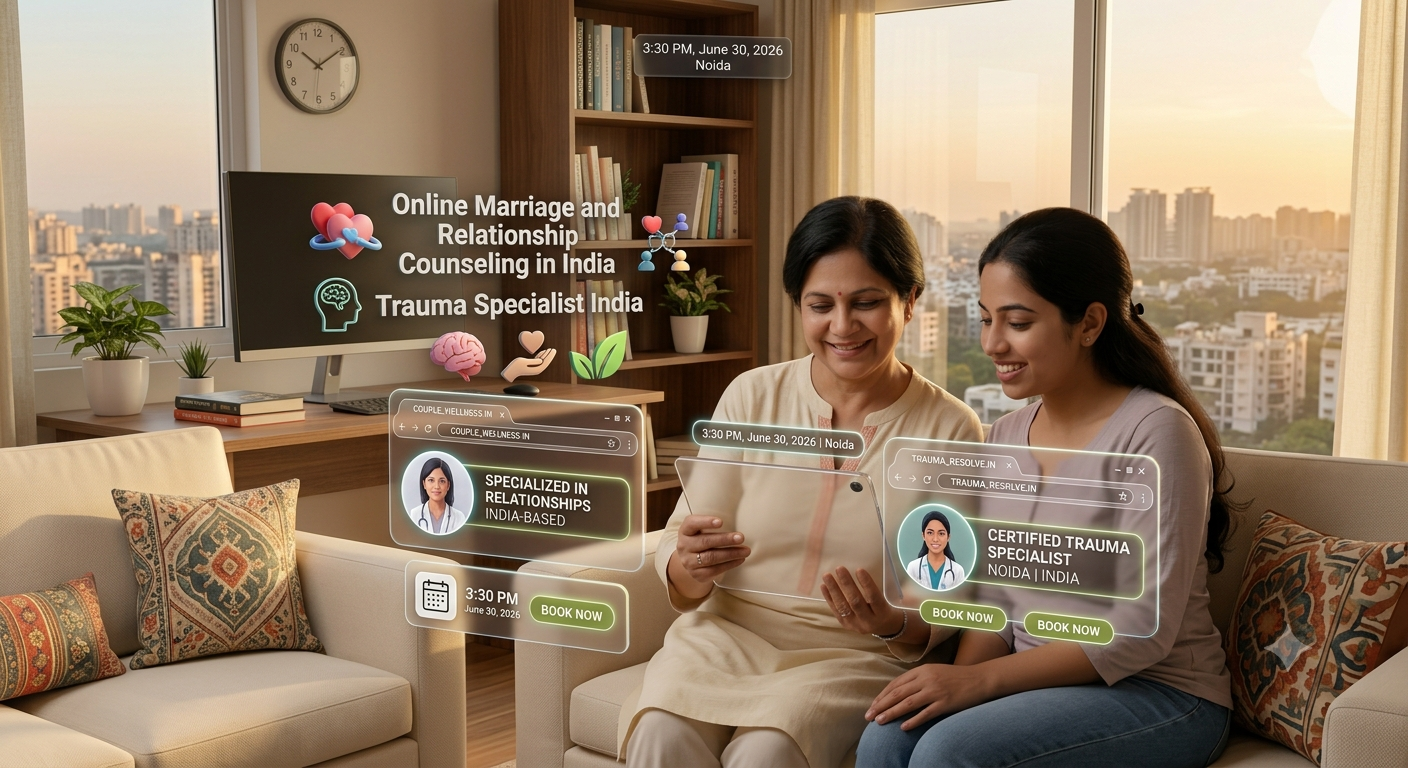
Relationships can be deeply rewarding, but even strong couples may experience periods of conflict, emotional distance, mistrust, communication breakdowns, or unresolved pain. In India, changing lifestyles, long-distance relationships, work pressure, family expectations, financial stress, and differences in personal values can all influence a couple’s emotional well-being. When these challenges become difficult to manage alone, professional support can provide a structured and confidential space for healing.
Online marriage and relationship counseling in India has made professional guidance more accessible to couples who may find it difficult to attend traditional in-person sessions. At the same time, individuals dealing with abuse, grief, betrayal, childhood experiences, or other distressing events may benefit from working with a trauma specialist in India who understands how past experiences can affect present relationships.
This guide explains how relationship counseling works, when trauma-focused support may be appropriate, and how couples can make informed decisions about seeking professional help.
Understanding Online Marriage and Relationship Counseling in India
Online counseling allows couples or individuals to meet a qualified mental health professional through secure video, audio, or other digital communication platforms. Sessions may be attended together or separately, depending on the relationship concerns and the counselor’s approach.
The goal is not simply to determine who is right or wrong. Instead, counseling can help people understand recurring patterns and develop healthier ways of responding to one another.
Common concerns addressed through relationship counseling include:
- Frequent arguments and unresolved conflicts
- Communication difficulties
- Emotional disconnection
- Trust issues and infidelity
- Premarital concerns
- Differences in expectations
- Intimacy and affection concerns
- Family and in-law conflicts
- Parenting disagreements
- Long-distance relationship challenges
- Separation or divorce-related decisions
Why Couples Choose Online Counseling
For many people, online sessions offer greater convenience and privacy. Couples living in different cities can attend the same session without traveling, while individuals who feel uncomfortable visiting a clinic may find virtual counseling easier to begin.
Some potential advantages include:
- Flexible scheduling around work and family responsibilities.
- Access to professionals outside the individual’s immediate location.
- Easier participation for long-distance couples.
- Reduced travel time and logistical challenges.
- A familiar environment that may help some clients feel comfortable.
However, online counseling is not automatically suitable for every situation. A qualified professional should assess whether virtual sessions are appropriate based on the client’s circumstances, safety, emotional needs, and clinical concerns.
How Relationship Counseling Can Help
A skilled relationship counselor focuses on the interaction between people rather than treating one partner as the sole source of the problem. The counselor may help couples identify patterns such as criticism, withdrawal, defensiveness, avoidance, or repeated misunderstandings.
A typical counseling process may involve:
Identifying the Core Problem
The first step is understanding what brought the couple to counseling. Sometimes the visible problem—such as frequent arguments—is only a symptom of deeper concerns involving insecurity, unmet emotional needs, or unresolved resentment.
Improving Communication
Counseling can teach couples to communicate feelings and needs more clearly. Instead of blaming or criticizing, partners may learn to express concerns in ways that encourage constructive discussion.
Understanding Emotional Patterns
Many relationship conflicts follow predictable cycles. One partner may seek reassurance while the other withdraws, creating a pattern that intensifies over time. Recognizing these cycles can help couples respond differently.
Rebuilding Trust
When trust has been damaged, rebuilding it generally requires honesty, consistency, accountability, and patience. Counseling can provide a structured environment for addressing difficult conversations and establishing realistic expectations.
When a Trauma Specialist in India May Be Helpful
Trauma can influence relationships in ways that are not always immediately obvious. A person who has experienced childhood neglect, violence, abuse, loss, accidents, betrayal, or other overwhelming events may carry emotional responses into adulthood.
A trauma specialist in India may help individuals understand how past experiences affect present emotions, relationships, boundaries, and reactions to stress.
Possible signs that trauma-focused support may be worth considering include:
- Persistent fear or anxiety after a distressing experience
- Strong emotional reactions that seem difficult to control
- Difficulty trusting others
- Avoidance of situations associated with painful memories
- Emotional numbness or detachment
- Recurring nightmares or intrusive memories
- Difficulty establishing personal boundaries
- Feeling constantly alert or unsafe
- Repeated relationship patterns connected to past experiences
Trauma-informed care does not mean forcing someone to discuss painful experiences before they are ready. A responsible professional prioritizes safety, consent, emotional stability, and the individual’s pace of treatment.
Relationship Counseling vs. Trauma-Focused Support
| Area | Relationship Counseling | Trauma-Focused Support |
| Primary focus | Relationship dynamics | Effects of traumatic experiences |
| Typical participants | Couples or partners | Often individuals, sometimes couples |
| Main concerns | Conflict, communication, trust | Trauma responses, fear, emotional distress |
| Goal | Improve relationship functioning | Support healing and emotional regulation |
| Approach | Communication and relational strategies | Trauma-informed therapeutic approaches |
In some cases, both forms of support may complement each other. For example, unresolved trauma may contribute to relationship difficulties, while ongoing relationship conflict may increase emotional distress. A qualified professional can help determine the most appropriate starting point.
Choosing the Right Professional
Finding the right counselor is an important part of the process. People searching for online marriage and relationship counseling in India should consider the professional’s education, qualifications, experience, therapeutic approach, and ability to work with the specific issue.
Before beginning sessions, consider asking:
- What are your professional qualifications?
- Do you work with couples or relationship concerns?
- Do you have experience with trauma-related issues?
- How are online sessions conducted?
- How is confidentiality handled?
- What happens if one partner does not want counseling?
- How frequently are sessions recommended?
- How will progress be evaluated?
For trauma-related concerns, it can be particularly important to seek someone with relevant training and experience rather than choosing a professional solely based on convenience.
When Couples Should Seek Help
Many couples wait until a problem becomes severe before contacting a professional. Early support may make it easier to address unhealthy patterns before resentment becomes deeply established.
Consider professional guidance when:
- The same argument keeps repeating without resolution.
- Communication has become consistently hostile or distant.
- Trust has been seriously damaged.
- One or both partners feel emotionally disconnected.
- A major life transition is creating ongoing conflict.
- Past trauma is affecting current relationship behavior.
- The couple is considering separation and wants structured support.
If there is immediate danger, violence, coercive control, or serious threats within a relationship, standard couples counseling may not be the appropriate first step. Safety and specialized support should take priority.
Frequently Asked Questions
1. What is online marriage counseling?
Online marriage counseling is professional relationship support delivered through digital platforms, allowing couples to communicate with a counselor remotely.
2. Is online relationship counseling effective?
It can be helpful for many couples, particularly when the participants are comfortable with virtual communication and the counselor determines that online treatment is appropriate.
3. Can couples attend counseling from different cities?
Yes. Online sessions can make it possible for partners living in separate locations to participate together, subject to the counselor’s policies and technical requirements.
4. What does a trauma specialist do?
A trauma specialist supports individuals experiencing emotional or psychological difficulties associated with traumatic or overwhelming experiences.
5. Can trauma affect romantic relationships?
Yes. Trauma may influence trust, emotional regulation, communication, attachment, boundaries, and responses to conflict.
6. Should I choose a relationship counselor or trauma specialist?
The choice depends on the primary concern. Relationship-focused problems may benefit from couples counseling, while significant trauma symptoms may require trauma-informed individual support.
7. Can one partner attend counseling alone?
Yes. Individual counseling can sometimes help one partner understand personal emotions, behaviors, and relationship patterns.
8. How long does relationship counseling take?
There is no universal timeline. The duration depends on the complexity of the concerns, goals, participation, and progress made during therapy.
9. Is online counseling confidential?
Professionals generally follow applicable ethical and privacy standards, but clients should ask how their information is protected and use a private environment for sessions.
10. When should professional help be considered?
Professional support may be appropriate when relationship problems become persistent, distressing, or difficult to resolve through personal communication.
https://newsgrow.blogspot.com/2026/06/best-couples-therapist-in-india-best.html