Modern businesses are increasingly dependent on digital display systems to communicate information, promote products, and improve operational efficiency. Whether it is a railway station displaying passenger updates, a retail store showcasing advertisements, or an industrial facility monitoring production data, displays play a critical role in everyday operations.
However, conventional display panels are not always suitable for specialized environments. Limited installation areas, outdoor lighting conditions, and continuous operating requirements have created the need for more advanced solutions. This has increased the importance of technologies such as bar type LCD display and high brightness LCD.
A bar type LCD display offers a unique wide and narrow structure that fits into compact spaces, while a high brightness LCD provides outstanding visibility in environments with strong ambient light. These technologies are becoming essential components in transportation, retail, automation, healthcare, and smart infrastructure projects.
The Evolution of Bar Type LCD Display Technology
A bar type LCD display represents a new generation of customized display solutions designed for applications where traditional screens cannot provide the required flexibility.
Unlike standard LCD monitors, these displays feature an extended horizontal or vertical format, making them ideal for delivering information in narrow spaces. Their specialized design allows businesses to maximize available space while maintaining excellent image quality.
The combination of compact structure, high resolution, and customization options makes bar LCD technology suitable for both commercial and industrial applications.
Important Features That Make Bar Type LCD Displays Different
Unique Wide-Screen Format
The most noticeable feature of a bar LCD display is its elongated design. This format allows companies to display more information in areas where standard screens may not fit.
Customizable Configuration
Manufacturers can modify display specifications according to project requirements, including:
- Screen dimensions
- Resolution options
- Brightness levels
- Interface compatibility
- Mounting design
Reliable Performance
Advanced bar LCD panels are developed for continuous operation, making them suitable for professional environments that require dependable performance.
Clear Information Presentation
The wide viewing area allows users to display scrolling messages, advertisements, schedules, and operational details with improved readability.
Where Are Bar Type LCD Displays Used?
The versatility of bar type LCD display technology has expanded its use across multiple industries.
Transportation and Smart Mobility
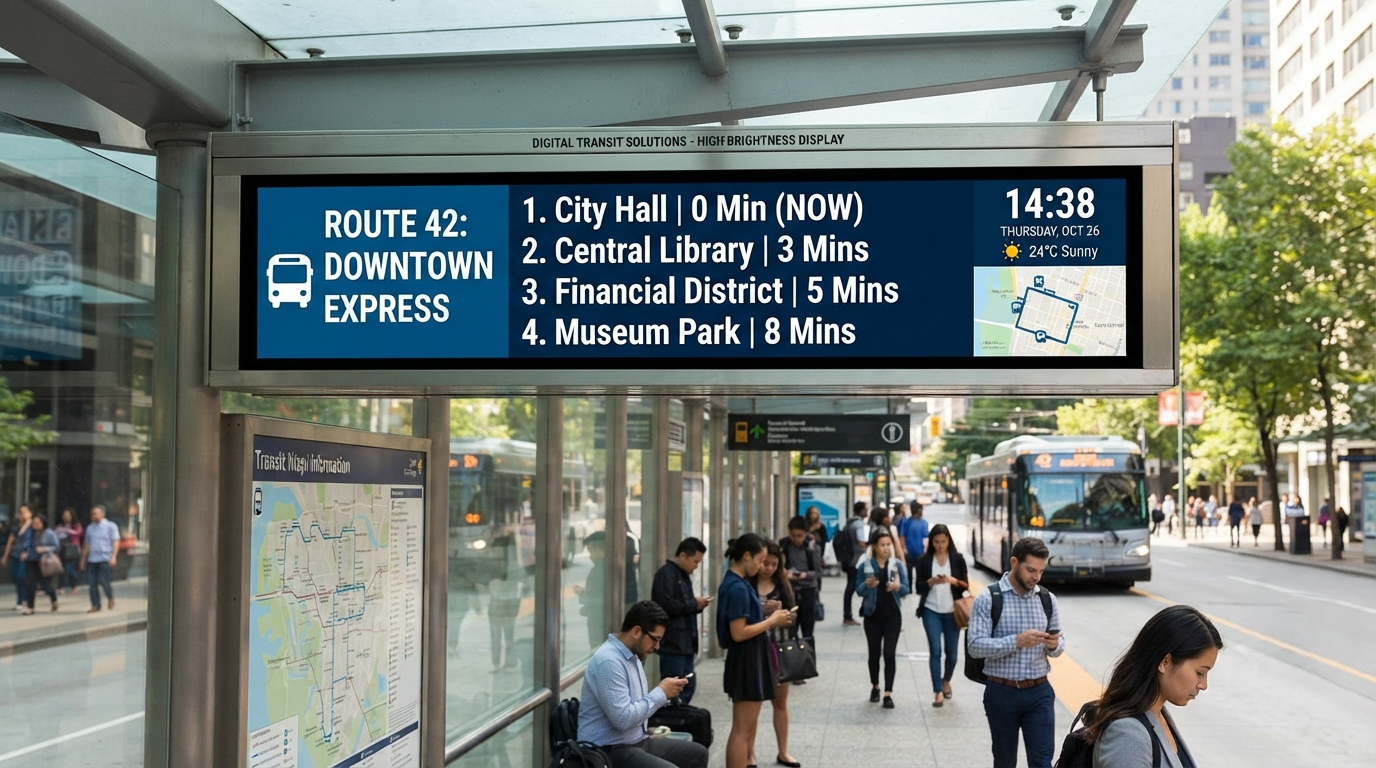
Transportation systems require quick and accurate communication. Bar LCD displays are widely used in:
- Train interiors
- Airport terminals
- Bus stations
- Metro platforms
- Navigation systems
These displays help passengers access important information such as arrival times, routes, safety instructions, and announcements.
Commercial and Retail Environments
Retail companies are adopting innovative display solutions to attract customers and improve shopping experiences.
Bar displays are commonly used for:
- Digital advertising
- Shelf-edge information
- Promotional campaigns
- Product details
Their modern appearance creates an engaging environment while maximizing limited display space.
Industrial and Manufacturing Applications
Industrial operations require displays that can provide real-time information. Bar type LCD solutions support:
- Machine monitoring
- Process visualization
- Production tracking
- Equipment management
Their durable construction makes them suitable for demanding industrial conditions.
Exploring the Benefits of High Brightness LCD Technology
A high brightness LCD is specifically engineered to deliver powerful illumination and excellent readability in challenging lighting environments.
Traditional displays may lose clarity when exposed to sunlight or intense indoor lighting. High brightness LCD technology solves this problem by using advanced backlight systems that produce higher brightness output.
These displays ensure that important information remains visible, accurate, and easy to read.
Why High Brightness LCD Displays Are Essential
Improved Outdoor Visibility
One of the biggest advantages of high brightness LCD panels is their ability to perform effectively in outdoor environments.
Applications such as:
- Outdoor digital signage
- Parking information systems
- Public kiosks
- Transportation displays
depend on high brightness technology for clear communication.
Enhanced User Experience
A bright and sharp display improves viewing comfort and allows users to understand information quickly.
Greater Operational Reliability
High brightness LCD systems are designed for demanding applications where displays need to operate for extended periods without performance issues.
Better Long-Term Value
Durable components and efficient performance help reduce maintenance costs and improve the overall return on investment.
Difference Between Bar Type LCD Display and High Brightness LCD
| Comparison Factor | Bar Type LCD Display | High Brightness LCD |
| Primary Focus | Unique display shape | Increased screen visibility |
| Design Style | Narrow and elongated | Standard or customized formats |
| Best Suitable For | Compact installation areas | Bright and outdoor environments |
| Main Advantage | Space optimization | Superior brightness output |
| Common Industries | Transportation, retail, automotive | Industrial, outdoor signage, public systems |
How to Choose the Best LCD Display Solution?
Selecting the right display technology requires understanding application needs and environmental conditions.
Analyze Installation Requirements
Businesses should evaluate available space, mounting options, and viewing distance before choosing a display.
Consider Environmental Conditions
Important factors include:
- Indoor or outdoor usage
- Temperature range
- Exposure to sunlight
- Dust and moisture conditions
Evaluate Technical Specifications
A reliable LCD solution should be selected based on:
- Display size
- Resolution quality
- Brightness level
- Power efficiency
- Durability
Partner With an Experienced Supplier
Working with an experienced LCD manufacturer ensures access to quality products, customization support, and technical expertise.
Future Opportunities in LCD Display Innovation
The display industry continues to advance with new technologies focused on better performance and smarter functionality.
Future bar type LCD display and high brightness LCD developments are expected to include:
- AI-based display management
- Touch and interactive features
- Improved energy efficiency
- Higher resolution screens
- IoT-enabled communication
- Advanced outdoor durability
As businesses continue adopting digital transformation strategies, these display technologies will become even more important for communication and automation.
Frequently Asked Questions About Bar Type LCD Display and High Brightness LCD
1. What is a bar type LCD display?
A bar type LCD display is a specially designed narrow and wide LCD panel used for applications requiring unique screen dimensions.
2. What are the main advantages of bar LCD displays?
They offer space efficiency, customization flexibility, high image quality, and reliable performance.
3. Where are high brightness LCD displays commonly installed?
They are used in outdoor signage, transportation systems, industrial environments, and public information displays.
4. Why is brightness important in LCD technology?
Higher brightness improves screen visibility and ensures clear content presentation under strong lighting conditions.
5. Can bar type LCD displays be customized?
Yes, manufacturers can customize screen size, resolution, brightness, and design according to specific requirements.
6. Are high brightness LCD panels suitable for industrial use?
Yes, they are designed to operate reliably in challenging industrial environments.
7. Do high brightness LCD displays consume more energy?
Modern models use efficient backlight technology to balance brightness performance and power consumption.
8. Can bar type LCD displays support multimedia content?
Yes, advanced models can display images, videos, advertisements, and real-time information.
9. How long do professional LCD displays last?
The lifespan depends on usage conditions and product quality, but industrial-grade models are designed for extended operation.
10. How can businesses select the right LCD technology?
Businesses should consider application type, installation environment, brightness requirements, and customization needs.
Read more – https://newsgrow.blogspot.com/2026/08/tft-lcd-module-and-tft-modules-drive.html
https://newsgrow.blogspot.com/2026/08/bar-type-lcd-display-and-high.html