Display technology has evolved significantly over the past decade, becoming one of the most important components in modern electronic devices. Whether it’s a medical monitor, industrial control panel, automotive dashboard, or smart home appliance, the quality of the display directly affects user experience and operational efficiency.
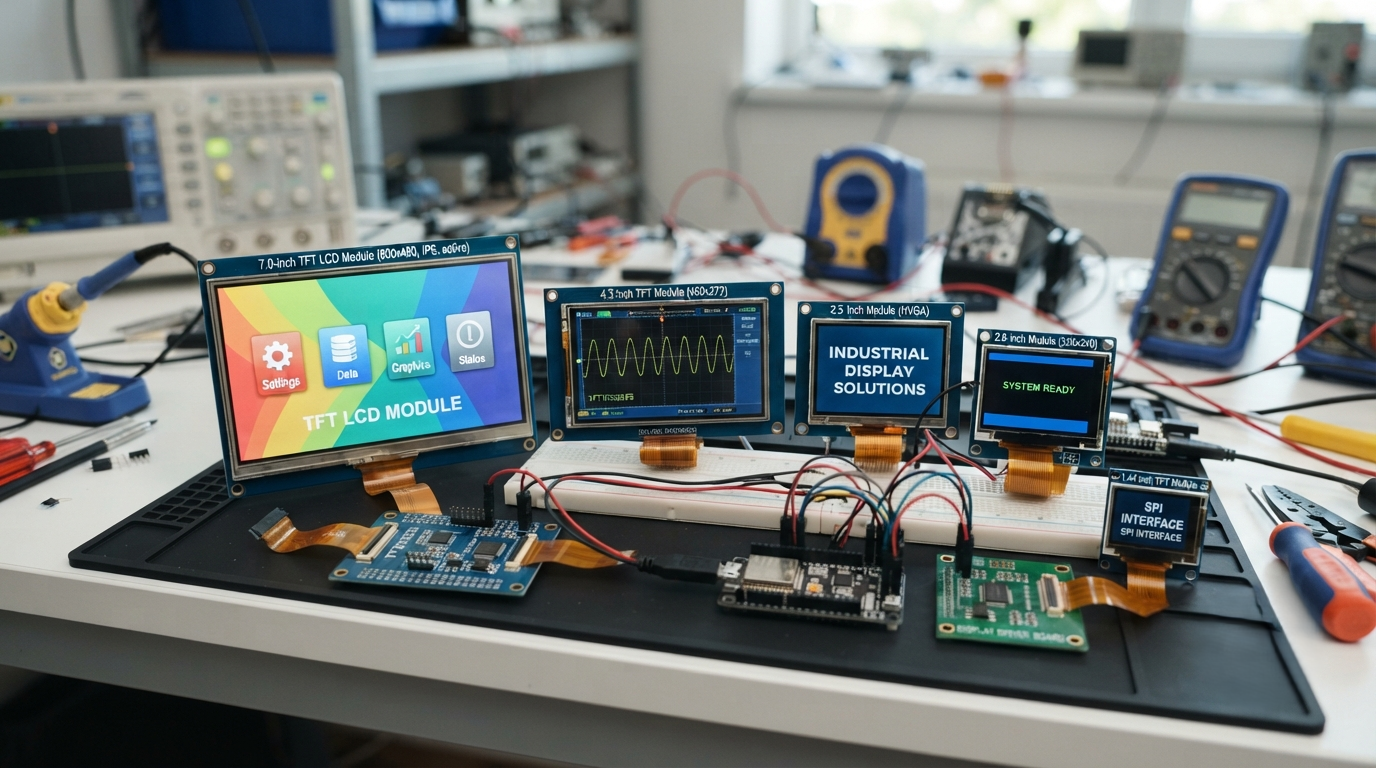
Among today’s most reliable display technologies, the TFT LCD Module has established itself as a preferred solution for manufacturers worldwide. Known for delivering vibrant colors, high resolution, fast response times, and exceptional durability, TFT Modules are helping businesses develop smarter, more interactive products.
This guide explores everything you need to know about TFT display technology, its advantages, applications, and how to choose the right solution for your next project.
What Is a TFT LCD Module?
Understanding the Technology Behind the Display
A TFT LCD Module is a display system that uses Thin Film Transistor (TFT) technology to control individual pixels. Unlike conventional LCD displays, TFT technology provides dedicated transistors for every pixel, resulting in sharper images, smoother graphics, and improved color performance.
This technology is designed to deliver consistent visual quality while maintaining low power consumption, making it suitable for both consumer and industrial applications.
Main Features
Advanced Display Performance
- High-definition image quality
- Rich and accurate colors
- Wide viewing angles
- Fast refresh rates
- Excellent brightness
- Long operational life
- Energy-efficient design
- Compact structure
These characteristics make TFT Modules one of the most versatile display solutions available today.
Why Industries Prefer TFT Modules
Meeting Modern Display Requirements
Businesses need displays that can operate continuously without sacrificing image quality or reliability. A TFT LCD Module offers an excellent balance of performance, durability, and affordability.
Benefits for Manufacturers
- Improves product appearance
- Enhances user interaction
- Supports graphical interfaces
- Reduces maintenance costs
- Provides reliable long-term operation
- Easy integration into embedded systems
- Available in multiple sizes and resolutions
- Compatible with touch technologies
These advantages have made TFT Modules a preferred choice for original equipment manufacturers (OEMs) across the globe.
Applications of TFT LCD Module Technology
Supporting Diverse Industries
One of the biggest strengths of TFT Modules is their flexibility. They are used in products ranging from compact handheld devices to sophisticated industrial systems.
Common Industries
Industrial Automation
Factory equipment uses TFT displays to monitor machinery, production data, and operational status in real time.
Medical Equipment
Healthcare devices rely on high-quality displays for accurate patient monitoring and diagnostic imaging.
Automotive
Digital instrument clusters, navigation systems, and infotainment units increasingly depend on TFT technology.
Consumer Electronics
Smart appliances, tablets, handheld devices, and portable electronics benefit from vibrant, responsive displays.
Retail and Commercial Systems
Self-service kiosks, POS terminals, vending machines, and digital signage use TFT LCD Module technology to improve customer interaction.
Key Advantages Compared with Other Display Technologies
Understanding the Difference
| Feature | TFT LCD Module | Standard LCD | OLED |
| Display Quality | Excellent | Good | Excellent |
| Brightness | High | Medium | High |
| Response Time | Fast | Moderate | Very Fast |
| Industrial Reliability | Excellent | Good | Moderate |
| Burn-In Issue | No | No | Possible |
| Cost Efficiency | Excellent | High | Moderate |
For applications requiring dependable operation over long periods, TFT Modules continue to offer outstanding value.
Customization Options for TFT Modules
Designed Around Your Product
Modern electronic products often require customized display solutions rather than standard configurations.
Popular Custom Features
Hardware Options
- Display size
- Screen resolution
- Interface selection
- Brightness adjustment
- Touch panel integration
Mechanical Options
- Protective glass
- Housing design
- Connector placement
- Mounting configuration
Software Support
- Display firmware
- Graphic interface optimization
- Driver compatibility
Customization enables manufacturers to create products that precisely match their operational requirements.
Factors to Consider Before Choosing a TFT LCD Module
Making the Right Investment
Before selecting a display solution, evaluate your application’s technical requirements.
Important Considerations
- Required display size
- Resolution needs
- Indoor or outdoor usage
- Brightness level
- Touchscreen requirement
- Operating temperature
- Communication interface
- Power consumption
- Product lifespan
- Customization requirements
Considering these factors helps ensure optimal performance and long-term reliability.
Future Trends in TFT Display Technology
Innovation Continues to Drive Growth
The display industry continues to evolve with new advancements focused on improving efficiency and user experience.
Emerging Trends
- Higher resolution displays
- IPS technology adoption
- Ultra-thin modules
- AI-enabled display interfaces
- Flexible display integration
- Improved sunlight readability
- Lower power consumption
- Enhanced durability for industrial environments
These innovations ensure that TFT LCD Module technology remains relevant in rapidly changing markets.
Frequently Asked Questions
1. What is a TFT LCD Module?
It is a display module that uses Thin Film Transistor technology to deliver high-quality images with excellent brightness and color accuracy.
2. What are TFT Modules commonly used for?
Industrial automation, medical devices, automotive systems, consumer electronics, retail equipment, and IoT applications.
3. Do TFT displays support touch functionality?
Yes. Many models are available with capacitive or resistive touchscreens.
4. Are TFT LCD Modules suitable for industrial environments?
Absolutely. Many are designed for vibration resistance, temperature stability, and continuous operation.
5. Which communication interfaces are available?
Common interfaces include SPI, RGB, LVDS, HDMI, MIPI, and MCU.
6. Can TFT Modules be customized?
Yes. Manufacturers provide customization for size, brightness, touch, connectors, firmware, and mechanical design.
7. Are TFT LCD Modules energy efficient?
Yes. They deliver excellent display performance while maintaining efficient power usage.
8. How long do TFT displays typically last?
High-quality modules can operate reliably for many years under normal conditions.
9. Why are TFT Modules preferred over conventional LCD displays?
They provide superior image quality, faster response, better color reproduction, and improved viewing angles.
10. What industries benefit most from TFT LCD Module technology?
Manufacturing, healthcare, transportation, retail, telecommunications, agriculture, consumer electronics, and smart home industries.
Read more – https://newsgrow.blogspot.com/2026/08/tft-lcd-module-and-tft-modules-drive.html