
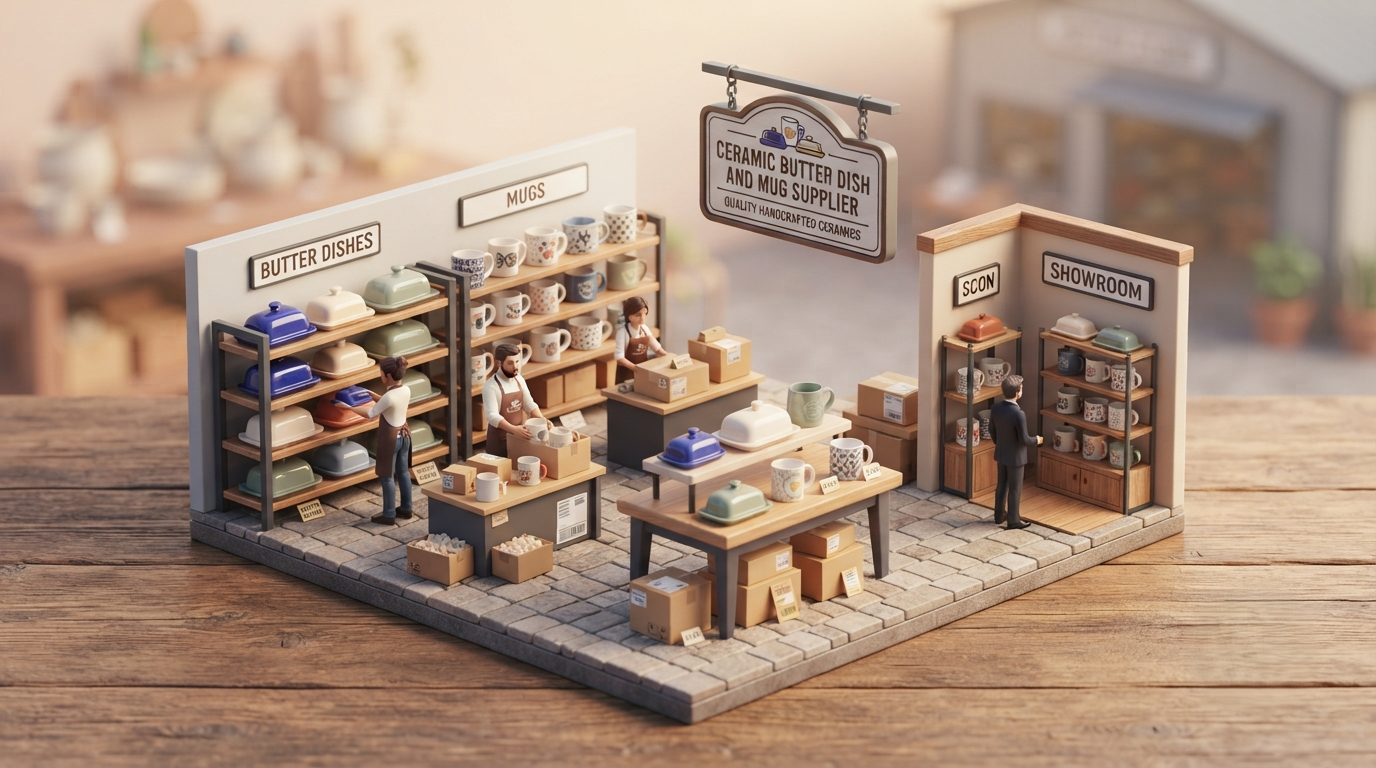
Walk into a thoughtfully designed kitchen or café and you will notice that even the smallest tableware pieces contribute to the overall experience. A stylish Ceramic Butter Dish can transform an ordinary breakfast table, while a well-made mug can make the daily ritual of coffee or tea more enjoyable.
For retailers, hospitality businesses, importers and private-label brands, however, these products represent more than aesthetics. Selecting the right Ceramic Mug Supplier and butter dish manufacturer involves decisions about ceramic quality, design, glazing, customisation, durability, packaging and production consistency.
So, what actually separates good ceramic tableware from an average product? And what should businesses consider before placing a wholesale order? This guide explores the details.
Why Ceramic Tableware Continues to Stand Out
Trends in homeware change regularly, but ceramic remains a familiar choice for everyday tableware.
One reason is versatility. Ceramic can support minimalist, traditional, rustic, contemporary and decorative styles without changing its fundamental functionality.
Manufacturers can experiment with:
- Glossy and matte surfaces
- Neutral and vibrant colours
- Textured finishes
- Printed patterns
- Reactive glaze effects
- Embossed details
- Custom logos and artwork
This versatility allows a Ceramic Butter Dish or mug to fit into everything from a simple breakfast collection to premium gift packaging.
The Ceramic Butter Dish Is More Than a Kitchen Container
At first glance, a butter dish has a straightforward purpose: hold butter and keep it covered. In reality, good product design requires considerably more thought.
A properly designed Ceramic Butter Dish should have a stable base, sufficient internal space and a lid that fits comfortably without touching the butter unnecessarily.
The lid also needs to be easy to lift. Small details such as the shape of the handle, edge finishing and weight can influence everyday usability.
For commercial buyers, important features include:
- Suitable internal dimensions
- Stable construction
- Smooth surface finishing
- Proper lid-to-base fit
- Consistent glaze application
- Attractive proportions
- Protective packaging
A product can look impressive in photographs but still disappoint customers if the lid is awkward or the base rocks on a flat surface.
Why Design Matters When Selling Ceramic Butter Dishes
Modern consumers often choose kitchenware as part of their interior style.
A minimalist white Ceramic Butter Dish, for example, can complement Scandinavian-inspired kitchens. Earthy colours and reactive finishes can work beautifully within rustic collections, while colourful patterns may appeal to buyers looking for statement tableware.
This gives retailers an opportunity to treat butter dishes as part of coordinated collections rather than standalone utility products.
Matching them with mugs, plates, bowls and serving pieces can create a more cohesive product range.
What Should You Expect From a Ceramic Mug Supplier?
Finding a Ceramic Mug Supplier online is easy. Finding one capable of maintaining quality across repeat orders requires more careful evaluation.
A professional supplier should understand that commercial buyers need consistency.
Imagine ordering 1,000 branded mugs for a café chain. The first batch has a warm cream glaze, while the next appears noticeably different. Or the logo position varies from one piece to another. Individually, the mugs might still function perfectly, but the brand presentation suffers.
This is why buyers should evaluate production processes rather than simply comparing catalogue prices.
Small Mug Details That Make a Big Difference
People may use their favourite mug hundreds of times. Ergonomics therefore matters just as much as appearance.
The Handle
A handle should feel comfortable and proportionate to the mug. It needs enough space for practical use while maintaining balance when the mug contains a beverage.
The Rim
The drinking edge should feel smooth and properly finished. Rim thickness also influences the drinking experience.
The Base
A quality mug should sit steadily on a level surface without unnecessary movement.
The Capacity
Never assume capacity based purely on photographs. Ask your Ceramic Mug Supplier for actual dimensions and volume specifications before placing an order.
Ceramic Butter Dish vs Ceramic Mug
| Feature | Ceramic Butter Dish | Ceramic Mug |
| Main purpose | Storing and serving butter | Serving beverages |
| Critical design feature | Lid and base compatibility | Handle and rim comfort |
| Popular finishes | Glossy, matte, reactive | Glossy, matte, printed, reactive |
| Custom branding | Available | Highly popular |
| Typical buyers | Homeware and kitchen retailers | Cafés, hotels, retailers, companies |
| Key measurement | Internal dimensions | Capacity |
| Packaging priority | Protect lid and base | Protect handle and body |
Although both products belong to ceramic tableware, their quality requirements are not identical.
Custom Ceramic Products Can Strengthen a Brand
Private-label tableware gives businesses greater control over how products look and feel.
Depending on production capabilities, a Ceramic Mug Supplier may offer customisation such as:
- Custom colours
- Brand logos
- Artwork and patterns
- Decal decoration
- Different mug shapes
- Special glaze finishes
- Individual retail boxes
- Gift packaging
Butter dishes can similarly be customised through shape, colour, decoration and packaging.
For retailers, this can turn generic tableware into a recognisable collection.
How to Evaluate a Ceramic Sample Before Ordering
Samples are one of the most valuable parts of ceramic sourcing.
Do not simply unpack a sample, look at it and approve production. Use it as a real customer would.
Hold the mug. Fill it with water. Check its balance. Examine the handle and drinking rim.
For a Ceramic Butter Dish, place an appropriately sized butter block inside, position the lid and check whether it closes comfortably.
Look closely for:
- Surface imperfections
- Cracks or chips
- Rough edges
- Unstable bases
- Noticeable glaze inconsistencies
- Incorrect dimensions
- Poorly positioned decoration
For custom products, compare the sample against the approved artwork and specifications.
Packaging Should Never Be an Afterthought
Ceramic products may travel thousands of kilometres before reaching a retail shelf.
A beautifully manufactured mug has little commercial value if it arrives with a broken handle.
Your Ceramic Mug Supplier should therefore be able to discuss packaging requirements according to the product and shipping method.
Protective inserts, individual boxes, dividers and suitable outer cartons may be used depending on order requirements.
For gift-oriented products, packaging serves two purposes: transportation protection and presentation.
Questions to Ask Before Choosing a Supplier
Before committing to a bulk order, have a detailed conversation with the manufacturer or supplier.
Ask questions such as:
- What ceramic products do you specialise in?
- What customisation options are available?
- What are your minimum order quantities?
- Can you provide production samples?
- How do you maintain colour consistency?
- What packaging options do you provide?
- What are the expected production timelines?
- Can you support repeat orders?
- What quality-control procedures are followed?
- What relevant testing or compliance documentation can be provided?
The answers can reveal far more about a supplier than the lowest quotation.
Frequently Asked Questions
What is a Ceramic Butter Dish used for?
A Ceramic Butter Dish provides a practical and attractive way to store, cover and present butter.
What makes a good ceramic butter dish?
Look for appropriate dimensions, stable construction, smooth glazing, comfortable lid handling and good overall finishing.
How do I find a reliable Ceramic Mug Supplier?
Evaluate samples, manufacturing experience, quality control, customisation, packaging capabilities and communication.
Can ceramic mugs have custom logos?
Yes. Many suppliers offer logos, artwork, patterns and other customised decoration depending on production requirements.
Can I customise a ceramic butter dish?
Yes. Possible options may include colours, patterns, decals, shapes and branded packaging.
Are ceramic mugs suitable for restaurants and cafés?
Yes. Ceramic mugs are commonly used across cafés, restaurants, hotels and other hospitality environments.
Can ceramic tableware be private-labelled?
Yes. Many manufacturers support private-label projects, although minimum quantities and customisation capabilities vary.
Why should buyers request ceramic samples?
Samples help buyers assess dimensions, colour, glazing, weight, ergonomics and overall workmanship before bulk production.
Which finish is better: matte or glossy?
Neither is universally better. The right finish depends on your design concept, intended use and target customer.
How should ceramic mugs be packaged?
Packaging should protect vulnerable areas such as handles and rims using appropriate boxes, dividers or protective inserts.
Can mugs and butter dishes be sold as a collection?
Yes. Coordinated colours and finishes can help retailers create attractive kitchenware and breakfast collections.
What details should I provide when requesting a quote?
Provide quantities, dimensions, colours, capacity, artwork, packaging requirements, customisation details and delivery destination.
https://newsgrow.blogspot.com/2026/08/ceramic-coaster-and-ceramic-canister.html
https://newsgrow.blogspot.com/2026/08/ceramic-butter-dish-and-ceramic-mug.html