Modern biotechnology depends on the ability to design, produce, and study DNA with speed and accuracy. From academic research and drug discovery to diagnostics and synthetic biology, scientists need reliable genetic materials that match their experimental goals. Two widely used technologies supporting these applications are DNA oligo synthesis and plasmid synthesis.
Although both involve custom DNA production, they serve different purposes. DNA oligos are typically short, precisely designed DNA sequences used for primers, probes, cloning, sequencing, and other molecular applications. Plasmid synthesis, on the other hand, focuses on producing larger circular DNA constructs that can carry genes, regulatory elements, reporters, or other functional sequences.
Understanding how these services differ—and when to use each—can help researchers select the right solution for their projects.
What Is DNA Oligo Synthesis?
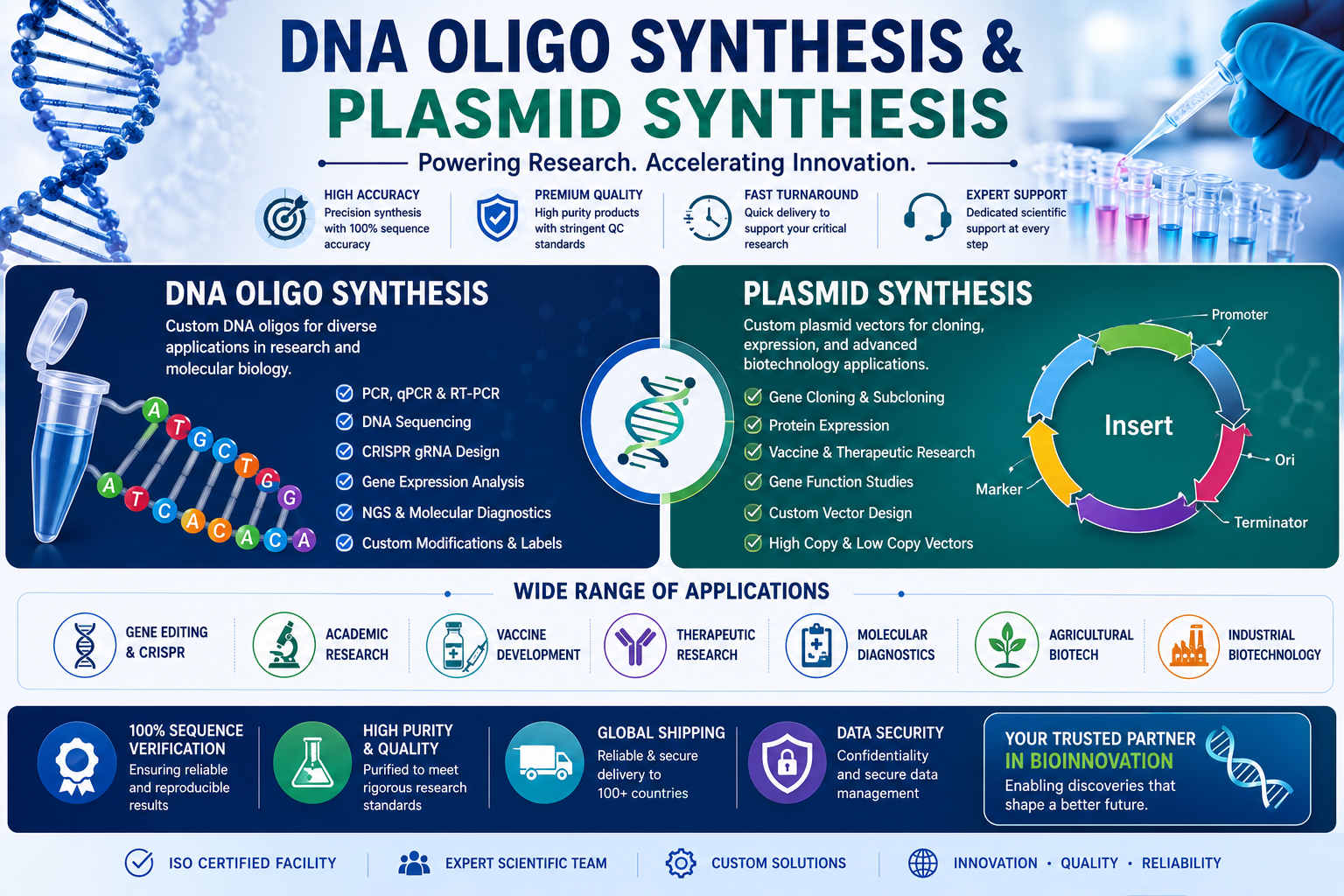
DNA oligo synthesis is the process of chemically producing short, single-stranded DNA sequences according to a customer’s specific design. These synthetic oligonucleotides, commonly called oligos, can be created with customized sequences and, depending on the application, may include modifications or purification options.
The technology has become a fundamental resource in molecular biology because researchers no longer need to rely exclusively on naturally occurring DNA sequences. Instead, they can order DNA oligos designed for highly specific experimental requirements.
Common Applications of DNA Oligos
Synthetic oligos are used across a wide range of laboratory workflows, including:
- PCR and quantitative PCR primer design
- DNA sequencing
- Gene cloning
- Site-directed mutagenesis
- Genotyping
- Molecular diagnostics
- Hybridization assays
- Gene expression studies
- CRISPR-related research
- Synthetic biology
- Next-generation sequencing workflows
The ability to customize sequence length, purification, and chemical modifications makes oligos adaptable to many research environments.
Why Quality Matters
The performance of a molecular biology experiment can depend heavily on the quality of the DNA being used. Sequence accuracy, purity, concentration, and appropriate quality control are important considerations when selecting a synthesis provider.
Researchers may also require specialized modifications, such as fluorescent labels or other chemical groups, depending on the intended application. The right specification can improve experimental consistency and reduce the need for troubleshooting.
What Is Plasmid Synthesis?
Plasmid synthesis involves the design and production of custom plasmid DNA constructs. Plasmids are generally circular DNA molecules that can contain one or more genetic elements selected for a specific research purpose.
A custom plasmid may include a gene of interest, promoter, terminator, selectable marker, reporter sequence, or other functional components. Researchers can therefore create constructs tailored to their experimental objectives.
Where Plasmid Synthesis Is Used
Plasmid DNA is widely used in:
- Recombinant protein research
- Gene expression studies
- Synthetic biology
- Functional genomics
- Gene editing research
- Vaccine development research
- Cell biology
- Biotechnology development
For researchers working with complex genetic designs, plasmid synthesis can simplify the process of moving from a digital sequence concept to a physical DNA construct.
Key Components of a Plasmid
A plasmid may contain several functional elements, depending on its purpose:
- Promoter: Helps regulate gene expression.
- Gene of interest: Encodes the desired protein or functional sequence.
- Selectable marker: Helps identify cells containing the plasmid.
- Origin of replication: Supports plasmid maintenance in an appropriate host system.
- Terminator: Helps regulate transcription.
- Reporter gene: Can provide a measurable signal for experimental analysis.
The exact configuration depends on the research application and the desired biological outcome.
DNA Oligo Synthesis vs. Plasmid Synthesis
While both technologies provide custom DNA, they differ significantly in size, structure, complexity, and typical use.
| Feature | DNA Oligo Synthesis | Plasmid Synthesis |
| Typical structure | Short, single-stranded DNA | Larger circular DNA |
| Main purpose | Primers, probes, sequencing, cloning | Gene expression and complex constructs |
| Design complexity | Low to moderate | Moderate to high |
| Common applications | PCR, sequencing, diagnostics | Recombinant DNA and synthetic biology |
| Customization | Sequence and modifications | Multiple genetic elements |
| Typical workflow | Chemical DNA synthesis | DNA assembly and plasmid preparation |
| Best suited for | Short DNA requirements | Larger functional DNA constructs |
Choosing between the two depends primarily on the project’s goals, sequence requirements, and downstream application.
How to Choose the Right DNA Synthesis Service
Selecting a suitable provider involves more than comparing prices. Researchers should consider the technical requirements of their projects and the quality standards offered by the service provider.
1. Define Your Experimental Goal
Start by identifying what the DNA will be used for. A short sequence needed as a PCR primer has very different requirements from a plasmid designed for gene expression research.
2. Consider Sequence Complexity
Some DNA sequences may be more challenging to synthesize than others. Repetitive regions, extreme GC content, or complex structures can affect synthesis performance.
3. Review Quality Control
A reliable provider should have appropriate quality assurance processes. Depending on the product, researchers may look for sequence verification, purity information, and documented quality-control procedures.
4. Evaluate Customization Options
Consider whether the provider offers the sequence length, purification method, modifications, and construct design options required for your research.
5. Assess Turnaround and Support
Time is often an important factor in research. Clear communication, technical support, and predictable delivery timelines can help laboratories plan projects more efficiently.
The Growing Importance of Custom DNA
The demand for custom genetic materials continues to expand as biotechnology becomes increasingly data-driven and design-oriented. Researchers can now develop DNA sequences digitally and then order physical materials that match their experimental designs.
This shift supports faster research cycles in areas such as synthetic biology, molecular diagnostics, therapeutic discovery, and genetic engineering.
Advantages for Modern Research
Custom DNA synthesis can help researchers:
- Reduce manual DNA preparation steps
- Access sequences that are difficult to obtain naturally
- Test multiple genetic designs
- Accelerate cloning workflows
- Improve experimental flexibility
- Support reproducible research
For organizations working on complex projects, combining DNA oligo synthesis with plasmid synthesis can create a streamlined approach to DNA design and experimentation.
Frequently Asked Questions
1. What is DNA oligo synthesis?
DNA oligo synthesis is the chemical production of short, custom-designed DNA sequences for laboratory and research applications.
2. What is plasmid synthesis?
Plasmid synthesis is the creation of custom circular DNA constructs containing selected genetic elements for specific research purposes.
3. Are oligos and plasmids the same?
No. Oligos are generally short DNA sequences, while plasmids are larger circular DNA molecules that can contain multiple functional elements.
4. What are DNA oligos commonly used for?
They are frequently used as PCR primers, sequencing primers, probes, cloning components, and research tools.
5. Why do researchers use plasmid synthesis?
Researchers use plasmid synthesis to create customized DNA constructs for gene expression, synthetic biology, functional studies, and other applications.
6. Can DNA oligos be chemically modified?
Yes. Depending on the provider and application, oligos may be available with various modifications and purification options.
7. How is plasmid quality evaluated?
Quality may be assessed through methods such as sequence verification and other quality-control procedures appropriate to the construct.
8. What affects DNA synthesis success?
Sequence length, composition, repetitive regions, GC content, and overall sequence complexity can influence synthesis.
9. How should researchers select a synthesis provider?
They should evaluate technical capabilities, quality control, customization options, turnaround time, documentation, and customer support.
10. Can oligo and plasmid synthesis be used together?
Yes. Researchers may use custom oligos during cloning, sequencing, or construct development while using plasmids for downstream genetic studies.
https://newsgrow.blogspot.com/2026/06/dna-oligo-synthesis-and-plasmid.html