
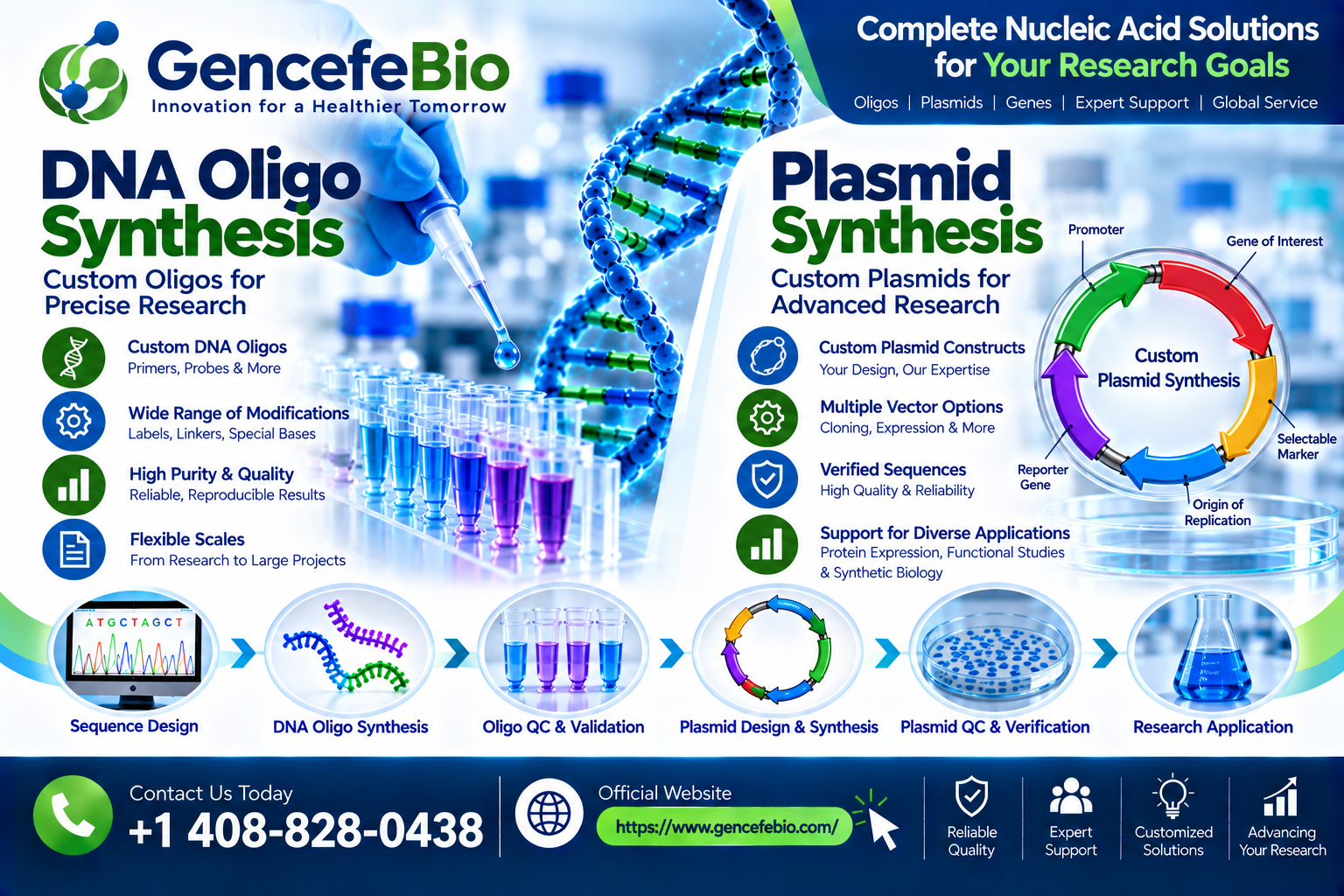
Molecular research becomes more sophisticated, laboratories increasingly require reliable DNA products that support experimental design and genetic investigation.
DNA oligo synthesis provides researchers with short, precisely defined DNA sequences for applications such as molecular detection, sequencing, and analytical research.
Meanwhile, plasmid synthesis supports the development of customised circular DNA constructs used in suitable genetic engineering, molecular biology, and recombinant expression studies.
Although these technologies involve different DNA formats, both contribute to research programmes that require carefully designed genetic materials.
For biotechnology companies, academic laboratories, and molecular research institutions, their importance extends beyond manufacturing accuracy to include experimental verification and dependable research documentation.
Why Genetic Construct Verification Matters
Researchers often work with multiple DNA components to investigate biological questions.
A molecular experiment may require a specific genetic construct, supporting analytical reagents, and appropriate verification methods.
Errors in sequence identity or construct configuration can affect experimental interpretation.
Consequently, laboratories should consider how their genetic materials will be evaluated before beginning a research project.
This principle encourages researchers to connect molecular manufacturing with quality assurance and scientific accountability.
What Is DNA Oligo Synthesis?
DNA oligo synthesis is the chemical manufacturing of short, defined DNA sequences known as oligonucleotides.
These molecules are widely used in molecular biology because they can be designed for particular sequence-related research applications.
Depending on manufacturing capabilities, oligonucleotides may include selected chemical modifications or labels.
Common Research Applications
- PCR Research: Preparing primers for suitable DNA amplification experiments.
- Sequence Analysis: Supporting selected DNA sequencing applications.
- Molecular Detection: Developing probes for research-based assays.
- Genetic Research: Investigating selected nucleotide sequences.
- Quality Verification: Providing reagents for appropriate analytical methods.
The required oligonucleotide length, purity, and molecular characteristics depend on the intended laboratory application.
Understanding Plasmid Synthesis
Plasmid synthesis involves the development and manufacturing of customised plasmid DNA constructs according to defined genetic specifications.
Plasmids are typically circular DNA molecules containing genetic elements selected for particular research purposes.
Depending on their design, plasmids may include a replication origin, selectable marker, regulatory elements, and an inserted genetic sequence.
These components help determine how the construct behaves in an appropriate experimental system.
Customised plasmids can support research involving genetic constructs, recombinant expression, and molecular biology investigations.
However, successful plasmid manufacturing does not automatically guarantee expression of the intended gene or a particular biological outcome.
Additional experimental verification remains essential.
Connecting Oligonucleotides with Plasmid Research
One useful connection between these technologies involves the evaluation of customised genetic constructs.
A research programme may require a plasmid containing a particular DNA sequence.
Separately designed oligonucleotide primers can support appropriate analytical methods used to examine selected regions of that construct.
This creates a relationship between the principal research material and supporting verification reagents.
For example, suitable oligonucleotides may be used in sequence-analysis workflows associated with plasmid characterisation.
However, confirmation of one selected region does not necessarily establish the identity or integrity of the complete plasmid.
Researchers should select verification methods according to the intended application.
DNA Oligo Synthesis vs Plasmid Synthesis
| Research Consideration | DNA Oligo Synthesis | Plasmid Synthesis |
| Primary Product | Short DNA oligonucleotides | Custom plasmid DNA constructs |
| Molecular Format | Typically short, linear DNA | Usually circular double-stranded DNA |
| Main Research Purpose | Molecular analysis and detection | Genetic construct and expression research |
| Important Specifications | Sequence, purity, and modifications | Complete construct sequence and configuration |
| Quality Considerations | Identity and purity | Identity, integrity, and suitable construct verification |
These services address different molecular requirements but can support related laboratory projects.
Why Plasmid Architecture Deserves Attention
A plasmid is more than a DNA sequence placed inside a circular molecule.
Its overall architecture may influence compatibility with the intended research system.
Researchers should consider the purpose of the construct and the characteristics needed for its experimental application.
Relevant considerations may include the genetic elements present, the arrangement of sequence regions, and the intended host or analytical system.
An unsuitable construct design can introduce difficulties even when the DNA sequence has been manufactured accurately.
Clear design documentation can help laboratories communicate their requirements effectively.
Quality Control for Custom DNA Products
Quality expectations differ between short oligonucleotides and larger plasmid constructs.
For synthetic oligonucleotides, relevant analytical methods may help assess molecular identity, purity, and suitable chemical characteristics.
For plasmid products, researchers may require sequence verification, DNA concentration measurements, and additional assessments relevant to the intended application.
Plasmid topology and the presence of unwanted impurities may also matter for certain research uses.
The necessary testing should be agreed upon before manufacturing.
A certificate of analysis provides useful information, but it does not replace application-specific experimental validation.
Improving Research Traceability
Traceability is an important consideration when laboratories work with multiple custom genetic materials.
Clearly documented sequence information, product identification, and analytical records can help researchers distinguish between different DNA preparations.
For plasmid projects, documentation may also include a suitable construct map and information about relevant genetic elements.
These records support internal communication, collaborative research, and investigation of unexpected experimental findings.
However, effective traceability also depends on laboratory recordkeeping and appropriate sample management practices.
Applications in Molecular and Biotechnology Research
Both technologies support different aspects of genetic investigation.
Molecular Biology: Studying selected DNA sequences and genetic constructs.
Recombinant Protein Research: Providing suitable plasmid materials for expression-related investigations.
Analytical Method Development: Using oligonucleotide reagents in appropriate genetic analysis methods.
Synthetic Biology: Supporting research involving designed genetic components.
Academic Research: Providing customised DNA materials for experimental molecular studies.
The exact application depends on product specifications, laboratory capabilities, and applicable biosafety requirements.
Choosing the Right DNA Manufacturing Service
Research organisations should evaluate the requirements of their projects before selecting a service provider.
Important considerations include:
- Sequence Accuracy: Confirm the requested nucleotide information.
- Product Format: Identify whether oligonucleotides or plasmid constructs are required.
- Construct Documentation: Specify relevant plasmid design information.
- Quality Expectations: Establish appropriate analytical requirements.
- Research Compatibility: Verify suitability for the intended application.
- Responsible Handling: Consider confidentiality, biosecurity, and laboratory requirements.
Clear technical communication helps align the delivered product with the research objective.
Responsible Use and Research Limitations
Custom DNA materials support valuable investigations in molecular biology and biotechnology.
However, research-grade oligonucleotides and plasmids are not automatically suitable for clinical diagnosis, therapeutic administration, or regulated manufacturing.
Such applications may require additional quality systems, validation, and regulatory oversight.
Research organisations should follow applicable biosafety and biosecurity requirements when developing or requesting genetic materials.
This supports responsible scientific investigation and appropriate use of synthetic DNA technologies.
Frequently Asked Questions (FAQs)
1. What is DNA oligo synthesis used for?
It produces short, defined DNA sequences used in molecular research, PCR applications, sequencing, and selected analytical methods.
2. What is plasmid synthesis?
Plasmid synthesis involves producing customised plasmid DNA constructs for suitable molecular biology, genetic engineering, and recombinant expression research.
3. Can DNA oligonucleotides support plasmid verification?
Yes. Appropriately designed oligonucleotides can support selected analytical methods used to examine plasmid sequences.
4. What is the main difference between an oligonucleotide and a plasmid?
An oligonucleotide is generally a short nucleotide sequence, while a plasmid is typically a larger circular DNA construct containing selected genetic elements.
5. What should researchers verify before ordering customised DNA products?
Researchers should review sequence specifications, product format, analytical quality requirements, documentation, and compatibility with the intended experiment.
Media Contact
Department: Custom DNA and Molecular Research Services
Contact: +1 408-828-0438
Email: gene@gencefebio.com
Official Website: https://www.gencefebio.com/