Packaging has never been a static part of product manufacturing. As technology, consumer habits, and business priorities change, packaging changes with them. This is especially true for cosmetics and jewellery, where packaging plays two roles at once: it protects the product and creates an emotional connection with the buyer.
The development of eco friendly cosmetic packaging and modern jewellery packaging boxes demonstrates this transformation clearly. Packaging has moved from basic containers and decorative boxes toward solutions that focus on sustainability, functionality, branding, and long-term usability.
The Packaging Industry Before Sustainability Became a Priority
In earlier times, packaging decisions were mainly practical. Cosmetic manufacturers needed containers that could protect creams, powders, perfumes, oils, and other products from contamination and damage. Glass, metal, paper, ceramic, and later plastic became widely used materials.
Plastic changed the cosmetics sector significantly. It allowed manufacturers to produce lightweight containers in almost any shape. Bottles, tubes, jars, caps, pumps, and other components could be manufactured quickly and economically.
Jewellery packaging developed around a different purpose. Because jewellery was traditionally viewed as a luxury or gifting product, its packaging was expected to create excitement and communicate value.
Wooden cases, velvet interiors, rigid cartons, leather-style coverings, and decorative paper were commonly used. The packaging was designed to make the product feel special from the moment the customer opened the box.
At that time, environmental impact was generally not a major factor in packaging decisions.
A Major Change in Consumer Thinking
The packaging industry began entering a new phase as environmental awareness increased. Plastic pollution, excessive waste, resource consumption, and difficult-to-recycle materials became important public concerns.
Consumers began examining products more carefully. They wanted to know not only what they were purchasing but also what happened to the packaging afterward.
This created pressure for brands to reconsider traditional packaging practices.
Instead of asking only, “Does this package look attractive?” manufacturers increasingly began asking:
- How much material does it require?
- Can the package be reused?
- Can the materials be recovered?
- Is the design unnecessarily complicated?
- Can transportation be made more efficient?
- Does the packaging provide value after purchase?
These questions helped create the modern sustainable packaging movement.
The Development of Eco Friendly Cosmetic Packaging
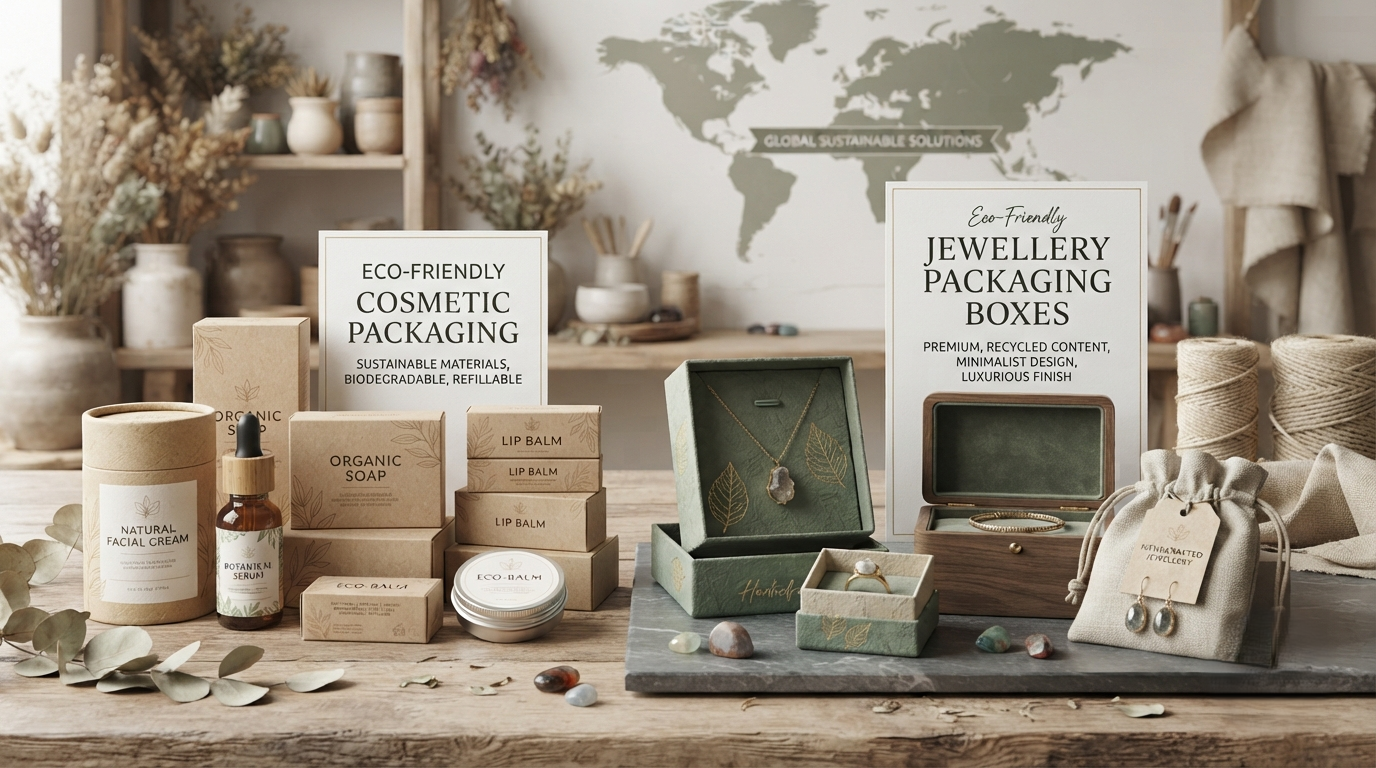
The cosmetics industry has responded by experimenting with new packaging concepts. Eco friendly cosmetic packaging can now include a wide range of materials and formats.
Depending on the product, businesses may use recycled paperboard, kraft paper, glass, aluminum, bamboo, molded fiber, recycled-content materials, or refillable systems.
However, choosing sustainable packaging is not simply about selecting a particular material. The packaging must still protect the cosmetic product.
For example, some products require protection against air, moisture, light, temperature changes, or contamination. A sustainable package that fails to protect its contents may create greater waste through damaged or spoiled products.
Therefore, effective sustainable packaging balances environmental considerations with technical performance.
Jewellery Packaging Moves Toward Responsible Luxury
The jewellery industry is also redefining its approach to packaging.
Modern jewellery packaging boxes are increasingly designed to deliver luxury without unnecessary material consumption. Recycled paperboard, kraft materials, molded fiber, reusable structures, and responsibly sourced papers can be incorporated into premium designs.
This shift does not mean jewellery packaging has to lose its elegance.
Luxury can be created through:
- High-quality paper textures
- Precision construction
- Embossed logos
- Custom inserts
- Elegant typography
- Sophisticated printing
- Reusable box structures
The result can be a jewellery box that feels premium while also serving a practical purpose after the sale.
Reuse Is Becoming More Important
One of the biggest differences between traditional and emerging packaging is the emphasis on reuse.
A disposable package has a limited purpose. Once the product has been opened, the package may become waste.
A reusable package has a longer lifecycle.
For example, a jewellery box can become a permanent storage case for earrings, rings, or necklaces. Similarly, cosmetic brands can develop refillable containers that allow customers to keep the main package and purchase only replacement contents.
This approach can change how consumers perceive packaging. Instead of seeing it as disposable material, they may see it as part of the product experience.
Comparing Yesterday’s and Tomorrow’s Packaging
| Category | Earlier Packaging | Emerging Packaging |
| Main Goal | Protection and presentation | Protection, presentation, and lifecycle efficiency |
| Material Strategy | Often material-intensive | More optimized |
| Sustainability | Limited consideration | Increasing priority |
| Product Life | Usually single-use | Reusable or refillable options |
| Design | Decorative | Functional and aesthetic |
| Technology | Mostly physical | Physical and digital |
| Customer Role | User and disposer | User, reuser, and recycler |
What the Future Holds for Cosmetic Packaging
The future of eco friendly cosmetic packaging is likely to be shaped by circular design.
Circular packaging aims to keep materials useful for longer rather than treating them as disposable after one purchase.
Several developments could become increasingly important:
- Refill systems that allow customers to replace cosmetic contents.
- Mono-material structures designed to simplify material recovery.
- Recycled materials incorporated into new packaging.
- Lightweight designs that use fewer resources.
- Reusable containers designed for repeated use.
- Digital information that reduces unnecessary printed content.
- Smarter packaging systems that improve product traceability.
These changes will require cooperation between packaging manufacturers, product companies, retailers, recyclers, and consumers.
The Future of Jewellery Packaging Boxes
Jewellery packaging is also expected to become more adaptable.
Customization will be an important area. Digital printing can allow brands to create packaging for specific collections, festivals, wedding jewellery, limited editions, and promotional campaigns.
Reusable boxes may become increasingly popular because they offer practical value to customers.
Technology may also become part of the jewellery packaging experience. QR codes and NFC-enabled features could provide digital certificates, authenticity information, care instructions, and product details.
Sustainable Luxury Will Become a Competitive Advantage
The future of luxury packaging may be less about using more material and more about using better design.
A beautifully structured box made from responsibly selected materials can communicate quality without excessive decoration.
This could change the way customers evaluate premium jewellery and cosmetic brands. Sustainability may gradually become part of the definition of modern luxury.
Packaging as a Brand Experience
Packaging can influence a customer’s perception before the product is even used. A carefully designed box can communicate professionalism, quality, exclusivity, and attention to detail.
For this reason, businesses should view packaging as part of their overall branding strategy rather than simply a manufacturing requirement.
Important Considerations for Businesses
Companies planning new packaging should look at the complete picture rather than selecting materials based only on appearance.
Important considerations include:
- Product protection
- Material sourcing
- Manufacturing requirements
- Packaging weight
- Transportation efficiency
- Customer convenience
- Reuse potential
- Recycling compatibility
- Total lifecycle impact
- Brand presentation
This approach can help businesses create packaging that is practical, attractive, and aligned with changing market expectations.
Frequently Asked Questions
What does eco friendly cosmetic packaging mean?
It refers to cosmetic packaging designed with the goal of reducing environmental impact through material efficiency, reuse, recycling, refill systems, or responsible material selection.
Why is cosmetic packaging changing?
Environmental concerns, customer expectations, technological development, and brand sustainability goals are encouraging companies to rethink conventional packaging.
What materials can be used for sustainable cosmetic packaging?
Depending on the product, businesses may consider recycled paperboard, kraft paper, glass, aluminum, bamboo, molded fiber, and recycled materials.
What are jewellery packaging boxes?
They are boxes specifically designed to protect, present, transport, and store jewellery products.
Can jewellery boxes be made from recycled materials?
Yes. Recycled paperboard and other suitable recycled materials can be used to manufacture attractive and protective jewellery packaging.
Can sustainable packaging still look luxurious?
Yes. Premium finishes, precise construction, embossing, customized inserts, and high-quality materials can create an elegant presentation.
What is a reusable jewellery box?
It is a jewellery box designed to remain useful after the initial purchase, commonly as a storage container for jewellery.
What is refillable cosmetic packaging?
It is a system where customers retain a durable primary container and replace the cosmetic product through refill units.
Does sustainable packaging always mean biodegradable packaging?
No. Sustainable packaging can involve recyclability, reuse, recycled content, renewable materials, lightweight design, or other lifecycle improvements.
What packaging trends are expected in the future?
Refill systems, reusable packaging, recycled materials, lightweight construction, digital information, customization, and circular design are expected to receive greater attention.