The sheet metal fabrication industry is exploring practical ways to improve manufacturing flexibility, dimensional accuracy, and production efficiency. As workshops handle increasingly diverse customer requirements, selecting suitable metal-forming equipment has become an important part of manufacturing planning.
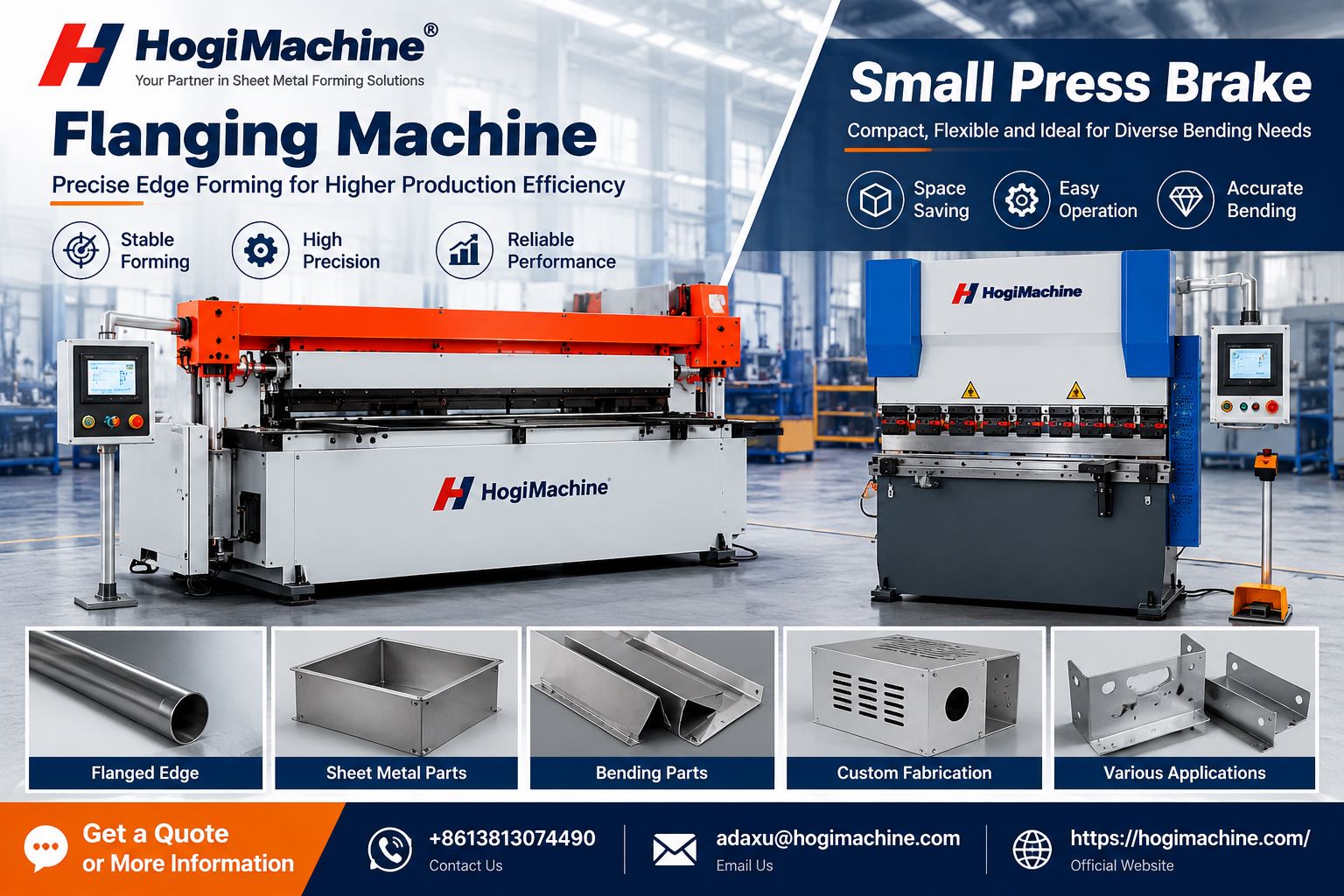
A Flanging machine helps manufacturers create raised or turned edges on suitable metal components, supporting structural reinforcement, joining requirements, and specialised product designs.
Meanwhile, a small press brake provides a compact solution for bending sheet metal into specified angles and profiles, making it useful for smaller workshops, prototype development, and precision component manufacturing.
Although these machines perform different forming operations, both contribute to efficient sheet metal production.
For fabrication businesses, equipment manufacturers, and industrial buyers, understanding their capabilities can help improve workflow planning and equipment utilisation.
Why Flexible Metal Forming Equipment Matters
Sheet metal workshops frequently manufacture components with different shapes, dimensions, and production quantities.
A business may receive orders for electrical enclosures, ventilation components, machinery covers, and customised metal brackets.
Each application introduces different forming requirements.
Using unsuitable equipment can increase handling, setup complexity, and the risk of dimensional errors.
Manufacturers are therefore considering machinery that supports their actual production mix.
This approach helps businesses balance production capacity with available workshop space and technical requirements.
What Is a Flanging Machine?
A Flanging machine is metal-forming equipment designed to bend, turn, or shape the edges of suitable metal workpieces.
Depending on its design, it may process circular, cylindrical, or other specifically shaped components.
Flanging operations can create edges required for joining, reinforcement, or subsequent manufacturing processes.
For example, selected equipment may be used when producing metal containers, ducts, or industrial components requiring formed edges.
However, flanging machines vary considerably in construction and application.
Buyers should verify compatible materials, workpiece dimensions, forming capabilities, and machine specifications before selecting equipment.
Understanding the Role of a Small Press Brake
A small press brake is a compact sheet metal bending machine designed to form appropriate workpieces using a punch and die arrangement.
It can produce bends for brackets, panels, enclosures, and other fabricated components.
Depending on the model, small press brakes may use mechanical, hydraulic, or electric drive systems.
Their compact construction can make them suitable for workshops with limited floor space or smaller production requirements.
However, machine size alone does not establish bending capability.
Material thickness, bending length, tooling selection, and available forming force must be evaluated together.
How Flanging and Press Brake Operations Differ
Flanging and press brake bending are related metal-forming processes, but their applications can differ.
Flanging focuses on shaping an edge into a specified profile, sometimes around curved or circular workpieces.
Press brake bending generally involves forming sheet metal along a bend line using suitable tooling.
Some flange shapes can be produced using a press brake, while others require specialised flanging equipment.
| Evaluation Factor | Flanging Machine | Small Press Brake |
| Primary Function | Forms suitable workpiece edges | Bends sheet metal into defined profiles |
| Typical Components | Containers, ducts, formed metal edges | Brackets, panels, enclosures |
| Main Tooling Consideration | Edge geometry and forming arrangement | Punch and die selection |
| Production Priority | Edge consistency | Bend accuracy |
| Workpiece Requirements | Machine-specific shape compatibility | Bending length and material capacity |
| Common Application | Specialised edge forming | General-purpose sheet metal bending |
Selecting the appropriate machine depends on the component design.
Improving Production Through Better Workflow Planning
Fabrication efficiency involves more than individual machine performance.
Manufacturers must consider how materials move between cutting, forming, welding, and finishing operations.
For example, a fabricated enclosure may require cutting, several bends, fastening, and surface finishing.
Poorly planned operations can create unnecessary handling or difficulties during assembly.
Similarly, a component requiring flanged edges may need particular preparation before forming.
Organising operations around actual product requirements can help manufacturers improve production consistency.
Why Tooling Selection Influences Finished Quality
Metal-forming accuracy depends on the interaction between the machine, tooling, and workpiece.
For press brake operations, punch and die geometry can influence bending results.
Material thickness, grain direction, and springback must also be considered.
Flanging operations introduce additional factors involving edge geometry, forming pressure, and material deformation.
Incorrect tooling can contribute to cracking, distortion, or dimensional inaccuracies.
Manufacturers should select tooling according to the material and intended component geometry.
Representative forming trials can help confirm whether the selected arrangement produces acceptable results.
Applications Across Manufacturing Industries
Flanging machines and compact press brakes can support different industrial applications.
HVAC Manufacturing: Suitable forming operations for ventilation components and sheet metal fittings.
Electrical Equipment: Bending panels, covers, and enclosure components.
Metal Furniture: Producing brackets, supports, and decorative metal profiles.
Industrial Machinery: Manufacturing guards, mounting plates, and suitable equipment components.
Custom Fabrication: Developing prototypes and short production runs.
Each application requires appropriate machine specifications, tooling, and operator procedures.
Automation and Operator Safety
Modern metal-forming equipment may incorporate digital controls, programmable settings, or automated positioning features.
These capabilities can support repeatable operations when correctly configured.
However, automation does not eliminate the need for trained operators and appropriate safety procedures.
Press brakes and flanging machines can create hazardous pinch points and other mechanical risks.
Suitable guarding, emergency controls, maintenance procedures, and operator training are essential.
Businesses should verify applicable machinery safety requirements before installation and operation.
Productivity improvements should never compromise safe working practices.
How to Choose Reliable Metal Forming Equipment
Industrial buyers should evaluate machine specifications against their actual production requirements.
Important considerations include:
- Material Compatibility: Confirm suitable metals and thickness ranges.
- Forming Capacity: Review bending length, forming force, and component dimensions.
- Tooling Availability: Evaluate suitable punches, dies, and specialised forming tools.
- Precision Requirements: Confirm appropriate dimensional capabilities.
- Safety Features: Review guarding and operating controls.
- Technical Support: Assess documentation, maintenance requirements, and replacement-part availability.
Testing representative components can help determine whether a machine meets workshop expectations.
Frequently Asked Questions (FAQs)
1. What is a Flanging machine used for?
A flanging machine forms edges on suitable metal components for joining, reinforcement, or specialised manufacturing requirements.
2. What is a small press brake?
A small press brake is compact metal-bending equipment used to form sheet metal into specified angles and shapes.
3. Can a small press brake manufacture flanged components?
Yes, certain straight flange designs can be produced using appropriate press brake tooling, although specialised shapes may require dedicated equipment.
4. Which materials can be processed using metal-forming machines?
Suitable machines may process mild steel, stainless steel, aluminium, and other compatible metals, depending on their specifications.
5. How should businesses select a reliable metal-forming machinery supplier?
Businesses should evaluate machine capacity, tooling compatibility, safety features, precision requirements, technical documentation, and after-sales support.
Media Contact
Department: Sheet Metal Forming and Industrial Machinery Enquiries
Contact: +86 138 1307 4490
Email: daxu@hogimachine.com
Official Website: https://hogimachine.com/