
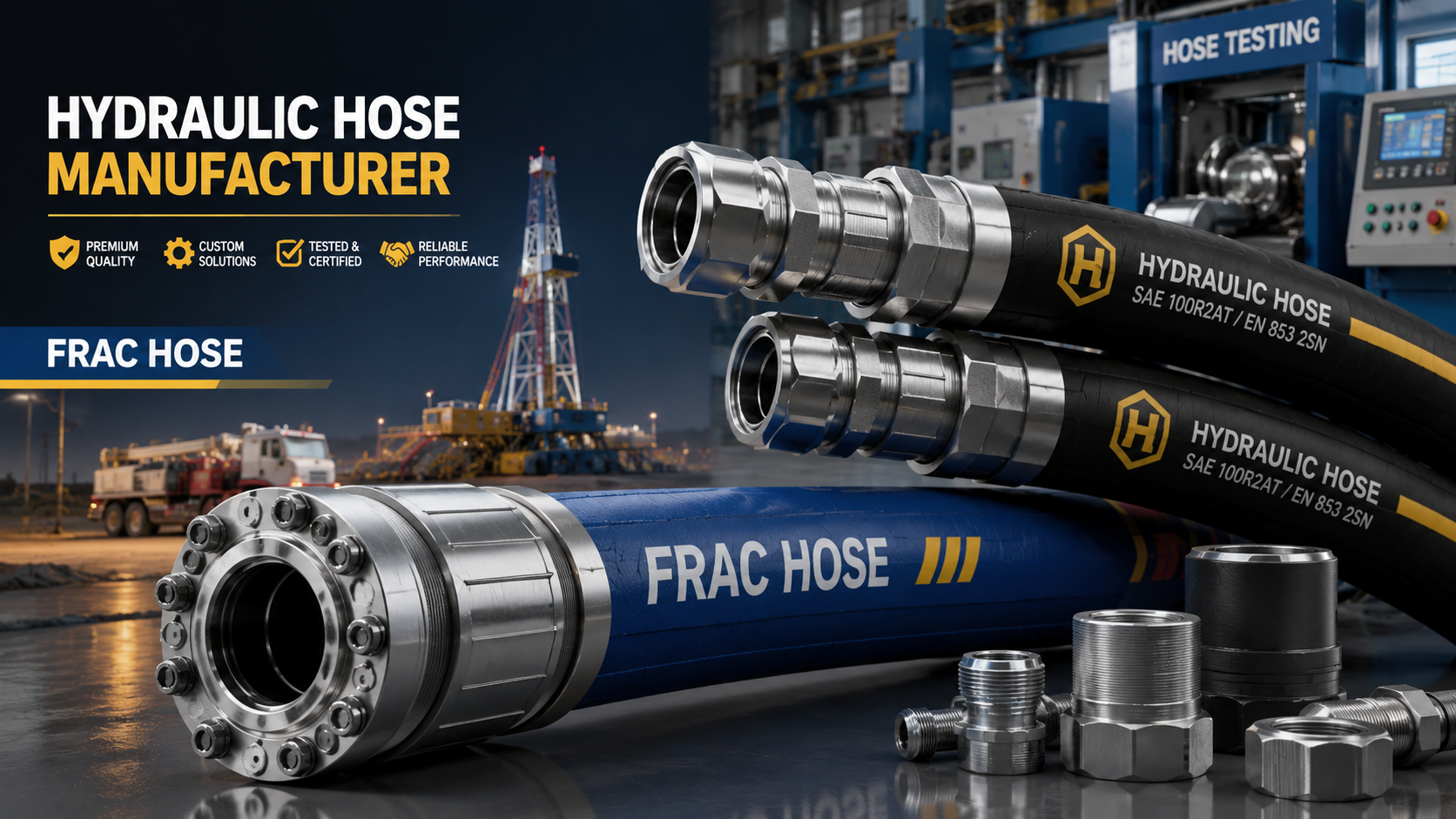
Industrial fluid-transfer systems operate under demanding conditions where pressure, abrasion, heat, vibration, and chemical exposure can quickly damage ordinary hoses. Choosing a dependable Hydraulic Hose Manufacturer and the correct frac hose can therefore have a direct impact on equipment reliability, worker safety, maintenance costs, and overall productivity.
From construction machinery and manufacturing plants to oilfield operations and hydraulic fracturing sites, modern industries need hoses engineered for controlled fluid transfer. Understanding hose construction, pressure ratings, materials, and application requirements helps buyers select solutions that deliver reliable service rather than simply choosing products based on price.
Understanding Hydraulic Hose Manufacturing
A professional Hydraulic Hose Manufacturer develops flexible hose assemblies capable of transferring hydraulic oil and other fluids under controlled pressure. These hoses connect pumps, cylinders, motors, valves, and other hydraulic components while allowing equipment movement.
Industrial hydraulic hoses commonly contain several engineered layers:
- Inner tube compatible with the operating fluid
- Reinforcement made from braided or spiral steel wire
- Protective outer cover resistant to abrasion and weather
- Properly designed fittings and couplings
The number and type of reinforcement layers depend largely on required working pressure.
A reliable manufacturer should also maintain consistent quality control throughout material selection, hose production, testing, fitting installation, and final inspection.
What Makes Frac Hose Different?
A frac hose is designed for demanding oilfield and hydraulic-fracturing environments where fluids may need to move at high pressure and high flow rates.
Unlike general-purpose industrial hoses, frac hoses may be exposed to abrasive fluids, chemicals, harsh weather, repeated movement, and challenging operating environments.
Typical applications include:
- Water transfer
- Fracturing-fluid handling
- Oilfield service operations
- Chemical transportation
- High-volume fluid movement
- Temporary field piping systems
Selecting the correct frac hose requires evaluating pressure, temperature, fluid composition, flow requirements, bend radius, and environmental conditions.
Hydraulic Hose vs Frac Hose
Although both products transfer fluids, their operating environments can be significantly different.
| Feature | Hydraulic Hose | Frac Hose |
| Main Application | Hydraulic machinery | Oilfield and fracturing operations |
| Fluid Flow | Low to moderate volume | Often high-volume transfer |
| Pressure Requirement | Application specific | Frequently demanding pressure conditions |
| Reinforcement | Textile or steel reinforcement | Heavy-duty reinforced construction |
| Environment | Industrial and mobile equipment | Severe outdoor and oilfield environments |
| Key Priority | Flexible power transmission | Reliable large-scale fluid transfer |
A qualified Hydraulic Hose Manufacturer can recommend hose construction according to actual equipment specifications instead of offering one standard solution for every application.
Important Factors When Selecting Industrial Hoses
Purchasing a hose without analyzing the operating environment can cause premature failure. Engineers typically evaluate several parameters before final selection.
Working Pressure
The hose working-pressure rating must meet the requirements of the equipment. Pressure spikes should also be considered because temporary surges can place additional stress on hose reinforcement.
Fluid Compatibility
Not every hose material is compatible with every liquid. Hydraulic oils, water, chemicals, petroleum products, and specialty fluids may require different inner-tube compounds.
Temperature Range
Both fluid temperature and surrounding temperature influence hose performance. Excessive heat can weaken rubber compounds and shorten service life.
Bend Radius
Installing a hose below its recommended minimum bend radius creates unnecessary stress. Correct routing improves flexibility and reduces fatigue near fittings.
Practical Installation Tip
Avoid twisting hoses during installation. A twisted high-pressure hose can experience uneven reinforcement loading and premature structural damage.
Why Hose Quality Matters in High-Pressure Applications
Industrial hose failure can cause more than simple production delays. Unexpected leakage may damage nearby components, contaminate work areas, increase maintenance requirements, or create serious safety hazards.
Working with an experienced Hydraulic Hose Manufacturer provides access to properly engineered products and suitable testing procedures.
Quality hose construction can provide:
- Better resistance to pressure fluctuations
- Improved abrasion protection
- Longer operating life
- More dependable fitting retention
- Better flexibility during equipment movement
- Reduced risk of unexpected leakage
Similarly, a properly selected frac hose can support consistent fluid-transfer operations in demanding field conditions.
How to Evaluate a Hose Manufacturer
Price should never be the only consideration when sourcing critical fluid-transfer equipment.
Before selecting suppliers, buyers should examine manufacturing capability, product specifications, technical support, testing procedures, material traceability, and available hose configurations.
A capable Hydraulic Hose Manufacturer should clearly provide important technical information such as working pressure, burst pressure, temperature range, inside diameter, outside diameter, bend radius, reinforcement construction, and compatible fittings.
For frac hose applications, buyers should additionally discuss fluid composition, expected flow rate, installation length, coupling requirements, operating environment, and pressure conditions.
Technical communication before ordering can prevent costly specification mistakes.
Maintenance Practices That Can Extend Hose Life
Even premium hoses require routine inspection. Maintenance teams should regularly examine assemblies instead of waiting for visible leakage.
Watch for:
- Cracks in the outer cover
- Abrasion or exposed reinforcement
- Damaged fittings
- Oil leakage
- Hose flattening
- Unusual twisting
- Excessive bending near couplings
- Chemical deterioration
A damaged hose should be evaluated promptly. Temporary repairs to high-pressure assemblies can introduce unnecessary operational risks.
Proper storage is equally important. Hoses should generally be protected from extreme heat, direct sunlight, ozone-producing equipment, chemicals, moisture, and unnecessary mechanical stress.
Frequently Asked Questions
1. What does a hydraulic hose manufacturer produce?
A Hydraulic Hose Manufacturer produces reinforced flexible hoses designed to transfer hydraulic fluids between components such as pumps, valves, cylinders, and motors.
2. What is a frac hose?
A frac hose is a heavy-duty fluid-transfer hose used in oilfield, fracturing, water-transfer, and related industrial operations.
3. How do I select the correct hydraulic hose?
Check operating pressure, temperature, fluid compatibility, hose diameter, bend radius, reinforcement type, and fitting requirements before selection.
4. Why is hose pressure rating important?
An incorrect pressure rating may increase the possibility of leakage, reinforcement damage, or sudden hose failure.
5. Can one hose handle every hydraulic fluid?
No. Inner-tube materials have different chemical resistance characteristics, so fluid compatibility should always be verified.
6. What causes hydraulic hoses to fail early?
Common causes include abrasion, excessive pressure, high temperatures, incorrect routing, twisting, incompatible fluids, and damaged fittings.
7. How often should industrial hoses be inspected?
Inspection frequency depends on operating severity, usage, environment, and applicable maintenance standards. High-demand systems generally require more frequent inspections.
8. Why is reinforcement used inside hydraulic hoses?
Reinforcement helps the hose withstand internal pressure while maintaining flexibility. Steel wire or textile reinforcement may be used depending on the application.
9. Are frac hoses suitable for water transfer?
Many frac hoses are designed for water and industrial fluid transfer, but compatibility and pressure specifications should always be confirmed.
10. What information should I provide when ordering a hose?
Provide fluid type, operating pressure, temperature, inside diameter, required length, end connections, application conditions, and installation details.