
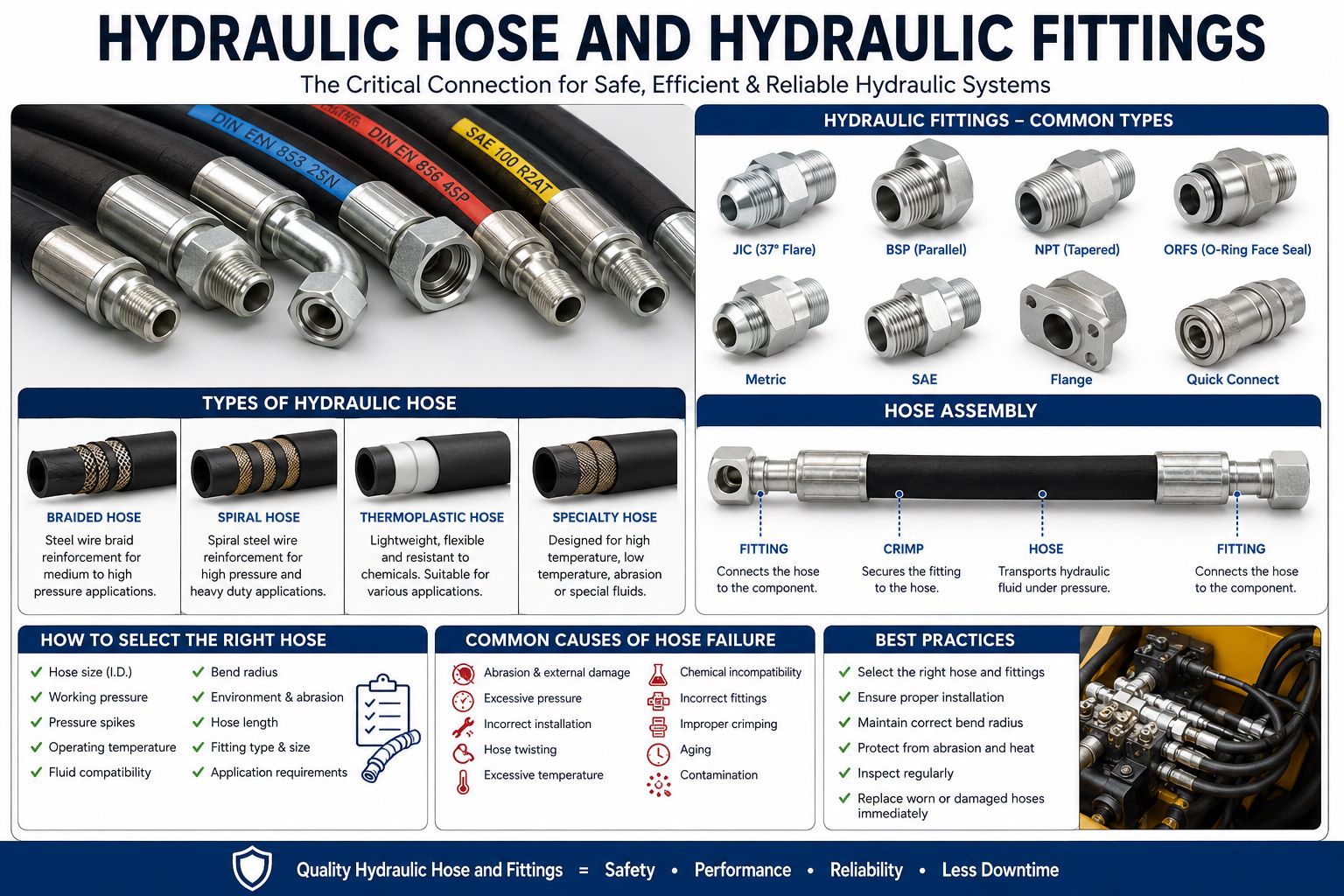
Hydraulic systems are essential to modern construction equipment, manufacturing machinery, agricultural vehicles, mining operations, material-handling systems, and many other industrial applications. At the center of these systems are Hydraulic Hose and Hydraulic Fittings, which work together to safely transport pressurized hydraulic fluid between pumps, cylinders, valves, motors, and other components.
Selecting the correct hose and fittings is not simply a matter of finding components that physically connect. Pressure rating, fluid compatibility, temperature, hose diameter, bend radius, fitting type, operating environment, and installation quality can all affect system performance and service life. Understanding these factors helps businesses build safer, more efficient, and more dependable hydraulic systems.
What Is a Hydraulic Hose?
A Hydraulic Hose is a flexible tube engineered to transport hydraulic fluid under pressure. Unlike ordinary rubber tubing, hydraulic hoses are constructed in multiple layers to withstand demanding operating conditions.
A typical hose contains three important layers:
- Inner tube designed to carry hydraulic fluid
- Reinforcement layer that provides pressure resistance
- Outer cover protecting against abrasion, weather, oil, and environmental exposure
Reinforcement may include braided steel wire, spiral wire, textile material, or other high-strength materials. The appropriate construction depends largely on the required working pressure and application.
Hydraulic hoses are widely used where rigid pipes would be unsuitable because of movement, vibration, installation limitations, or the need for flexibility.
Understanding Hydraulic Fittings
Hydraulic Fittings are connectors used to join hydraulic hoses with pumps, valves, cylinders, pipes, manifolds, and other system components. Their primary function is to create a secure, leak-resistant connection capable of handling system pressure.
Common fitting configurations include:
- Straight fittings
- 45-degree elbow fittings
- 90-degree elbow fittings
- Tee fittings
- Flange connections
- Male and female threaded fittings
- Crimp fittings
- Reusable fittings
Different hydraulic systems can also use different thread and sealing standards, including BSP, JIC, ORFS, NPT, and metric connections.
Using the wrong fitting standard can cause leakage, damaged threads, pressure loss, or premature connection failure. Therefore, correct identification is critical before installation.
How Hydraulic Hose and Hydraulic Fittings Work Together
A Hydraulic Hose carries pressurized fluid while Hydraulic Fittings provide secure connection points at each end. Together, they form a flexible fluid-transfer assembly.
When hydraulic fluid is pumped through the hose, pressure energy travels to an actuator such as a hydraulic cylinder or motor. This energy can then generate linear or rotary mechanical movement.
Reliable performance depends on both components being properly matched. A high-pressure hose connected to an inadequately rated fitting does not create a high-pressure assembly. The complete assembly should be suitable for the maximum operating conditions of the system.
| Factor | Hydraulic Hose | Hydraulic Fittings |
| Primary role | Transfers hydraulic fluid | Connects hose to components |
| Construction | Rubber/thermoplastic with reinforcement | Steel, stainless steel, brass, or other metals |
| Key consideration | Pressure, size, temperature, flexibility | Thread, seal, size, pressure rating |
| Common failure | Abrasion, cracking, bursting | Leakage, corrosion, damaged threads |
| Selection priority | Application compatibility | Correct connection standard |
Important Factors When Selecting Hydraulic Hose
Choosing the appropriate Hydraulic Hose requires evaluating actual operating conditions rather than selecting only by physical size.
Important considerations include:
- Hose size: The inside diameter must support the required fluid flow without creating excessive pressure drop.
- Working pressure: Select a hose with a rated working pressure suitable for the hydraulic system.
- Temperature: Consider both hydraulic fluid temperature and surrounding environmental temperature.
- Fluid compatibility: The inner tube material must be compatible with the hydraulic oil or other fluid being transferred.
- Bend radius: Installing a hose below its recommended minimum bend radius can shorten service life.
- Abrasion exposure: Hoses operating near moving machinery or rough surfaces may require additional abrasion protection.
These factors are commonly considered together because overlooking one can compromise the entire hose assembly.
How to Choose the Right Hydraulic Fittings
Correct Hydraulic Fittings should match the hose, pressure requirement, port connection, and application.
Start by identifying the fitting standard and thread accurately. Two fittings can appear similar while having different thread pitches, sealing surfaces, or dimensions.
The fitting material also matters. Carbon steel is widely used for general industrial hydraulic applications, while stainless steel can provide better corrosion resistance in demanding environments.
Consider:
- Thread type and size
- Sealing method
- Hose compatibility
- Pressure rating
- Fitting orientation
- Corrosion resistance
- Operating temperature
- Application environment
Never force incompatible threads together. A connection that initially appears tight may still leak or fail when subjected to pressure.
Common Causes of Hydraulic Hose Failure
Even high-quality hydraulic components can fail when improperly selected, installed, or maintained.
Common causes include excessive abrasion, incorrect routing, twisting, extreme temperature, incompatible fluid, pressure spikes, poor-quality crimping, insufficient bend radius, and natural aging.
Warning signs can include:
- Visible cracks
- Exposed reinforcement
- Oil leakage
- Blisters or bubbles
- Damaged outer cover
- Corroded fittings
- Kinked sections
- Loose connections
Damaged hoses should be inspected promptly rather than relying on temporary repairs.
Benefits of High-Quality Hydraulic Hose and Fittings
Reliable Hydraulic Hose and Hydraulic Fittings can improve overall hydraulic system performance and reduce unexpected maintenance.
Major benefits include better pressure handling, dependable fluid transfer, reduced leakage risk, longer service life, improved equipment uptime, and safer operation.
Quality components are especially important for machinery operating continuously or under demanding pressure, vibration, temperature, and environmental conditions.
Hydraulic Hose Maintenance and Safety
Routine inspection is one of the most effective ways to identify developing hydraulic problems.
Check hose assemblies regularly for abrasion, leaks, cracks, unusual deformation, loose fittings, corrosion, and contact with hot or moving components. Hose routing should allow normal machine movement without twisting, stretching, or excessive bending.
Never search for a suspected pinhole leak with bare hands. High-pressure hydraulic fluid can penetrate skin and cause a serious medical emergency. Depressurize equipment according to the manufacturer’s procedure before servicing hydraulic components.
Preventive replacement can also be appropriate for critical equipment where unexpected hose failure would create significant safety risks or costly downtime.
Frequently Asked Questions About Hydraulic Hose and Hydraulic Fittings
1. What is a hydraulic hose used for?
It transports pressurized hydraulic fluid between different components within a hydraulic system.
2. What are hydraulic fittings used for?
They securely connect hoses to pumps, cylinders, valves, pipes, and other hydraulic components.
3. How do I select the correct hydraulic hose?
Consider size, working pressure, temperature, hydraulic fluid, bend radius, fittings, and operating environment.
4. Can every fitting be used with every hydraulic hose?
No. Fittings must be compatible with the hose construction, dimensions, pressure requirements, and manufacturer’s assembly specifications.
5. What causes hydraulic hoses to leak?
Common causes include abrasion, aging, damaged fittings, incorrect assembly, excessive pressure, and poor routing.
6. What does hydraulic hose working pressure mean?
It is the maximum continuous pressure for which the hose is rated under specified operating conditions.
7. Are hydraulic fittings reusable?
Some fitting designs are reusable, while many crimp-style fittings are intended for permanent assembly.
8. Why is hose bend radius important?
Excessive bending can damage reinforcement, restrict flow, and reduce hose life.
9. How often should hydraulic hoses be inspected?
Inspection frequency depends on equipment usage, environment, manufacturer recommendations, and the consequences of failure.
10. When should a hydraulic hose be replaced?
Replacement should be considered when there is leakage, cracking, exposed reinforcement, severe abrasion, deformation, damaged fittings, or other signs of deterioration.