
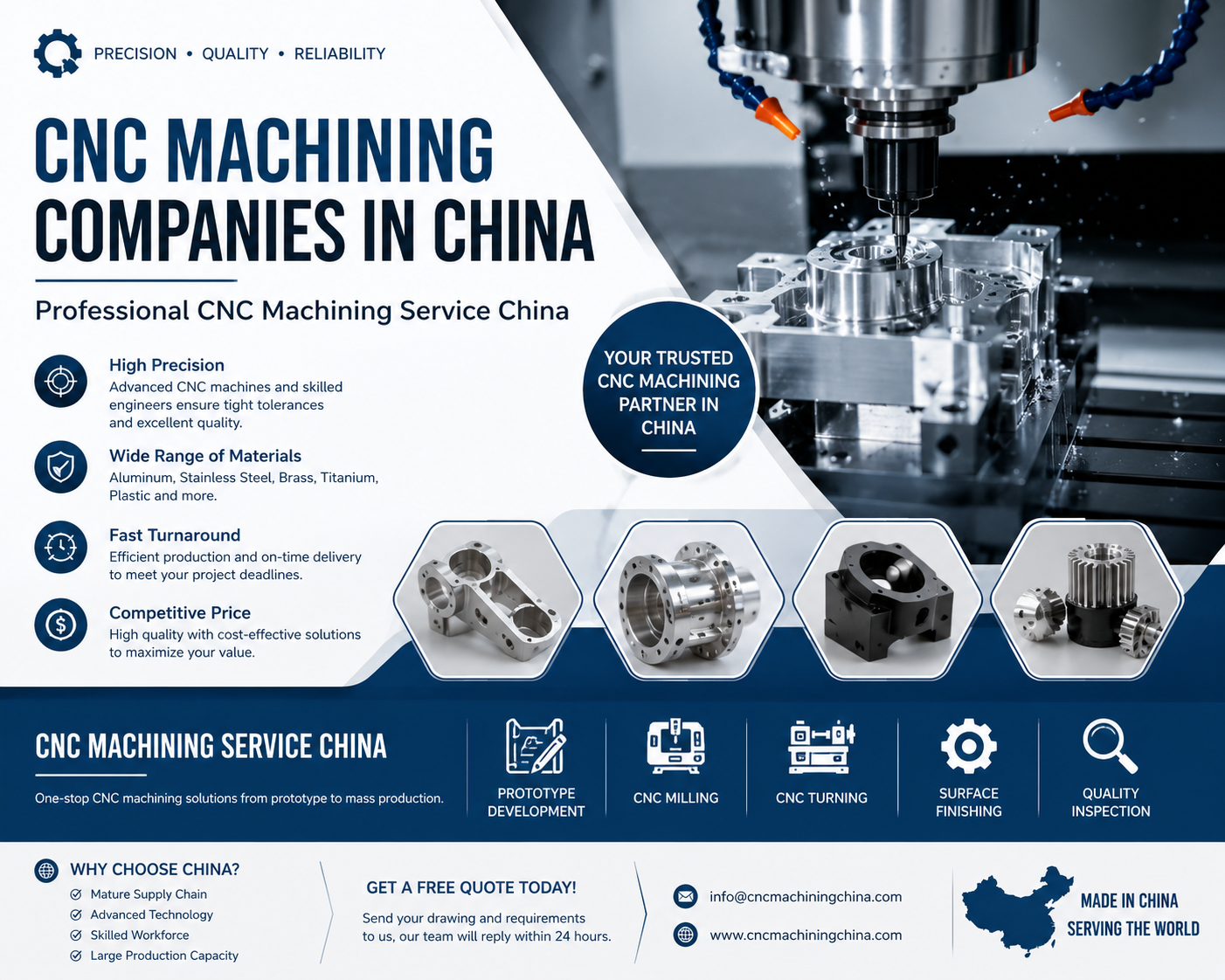
A precision component may begin as nothing more than a digital model on an engineer’s computer. Before that design becomes a finished aluminium housing, stainless-steel shaft or complex mechanical component, it passes through a carefully controlled sequence of manufacturing decisions.
This journey is one reason international manufacturers are increasingly interested in cnc machining companies in china. China has built an extensive manufacturing ecosystem where CNC machining, material sourcing, finishing, inspection and supporting processes can often be coordinated within established industrial networks.
Understanding what happens between uploading a CAD file and receiving finished components can help buyers make better sourcing decisions and avoid costly manufacturing mistakes.
Stage One: Turning a Digital Design into a Manufacturing Plan
The manufacturing process does not begin when a CNC machine starts cutting.
It begins with engineering review.
A manufacturer typically examines the CAD model and technical drawing to understand:
- Component dimensions
- Material specification
- Critical tolerances
- Hole and thread requirements
- Surface finish
- Complex geometries
- Production quantity
- Secondary operations
This review determines how the component should be manufactured.
An experienced cnc machining service china provider may also identify design features that are technically possible but unnecessarily difficult or expensive to machine.
This is where Design for Manufacturability becomes valuable.
Stage Two: Making the Design Easier to Manufacture
A design that looks perfect on screen is not automatically efficient to manufacture.
CNC cutting tools have physical limitations. They need sufficient space to reach internal features, remove material and maintain dimensional stability.
Several design characteristics can increase manufacturing difficulty:
- Deep cavities
- Thin walls
- Small internal corner radii
- Very deep holes
- Complex undercuts
- Excessively tight tolerances
- Multiple machining orientations
For example, an extremely sharp internal corner cannot normally be produced using a standard rotating end mill because the cutting tool itself has a radius.
A small design adjustment could make that feature significantly easier to machine.
This is why engineering support can be just as important as machine capability when evaluating cnc machining companies in china.
Stage Three: Selecting the Right CNC Process
Not every precision component should be manufactured using the same equipment.
The geometry determines the process.
CNC Milling
CNC milling is widely used for brackets, housings, plates, enclosures and components containing pockets, slots or complex surfaces.
CNC Turning
Turning is particularly suitable for cylindrical components such as:
- Shafts
- Pins
- Bushes
- Spacers
- Fittings
- Connectors
Multi-Axis Machining
Complex parts may require 4-axis or 5-axis equipment.
Multi-axis machining allows additional movement between the cutting tool and workpiece, making complicated surfaces and angled features more accessible.
The most advanced machine is not automatically the best choice. An efficient cnc machining service china supplier should select a process based on accuracy, geometry, production volume and cost.
Stage Four: Choosing the Material
Material selection affects much more than the appearance of a component.
It influences strength, weight, corrosion resistance, machinability, temperature performance and cost.
| Material | Key Property | Common Use |
| Aluminium | Lightweight | Housings and structural parts |
| Stainless steel | Corrosion resistance | Industrial components |
| Carbon steel | Strength and affordability | Machinery parts |
| Brass | Good machinability | Fittings and connectors |
| Copper | Electrical conductivity | Electrical components |
| Titanium | Strength-to-weight performance | High-performance components |
| Engineering plastics | Lightweight and specialised properties | Mechanical and electrical parts |
Rather than specifying only “aluminium” or “stainless steel”, engineering drawings should identify the exact grade required.
Material documentation may also be necessary when traceability is important.
Stage Five: Programming and Machine Setup
Once the manufacturing strategy is established, engineers prepare the machining program.
CAM software can be used to translate component geometry into toolpaths that control how cutting tools move through the material.
The machining team must consider:
- Cutting-tool selection
- Cutting speed
- Feed rate
- Workholding
- Tool accessibility
- Machining sequence
- Component deformation
- Surface requirements
Fixtures are particularly important.
If a component moves during machining, dimensional accuracy can be compromised regardless of how sophisticated the CNC machine is.
Stage Six: The Actual Machining Process
The workpiece is secured and machining begins.
Material is gradually removed until the required geometry is created.
Depending on the component, multiple tools may be used for roughing, finishing, drilling, threading and other operations.
Modern cnc machining companies in china may operate combinations of CNC machining centres, turning centres and multi-axis equipment.
A complicated component can require several operations before reaching its final dimensions.
Stage Seven: Inspection Begins Before Production Ends
Quality inspection should not be treated as something that happens only after an entire batch has been manufactured.
A controlled process can involve several inspection stages.
First-Piece Inspection
The first manufactured component is measured before full production proceeds.
This provides an opportunity to identify dimensional problems early.
In-Process Inspection
Important dimensions may be checked during manufacturing to identify tool wear or process variation.
Final Inspection
Completed components are inspected against drawing requirements before shipment.
Measurement equipment can include calipers, micrometers, height gauges, thread gauges, bore gauges and coordinate measuring machines.
Stage Eight: Surface Finishing Adds the Final Characteristics
Machining is not always the final manufacturing operation.
Components may require additional treatment for appearance, corrosion resistance, hardness or functional performance.
Depending on material and application, secondary processes can include:
- Anodising
- Polishing
- Plating
- Passivation
- Sandblasting
- Powder coating
- Heat treatment
- Laser marking
When selecting a cnc machining service china provider, buyers should establish whether these operations are completed internally or by specialised subcontractors.
Stage Nine: Packaging Is Part of Quality Control
A perfectly manufactured component can still arrive damaged if packaging is inadequate.
Precision surfaces may scratch when components rub together. Threads can become damaged during transportation, while cosmetic parts may require individual protective wrapping.
International buyers should therefore specify packaging expectations for sensitive components.
Suitable packaging can include separators, protective film, foam, individual bags and purpose-designed trays.
What Should Buyers Check Before Choosing a Supplier?
A structured evaluation can reduce sourcing risk.
Look beyond the quotation and investigate:
- Experience with similar components
- Available CNC equipment
- Engineering support
- Material traceability
- Inspection capability
- Quality procedures
- Production capacity
- Finishing options
- Packaging standards
- Communication quality
For a new relationship, ordering prototypes before committing to a large production run can provide valuable evidence of the manufacturer’s actual performance.
Frequently Asked Questions
1. What information is needed for CNC machining?
A CAD model, technical drawing, material grade, quantity, tolerances and finishing requirements provide a strong starting point.
2. Why is DFM important?
DFM identifies features that may be unnecessarily difficult, expensive or risky to manufacture.
3. What is the difference between CNC milling and turning?
Milling primarily uses rotating cutting tools, while turning generally rotates the workpiece against a cutting tool.
4. When is 5-axis machining useful?
It can be useful for complicated geometry requiring tool access from multiple directions.
5. Can prototypes be CNC machined in China?
Yes. Many manufacturers support prototypes before moving into batch production.
6. Which materials are commonly available?
Aluminium, steel, stainless steel, brass, copper, titanium and engineering plastics are common choices.
7. How are precision dimensions inspected?
Depending on requirements, manufacturers may use gauges, micrometers, optical systems or CMM equipment.
8. Can CNC parts receive surface treatments?
Yes. Anodising, plating, polishing, passivation and other treatments may be available.
9. What affects machining lead time?
Material availability, geometry, quantity, machine capacity, finishing and inspection requirements all influence schedules.
10. How can buyers reduce sourcing risks?
Provide complete documentation, evaluate manufacturing capability, approve prototypes and define inspection requirements before volume production.
Read more – https://shopnets.com/china-cnc-custom-machining-how-to-choose-the-right-manufacturing-partner/
https://newsgrow.blogspot.com/2026/08/china-cnc-custom-machining-practical.html
https://newsgrow.blogspot.com/2026/08/china-cnc-machining-suppliers-and.html
https://newsgrow.blogspot.com/2026/08/sla-3d-printing-china-and-vacuum.html
https://newsgrow.blogspot.com/2026/08/vacuum-casting-factory-and-sla-3d.html
https://newsgrow.blogspot.com/2026/08/cnc-machining-companies-in-china.html