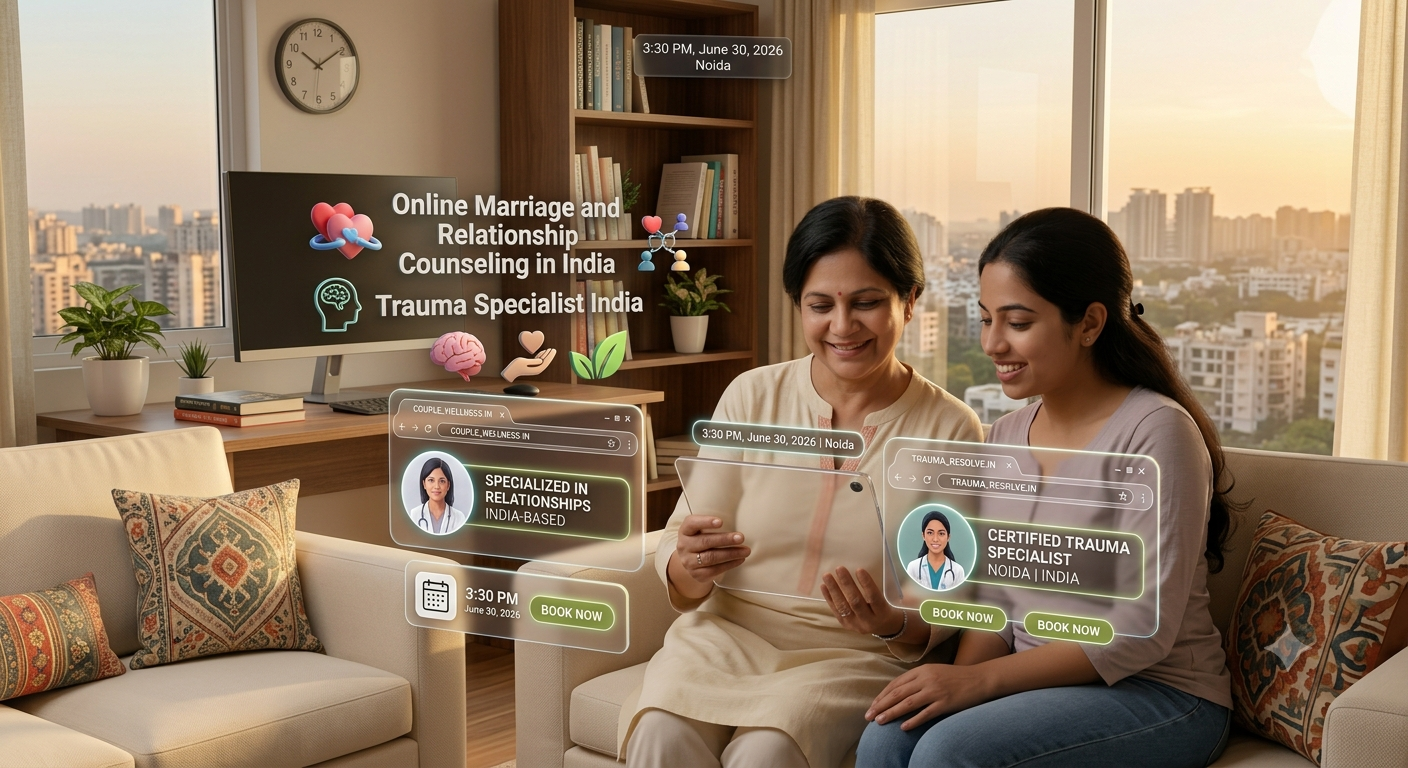
Sometimes the problem is obvious—frequent arguments, broken trust, financial disagreements or family interference. At other times, everything appears normal from the outside, yet one or both partners feel unheard, disconnected or emotionally exhausted.
This is one reason online marriage and relationship counseling in India is increasingly relevant for couples who want to understand their relationship rather than simply continue repeating the same disagreements.
There is another side to relationship difficulties that often receives less attention: the emotional experiences people bring into relationships. Fear, grief, abandonment, childhood experiences, previous abusive relationships or other distressing events can influence present-day reactions. When this happens, consulting an appropriately qualified trauma specialist India may help address the individual concerns behind relationship difficulties.
Every Argument Has a Story Behind It
Imagine a married couple arguing because one partner spends too much time working.
The conversation begins with:
“You are always working.”
The other partner responds:
“Everything I do is for this family.”
Within minutes, both people are angry.
On the surface, the argument is about work.
Underneath, however, one partner may actually be saying, “I don’t feel important to you anymore.”
The other may be thinking, “Nothing I do is ever appreciated.”
This difference between what people say and what they emotionally experience is important.
Many couples do not lack love. They lack a safe and effective way of communicating difficult emotions.
Why the Same Relationship Problems Keep Coming Back
Recurring arguments often follow predictable patterns.
A disagreement happens. One person becomes emotional. The other becomes defensive or silent. The first person feels ignored and pushes harder. The second withdraws further.
The argument eventually ends, but the underlying problem remains.
A few days later, something triggers the same cycle again.
Common recurring relationship concerns include:
- Communication breakdown
- Emotional distance
- Lack of appreciation
- Trust problems
- Jealousy
- Intimacy concerns
- Parenting disagreements
- Financial stress
- Work-life imbalance
- Family and in-law conflicts
- Different expectations about marriage
Online marriage and relationship counseling in India can provide a structured environment in which these patterns can be examined with professional guidance.
What Marriage Counseling Is Really About
Relationship counselling is sometimes misunderstood as the final option before divorce.
It does not have to be.
Couples can seek counselling at different stages of their relationship, including before marriage, during major transitions or when relatively small disagreements begin becoming repetitive.
The counsellor’s role is generally not to choose sides.
Instead, counselling may help partners recognise how they communicate, understand emotional needs, identify unhealthy patterns and develop more constructive approaches to disagreements.
What Happens in Online Relationship Counseling?
Every professional works differently, but counselling commonly begins with understanding the relationship.
A therapist may ask about the couple’s history, current difficulties, important life events and what each partner hopes to achieve.
Understanding the Problem
Both partners may have opportunities to explain their perspectives.
The purpose is to develop a broader understanding of the relationship rather than simply determine who caused the latest argument.
Recognising Emotional Patterns
Counselling may explore what happens immediately before, during and after conflicts.
This can reveal triggers that couples have stopped noticing.
Learning Different Responses
Once a pattern is recognised, couples may work on healthier ways of listening, communicating needs, establishing boundaries and managing disagreements.
The value of online marriage and relationship counseling in India lies partly in creating dedicated time for conversations that may otherwise become rushed, avoided or emotionally charged.
The Invisible Partner in Some Relationships: Past Trauma
Not every relationship difficulty begins with the current partner.
Sometimes experiences from years earlier continue influencing present reactions.
Suppose someone grew up in an environment where arguments regularly became threatening. As an adult, even a relatively ordinary disagreement may create intense fear or a strong desire to escape the conversation.
Another person who previously experienced betrayal may become extremely anxious when a partner does not answer the phone.
These reactions are not necessarily conscious choices.
This is where understanding trauma becomes important.
What Is a Trauma Specialist India?
A trauma specialist India is generally a mental health professional who has relevant qualifications, experience and training in working with people affected by psychologically distressing or overwhelming experiences.
Such experiences may include:
- Childhood neglect
- Emotional or physical abuse
- Domestic violence
- Sexual violence
- Serious accidents
- Bereavement
- Medical emergencies
- Bullying
- Workplace harassment
- Relationship abuse
- Natural disasters
People respond to difficult experiences differently. Experiencing trauma does not automatically mean that someone has PTSD or another mental health disorder.
Diagnosis should always be carried out by appropriately qualified professionals.
How Past Trauma Can Enter a Present Relationship
Trauma can sometimes influence relationships in subtle ways.
Difficulty Trusting a Partner
Previous betrayal, neglect or abuse may contribute to heightened sensitivity around honesty, rejection or abandonment.
Avoiding Difficult Conversations
A person may withdraw during conflict because confrontation feels emotionally unsafe.
Strong Reactions to Small Events
Certain situations can become emotional triggers because they resemble aspects of earlier distressing experiences.
Difficulty With Emotional Closeness
Vulnerability can feel uncomfortable for someone whose trust was previously violated.
Constant Need for Reassurance
Fear of rejection or abandonment can sometimes create repeated reassurance-seeking.
Working with a qualified trauma specialist India may help an individual explore these patterns and develop appropriate coping strategies.
Marriage Counseling and Trauma Therapy Are Not the Same
The two approaches can address different needs.
| Marriage & Relationship Counseling | Trauma-Focused Support |
| Focuses primarily on the relationship | Focuses primarily on the individual |
| Examines couple communication | Explores trauma-related responses |
| May involve both partners | Often conducted individually |
| Addresses recurring conflicts | Addresses triggers and emotional reactions |
| Develops relationship skills | Develops coping and regulation strategies |
There can also be overlap.
A couple may attend relationship counselling while one partner receives separate trauma-focused care. The appropriate arrangement depends on professional assessment and individual circumstances.
Is Online Counseling Suitable for Everyone?
Online counselling can provide flexibility, especially for busy professionals, parents, long-distance couples and people who do not have an appropriate specialist nearby.
However, it should not automatically be treated as the best option for every situation.
Privacy at home, internet reliability, clinical requirements and safety considerations can all influence whether online or face-to-face care is more appropriate.
A mental health professional can discuss these factors before treatment begins.
How to Choose the Right Professional in India
Do not choose a therapist based only on advertisements or social-media popularity.
Consider:
- Educational qualifications
- Professional credentials and registrations where applicable
- Experience with couples or relationship counselling
- Specific trauma-informed training when required
- Therapeutic methods used
- Confidentiality procedures
- Online session security
- Communication style
- Experience with your specific concerns
- Your comfort level during initial consultations
If you specifically need a trauma specialist India, ask directly about the professional’s training and practical experience with trauma-related concerns.
Frequently Asked Questions
1. What is online marriage and relationship counseling in India?
It is professional relationship counselling delivered remotely, usually through video sessions, to help individuals or couples explore relationship difficulties.
2. Is marriage counselling only for troubled marriages?
No. Couples may seek counselling to improve communication, prepare for marriage or manage major life transitions.
3. Can unmarried couples take relationship counselling?
Yes. Counselling may be appropriate for dating, engaged and long-term couples as well.
4. Can I attend without my spouse?
Yes. Individual counselling can still help you understand your emotions, behaviours and relationship patterns.
5. What does a trauma specialist India do?
A trauma-informed professional works with psychological responses associated with distressing or overwhelming experiences.
6. Can childhood experiences affect adult relationships?
They can sometimes influence trust, boundaries, communication and responses to emotional situations.
7. Can trauma cause relationship problems?
Trauma-related responses may sometimes affect communication, intimacy, emotional regulation and trust.
8. How many counselling sessions are needed?
There is no fixed number. It depends on the concerns, goals, therapeutic approach and individual progress.
9. Can relationship counselling and trauma therapy be taken together?
In some circumstances, yes. A qualified professional can recommend an appropriate treatment structure.
10. How can I know whether a therapist is right for me?
Check professional qualifications and relevant experience, but also consider whether you feel safe, respected and comfortable communicating with the therapist.
https://newsgrow.blogspot.com/2026/08/online-marriage-and-relationship.html