
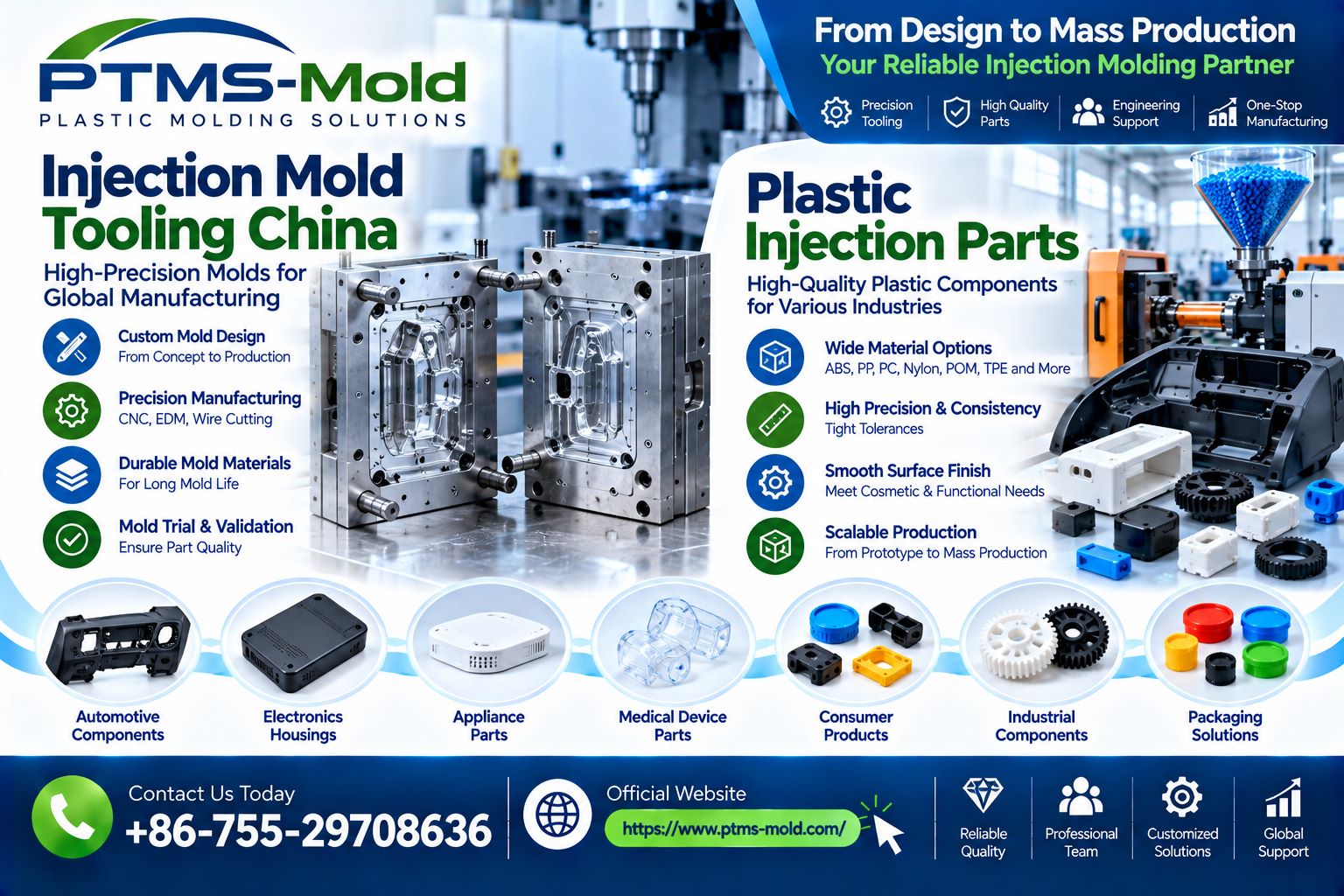
The injection molding market is seeing a shift from basic component production toward increasingly complex, application-specific manufacturing. Product developers now expect molded components to combine dimensional accuracy, functional features, attractive surfaces, efficient material usage, and dependable repeat production.
These changing requirements are influencing how international companies evaluate Injection Mold Tooling China. Instead of simply sending a drawing and requesting a mold quotation, buyers are increasingly assessing engineering capability, quality planning, process validation, project communication, and production scalability. The ultimate goal is to create Plastic Injection Parts that can perform consistently throughout the commercial life of a product.
Quality Planning Is Starting Before Mold Construction
Quality control traditionally receives the most attention after components have been produced. Modern injection molding programs are moving quality planning much earlier.
Before mold construction, customers and engineers can identify the characteristics that determine whether the final component will function correctly.
These may include mating dimensions, mounting locations, sealing surfaces, snap features, cosmetic areas, or other product-specific requirements.
For Injection Mold Tooling China, defining these characteristics before machining can help ensure that mold engineering decisions reflect the actual priorities of the finished product.
Risk-Based Engineering Can Prevent Expensive Corrections
Not every feature creates the same level of manufacturing risk.
A simple external radius may require relatively little discussion, while an internal undercut, thin section, deep rib, or tight-tolerance assembly interface may need detailed engineering consideration.
A risk-based review focuses attention on features most likely to influence tooling complexity or molding stability.
This approach can help project teams resolve challenging areas before they become expensive mold modifications.
Mold Architecture Determines How the Tool Operates
An injection mold is more than two pieces of metal forming a cavity.
Depending on the component, the tooling system may contain cores, cavities, ejector pins, slides, lifters, inserts, cooling channels, runner systems, and other mechanical elements.
Each feature should have a clear purpose.
A well-planned Injection Mold Tooling China project considers how these elements will operate repeatedly during production.
The tool should not only create the required geometry but also allow practical filling, cooling, mold opening, component release, and maintenance.
Plastic Injection Parts Need Realistic Dimensional Strategies
Design drawings can contain dozens or even hundreds of dimensions. Applying unnecessarily restrictive tolerances to every feature can make production more difficult and expensive.
For Plastic Injection Parts, a more practical approach is to identify which dimensions directly affect product performance.
Critical dimensions may determine whether components assemble correctly or interact with other parts. These characteristics may justify closer control and more frequent inspection.
Other dimensions may allow broader manufacturing tolerances without affecting the product.
This functional approach can improve both quality planning and production efficiency.
Process Windows Matter More Than One Perfect Sample
A manufacturer can sometimes produce an acceptable sample by carefully adjusting molding parameters. The greater challenge is maintaining acceptable results during repeat production.
A stable molding process should operate within an appropriate range rather than depending on one extremely narrow set of conditions.
Material behavior, temperature, pressure, cooling, and other factors can influence results.
During tooling validation, engineers can evaluate whether the mold and process provide reasonable production stability.
This distinction becomes particularly important when thousands of Plastic Injection Parts will be manufactured over multiple production orders.
Dimensional Variation Should Be Studied, Not Ignored
All manufacturing processes involve some degree of variation.
The objective is to understand and manage that variation so important product requirements remain within agreed limits.
For injection molding, dimensional behavior may be influenced by geometry, resin characteristics, shrinkage, tooling, cooling, and process conditions.
When trial measurements show unexpected variation, engineers should investigate the pattern rather than simply adjusting individual dimensions without understanding the cause.
This can create a stronger foundation for repeat manufacturing.
Tooling Corrections Should Follow Trial Evidence
Initial mold trials may identify areas requiring improvement.
However, immediately modifying the mold after observing one issue can sometimes create new problems.
A more structured approach is to review trial samples, measurements, molding observations, and assembly results together.
The team can then determine whether the issue is most likely related to the mold, component design, material, or process.
Evidence-based correction helps reduce unnecessary tooling changes.
For Injection Mold Tooling China projects managed across different countries, clear trial reports can make these decisions easier to communicate.
Inspection Methods Should Match Component Requirements
Different features require different inspection approaches.
Basic dimensions may be checked using conventional measuring equipment, while more complex geometry may require specialized measurement methods.
Visual requirements may also need agreed reference standards.
The appropriate inspection plan depends on component complexity, tolerances, production quantities, and application.
For Plastic Injection Parts, the objective should be meaningful verification rather than measurement for its own sake.
Quality resources should focus most heavily on characteristics that affect the customer’s final product.
Defect Prevention Is More Efficient Than Sorting
Sorting finished components after production can identify certain nonconforming parts, but prevention is generally a stronger manufacturing strategy.
Tooling condition, material handling, process control, maintenance, operator procedures, and inspection all contribute to defect prevention.
Common molding concerns can include flash, sink marks, incomplete filling, warpage, surface marks, or dimensional variation.
The exact cause can differ from project to project.
Systematic problem solving can help identify underlying causes instead of repeatedly relying on sorting.
Repeat Orders Require Configuration Control
Products often evolve after their initial launch.
A customer may update a dimension, modify a feature, change a material, or revise a cosmetic requirement.
When repeat production begins, both parties need to know exactly which version should be manufactured.
Configuration control helps connect the approved drawing, CAD model, material specification, and relevant production requirements.
This prevents an older product revision from accidentally returning to production.
For long-term injection molding programs, effective revision management can be just as valuable as accurate machining.
Frequently Asked Questions
What is Injection Mold Tooling China?
Injection Mold Tooling China describes sourcing injection mold design, engineering, manufacturing, testing, and related production support from manufacturers in China.
What are Plastic Injection Parts?
Plastic Injection Parts are components created by injecting heated thermoplastic into a mold, allowing it to cool into the required geometry, and then ejecting it.
Why should quality planning begin before tooling?
Early quality planning identifies critical requirements so that mold design, tolerances, testing, and inspection can be developed around actual product needs.
What are critical-to-quality dimensions?
They are dimensions or characteristics that can directly influence product function, fit, assembly, appearance, or other important requirements.
Why is process stability important?
A stable process supports repeatable manufacturing instead of relying on frequent adjustments to produce acceptable components.
Are mold modifications normal?
Some projects require corrections after initial trials. The need depends on product complexity, trial results, tolerances, and other requirements.
What causes dimensional variation in molded components?
Potential influences include material behavior, shrinkage, component geometry, cooling, mold condition, and processing parameters.
Why should trial data be reviewed before modifying a mold?
Trial evidence can help determine whether a problem originates from tooling, design, material, or processing, reducing unnecessary corrections.
How can buyers improve repeat-order consistency?
Using controlled drawings, approved materials, defined inspection requirements, stable tooling, and clear revision management can support consistency.
What should companies compare when selecting a tooling supplier?
Buyers can consider engineering capability, manufacturing resources, quality planning, trial support, communication, production capacity, maintenance, and long-term service.
About Company
Ptms-Mold supports custom plastic manufacturing through DFM analysis, mold engineering, tooling development, trial optimization, quality inspection, injection molding, and repeat-production support for precision component projects.
Media Contact
Injection Mold Manufacturing Enquiries
Email: Sales@ptms-mold.com
Official Website: ptms-mold.com