Delivery performance is becoming a major competitive factor in sheet-metal fabrication. Customers increasingly expect manufacturers to move quickly from quotation and drawing approval to production, inspection, and shipment. For job shops managing several orders at the same time, delays at one forming station can affect the entire delivery schedule.
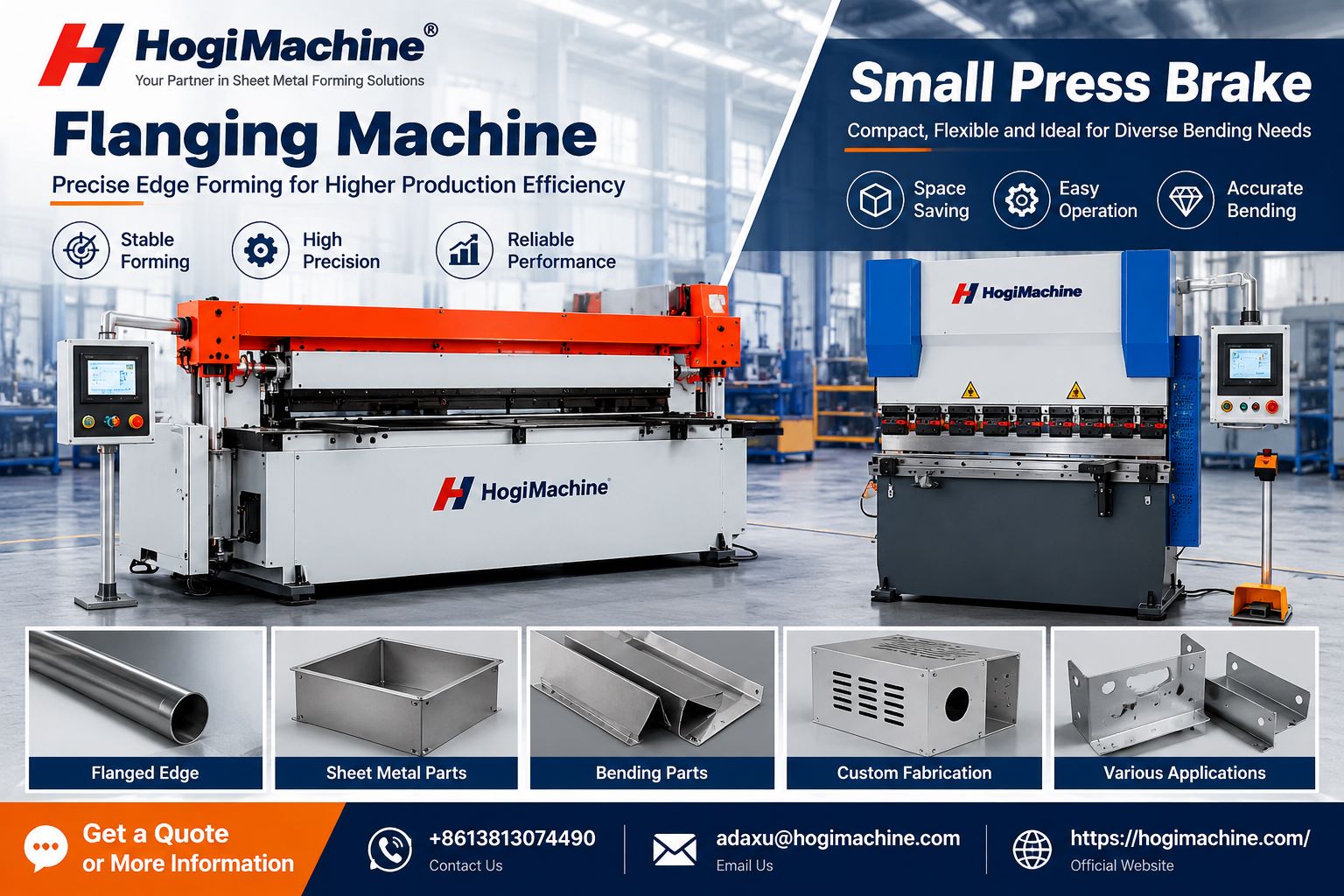
This pressure is changing how businesses evaluate the Flanging machine and small press brake. Instead of looking only at maximum machine capacity, manufacturers are considering how specialized and compact equipment can shorten production queues, improve order routing, and make delivery planning more predictable.
Production Queues Are Becoming a Key Performance Issue
A machine may operate efficiently while customer orders still move slowly through the factory.
This happens when multiple jobs wait for the same production resource.
For example, a component requiring a relatively straightforward edge-forming operation may remain in a queue behind unrelated work. Introducing a dedicated Flanging machine can create a separate production route where recurring flange requirements justify it.
The result is not simply additional machine capacity. It can also make production schedules easier to organize because different operations no longer compete for the same workstation.
Flanging Can Influence Assembly Speed
Fabricators often evaluate forming quality by checking the individual component. However, the real effect may become visible during assembly.
A correctly produced flange can help components align as intended and support subsequent joining or fitting operations.
Inconsistent edge geometry, by contrast, may require additional adjustment downstream.
For this reason, Flanging machine performance should be considered in relation to the complete manufacturing process.
The objective is to create components that progress smoothly into the next production stage rather than merely completing the forming operation quickly.
Small Press Brake Can Create a Fast Lane for Compact Jobs
One of the challenges in mixed production is deciding where smaller orders should be processed.
A few compact brackets may not require the capabilities of a large press brake, but they can still wait behind substantial production batches if only one bending route is available.
A small press brake can create a dedicated path for appropriate compact work.
This can be especially valuable for urgent replacement parts, engineering samples, small customer orders, and supporting components needed to complete larger assemblies.
Machine capability must always be matched to material, thickness, bend length, tooling, and required forming force.
Delivery Reliability Starts With Realistic Scheduling
Promising an unrealistic delivery date can create pressure throughout the factory.
Production planners need to understand machine availability, setup requirements, material status, inspection needs, and downstream operations before confirming schedules.
Separating flanging and compact bending workloads can improve visibility.
Planners can see how much work is waiting for each process and assign realistic priorities accordingly.
A small press brake may also provide useful backup capacity for suitable work when the main bending schedule is heavily loaded.
Batch Size Should Influence Production Strategy
Not every order should be approached in the same way.
A large repetitive batch may justify a different setup strategy from an order containing five customized components.
Short batches place greater importance on preparation because setup can represent a substantial part of total production time.
Manufacturers can improve efficiency by ensuring that drawings, materials, tooling, and inspection requirements are ready before the job reaches the machine.
For Flanging machine operations, this preparation can prevent the equipment from sitting idle while operators search for information or production resources.
Rush Orders Need Controlled Processes
Urgent work is common in fabrication.
Customers may need a replacement component because of an equipment breakdown or request a revised part to keep another project moving.
The temptation is to bypass normal procedures to save time.
However, skipping verification can create additional delays if the component needs to be produced again.
A better approach is to establish a controlled route for urgent work.
Where appropriate, a small press brake can become part of this rapid-response capability while normal production continues on larger machinery.
Work-In-Progress Visibility Can Reduce Hidden Delays
Components waiting between operations can easily become overlooked in busy workshops.
Clear identification of work-in-progress helps production teams understand which order each component belongs to and what operation comes next.
Job travelers, production labels, digital tracking, or other internal systems can be used depending on factory requirements.
When components move from cutting to a Flanging machine, then to assembly or another process, their production status should remain visible.
Better visibility helps supervisors identify delays before they threaten customer delivery dates.
Changeover Planning Can Increase Available Capacity
When several jobs require the same equipment, production sequence matters.
Repeatedly changing between unrelated setups can consume valuable production time.
Where customer deadlines permit, planners may group compatible work to reduce unnecessary changes.
A small press brake handling multiple short orders can particularly benefit from organized sequencing.
This does not mean delaying urgent work merely to reduce setups. Instead, scheduling should balance customer priorities with practical production efficiency.
Quality Problems Have a Direct Impact on Delivery
Rework affects more than manufacturing cost.
A rejected component may need to return to an earlier operation, potentially disrupting the schedules of several other jobs.
Preventing defects therefore contributes directly to delivery performance.
First-piece verification, correct drawing revisions, suitable tooling, material identification, and appropriate inspection can reduce avoidable production problems.
For recurring flange work, documenting successful setups can also help maintain consistency between different batches.
Equipment Selection Should Consider the Order Profile
Manufacturers evaluating new equipment should analyze the types of orders they actually receive.
A factory producing mainly large components has different requirements from a workshop processing hundreds of small custom jobs.
Important questions include: How many orders require flanging? How frequently do small bending jobs wait for larger equipment? How often are prototypes or replacement components requested? Which operations currently create delivery delays?
Answers to these questions can help determine whether dedicated flanging or compact bending capacity would improve the production system.
Frequently Asked Questions
What is a Flanging machine?
A Flanging machine is equipment used to form a flange or edge on a metal component according to specific fabrication and assembly requirements.
What is the purpose of a small press brake?
A small press brake provides bending capability for appropriately sized sheet-metal components within the machine’s specified working capacity.
Can dedicated flanging equipment reduce production queues?
It can help when recurring flange work currently competes with other jobs for the same production resources.
Is a compact press brake suitable for urgent orders?
It can be useful for suitable urgent components when the material, dimensions, tooling, and forming requirements remain within machine capabilities.
Why is setup preparation important for small batches?
Because setup time represents a larger proportion of total manufacturing time when only a limited number of components are being produced.
How can manufacturers improve delivery reliability?
Realistic scheduling, visible work-in-progress, appropriate machine allocation, controlled setups, quality checks, and effective communication between production stages can all help.
Why does flanging quality matter during assembly?
The geometry of a flange may influence alignment, fitting, joining, or the position of other components.
Can a small press brake complement larger equipment?
Yes. Suitable compact jobs can be allocated separately, leaving larger machinery available for work that requires greater capacity.
What causes forming-related production delays?
Possible causes include unavailable materials, incorrect drawings, tooling problems, inefficient setups, equipment downtime, quality failures, and overloaded production queues.
What should manufacturers review before investing in new forming machinery?
They should examine their order mix, materials, component sizes, required capacity, tooling, current bottlenecks, available space, maintenance requirements, operator needs, and future workload.
Media Contact
Metal Forming Equipment Enquiries
Phone: +86 138 1307 4490
Email: adaxu@hogimachine.com
Official Website: hogimachine.com