
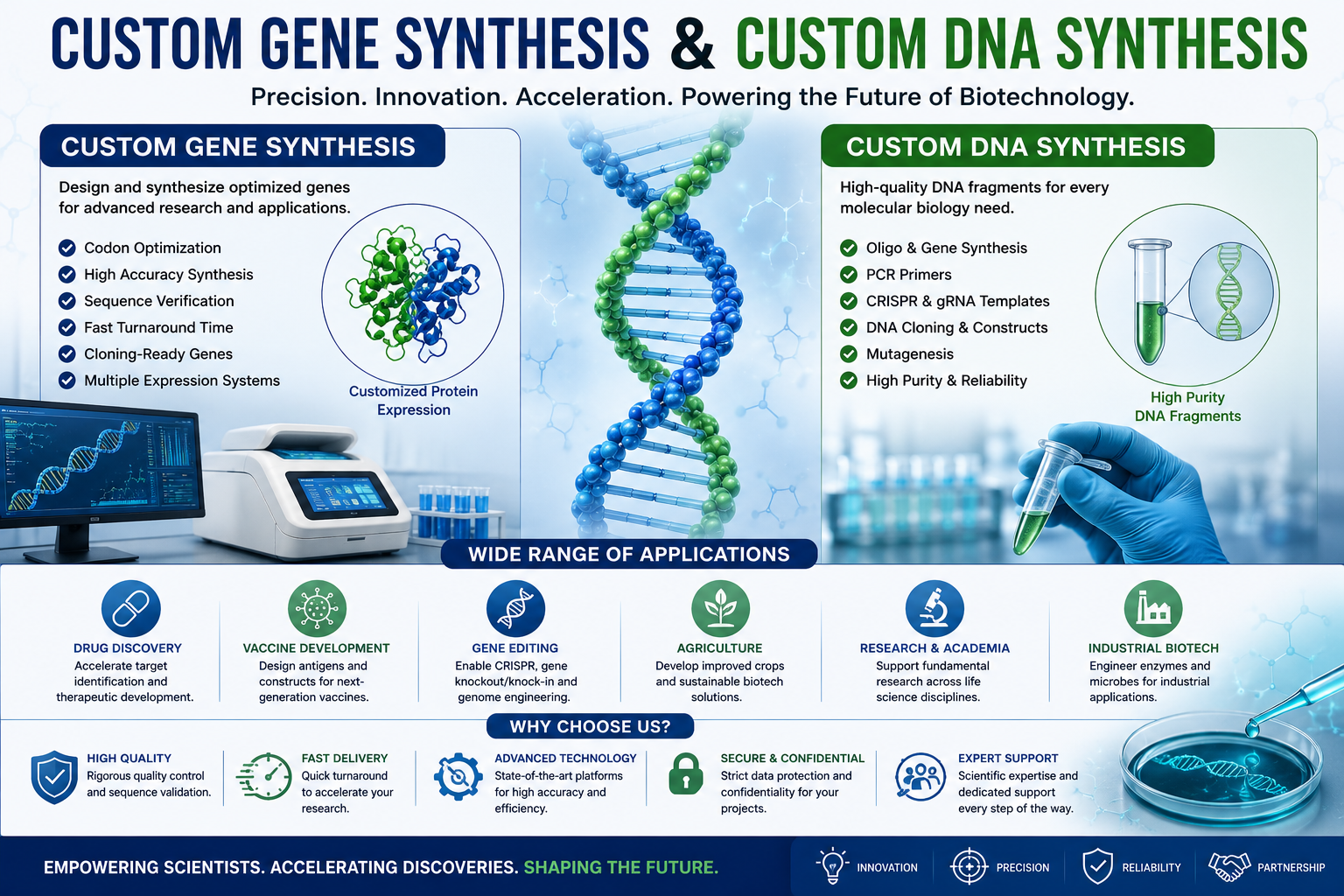
The rapid evolution of biotechnology is transforming how researchers approach genetic engineering, molecular biology, drug discovery, and synthetic biology. At the center of this progress are custom gene synthesis and custom DNA synthesis, two technologies that allow scientists to obtain precisely designed genetic sequences for specific research and development goals.
From academic laboratories to biotechnology companies and pharmaceutical research organizations, synthetic DNA is helping researchers move from concept to experiment more efficiently. Instead of relying exclusively on naturally occurring DNA or lengthy cloning workflows, scientists can design sequences according to their experimental requirements and obtain customized genetic material for downstream applications.
As demand for precision biotechnology continues to grow, reliable DNA synthesis services are becoming an important part of modern research infrastructure.
Understanding Custom Gene Synthesis
Custom gene synthesis is a biotechnology service used to create a DNA sequence based on a customer’s desired genetic design. Researchers can specify a target sequence, and specialized synthesis providers produce the corresponding DNA construct for laboratory use.
This approach is particularly valuable when a gene is difficult to isolate from natural sources, contains modifications, or needs to be optimized for expression in a particular host system.
A custom gene synthesis workflow may involve:
- Designing or submitting the desired DNA sequence.
- Reviewing sequence feasibility and technical requirements.
- Optimizing the sequence for the intended application.
- Synthesizing the DNA fragments.
- Assembling the required gene construct.
- Verifying the final sequence through quality-control procedures.
- Delivering the finished material in a suitable format.
This streamlined process can help researchers reduce the time associated with traditional cloning and accelerate experimental development.
Why Researchers Use Custom Gene Synthesis
Modern research frequently requires DNA sequences that are not readily available in standard repositories. Custom synthesis provides greater flexibility for designing genes, coding regions, regulatory elements, and other genetic constructs.
Common benefits include:
- Faster access to research-ready DNA
- Greater control over sequence design
- Reduced dependence on biological source material
- Support for difficult or complex genetic sequences
- Potential codon optimization for expression systems
- Flexible construct design
- Improved reproducibility across research projects
For researchers working on advanced molecular biology projects, these advantages can make custom gene synthesis an efficient alternative to conventional gene isolation and cloning approaches.
What Is Custom DNA Synthesis?
Custom DNA synthesis is a broader term that refers to the laboratory production of designed DNA sequences. Depending on the project, synthesized DNA may include short oligonucleotides, longer DNA fragments, complete genes, or assembled genetic constructs.
While gene synthesis focuses specifically on producing functional gene sequences, DNA synthesis can encompass a wider range of genetic materials used in research and biotechnology.
Custom Gene Synthesis vs. Custom DNA Synthesis
| Feature | Custom Gene Synthesis | Custom DNA Synthesis |
| Primary focus | Complete or functional gene sequences | Designed DNA sequences of varying lengths |
| Typical use | Gene expression and genetic engineering | Molecular biology and laboratory research |
| Design flexibility | High | High |
| Sequence optimization | Commonly available | Depends on service |
| Construct complexity | Genes and larger constructs | Oligos, fragments, and DNA sequences |
| Research applications | Protein production, synthetic biology | Cloning, diagnostics research, sequencing workflows |
The two terms are closely related and are sometimes used interchangeably. However, researchers should evaluate the exact capabilities of a provider before selecting a service.
Applications Across Biotechnology
The growing adoption of custom gene synthesis and custom DNA synthesis reflects their broad utility across scientific disciplines.
Synthetic Biology
Synthetic biology depends heavily on precisely designed genetic sequences. Researchers can construct biological systems with specific characteristics, investigate genetic pathways, and develop experimental models.
Protein Expression
Researchers studying recombinant proteins often require optimized genes that can be expressed efficiently in bacterial, yeast, mammalian, or other host systems. Gene synthesis can support these projects by providing sequences designed around the intended expression platform.
Drug Discovery and Development
Pharmaceutical research frequently involves studying disease-related genes, therapeutic targets, and biological pathways. Synthetic DNA can support laboratory research during early-stage target validation and candidate development.
Molecular Diagnostics Research
Designed DNA sequences can also be used in assay development, control materials, and research involving molecular detection technologies. Accurate sequence design is particularly important when researchers are developing highly specific experimental systems.
Genetic Engineering
Custom DNA constructs are widely used in research involving plasmid development, genetic modification, and functional studies. Synthetic sequences can help scientists explore gene function and evaluate genetic relationships.
Choosing a Reliable DNA Synthesis Provider
Selecting a synthesis partner requires more than comparing prices. Researchers should consider technical capabilities, quality standards, turnaround time, customer support, and sequence complexity.
Important Evaluation Criteria
Look for a provider that offers:
- Clear sequence design and optimization support
- Transparent quality-control procedures
- Reliable sequence verification
- Experience with complex DNA constructs
- Secure handling of customer information
- Flexible project scales
- Consistent manufacturing capabilities
- Technical assistance when required
A dependable provider should also communicate clearly about project feasibility and potential sequence challenges before production begins.
Key Factors That Influence Project Success
Several factors can affect the success of a DNA synthesis project. Sequence length, GC content, repetitive regions, secondary structures, and other characteristics may influence synthesis complexity.
Researchers should therefore provide accurate project information and clearly define their intended application. Early communication with the synthesis provider can help identify potential challenges and determine the most appropriate design strategy.
Another important consideration is sequence verification. High-quality genetic material is essential for reproducible research, so researchers should understand what quality-control and validation processes are included with their order.
The Future of Custom Gene Synthesis
Advances in synthetic biology, automation, computational design, and biotechnology are expected to increase demand for custom genetic sequences. As research becomes more specialized, scientists will increasingly require DNA designed for highly specific experimental purposes.
Future developments may focus on:
- Faster synthesis workflows
- Improved ability to handle complex sequences
- Greater design automation
- More sophisticated sequence optimization
- Integration with synthetic biology platforms
- Expanded support for large-scale genetic engineering
The combination of digital sequence design and advanced manufacturing is creating new opportunities for researchers across biotechnology and life sciences.
Frequently Asked Questions
1. What is custom gene synthesis?
Custom gene synthesis is the process of producing a DNA sequence designed according to a researcher’s specifications, often for genetic engineering, protein expression, or synthetic biology.
2. What is custom DNA synthesis?
Custom DNA synthesis involves creating designed DNA sequences for research applications. These may include DNA fragments, genes, or other custom genetic constructs.
3. Are custom gene synthesis and DNA synthesis the same?
They are closely related but not identical. Gene synthesis generally focuses on functional genes, while DNA synthesis can refer to a broader range of designed DNA sequences.
4. Why use custom gene synthesis?
Researchers use it to obtain specific genetic sequences without relying solely on natural DNA sources or lengthy traditional cloning procedures.
5. Can genes be optimized for expression?
Depending on the provider and project requirements, sequences may be optimized for expression in a selected host system.
6. What industries use synthetic DNA?
Biotechnology, pharmaceutical research, academic research, diagnostics development, and synthetic biology are among the major fields using synthetic DNA technologies.
7. How long does gene synthesis take?
Turnaround depends on sequence length, complexity, quality requirements, and the provider’s workflow. Researchers should request a project-specific estimate.
8. What affects DNA synthesis complexity?
Sequence length, repetitive regions, GC content, secondary structures, and other sequence characteristics can influence synthesis feasibility.
9. How important is sequence verification?
Sequence verification is essential for confirming that the delivered DNA matches the intended design and supports reliable downstream research.
10. How should researchers choose a synthesis provider?
Consider technical expertise, quality control, sequence verification, turnaround time, support services, and experience with your type of project.
https://newsgrow.blogspot.com/2026/06/custom-gene-synthesis-drives-next.html