Organizations are moving away from conventional monitoring methods and investing in RFID-powered technologies to achieve better visibility, accuracy, and operational efficiency.
From industrial facilities and warehouses to hospitals and corporate buildings, RFID solutions are becoming an essential component of modern digital infrastructure. These systems help businesses monitor valuable assets, manage access permissions, and improve safety through real-time data collection.
With advancements in wireless communication, IoT integration, and automation, active RFID tags and RFID access control systems are emerging as reliable solutions for organizations looking to build smarter and more secure environments.
Active RFID Tags Drive the Future of Asset Tracking
The use of Active RFID Tags is expanding rapidly as businesses require continuous monitoring of assets, equipment, and resources. Unlike passive RFID tags, active RFID tags contain built-in batteries that allow them to transmit signals independently over extended distances.
This capability makes active RFID technology highly suitable for applications where real-time visibility and accurate location tracking are required.
Active RFID tags are helping organizations achieve:
- Real-time asset identification
- Improved inventory management
- Faster equipment tracking
- Reduced chances of asset loss
- Better operational decision-making
Industries handling expensive machinery, medical devices, vehicles, and sensitive materials are increasingly relying on active RFID solutions to improve efficiency.
RFID Access Control Systems Redefine Workplace Security
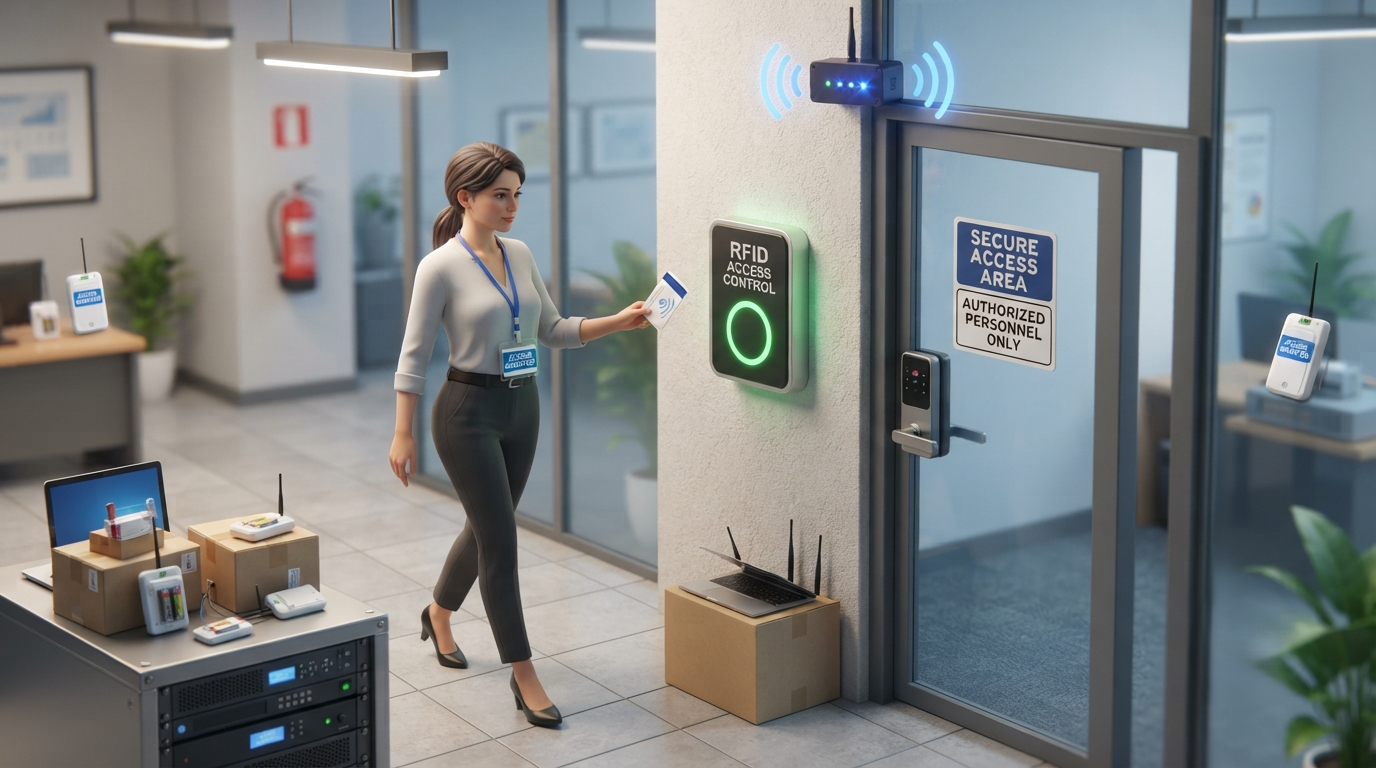
Security requirements are becoming more complex as organizations manage larger facilities and increasing numbers of employees. RFID Access Control systems are providing businesses with advanced methods to control and monitor entry points.
Unlike traditional keys and manual security checks, RFID access solutions use digital credentials to verify authorized users. Employees and visitors can access approved areas using RFID cards, smart badges, or electronic credentials.
The major benefits of RFID access control include:
- Secure authentication
- Automated entry management
- Detailed access records
- Reduced security risks
- Easy permission updates
These features make RFID access control an effective solution for offices, factories, educational campuses, healthcare facilities, and high-security locations.
Market Growth Supported by Industry-Wide Applications
The increasing implementation of RFID technology across different sectors is contributing to market expansion. Businesses are recognizing the value of combining real-time tracking with automated security management.
Manufacturing Companies Adopt RFID for Better Productivity
Manufacturing organizations are using active RFID tags to monitor tools, production equipment, and materials throughout their facilities. Real-time tracking reduces operational delays and supports better resource utilization.
RFID access control systems also help manufacturing plants restrict unauthorized entry into production zones and improve workplace safety.
Healthcare Industry Uses RFID for Better Patient and Asset Management
Hospitals and healthcare providers are adopting RFID solutions to improve the management of medical equipment and critical resources.
Active RFID tags help healthcare teams quickly locate essential devices, while RFID access control protects sensitive areas such as laboratories, storage rooms, and patient facilities.
Logistics Sector Benefits From Improved Supply Chain Visibility
The logistics and transportation industries are among the fastest adopters of RFID technology. Companies use active RFID tags to track shipments, containers, vehicles, and warehouse inventory.
These systems provide accurate information about asset movement and help businesses improve delivery performance.
Businesses Upgrade Corporate Security With RFID
Corporate organizations are implementing RFID access control systems to create safer workplaces. Digital access management allows companies to control employee entry, monitor activity, and maintain security records.
Combining Active RFID Tags With RFID Access Control Creates Smarter Operations
Industry specialists believe that integrating active RFID tags with RFID access control technology can provide organizations with a complete solution for security and operational management.
For example, a large industrial facility can use RFID access control to verify employee authorization while active RFID tags monitor equipment movement and asset locations.
This integrated approach delivers several advantages:
- Improved workplace monitoring
- Enhanced security response
- Greater asset visibility
- Reduced operational risks
- Increased productivity
By connecting tracking and access management systems, organizations can create intelligent environments that support automation and better decision-making.
Key Differences Between Active RFID Tags and RFID Access Control
| Category | Active RFID Tags | RFID Access Control |
| Primary Function | Tracking assets and people | Managing secure access |
| Communication Method | Wireless signal transmission | Credential verification |
| Main Focus | Location visibility | Security authorization |
| Typical Usage | Logistics, healthcare, manufacturing | Offices, buildings, restricted areas |
| Technology Advantage | Long-range monitoring | Controlled entry management |
Although these technologies have different functions, they complement each other when used in modern security and management systems.
Future Developments in RFID Technology
The future of RFID technology is expected to become more advanced as businesses integrate artificial intelligence, cloud computing, and IoT-based solutions.
Upcoming developments may include:
- AI-powered RFID analytics
- Cloud-based security platforms
- Smart wearable RFID devices
- Advanced sensor-enabled tags
- Mobile access authentication
These innovations will help organizations achieve higher levels of automation, security, and operational intelligence.
Frequently Asked Questions About Active RFID Tags and RFID Access Control
What are Active RFID Tags used for?
Active RFID tags are used for tracking assets, equipment, vehicles, inventory, and personnel in real time.
How do Active RFID Tags work?
They use internal batteries to transmit wireless signals that are captured by RFID readers and processed through software systems.
What makes Active RFID Tags different from passive RFID tags?
Active RFID tags provide longer communication ranges and continuous tracking, while passive RFID tags require reader-generated energy.
What is the purpose of RFID Access Control?
RFID access control manages secure entry by verifying authorized users through RFID-enabled credentials.
Can RFID Access Control replace traditional keys?
Yes, RFID systems can replace physical keys with digital credentials that are easier to manage and monitor.
Are Active RFID Tags suitable for industrial environments?
Yes, active RFID tags are widely used in factories, warehouses, and industrial facilities.
Can RFID Access Control systems monitor employee access?
Yes, these systems record entry and exit activities for improved security management.
Which industries use RFID technology?
Industries such as healthcare, logistics, manufacturing, transportation, and corporate sectors use RFID solutions.
Are RFID systems compatible with IoT technology?
Yes, modern RFID systems can integrate with IoT platforms for advanced monitoring and automation.
What is the future scope of RFID technology?
RFID technology is expected to grow with AI, cloud computing, and smart automation applications.
Read more – https://newsgrow.blogspot.com/2026/08/long-range-rfid-reader-and-active-rfid.html
https://blogstream.net/long-range-rfid-reader-and-active-rfid-reader-a-smarter-way-to-track-assets/
https://newsgrow.blogspot.com/2026/08/active-rfid-tags-and-rfid-access.html