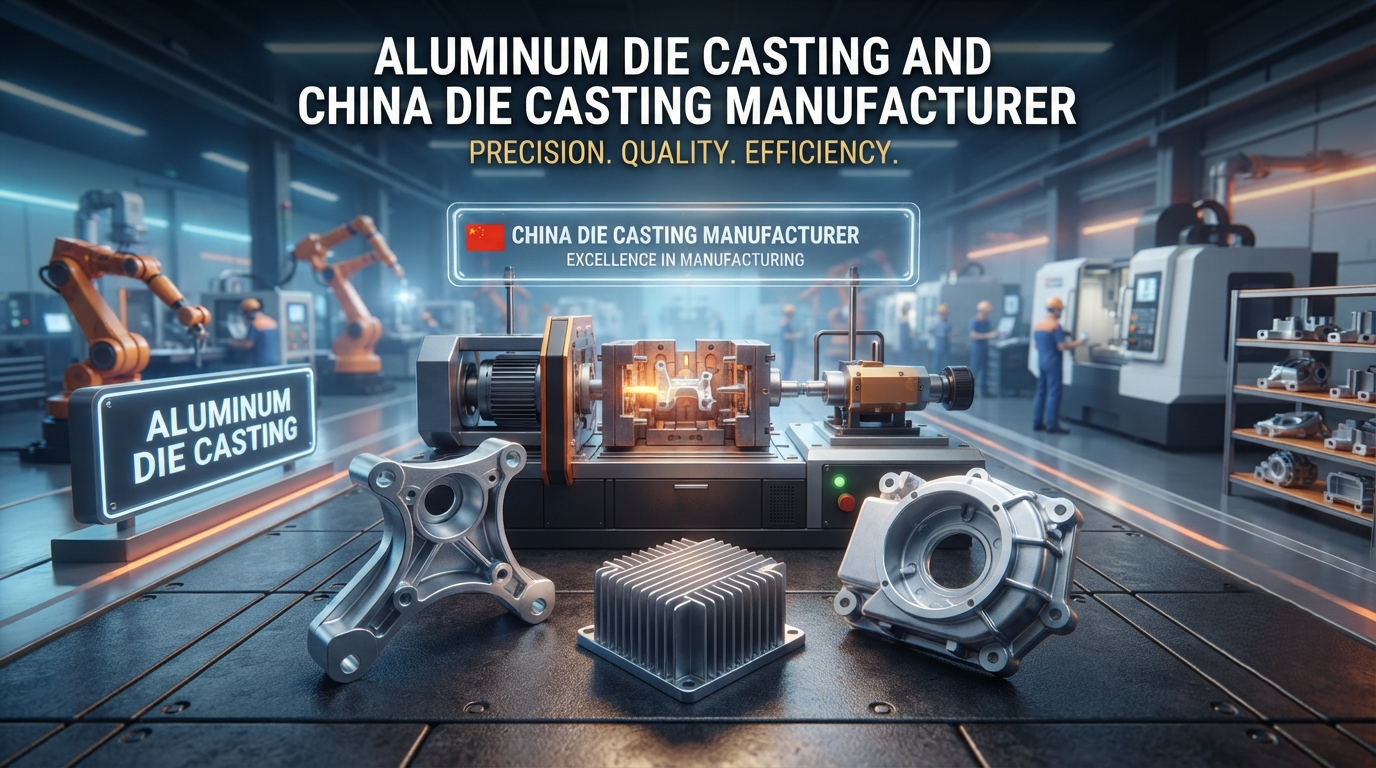
Manufacturing industries today demand components that are lighter, stronger, more reliable, and economically efficient. To meet these requirements, aluminum die casting has become a leading production method for creating precision metal parts used across multiple sectors.
The process combines advanced engineering, high-speed production, and excellent material performance, making it ideal for industries that require complex designs and consistent quality. From electric vehicles and electronic devices to industrial machinery and consumer goods, aluminum die casting plays an important role in modern product development.
A trusted China die casting manufacturer helps companies worldwide achieve their manufacturing goals by offering complete solutions, including mold design, casting production, finishing services, and quality inspection. With advanced technology and experienced professionals, Chinese manufacturers have become valuable partners in the global supply chain.
Exploring the Fundamentals of Aluminum Die Casting
What Is Aluminum Die Casting and How Does It Work?
Aluminum die casting is a specialized manufacturing process used to produce metal components by forcing molten aluminum alloy into a precision-engineered mold under high pressure. The mold cavity determines the final shape of the product, allowing manufacturers to create detailed components with excellent accuracy.
The process is popular because it delivers:
- Precise dimensions
- Smooth surface finishes
- High production speed
- Strong mechanical performance
- Reduced material waste
Unlike conventional manufacturing methods, aluminum die casting is designed for producing large quantities of identical components while maintaining consistent quality.
Why Aluminum Is the Preferred Material for Die Casting
Unique Properties That Make Aluminum Ideal
Aluminum has become one of the most widely used materials in die casting because of its combination of physical and mechanical advantages.
Lightweight Performance
Reducing product weight is a major priority in industries such as automotive and aerospace. Aluminum components provide strength without adding unnecessary weight.
Strong Mechanical Properties
Aluminum alloys offer excellent durability and resistance to mechanical stress, making them suitable for demanding applications.
Heat Management Capability
The excellent thermal conductivity of aluminum makes it valuable for products that require efficient heat dissipation, especially electronic devices and automotive systems.
Resistance Against Environmental Damage
Aluminum naturally protects itself from corrosion, helping components maintain performance over long periods.
Sustainable Manufacturing Benefits
Because aluminum can be recycled repeatedly, it supports environmentally friendly production strategies.
How a China Die Casting Manufacturer Supports Global Production
Advantages of Working With Chinese Manufacturing Experts
A professional China die casting manufacturer provides more than basic production services. These companies offer complete manufacturing support, helping businesses transform ideas into finished products.
China’s manufacturing industry has developed advanced capabilities through:
- Modern high-pressure die casting machines
- Automated production technology
- Skilled engineering teams
- Precision mold-making facilities
- Strict quality management systems
Businesses choose Chinese suppliers because they can provide:
- Customized component development
- Prototype manufacturing
- Large-volume production
- Surface finishing solutions
- Cost optimization strategies
A reliable manufacturer works closely with customers to improve product design, reduce manufacturing challenges, and achieve better production results.
The Complete Aluminum Die Casting Production Journey
From Design Concept to Finished Component
Product Design and Simulation
The first stage involves creating detailed digital designs and analyzing manufacturing requirements. Engineers evaluate the structure, material selection, and production possibilities before manufacturing begins.
Important design factors include:
- Product dimensions
- Weight requirements
- Strength expectations
- Heat resistance
- Assembly needs
Precision Die Mold Manufacturing
The die mold determines the quality and accuracy of the final component. Manufacturers use advanced machining technology to create durable molds capable of handling repeated production cycles.
A high-quality mold improves:
- Product consistency
- Surface appearance
- Production efficiency
- Overall component quality
Aluminum Melting and Casting
Selected aluminum alloys are heated until they become molten. The liquid metal is then injected into the mold at high pressure, filling every section of the cavity.
This process creates complex parts with excellent repeatability.
Post-Casting Operations
After casting, components may require additional processing, including:
- CNC machining
- Cutting
- Grinding
- Polishing
- Surface coating
- Assembly
Quality Testing
Professional manufacturers conduct detailed inspections to verify:
- Dimensional accuracy
- Surface quality
- Material strength
- Product performance
Major Industries Using Aluminum Die Casting
Where Aluminum Casting Technology Creates Value
Automotive and Electric Vehicle Sector
The automotive industry relies heavily on aluminum die casting to manufacture lightweight components.
Common applications include:
- Engine covers
- Transmission cases
- EV battery housings
- Motor components
- Structural supports
The use of aluminum helps improve fuel efficiency and supports the development of electric vehicles.
Electronics and Technology Products
Electronic manufacturers use aluminum die casting for protective and functional components such as:
- Device enclosures
- Cooling components
- LED housings
- Communication equipment parts
Industrial Manufacturing
Industrial companies use aluminum cast parts for:
- Machinery frames
- Pump components
- Automation systems
- Equipment housings
Consumer Goods
Many consumer products use aluminum die casting because it provides durability, attractive appearance, and long service life.
Aluminum Die Casting Compared With Other Production Methods
Selecting the Best Manufacturing Solution
| Production Method | Strengths | Weaknesses |
| Aluminum Die Casting | High efficiency, accurate parts, suitable for mass production | Requires mold investment |
| CNC Machining | Excellent precision and flexibility | Higher cost for large quantities |
| Plastic Injection Molding | Affordable and lightweight production | Lower strength capability |
| Traditional Casting | Suitable for large components | Lower accuracy and finish quality |
For industries requiring high-volume metal parts, aluminum die casting remains a highly efficient option.
Choosing the Right China Die Casting Manufacturer
Essential Qualities of a Reliable Supplier
Selecting the correct manufacturing partner can directly influence product success.
Businesses should evaluate:
Industry Experience
Manufacturers with years of experience understand material behavior, production challenges, and quality requirements.
Technical Capabilities
Advanced equipment and skilled engineers ensure better product development and manufacturing accuracy.
Quality Assurance Systems
A professional supplier should have strong inspection procedures and quality management practices.
Custom Manufacturing Support
The ideal partner should provide:
- Design assistance
- Prototype production
- Mold development
- Surface finishing
- Assembly services
Communication and Delivery Reliability
Strong communication helps avoid delays and ensures smooth cooperation throughout the project.
Future Development of Aluminum Die Casting Technology
Innovations Shaping the Manufacturing Industry
The aluminum die casting sector continues to advance with new technologies focused on efficiency and sustainability.
Future developments include:
- Automated casting systems
- Artificial intelligence quality monitoring
- Smart factory solutions
- Eco-friendly production techniques
- Advanced lightweight alloys
- Improved recycling methods
These innovations will help manufacturers produce better components while reducing environmental impact.
Frequently Asked Questions About Aluminum Die Casting
What is aluminum die casting?
Aluminum die casting is a manufacturing process that produces metal components by injecting molten aluminum into precision molds under pressure.
What are the main benefits of aluminum die casting?
The major benefits include lightweight design, strength, accuracy, corrosion resistance, and fast production capability.
Why are China die casting manufacturers popular?
They provide advanced technology, competitive pricing, engineering expertise, and large production capabilities.
Which industries use aluminum die casting?
Automotive, electronics, industrial machinery, telecommunications, and consumer product industries commonly use this technology.
Can aluminum die casting support custom designs?
Yes, manufacturers can create customized components according to specific shapes, sizes, and performance requirements.
Is aluminum die casting suitable for mass production?
Yes, it is especially effective for producing large quantities of identical components.
What aluminum alloys are used in die casting?
Common alloys include ADC12, A380, and A356 because of their excellent casting performance.
How long can aluminum die casting parts last?
With proper design and finishing, aluminum die casting components can provide long-term durability.
What finishing options are available after casting?
Common options include polishing, coating, anodizing, machining, and surface treatments.
How do companies select a reliable die casting supplier?
Companies should review manufacturing experience, technology, quality systems, production capacity, and customer support.
Read more – https://newsgrow.blogspot.com/2026/08/aluminum-die-casting-manufacturer-and.html
https://newsgrow.blogspot.com/2026/08/die-casting-manufacturer-and-die.html
https://newsgrow.blogspot.com/2026/08/zinc-die-casting-and-die-casting-mold.html
https://newsgrow.blogspot.com/2026/08/aluminum-die-casting-and-china-die.html