
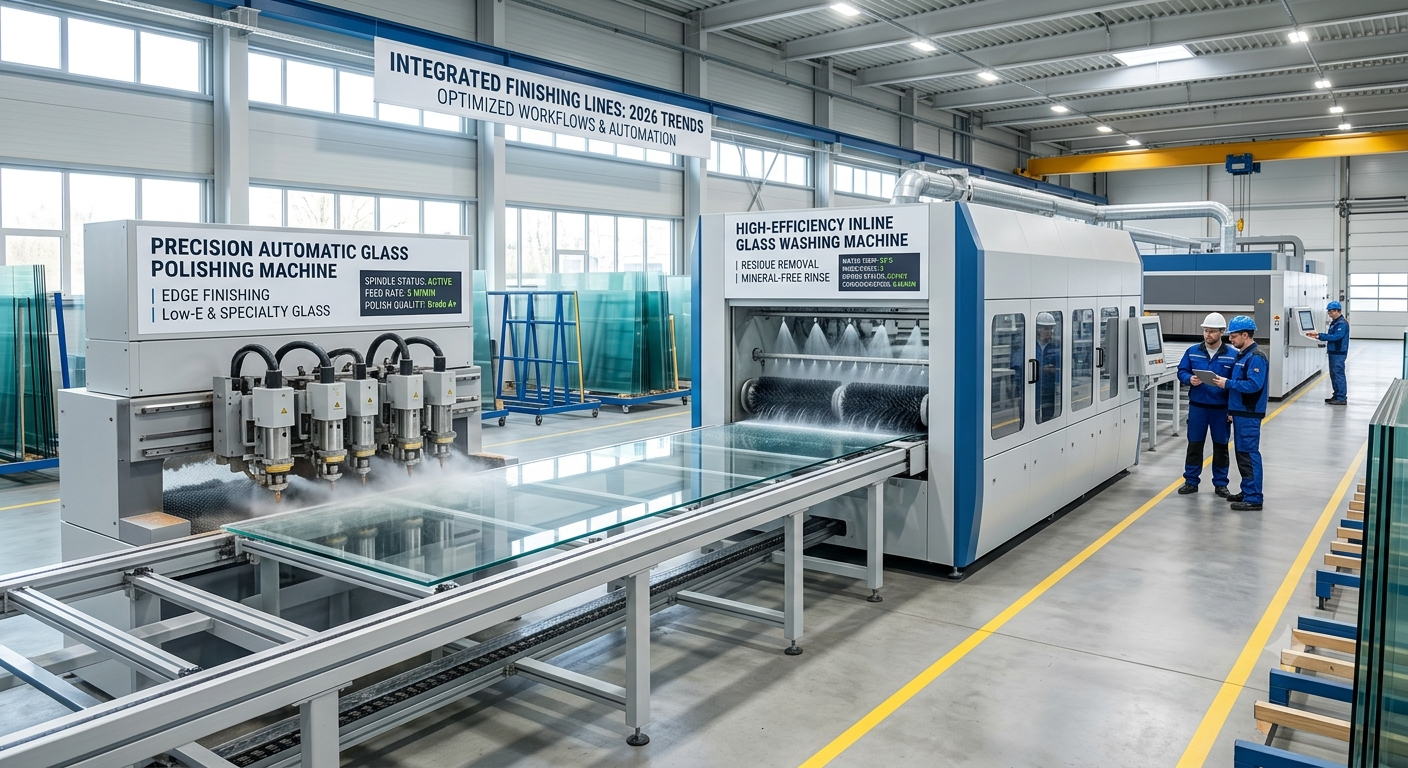
The glass processing industry is entering a new phase of automation, precision, and quality control as manufacturers increasingly invest in advanced equipment designed to improve production efficiency. Among the most important technologies supporting this transformation are the glass polishing machine and glass washing machine. Together, these machines help manufacturers achieve cleaner surfaces, smoother edges, better finishing, and consistent product quality across a wide range of applications.
From architectural glazing and furniture glass to automotive components and interior décor, processed glass is becoming more sophisticated. As customer expectations rise, manufacturers are looking beyond traditional manual processes and adopting automated solutions that can deliver reliable results at higher production speeds.
Why Glass Processing Technology Is Changing
Modern glass manufacturers face several challenges, including rising labor costs, strict quality requirements, higher production volumes, and the need to reduce material waste. Manual polishing and cleaning can be time-consuming and may produce inconsistent results.
Advanced machinery addresses these challenges by combining automation with precise control. A glass polishing machine is primarily designed to refine and finish glass surfaces or edges, while a glass washing machine removes dust, particles, oil, and other contaminants before the glass moves to the next production stage.
The integration of both technologies can create a smoother and more efficient processing workflow.
The Role of Automated Glass Polishing
Polishing is an important stage in glass fabrication, especially when the final product requires a refined appearance or accurately finished edges. Depending on the machine configuration, automated polishing equipment can support different glass shapes, thicknesses, and processing requirements.
Key advantages include:
- Consistent edge finishing
- Improved surface appearance
- Higher processing accuracy
- Reduced dependence on manual labor
- Better production repeatability
- Improved workplace safety
- Reduced processing time
For manufacturers producing large quantities of glass, automation can help maintain consistent quality from the first piece to the last.
Why Glass Washing Matters
After cutting, grinding, drilling, or polishing, glass surfaces may contain fine particles, coolant residue, fingerprints, and other contaminants. A glass washing machine is designed to clean the material efficiently before further processing, inspection, coating, or installation.
A typical automated washing system may include:
- Loading and conveyor transportation
- Pre-cleaning or rinsing
- Brush-based washing
- High-pressure water cleaning
- Air drying
- Final inspection
The result is a cleaner glass surface that is better prepared for subsequent manufacturing or assembly operations.
Glass Polishing Machine vs. Glass Washing Machine
Although both machines contribute to high-quality glass production, their functions are different. Understanding these differences helps manufacturers select the right equipment for their production lines.
| Feature | Glass Polishing Machine | Glass Washing Machine |
| Primary purpose | Finishing and polishing | Cleaning and drying |
| Main processing area | Glass edge or surface | Glass surface |
| Key benefit | Smooth and refined finish | Clean, residue-free glass |
| Typical use | Edge finishing and surface refinement | Pre-processing and final cleaning |
| Automation level | Manual, semi-automatic, or automatic | Manual, semi-automatic, or automatic |
| Quality impact | Improves appearance and finishing accuracy | Improves cleanliness and preparation |
When used together, these technologies can support a more complete production process, helping manufacturers improve both the appearance and cleanliness of finished glass.
Industries Benefiting From Advanced Glass Machinery
The growing adoption of automated processing equipment is closely connected to the expanding use of glass in modern construction and manufacturing.
Architectural Glass
Buildings increasingly feature large glass façades, partitions, doors, windows, and curtain walls. These applications demand excellent visual quality and precise finishing. Automated polishing and washing equipment helps manufacturers meet these expectations while handling larger production volumes.
Automotive Glass
Automotive glass requires strict quality control because even minor surface defects can affect appearance and performance. Automated cleaning systems help prepare glass for inspection and additional manufacturing processes.
Furniture and Interior Design
Glass tables, shelves, cabinets, shower enclosures, and decorative panels often require polished edges and spotless surfaces. Reliable processing equipment can improve consistency while reducing production delays.
Solar and Specialty Glass
Solar panels and other specialized glass products require controlled processing environments. Cleaning and finishing technologies can play an important role in maintaining surface quality throughout production.
Key Factors to Consider Before Buying
Selecting the right machine requires more than comparing purchase prices. Manufacturers should evaluate the equipment according to their production requirements and long-term goals.
Important considerations include:
- Glass dimensions and thickness range
- Required production capacity
- Machine automation level
- Polishing or washing configuration
- Energy and water consumption
- Maintenance requirements
- Availability of replacement parts
- Operator safety features
- Equipment footprint
- Manufacturer technical support
A machine that matches the production environment can provide better efficiency and a stronger return on investment over time.
Automation Becomes a Competitive Advantage
The glass industry is increasingly moving toward smart manufacturing, and automation is becoming an important competitive advantage. Modern equipment can reduce repetitive manual work while improving process consistency.
Some advanced systems may also incorporate digital controls, sensors, programmable settings, and automated monitoring. These technologies allow operators to manage production parameters more efficiently and identify potential issues before they lead to significant quality problems.
For manufacturers, the benefits can extend beyond speed. Better process control may contribute to:
- Lower material waste
- More predictable production schedules
- Consistent product quality
- Reduced labor requirements
- Improved operational visibility
Combining Polishing and Washing Processes
Manufacturers that integrate a glass polishing machine with a glass washing machine can create a more streamlined workflow. For example, glass can undergo edge finishing before moving through an automated cleaning and drying stage.
This approach can help reduce unnecessary handling between processes. Less manual movement may also lower the risk of fingerprints, scratches, and contamination during production.
A More Efficient Production Workflow
A modern glass processing line may follow this sequence:
- Glass cutting
- Edge grinding or polishing
- Drilling or additional fabrication
- Automated washing
- Drying
- Quality inspection
- Packaging and dispatch
The exact sequence depends on the product and manufacturing requirements, but the principle remains the same: automation connects individual processes into a more efficient production system.
The Future of Glass Processing
The future of glass manufacturing is expected to focus increasingly on automation, resource efficiency, and intelligent production. Manufacturers are likely to seek machines that consume fewer resources while delivering greater productivity.
Water recycling systems, energy-efficient components, improved brush technology, advanced drying systems, and digital controls could become increasingly important purchasing considerations.
At the same time, demand for customized glass products is encouraging manufacturers to adopt flexible equipment capable of handling different dimensions and specifications. This creates opportunities for suppliers developing adaptable machinery for both large-scale factories and specialized processors.
Frequently Asked Questions
1. What is a glass polishing machine?
A glass polishing machine is industrial equipment used to refine and finish glass surfaces or edges, helping achieve a smoother and more consistent appearance.
2. What does a glass washing machine do?
A glass washing machine automatically cleans glass surfaces by removing dust, particles, residues, and other contaminants before further processing or installation.
3. Can polishing and washing machines be used together?
Yes. Using both machines in a coordinated production line can help manufacturers achieve polished finishes and clean glass while reducing manual handling.
4. Why is glass washing important after polishing?
Polishing can leave fine particles or processing residues on glass. Washing removes these contaminants and prepares the surface for inspection, coating, assembly, or installation.
5. Are automated glass machines suitable for large factories?
Yes. Automated systems are particularly useful for high-volume production because they can improve consistency and reduce repetitive manual operations.
6. Can a glass polishing machine handle different glass thicknesses?
Many modern machines are designed to process multiple thickness ranges, but the actual capability depends on the specific machine configuration.
7. What industries use glass washing machines?
Architectural glass, automotive glass, furniture, interior design, solar, and specialty glass manufacturers commonly use automated washing equipment.
8. How does automation improve glass production?
Automation can improve process consistency, reduce repetitive labor, increase production efficiency, and support better quality control.
9. What should buyers consider when selecting equipment?
Buyers should evaluate capacity, glass dimensions, thickness compatibility, automation, maintenance, energy consumption, safety, and after-sales technical support.
10. Is equipment maintenance important?
Yes. Regular maintenance helps preserve machine performance, reduce unexpected downtime, and extend equipment service life.
https://newsgrow.blogspot.com/2026/06/glass-polishing-machine-and-glass_0387364086.html