
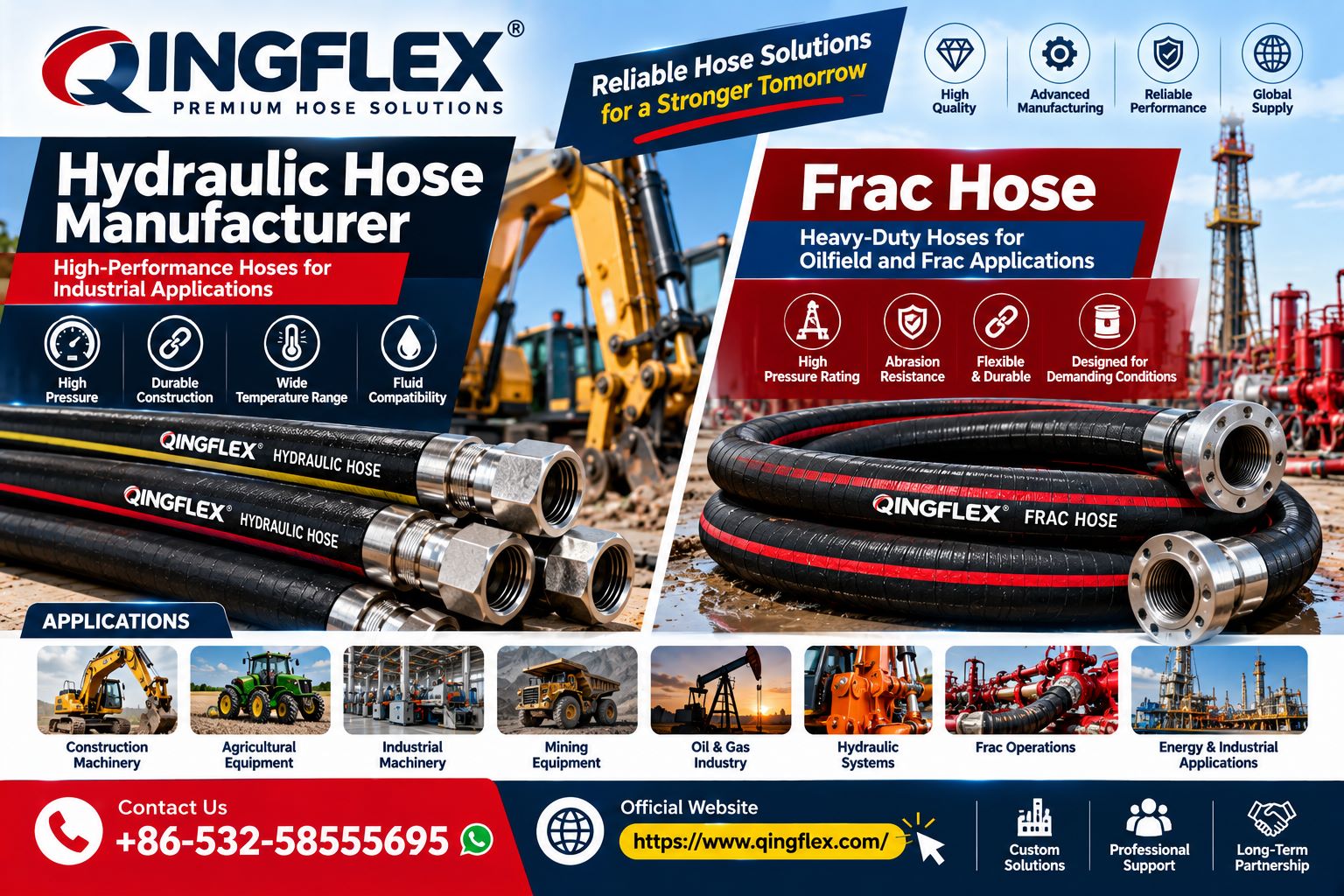
Reliability planning is becoming a stronger priority across hydraulic equipment, oilfield operations, mining, construction, and other heavy industries. Instead of viewing flexible hoses as routine consumable components, operators are increasingly examining how specification, installation, pressure cycles, movement, environmental exposure, inspection, and maintenance affect overall performance.
The Hydraulic Hose remains essential for transmitting hydraulic fluid through equipment where flexibility is required. In hydraulic fracturing environments, the frac hose supports specialized fluid-transfer applications where operating conditions can be particularly demanding.
This growing focus is encouraging maintenance teams to consider the complete working environment rather than replacing hoses only after visible deterioration appears.
Hydraulic Hose Performance Is Linked to Duty Cycle
Not every hydraulic system operates in the same way.
Some machines run intermittently, while others work for extended periods or experience repeated pressure changes and equipment movement. These differences can influence how a Hydraulic Hose should be specified and maintained.
A useful application review can consider the frequency of operation, system pressure, fluid temperature, surrounding environment, hose movement, and connection arrangement.
Understanding the duty cycle gives engineers a more complete picture than relying only on maximum pressure information.
It can also help maintenance teams determine which hose positions deserve closer monitoring because of demanding operating patterns.
Frac Hose Applications Require Detailed Site Evaluation
Hydraulic fracturing operations can involve multiple pieces of equipment connected within a complex field environment.
A frac hose used in such applications should be selected according to its intended service and documented technical requirements.
Site conditions may introduce movement, vibration, outdoor exposure, mechanical contact, and intensive operating schedules.
This means engineers should evaluate not only the hose itself but also its installation location.
Questions about where the hose will run, how equipment will move, what it may contact, and how personnel will access it for inspection can influence the overall installation strategy.
Pressure Cycles Deserve Greater Attention
A hose may experience repeated changes in pressure throughout its operating life.
These cycles are different from simply considering a single static pressure value.
For a Hydraulic Hose, the actual operating profile should therefore be understood as completely as practical when selecting a suitable product.
Equipment documentation and manufacturer information can help engineering teams identify appropriate requirements.
A frac hose may also operate under demanding pressure conditions, making accurate specification and application-specific evaluation essential.
Temperature Can Influence Hose Selection
Temperature is another factor that can be overlooked during replacement purchasing.
The temperature of the transferred fluid and the surrounding operating environment may both be relevant depending on the application.
A Hydraulic Hose should be suitable for the temperatures expected in service and compatible with the intended hydraulic medium.
Similarly, a frac hose should be selected according to the temperature and media conditions defined for its specific application.
Using technical documentation to confirm suitability is preferable to assuming that a previously used hose construction is appropriate for every operating environment.
Equipment Layout Can Affect Hose Routing
Modern industrial equipment often places multiple hydraulic components within limited installation spaces.
This can create routing challenges.
A hose that is forced around an obstruction, installed with an excessively tight bend, or allowed to rub continuously against equipment can experience unnecessary mechanical stress.
Routing a Hydraulic Hose should therefore account for specified bending requirements, movement, connection position, and potential contact points.
For a frac hose, field layout deserves similar attention.
Where equipment positions change, routing should be reassessed to ensure that the hose is not subjected to unintended pulling, twisting, or interference.
Connection Points Need Routine Observation
Hose ends deserve particular attention during inspection.
Fittings and connection areas form part of the complete assembly and should be checked for visible conditions requiring further assessment.
Hose and fitting compatibility should also be verified when an assembly is manufactured or replaced.
Components that appear physically compatible are not necessarily designed to function together.
For both Hydraulic Hose and frac hose assemblies, manufacturer requirements and appropriate assembly procedures should guide component selection.
Qualified personnel should handle installation and connection work according to relevant procedures.
Cleanliness Matters During Hydraulic Maintenance
Contamination control is an important consideration in many hydraulic systems.
During hose replacement, open connections can potentially expose the system to unwanted contaminants if maintenance procedures are not properly managed.
Maintenance teams should follow equipment and site-specific procedures when removing or installing a Hydraulic Hose.
Replacement components should also be handled and stored appropriately before installation.
For specialized industrial applications, including frac hose operations, cleanliness and handling requirements should follow the procedures relevant to the transferred media and equipment.
Visual Inspection Can Reveal Developing Problems
Regular visual inspection provides an opportunity to identify changes before they become more significant.
Maintenance personnel can look for abrasion, cracks, leaks, deformation, damaged outer covers, fitting concerns, unusual movement, or changes in routing.
Inspection findings should be documented where appropriate.
A Hydraulic Hose showing repeated wear in the same location may indicate that the underlying installation deserves review.
Likewise, recurring frac hose damage should prompt investigation into routing, equipment movement, handling, operating conditions, or other contributing factors rather than automatic repeat replacement.
Maintenance Records Build Useful Operational Knowledge
Every hose replacement can generate information that helps future maintenance.
Records can identify the equipment, hose specification, installation position, date of service, inspection findings, and reason for replacement.
Over time, these records can reveal patterns.
If one hose position repeatedly requires attention, engineers can examine whether its routing, application requirements, or equipment configuration should be reviewed.
For operations managing multiple frac hose assemblies, traceability can also simplify replacement planning and communication between field teams and procurement personnel.
Frequently Asked Questions
What is a Hydraulic Hose?
A Hydraulic Hose is a flexible component designed to carry hydraulic fluid between suitable components in a hydraulic system.
What is a frac hose?
A frac hose is a specialized flexible hose intended for appropriate fluid-transfer applications associated with hydraulic fracturing operations.
Why does hydraulic hose duty cycle matter?
Duty cycle helps describe how frequently and intensively equipment operates, providing useful context for product selection, inspection, and maintenance planning.
Is pressure the only factor when choosing a hydraulic hose?
No. Temperature, fluid compatibility, dimensions, fittings, movement, routing, environmental exposure, and equipment requirements are also important.
Why is correct hose routing necessary?
Appropriate routing can help avoid unnecessary twisting, excessive bending, pulling, abrasion, and interference with equipment movement.
Can visually similar hoses have different specifications?
Yes. Hoses that look similar externally may have different constructions, ratings, materials, and intended applications.
Why are fittings important in a hose assembly?
Fittings connect the hose to the equipment and form part of the complete fluid-transfer assembly. Their compatibility must be confirmed.
What should be inspected on a frac hose?
Inspection may include checking for visible abrasion, cracking, leakage, deformation, connection issues, unusual movement, and other changes requiring professional evaluation.
Why should hose replacements be documented?
Documentation supports traceability, future procurement, inspection planning, specification accuracy, and analysis of recurring maintenance issues.
When should an industrial hose be replaced?
Replacement decisions should follow manufacturer guidance, equipment requirements, applicable standards, operating conditions, inspection findings, and site maintenance procedures.
Media Contact
Hydraulic & Oilfield Hose Enquiries
Email: info@qingflex.com
Contact: +86-532-58555695
Website: https://www.qingflex.com/