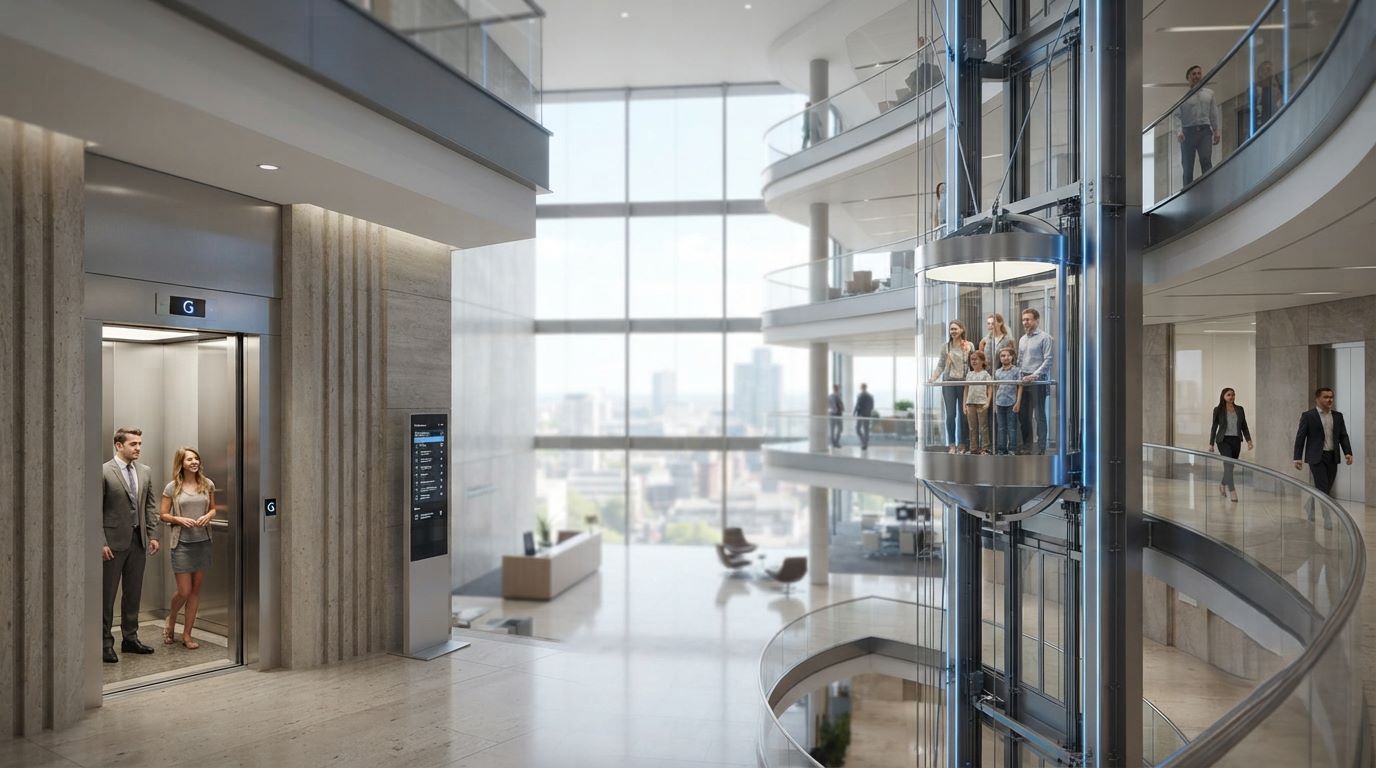
The vertical transportation industry is witnessing a significant transformation as developers, architects and building owners increasingly demand elevator solutions that combine reliable performance with sophisticated design. The passenger elevator remains a fundamental component of modern multi-storey buildings, while the glass lift is gaining momentum as an architectural feature capable of enhancing both functionality and passenger experience.
The evolution reflects a broader change in construction. Buildings are becoming taller, smarter and more focused on occupant experience, creating new expectations for vertical transportation systems.
Passenger Elevators Evolve Alongside Modern Architecture
The development of the passenger elevator played a major role in enabling the expansion of high-rise architecture. Earlier lifting systems were primarily used for materials, but advances in electric traction, braking mechanisms and automatic controls eventually created safer and more practical passenger transportation.
Today, elevators support daily movement in:
- Residential towers
- Business centers
- Hospitals
- Hotels
- Shopping complexes
- Educational institutions
- Airports
- Public infrastructure
Modern elevator planning now involves much more than selecting a cabin and motor. Passenger volume, travel speed, accessibility, energy consumption, building height, traffic patterns and maintenance requirements all influence the final solution.
Glass Lifts Bring Design Into the Spotlight
The growing popularity of the glass lift illustrates how elevator technology is becoming closely connected with architecture.
Transparent cabins and glazed shafts can provide passengers with views of interior spaces, atriums, landscapes and surrounding buildings. This allows elevators to become visible elements of the building rather than hidden infrastructure.
Panoramic elevator designs are particularly attractive in:
- Hotels and resorts.
- Shopping malls.
- Luxury residences.
- Corporate offices.
- Showrooms.
- Atrium-based developments.
- Public and commercial spaces.
The result is a vertical transportation experience that combines movement with visual engagement.
Safety Continues to Define Industry Standards
While aesthetics and technology are receiving greater attention, safety remains the foundation of elevator development.
A modern passenger elevator may incorporate door interlocks, overspeed protection, emergency communication, floor-leveling controls, emergency lighting, load monitoring and rescue functions.
For a glass lift, engineers must additionally consider the properties and installation of glazing, structural connections, impact resistance, visibility, cleaning and maintenance access.
Because elevator requirements vary according to location, building type and equipment configuration, projects should be designed and installed by qualified professionals in accordance with applicable requirements.
Digital Technology Transforms Elevator Operations
Technology is changing how elevators operate and how building owners manage them. Advanced control systems can help improve passenger flow, reduce unnecessary stops and provide useful operational information.
Destination-control technology can group passengers traveling to similar floors, while remote monitoring can provide service teams with information about equipment performance.
Key technologies influencing the industry include:
- Intelligent control systems
- Destination dispatch
- Remote monitoring
- Predictive maintenance
- Energy-efficient drives
- Touchless interfaces
- Smart access control
- Building-management integration
This shift is gradually transforming elevators into connected building systems.
Energy Efficiency Becomes a Purchasing Priority
As building owners focus more closely on operating costs and sustainability, elevator energy performance is receiving greater attention.
Modern elevator solutions can incorporate efficient motors, variable-speed drives, standby functions and regenerative technologies. These features can help reduce unnecessary energy consumption depending on the building’s traffic and operating conditions.
However, energy performance should be assessed across the elevator’s lifecycle. Purchase price alone does not necessarily represent the overall value of an elevator system.
Predictive Maintenance Supports Greater Reliability
Maintenance is also becoming increasingly technology-driven. Connected elevator systems can collect information about operating conditions, enabling service teams to identify unusual patterns.
Predictive maintenance can support a more proactive approach by helping technicians investigate potential equipment problems before they become serious failures.
For building operators, better monitoring may contribute to:
- Improved equipment visibility
- More efficient service planning
- Reduced unexpected downtime
- Better asset management
- Longer equipment performance
Professional inspection and scheduled maintenance remain essential regardless of how advanced the monitoring system becomes.
Glass Lifts Enhance Modern Building Experiences
The glass lift is particularly relevant to buildings where customer experience and visual presentation are important.
A panoramic elevator can become a design centerpiece in a hotel lobby, provide shoppers with views across multiple levels, or create a dramatic feature inside a luxury residence.
Nevertheless, successful glass lift projects require careful planning. Designers must consider privacy, sunlight, glare, temperature, cleaning, durability, passenger comfort and long-term maintenance.
The most successful designs combine aesthetics with engineering rather than treating appearance as the primary objective.
What the Future Holds for Passenger Elevators
The future of the passenger elevator is expected to focus increasingly on intelligent automation, connectivity, energy efficiency and personalized passenger experiences.
Elevators may become more closely integrated with building-management platforms, security systems and access-control technologies. Sensors and data analytics can support condition monitoring and predictive service strategies.
Accessibility is also expected to remain a major priority, with elevator systems designed around a broader range of passenger needs.
The Future of Glass Lift Innovation
Future glass lift designs may introduce advanced glazing, intelligent cabin lighting, interactive displays, touchless controls and digitally connected passenger interfaces.
Architects may increasingly integrate elevators into the visual and technological identity of buildings. Instead of simply occupying a shaft, the elevator could become an active part of the building’s interior experience.
Industry Outlook Encourages Smarter Investment
The changing elevator industry creates opportunities for manufacturers and construction professionals to develop solutions around actual building requirements.
Before selecting an elevator, project teams should evaluate:
- Building height
- Passenger traffic
- Capacity
- Speed
- Accessibility
- Safety requirements
- Energy performance
- Shaft dimensions
- Installation conditions
- Maintenance support
- Lifecycle costs
Early coordination between architects, structural engineers, elevator specialists and developers can improve project planning and reduce later modifications.
Frequently Asked Questions
What is a passenger elevator?
A passenger elevator is a powered vertical transportation system designed mainly to move people safely between floors.
What is a glass lift?
A glass lift is an elevator incorporating transparent or glazed cabin or shaft elements to provide visibility and panoramic appeal.
Is a glass lift also a passenger elevator?
Yes. A glass lift can be a passenger elevator when its primary function is transporting people.
Where are glass lifts commonly used?
They are often considered for hotels, shopping centers, offices, luxury residences, atriums and showrooms.
Are modern passenger elevators energy efficient?
Many modern systems use efficient drives, motors, standby functions and regenerative technology to improve energy performance.
What makes a glass lift attractive to architects?
Its transparency can provide panoramic views, improve visual connectivity and turn the elevator into an architectural feature.
Are glass lifts suitable for residential projects?
Yes. They can be incorporated into suitable homes and villas when structural and safety requirements are properly addressed.
How does predictive maintenance help elevators?
It uses operational information to identify unusual conditions and help maintenance teams respond proactively.
Can passenger elevators be customized?
Depending on the system, cabin dimensions, finishes, lighting, doors, controls and other elements can be customized.
What will future elevators focus on?
Future systems are expected to emphasize connectivity, intelligent controls, sustainability, accessibility, predictive maintenance and improved passenger experiences.
https://newsgrow.blogspot.com/2026/08/dumbwaiter-lift-vs-passenger-lift-which.html