
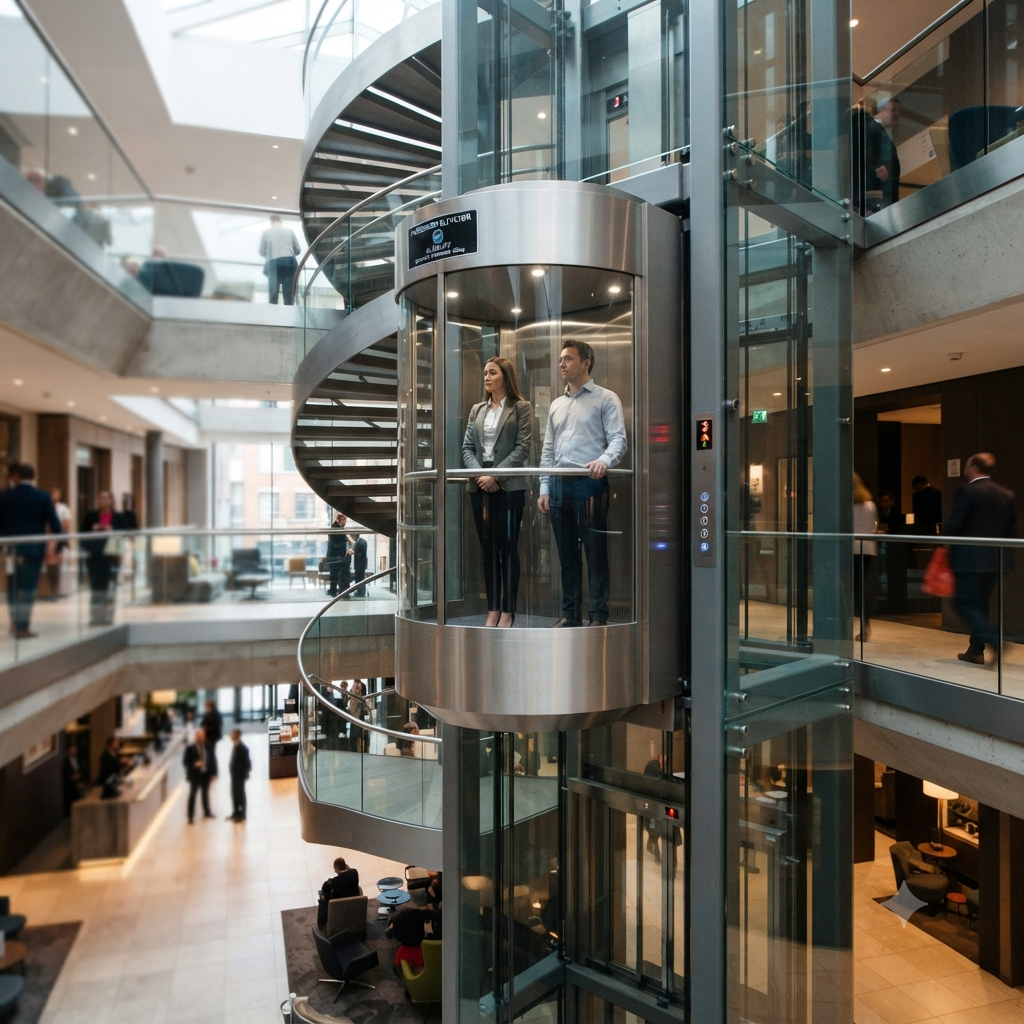
Modern buildings require more than stairs to move people safely and efficiently between floors. Whether the property is a residential tower, office complex, hotel, hospital, shopping centre, or luxury villa, the right passenger elevator can significantly improve accessibility, convenience, and overall user experience. At the same time, architectural trends have increased demand for the glass lift, which combines reliable vertical transportation with a distinctive visual appearance.
Although both systems perform the essential function of transporting passengers, their design priorities, installation requirements, aesthetics, and applications can differ. Understanding these differences helps architects, developers, homeowners, and facility managers select an elevator solution that complements both building performance and architectural design.
What Is a Passenger Elevator?
A passenger elevator is specifically engineered to transport people between different levels of a building. Depending on the project, it may be designed for low-rise residential properties, commercial buildings, hotels, hospitals, offices, educational institutions, or high-rise developments.
Unlike freight elevators, passenger systems typically prioritise ride comfort, cabin appearance, accessibility, noise control, and smooth acceleration and braking.
An appropriately selected passenger elevator considers several important factors:
- Building height and number of floors
- Expected passenger traffic
- Required load capacity
- Elevator speed
- Cabin dimensions
- Door configuration
- Available shaft space
- Accessibility requirements
- Energy consumption
- Safety and emergency features
- Interior design preferences
The correct specification should be based on actual building requirements rather than simply choosing the largest or fastest elevator available.
What Is a Glass Lift?
A glass lift, often called a panoramic or observation elevator, incorporates transparent glass panels within the cabin, doors, or surrounding lift structure. Its main attraction is the ability to combine transportation with architectural visibility.
Passengers may enjoy views of an atrium, lobby, shopping mall, cityscape, garden, or interior architectural features while travelling between floors.
Glass elevators are commonly installed in:
Luxury hotels, shopping centres, corporate offices, premium residences, showrooms, entertainment facilities, airports, commercial complexes, and architecturally distinctive public spaces.
A well-designed glass lift can become a visual feature rather than simply remaining a hidden building utility.
Passenger Elevator vs Glass Lift
| Feature | Passenger Elevator | Glass Lift |
| Primary purpose | Efficient passenger transportation | Transportation with visual appeal |
| Cabin design | Metal, laminate, decorative panels or mixed finishes | Extensive transparent glazing |
| Visibility | Usually enclosed | Panoramic or partially transparent |
| Common locations | Residential and commercial buildings | Hotels, malls, offices and luxury properties |
| Architectural impact | Functional to premium | Strong visual statement |
| Privacy | Generally higher | Depends on glazing design |
| Maintenance focus | Mechanical and cabin systems | Mechanical systems plus glass cleanliness |
The choice does not always need to be one or the other. A glass lift is essentially a passenger transportation solution with additional architectural and aesthetic considerations.
Important Features of a Modern Passenger Elevator
Contemporary elevators integrate mechanical, electrical and electronic systems to provide comfortable and controlled movement.
Automatic doors provide convenient entry and exit, while accurate floor levelling improves accessibility. Variable-frequency drive technology can contribute to smoother acceleration and deceleration. Modern controllers also help manage elevator movement according to passenger demand.
Other useful features may include emergency alarms, intercom communication, overload detection, backup power provisions, floor indicators, accessibility controls, ventilation, lighting and automatic rescue functionality.
The exact specification should always correspond with applicable building regulations and elevator safety standards in the installation location.
Why Architects Choose Glass Lifts
The biggest advantage of a glass lift is its ability to support architectural design while providing practical mobility.
Transparent elevator cabins can make an interior environment feel more open and connected. In shopping centres, hotels and corporate buildings, passengers can see surrounding spaces while travelling. In premium homes, a panoramic lift can complement modern interiors without introducing the visually heavy appearance of a completely enclosed cabin.
Glass also allows architects to integrate vertical transportation into atriums and open spaces as a deliberate design element.
However, aesthetics should never replace engineering considerations. Structural support, glazing specifications, shaft design, ventilation, emergency operation and passenger safety remain essential.
How to Choose the Right Elevator Capacity
Elevator capacity should reflect expected passenger volume and building usage.
A small residential property has very different transportation requirements from a busy commercial tower. Designers therefore evaluate factors such as number of occupants, peak-hour demand, travel distance, number of stops and acceptable waiting time.
Choosing insufficient capacity may cause congestion and longer waiting periods. Oversizing the elevator unnecessarily can increase space requirements and project costs.
For larger developments, professional traffic analysis can help determine whether the building needs one passenger elevator or a coordinated group of elevators.
Energy Efficiency and Elevator Technology
Energy performance is becoming increasingly important in modern building design. Elevator efficiency can depend on motor technology, control systems, operating patterns, cabin lighting, standby functions and building height.
LED cabin lighting and intelligent standby modes can reduce unnecessary electricity consumption when the elevator is inactive. Efficient drive technology can further improve system performance.
For frequently used buildings, lifecycle efficiency should be considered alongside initial purchase price. An elevator operates for many years, making maintenance requirements, component availability and energy consumption important long-term considerations.
Safety Considerations for Passenger and Glass Elevators
Safety is fundamental when selecting any passenger elevator or glass elevator.
The system should include appropriate braking arrangements, door interlocks, emergency communication, overload protection and reliable control equipment. Glass components must also be suitable for their intended elevator application and designed according to relevant requirements.
Regular inspection and preventive maintenance are equally important. Elevator owners should follow recommended service schedules and applicable local inspection regulations.
A beautiful lift is valuable only when engineering reliability and passenger safety remain the highest priorities.
Elevator Maintenance and Long-Term Performance
Routine maintenance helps keep elevators operating smoothly and may reduce unexpected breakdowns.
Technicians typically inspect doors, control systems, electrical components, safety devices and mechanical equipment. For a glass lift, maintaining the transparent surfaces is also important because fingerprints, dust and marks are more noticeable than on conventional cabin panels.
Building owners should evaluate maintenance support before purchasing an elevator. Availability of replacement components, qualified technicians and responsive service can influence total ownership experience significantly.
Design Options for Modern Elevator Cabins
Modern passenger cabins can be customised to complement surrounding architecture. Options may include stainless steel finishes, decorative laminates, mirrors, textured panels, premium flooring, customised ceilings and sophisticated lighting.
Glass elevators offer additional choices such as fully panoramic walls, partial glazing, framed glass structures and combinations of glass with metal finishes.
Instead of treating the elevator as an isolated element, designers can coordinate its materials, lighting and colours with the lobby and overall interior concept.
Frequently Asked Questions About Passenger Elevator and Glass Lift
1. What is the main purpose of a passenger elevator?
It transports people safely and conveniently between different floors of a building.
2. Is a glass lift suitable for residential buildings?
Yes. Glass elevators can be used in villas, luxury homes and residential developments when site conditions and engineering requirements permit.
3. Is a glass lift different from a passenger elevator?
A glass lift can be a passenger elevator, but it incorporates transparent or panoramic design elements.
4. Where are glass lifts commonly installed?
They are popular in malls, hotels, offices, luxury residences, showrooms and commercial buildings.
5. How is elevator capacity selected?
Capacity is determined by building occupancy, passenger traffic, number of floors and expected peak demand.
6. Are glass elevators difficult to maintain?
Mechanical maintenance is broadly comparable with other elevator systems, although glass surfaces require more frequent cleaning.
7. Can a passenger elevator be customised?
Yes. Cabin walls, flooring, ceilings, lighting, doors and control panels can often be customised.
8. Are modern elevators energy efficient?
Many modern systems use efficient drives, LED lighting and standby functions to help reduce energy consumption.
9. How often should an elevator be serviced?
Service frequency depends on manufacturer recommendations, elevator usage and local regulatory requirements.
10. What should buyers check before selecting an elevator?
Consider capacity, speed, shaft requirements, safety features, accessibility, energy performance, design, installation expertise and after-sales support.