
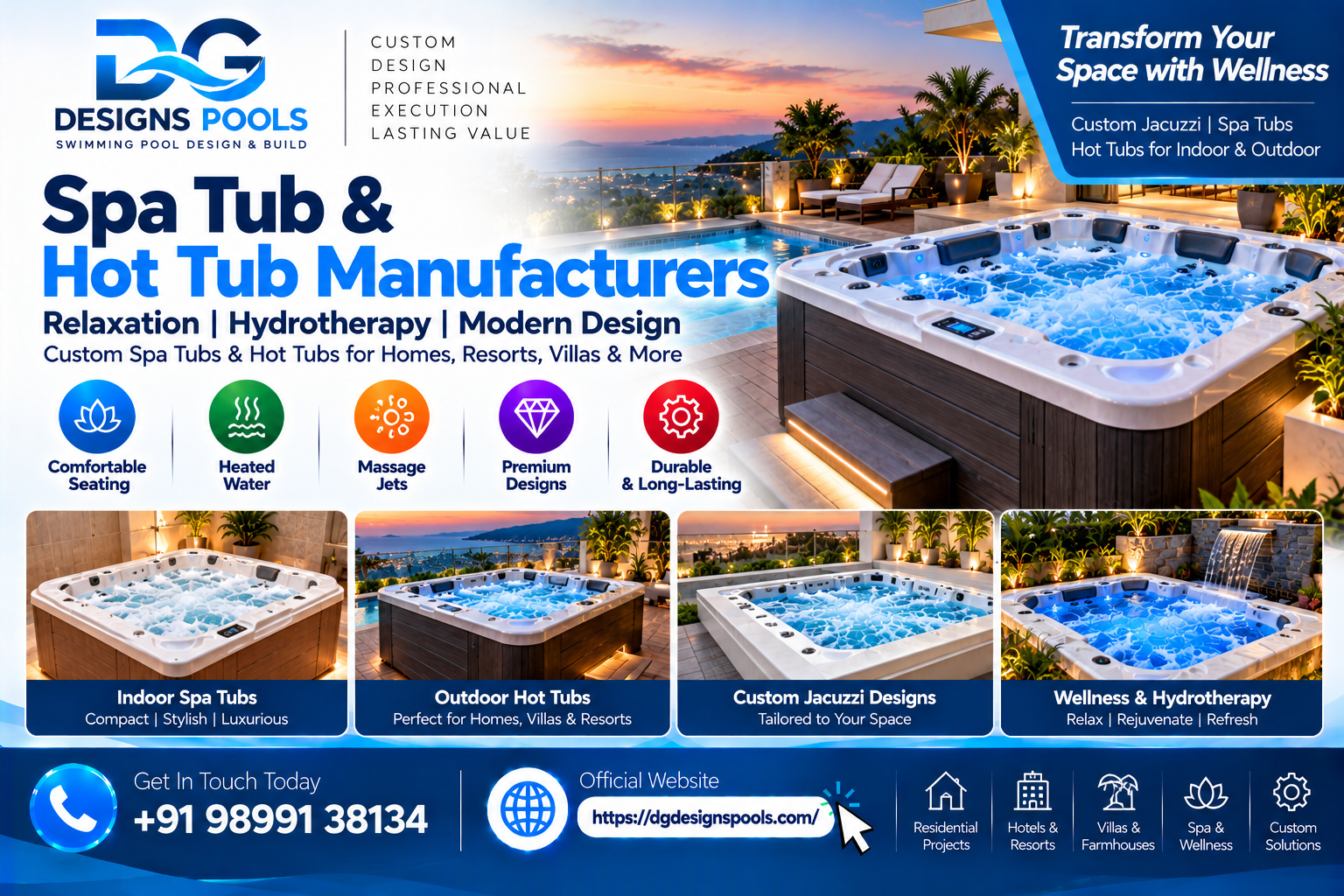
Wellness and luxury bathing industry is placing greater emphasis on personalised comfort, efficient equipment, and practical maintenance. Homeowners, hospitality developers, and wellness businesses are exploring spa installations that offer relaxing environments while meeting technical and operational requirements.
Professional spa tub manufacturers contribute to this sector by developing bathing systems that combine ergonomic seating, water circulation, temperature control, and customised designs.
Meanwhile, hot tub manufacturers focus on producing suitable heated bathing units with integrated equipment, structural components, and water-management features.
Although the terms are sometimes used interchangeably, different products may offer distinct installation arrangements, operating systems, and levels of customisation.
For buyers considering residential or commercial wellness facilities, understanding these differences can support better purchasing decisions and more practical long-term ownership.
Why Personalised Wellness Spaces Are Gaining Attention
Wellness-focused environments are becoming an important consideration in residential architecture and hospitality design.
A carefully planned bathing area can offer a comfortable setting for relaxation and leisure.
However, the experience depends on more than appearance.
Seating dimensions, water temperature, jet positioning, accessibility, and surrounding space all influence usability.
This approach encourages buyers to evaluate spa systems according to their intended use rather than selecting equipment based exclusively on decorative features.
What Do Spa Tub Manufacturers Provide?
Spa tub manufacturers develop bathing products designed for suitable residential, hospitality, and wellness applications.
Depending on their capabilities, products may include freestanding spa tubs, built-in systems, and customised hydrotherapy-style units.
Common components can include engineered shells, seating arrangements, water jets, circulation pumps, controls, and suitable heating systems.
Some products are intended for single-person use, while larger designs accommodate multiple occupants.
The appropriate configuration depends on the available space, installation conditions, and anticipated usage.
Manufacturers should provide clear specifications covering materials, electrical requirements, water capacity, and maintenance procedures.
Understanding the Role of Hot Tub Manufacturers
Hot tub manufacturers produce heated bathing systems that may be designed for indoor or outdoor installation.
Many hot tubs incorporate integrated seating, circulation equipment, filters, heaters, and control systems.
Certain models are self-contained, while others require additional installation arrangements.
The choice between these approaches depends on the property and product specifications.
Buyers should evaluate the complete system rather than comparing only the outer dimensions or number of water jets.
Heating performance, insulation, service access, and equipment quality can significantly influence operating requirements.
Spa Tub vs Hot Tub: Understanding the Differences
The terminology varies across the industry, and product categories often overlap.
| Comparison Factor | Spa Tub | Hot Tub |
| Main Application | Personalised bathing and relaxation | Heated recreational bathing |
| Installation | Built-in or freestanding designs | Self-contained or integrated systems |
| Water Jets | Optional or integrated | Common in many models |
| Heating | Depends on configuration | Usually a central feature |
| Typical Location | Bathrooms, wellness areas, outdoor spaces | Indoor or outdoor leisure areas |
| Key Consideration | Comfort and installation compatibility | Heating, hygiene, and operational efficiency |
Buyers should confirm the actual technical features rather than relying solely on the product name.
Why Ergonomic Design Matters
Comfortable spa seating requires attention to body positioning, support, and access.
Seat depth, backrest angles, and available legroom can affect how comfortably occupants use the facility.
Water jets should be positioned to provide appropriate circulation and the intended bathing experience.
Excessive jet pressure or unsuitable positioning may reduce comfort.
Representative testing and clear product specifications can help buyers identify models appropriate for their needs.
Spa installations should not be promoted as treatments for medical conditions without appropriate clinical evidence.
Energy Efficiency and Temperature Management
Heating is an important operational consideration for spa systems.
Energy consumption depends on factors such as water volume, insulation quality, ambient temperature, equipment performance, and usage patterns.
Suitable covers may help limit heat loss in certain installations.
Efficient pumps, appropriate controls, and properly maintained components can also support practical operation.
However, no single feature guarantees low energy consumption.
Buyers should request relevant technical information and consider the complete operating environment before choosing a product.
Water Hygiene and Safe Operation
Warm-water bathing systems require careful water-quality management.
Filtration, disinfection, cleaning, and regular water testing are important because heated recreational water can create conditions that support microbial growth when improperly maintained.
Manufacturers should provide clear operating instructions and recommend suitable treatment methods.
Users should avoid excessive water temperatures and follow relevant health and safety guidance.
Commercial facilities may require additional monitoring and operational controls.
Proper hygiene should remain a priority regardless of the installation’s appearance or luxury features.
Material Selection and Product Durability
Spa shells may be manufactured using suitable acrylic, fiberglass-reinforced composites, or other engineered materials.
Each material has specific characteristics concerning structural performance, surface appearance, maintenance, and compatibility with water-treatment chemicals.
Product durability also depends on the quality of pumps, heaters, fittings, and electrical components.
For outdoor installations, environmental exposure should be considered.
Buyers should review manufacturer specifications, warranty coverage, and cleaning recommendations before approving a purchase.
How to Choose the Right Manufacturing Partner
Selecting dependable hot tub manufacturers or spa equipment suppliers requires careful technical evaluation.
Important considerations include:
- Product Specifications: Review seating capacity, dimensions, and water volume.
- Equipment Quality: Evaluate pumps, heaters, filtration, and controls.
- Installation Requirements: Confirm electrical, plumbing, and structural needs.
- Energy Performance: Review insulation and relevant equipment specifications.
- Maintenance Accessibility: Ensure components can be inspected and serviced.
- Warranty Support: Understand written coverage and replacement-part arrangements.
A detailed proposal should explain what is included in the purchase and which installation services require separate arrangements.
Frequently Asked Questions (FAQs)
1. What do spa tub manufacturers produce?
They manufacture bathing systems designed for relaxation and suitable wellness applications, including selected products with seating, water jets, heating, and circulation equipment.
2. What is the difference between a spa tub and a hot tub?
The terms often overlap. A hot tub generally emphasises heated recreational bathing, while spa tubs may include various customised bathing and hydrotherapy-style configurations.
3. Can hot tubs be installed indoors?
Yes, suitable products may be installed indoors when structural support, ventilation, moisture control, drainage, and electrical safety requirements are met.
4. Are energy-efficient hot tubs available?
Some models incorporate insulation, covers, efficient equipment, and temperature controls that may help manage energy consumption under appropriate operating conditions.
5. What should buyers check before selecting a spa tub manufacturer?
Buyers should review material quality, equipment specifications, comfort features, installation requirements, hygiene provisions, maintenance support, and warranty conditions.
Media Contact
Department: Spa Tub and Hot Tub Design Enquiries
Contact: +91 98991 38134
Email: abhinav.mishra@hotmail.com
Official Website: https://dgdesignspools.com/
Read More:-