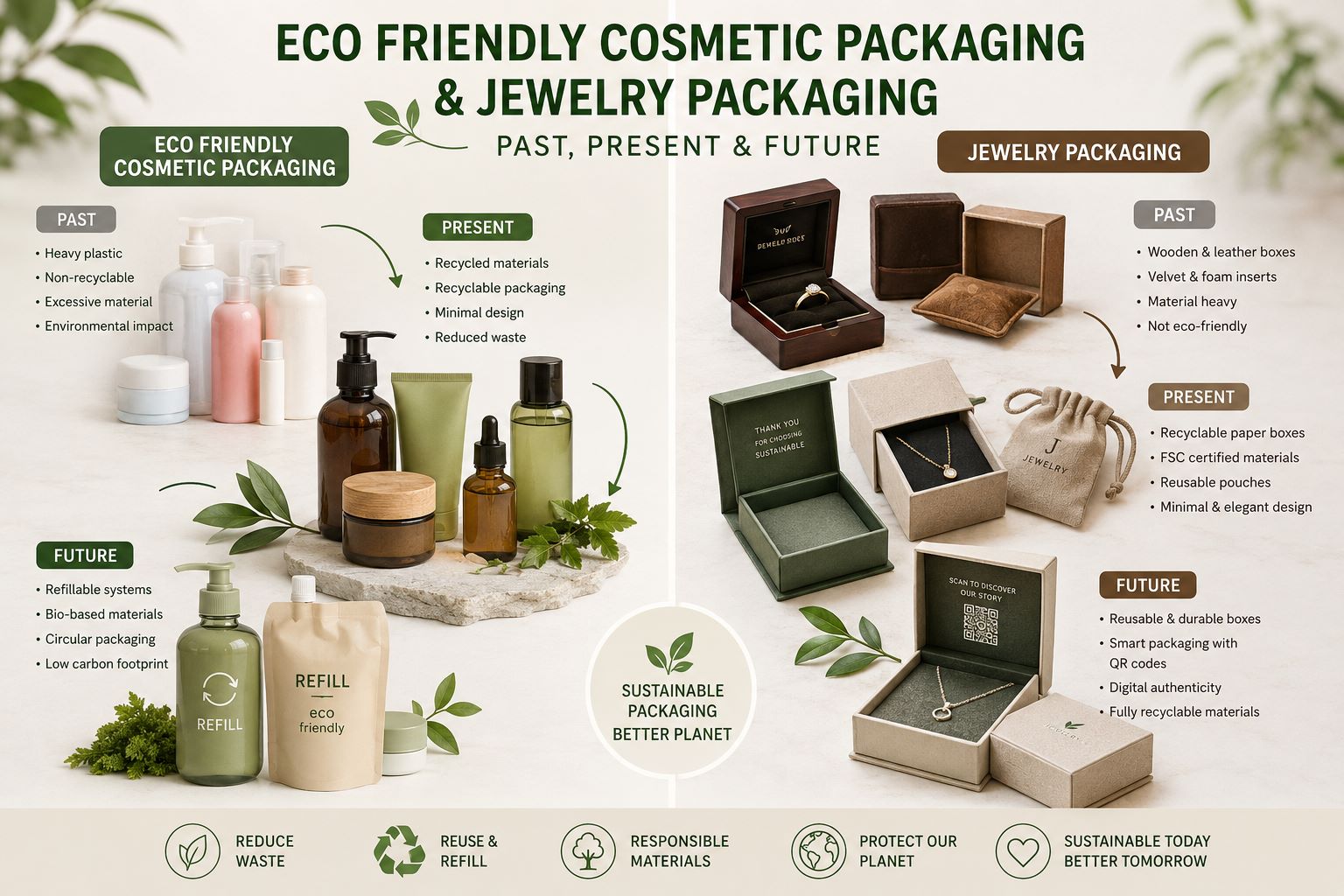
Packaging has become an important part of how customers judge a product before they even use it. Modern consumers increasingly look beyond attractive designs and pay attention to materials, recyclability, durability, and the environmental impact of packaging. This shift has made eco friendly cosmetic packaging and jewelry packaging important choices for brands that want to combine premium presentation with responsible business practices.
From skincare bottles and makeup boxes to elegant jewelry cases, packaging must protect the product, communicate brand identity, and create a memorable customer experience. Sustainable materials now make it possible to achieve all three goals without relying heavily on unnecessary plastic or excessive packaging.
Why Eco Friendly Cosmetic Packaging Matters
The beauty industry traditionally depends on plastic containers, laminated boxes, pumps, caps, jars, and decorative materials. While these formats provide protection and convenience, they can also create significant packaging waste.
Eco friendly cosmetic packaging focuses on reducing environmental impact throughout the packaging lifecycle. This may include using recyclable materials, recycled content, refillable containers, biodegradable paper, lightweight structures, or packaging designed with fewer components.
Brands can use sustainable packaging for products such as:
- Face creams and moisturizers
- Serums and essential oils
- Lipsticks and lip balms
- Shampoos and conditioners
- Body lotions
- Perfumes
- Makeup products
- Organic skincare collections
Good sustainable cosmetic packaging should still protect formulas from moisture, air, sunlight, contamination, and leakage while maintaining an attractive appearance.
Materials Used in Sustainable Cosmetic Packaging
Selecting the correct material is one of the most important decisions when developing eco friendly cosmetic packaging.
Recycled paperboard is commonly used for cosmetic cartons because it can provide excellent printing quality while reducing dependence on virgin materials.
Glass is popular for premium skincare products, perfumes, oils, and serums because it is durable and widely recyclable.
Aluminium is another useful option because it is lightweight, recyclable, and suitable for selected cosmetic containers.
Brands are also exploring post-consumer recycled plastics when plastic functionality is necessary. These materials reuse existing plastic instead of relying entirely on newly produced resin.
Other options include kraft paper, molded pulp, responsibly sourced cardboard, refill systems, and mono-material packaging that simplifies recycling.
Understanding Jewelry Packaging
While cosmetics require packaging that protects formulas, jewelry packaging focuses heavily on product security, luxury presentation, and emotional value.
A jewelry box is often part of the buying experience itself. Customers may keep rings, necklaces, earrings, bracelets, or watches inside the original packaging for years.
Professional jewelry packaging can include:
- Ring boxes
- Necklace boxes
- Earring boxes
- Bracelet boxes
- Jewelry pouches
- Kraft jewelry boxes
- Magnetic rigid boxes
- Drawer-style boxes
- Gift packaging
- Custom branded jewelry cases
The packaging should prevent scratching, tangling, dust exposure, and accidental damage while presenting the jewelry beautifully.
Sustainable Materials for Jewelry Packaging
Sustainability is becoming increasingly relevant within the jewelry industry. Many brands are replacing plastic inserts, synthetic foam, and excessive decorative layers with environmentally responsible alternatives.
Recycled cardboard can be used to create attractive rigid jewelry boxes. Kraft paper provides a natural appearance that works particularly well for handmade, ethical, or minimalist jewelry brands.
Molded pulp can replace certain plastic inserts, while recycled fabric or cotton pouches can provide reusable packaging options.
Other sustainable choices include water-based inks, soy-based inks, paper cushioning, reusable boxes, and FSC-certified paper materials.
The goal should not simply be to label packaging as environmentally friendly. Brands should examine the complete packaging structure and remove materials that add little functional value.
Cosmetic Packaging vs Jewelry Packaging
| Feature | Eco Friendly Cosmetic Packaging | Jewelry Packaging |
| Main purpose | Protect cosmetic formulas | Protect and present jewelry |
| Common materials | Glass, paperboard, aluminium, recycled plastic | Cardboard, paper, fabric, molded pulp |
| Product protection | Moisture, air, leakage and contamination | Scratches, dust, tangling and impact |
| Branding focus | Product information and shelf visibility | Luxury presentation and gifting |
| Sustainable options | Refillable and recyclable containers | Reusable and recyclable boxes |
| Custom printing | Labels, cartons and sleeves | Logos, foil effects and printed boxes |
Both packaging categories require thoughtful material selection, attractive design, and functional construction.
How Packaging Strengthens Brand Identity
Packaging often creates the customer’s first physical interaction with a brand. Colors, typography, textures, box structures, labels, finishes, and materials all contribute to brand recognition.
A natural skincare company might choose kraft cartons with simple typography, while a premium cosmetic brand may prefer elegant glass bottles inside minimalist paper boxes.
Similarly, a luxury jewelry company may use rigid boxes with understated branding, whereas a handmade jewelry business might choose recycled kraft boxes and reusable cotton pouches.
Consistency is important. Using similar colors, logo placement, printing styles, and packaging materials across product ranges can create stronger brand recognition.
Benefits of Choosing Eco Friendly Packaging
Sustainable packaging can provide several practical and marketing advantages.
- It can reduce unnecessary packaging waste.
- It supports growing consumer interest in responsible brands.
- Lightweight packaging may reduce transportation requirements.
- Recyclable structures can simplify disposal.
- Reusable packaging can extend product life.
- Minimal packaging can reduce material consumption.
- Sustainable design can strengthen brand positioning.
However, companies should avoid making unsupported environmental claims. Statements such as recyclable, biodegradable, compostable, or plastic-free should only be used when they accurately describe the packaging.
How to Design Better Cosmetic and Jewelry Packaging
Successful packaging begins with understanding the product.
For cosmetics, evaluate formula sensitivity, container compatibility, leakage protection, product shelf life, and customer usage.
For jewelry, consider dimensions, product weight, cushioning requirements, storage, shipping protection, and gifting presentation.
Brands should also consider packaging size. Oversized boxes may appear luxurious, but unnecessary empty space increases material usage and shipping volume.
A better approach is creating packaging that fits the product closely while leaving enough room for proper protection.
Printing should also be planned carefully. Minimal printing, water-based coatings, recyclable finishes, and reduced lamination can support a more responsible packaging strategy.
Custom Packaging for Online Brands
E-commerce has increased the importance of durable packaging because products must survive handling and transportation before reaching customers.
Cosmetic brands may need protective shipping cartons, bottle dividers, leak-resistant closures, and cushioning.
Jewelry companies may use compact branded boxes inside recyclable mailers to provide both protection and presentation.
The unboxing experience also matters. Tissue paper, thank-you cards, branded stickers, ribbons, and inserts can create excitement, but they should be used thoughtfully. Removing unnecessary packaging components can make an unboxing experience feel cleaner and more premium.
Frequently Asked Questions
What is eco friendly cosmetic packaging?
It refers to cosmetic packaging designed to reduce environmental impact through recyclable, reusable, recycled, refillable, or responsibly sourced materials.
Which materials are best for sustainable cosmetic packaging?
Glass, aluminium, recycled paperboard, kraft paper, and post-consumer recycled materials are commonly considered.
Can cosmetic packaging still look luxurious when sustainable?
Yes. Minimalist structures, quality printing, textured papers, glass containers, and carefully designed cartons can create a premium appearance.
What is jewelry packaging used for?
Jewelry packaging protects products from scratches, dust, impact, and tangling while improving presentation and gifting appeal.
Can jewelry boxes be recyclable?
Yes. Boxes made primarily from paperboard or cardboard without difficult-to-separate materials can often be designed for recycling.
Is kraft paper suitable for jewelry packaging?
Yes. Kraft paper is especially suitable for natural, handmade, minimalist, and environmentally conscious jewelry brands.
What makes cosmetic packaging sustainable?
Factors include material reduction, recycled content, recyclability, refillability, reusable structures, and responsible sourcing.
Can custom logos be printed on sustainable packaging?
Yes. Logos and brand designs can be printed using various techniques, including water-based or other lower-impact printing methods.
Why is packaging important for online jewelry sales?
Packaging protects delicate jewelry during transportation while helping customers experience the brand professionally when opening their order.
How can brands reduce packaging waste?
Brands can eliminate unnecessary layers, reduce box dimensions, use recyclable materials, introduce refills, and select simpler packaging structures.