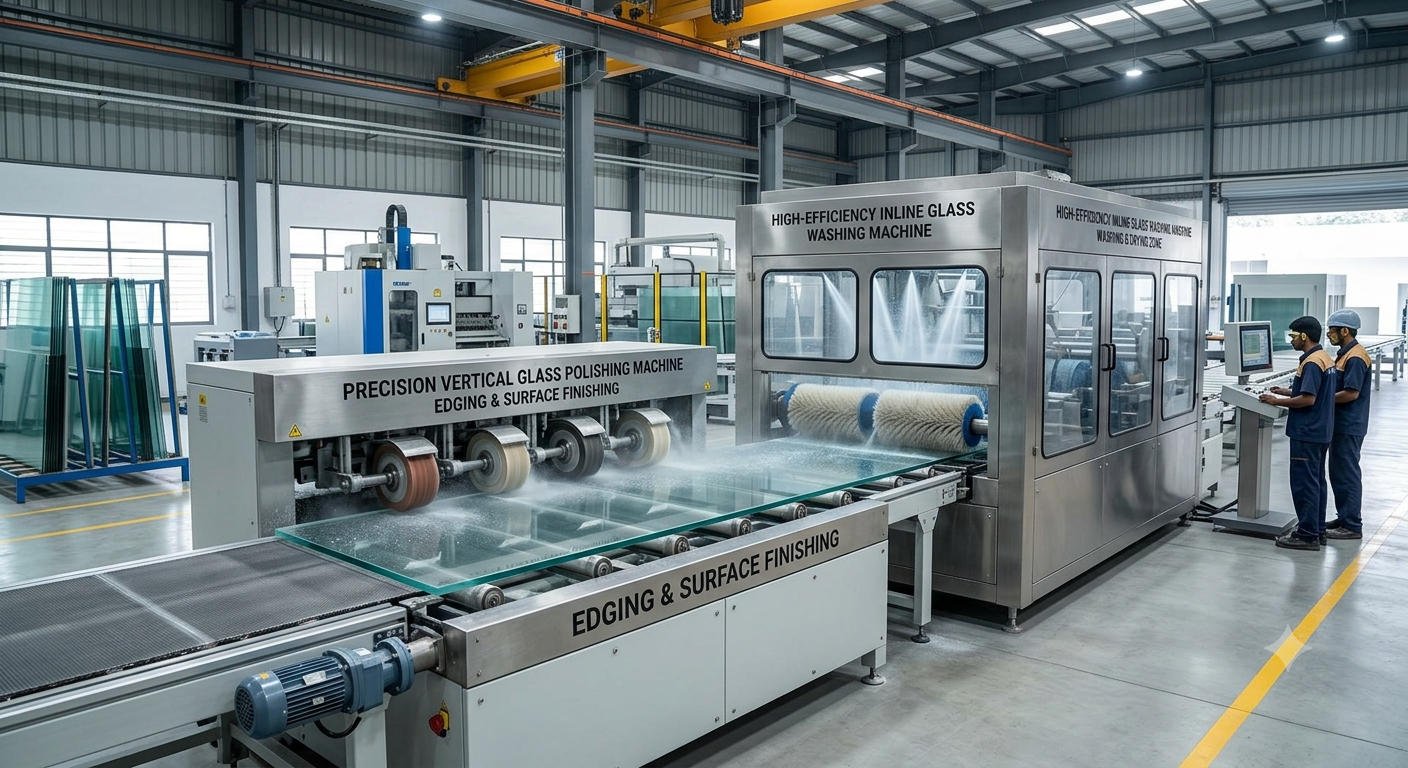
The glass processing industry is evolving rapidly as manufacturers look for faster production, better surface quality, and consistent finishing. Two machines that play an important role in achieving these goals are the glass polishing machine and glass washing machine. While both are used during glass processing, they perform different functions and are often combined in production lines to deliver clean, smooth, and high-quality finished glass.
From architectural glass and automotive glazing to furniture, shower enclosures, and insulated glass units, manufacturers depend on reliable processing equipment to improve productivity and product quality. Understanding how these machines work, where they are used, and how to choose the right equipment can help businesses make better investment decisions.
What Is a Glass Polishing Machine?
A glass polishing machine is specialized equipment designed to improve the edges or surfaces of glass by removing imperfections and creating a smooth, refined finish. Depending on the machine configuration, polishing may be performed on straight edges, shaped edges, bevels, or other glass profiles.
During glass cutting and edge processing, sharp edges and microscopic imperfections can remain on the material. Polishing equipment helps eliminate these defects while improving the visual appearance and safety of the finished product.
How Does a Glass Polishing Machine Work?
The basic polishing process generally involves several stages:
- The glass panel is positioned securely on the machine.
- Abrasive wheels or polishing tools contact the required glass edge or surface.
- Rough imperfections are gradually removed.
- Finer polishing stages improve smoothness and appearance.
- The processed glass is inspected for consistency and quality.
Modern equipment may use automated control systems to maintain consistent processing parameters. This reduces variation between individual glass panels and helps manufacturers achieve repeatable results.
Key Benefits of Glass Polishing Equipment
A high-quality polishing machine can provide several advantages:
- Smooth and visually attractive glass edges
- Improved dimensional consistency
- Reduced risk from sharp untreated edges
- Better preparation for further fabrication
- Increased production efficiency
- Consistent finishing across large production batches
For companies handling high-volume glass fabrication, automation can also reduce dependence on manual finishing processes.
What Is a Glass Washing Machine?
A glass washing machine is designed to clean glass after cutting, grinding, polishing, drilling, or other fabrication operations. Processing can leave behind glass dust, abrasive residue, fingerprints, oil, and other contaminants that need to be removed before the glass moves to the next production stage.
A washing machine typically combines water, brushes, air drying, and controlled transportation to produce clean, dry glass panels ready for inspection, assembly, coating, or packaging.
Why Is Glass Washing Important?
Cleanliness is essential in modern glass manufacturing. Even small particles can affect the appearance or performance of products such as insulated glass units, laminated glass, coated glass, and architectural panels.
A professional washing process can help:
- Remove dust and processing debris
- Improve surface cleanliness
- Prepare glass for assembly
- Reduce manual cleaning requirements
- Support consistent product quality
- Improve the appearance of finished products
Many automated systems include drying sections that use air knives or blowers to remove remaining moisture before the glass exits the machine.
Glass Polishing Machine vs. Glass Washing Machine
Although these machines may operate within the same production environment, their primary purposes are different.
| Feature | Glass Polishing Machine | Glass Washing Machine |
| Main purpose | Smooths and finishes glass edges or surfaces | Cleans and dries glass |
| Primary process | Abrasive polishing | Washing and air drying |
| Removes | Edge imperfections and roughness | Dust, residue, and contaminants |
| Typical output | Smooth, refined glass | Clean, dry glass |
| Main applications | Edge finishing and fabrication | Cleaning before inspection or assembly |
| Key quality factor | Polishing consistency | Cleaning and drying effectiveness |
In many factories, the two machines work as complementary equipment rather than competing technologies.
Applications Across the Glass Industry
The combination of polishing and washing technology is valuable across numerous sectors.
Architectural Glass
Large glass panels used in buildings require precise processing and excellent surface quality. Polishing helps achieve refined edges, while washing ensures the panels are clean before installation or further processing.
Furniture Glass
Glass used for tables, shelves, cabinets, and display units often requires smooth edges for both appearance and user safety. Polishing machines help create the desired edge finish, while washing equipment removes processing residues.
Automotive Glass
Automotive glazing requires high standards of cleanliness and precision. Washing systems are particularly important for removing contaminants that could affect inspection or downstream processing.
Shower and Interior Glass
Shower doors, partitions, and interior glass products benefit from attractive edge finishing and spotless surfaces. Automated processing equipment can help manufacturers maintain consistent quality.
How to Choose the Right Equipment
Selecting suitable machinery requires more than comparing basic specifications. Manufacturers should consider their production requirements, glass dimensions, finishing needs, and automation goals.
1. Consider Glass Size and Thickness
Check the minimum and maximum glass dimensions supported by the machine. The equipment should match the types of panels your factory processes most frequently.
2. Evaluate Production Capacity
Determine the expected production volume and cycle time. High-volume manufacturers may benefit from automated systems capable of continuous operation.
3. Check Finishing Requirements
For polishing equipment, identify whether your products require straight-line polishing, beveling, shaped-edge processing, or other specialized finishes.
4. Review Washing and Drying Performance
For a washing machine, examine brush quality, water management, drying capability, and compatibility with different glass types.
5. Prioritize Automation and Controls
Modern control systems can improve repeatability and reduce operator workload. Features such as adjustable parameters and automated monitoring may be valuable for demanding production environments.
6. Consider Maintenance
Look for machines that provide convenient access to components requiring regular inspection or replacement. Easy maintenance can help minimize unexpected downtime.
The Role of Automation in Glass Processing
Automation is transforming how manufacturers approach glass fabrication. Instead of relying heavily on manual handling, modern production lines can connect cutting, edging, polishing, washing, inspection, and other operations.
A well-integrated workflow can offer:
- Faster material movement
- Lower manual handling requirements
- Better production consistency
- Reduced processing errors
- Improved workplace efficiency
- Easier quality control
The goal is not simply to install advanced equipment but to create a coordinated production process where every machine contributes to overall efficiency.
Maintenance Tips for Better Machine Performance
Regular maintenance is essential for protecting equipment investment and maintaining consistent output.
Manufacturers should:
- Clean machine components according to recommended procedures.
- Inspect polishing wheels and replace worn abrasives when necessary.
- Check washing brushes for wear or contamination.
- Maintain water quality and filtration systems.
- Inspect conveyors and rollers regularly.
- Keep sensors and control components clean.
- Follow the manufacturer’s preventive maintenance schedule.
Proper maintenance can extend machine service life while helping avoid unexpected production interruptions.
Frequently Asked Questions
1. What does a glass polishing machine do?
It processes glass edges or surfaces to remove imperfections and create a smoother, more refined finish.
2. What is the main purpose of a glass washing machine?
It cleans glass panels by removing dust, residue, and other contaminants before further processing or final delivery.
3. Can polishing and washing machines be used together?
Yes. They can be integrated into a production workflow where glass is polished and then washed before moving to the next stage.
4. Is glass washing necessary after polishing?
In many applications, yes. Polishing can generate dust and residue, so washing helps achieve a cleaner surface.
5. What industries use glass polishing machines?
They are widely used in architectural glass, furniture, automotive, interior design, shower enclosure, and general glass fabrication industries.
6. Does a glass washing machine also dry the glass?
Most automated washing systems include a drying section that removes remaining water using air blowers or air knives.
7. How can manufacturers improve glass processing efficiency?
Integrating automated equipment, optimizing workflow, maintaining machines regularly, and using suitable processing parameters can improve efficiency.
8. What should I consider when buying a glass polishing machine?
Consider glass dimensions, thickness, edge profile, production volume, automation requirements, finishing quality, maintenance, and after-sales support.
9. What affects glass washing quality?
Water cleanliness, brush condition, machine settings, drying performance, and proper maintenance all influence cleaning results.
10. Are automated glass machines suitable for small manufacturers?
Yes. The right machine depends on production volume and application requirements. Smaller businesses can select equipment designed for their specific capacity.
https://newsgrow.blogspot.com/2026/06/glass-polishing-machine-powers.html