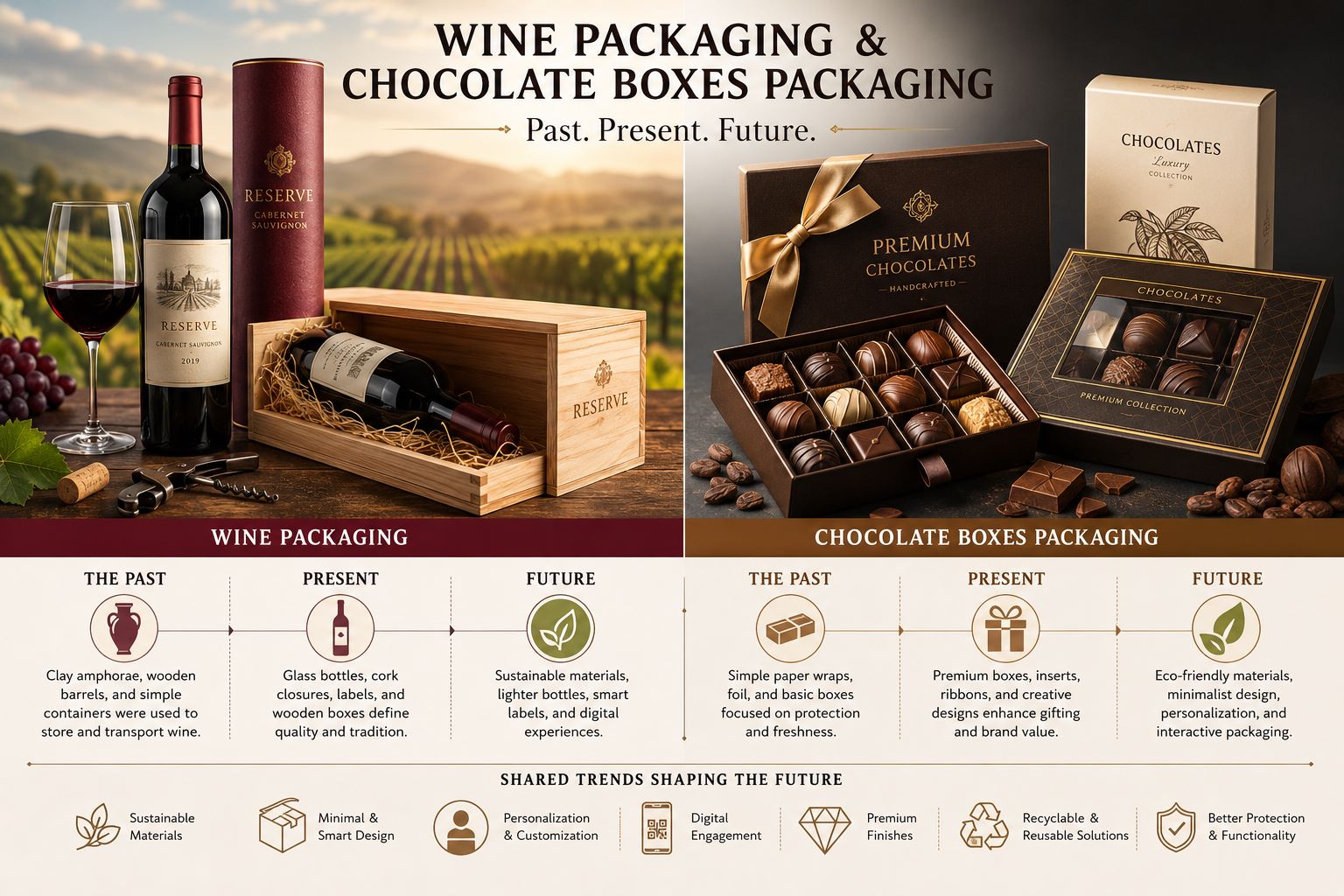
Packaging often speaks before the product does. A carefully designed wine bottle can suggest heritage, craftsmanship, or exclusivity, while an elegant chocolate box can immediately create the feeling of a special occasion. In both cases, consumers begin experiencing the product before opening it.
The story of wine packaging and chocolate boxes packaging is therefore about much more than containers. It is a story of changing consumer habits, improvements in materials, evolving brand strategies, and growing environmental awareness.
Looking back shows how packaging became such an important part of premium products. Looking forward reveals an industry moving toward smarter, lighter, more personalized, and more responsible solutions.
Packaging Was Once Designed Around Necessity
The earliest packaging solutions were created to solve practical problems. Producers needed ways to store goods, prevent damage, and transport products over long distances.
Wine was stored in vessels made from materials such as clay and ceramics, as well as wooden barrels. These solutions served their purpose, but branding opportunities were limited.
Chocolate packaging also began simply. Paper, foil, tins, and cardboard helped keep products protected and easier to handle.
At this stage, packaging was judged mainly by one question: could it protect the product?
Today, the answer to that question is only the beginning.
How Wine Packaging Found Its Identity
The development of the glass bottle was a defining moment for wine packaging. Glass provided a practical storage format while allowing producers to develop a consistent visual presentation.
Labels added another dimension.
Initially, their purpose was largely informational. As competition increased, labels gradually became important tools for differentiation.
A bottle could now communicate not only what the wine was, but also what the brand represented.
The Rise of Visual Storytelling
Modern wine packaging can use design to create different expectations.
A traditional label may emphasize history and provenance. Minimal typography may suggest a modern producer. Illustrations can create personality, while textured papers and embossed details can reinforce premium positioning.
Packaging can also communicate:
- Vineyard identity
- Region of production
- Grape variety
- Vintage
- Tasting characteristics
- Brand history
- Production philosophy
- Sustainability efforts
This has transformed the bottle from a functional vessel into a valuable communication platform.
Why the Traditional Wine Bottle Is Being Rethought
Consumers still recognize glass bottles as an important part of wine culture. However, modern packaging decisions increasingly consider environmental impact alongside appearance.
Weight is one important issue.
Heavier bottles require more material and can increase transportation loads. Additional boxes, decorative components, and protective materials can add further complexity.
This is leading producers and packaging specialists to explore lightweight glass, recycled content, recyclable cartons, alternative formats, and simplified secondary packaging.
Sustainability Meets Premium Design
Future wine packaging will need to solve an interesting challenge: how can a bottle feel premium without relying on unnecessary weight or material?
The answer may come from better design rather than more packaging.
Typography, distinctive structures, quality printing, carefully selected materials, and brand storytelling can communicate value without excessive components.
The Wine Label of Tomorrow May Do More
Future labels could become interactive gateways.
QR codes and NFC-enabled packaging make it possible to connect a physical bottle with a digital environment.
A consumer might scan a bottle to discover:
- The vineyard’s history
- How the wine was produced
- Food pairing ideas
- Serving recommendations
- Sustainability information
- Authenticity details
- Videos and educational content
Instead of trying to place every detail on a physical label, brands can provide deeper information digitally.
Personalization Could Make Every Bottle Different
Digital printing also opens the door to customized labels.
Weddings, corporate gifts, anniversaries, restaurants, festivals, and limited editions can all benefit from personalized wine packaging.
This shift could make packaging feel less mass-produced and more relevant to individual customers.
Chocolate Boxes Packaging Grew With Gifting Culture
Chocolate followed a different path.
While basic packaging was originally intended to protect the product, chocolates gradually became associated with emotional occasions.
Birthdays, anniversaries, weddings, romantic celebrations, festivals, and corporate gifting increased the importance of presentation.
As a result, chocolate boxes packaging evolved into part of the gift.
The box was no longer simply something surrounding the chocolates. It helped create anticipation before the first piece was tasted.
The Box Became Part of the Chocolate Experience
Premium chocolate brands increasingly experimented with packaging structures and decorative details.
Rigid boxes, sleeves, drawers, ribbons, individual compartments, embossed surfaces, windows, and carefully designed inserts created more sophisticated presentations.
This eventually contributed to what we now call the “unboxing experience.”
But Beautiful Packaging Must Still Perform
Chocolate can be delicate.
A visually impressive package has little value if the chocolates arrive broken or displaced.
Effective chocolate boxes packaging therefore needs to consider:
- Structural strength
- Product separation
- Internal movement
- Protection against crushing
- Moisture exposure
- Transportation conditions
- Ease of opening
The growth of e-commerce has made these considerations particularly important.
Online Shopping Is Creating New Packaging Challenges
A product purchased in a physical shop has a relatively predictable journey. An online order can pass through several distribution and handling stages.
That means packaging must perform differently.
Wine bottles require effective protection against impact and breakage. Chocolate boxes need to maintain their shape and keep individual chocolates securely positioned.
For both categories, attractive packaging is no longer enough.
It must arrive attractive.
This distinction will influence future packaging structures, inserts, shipping cartons, and material choices.
Chocolate Boxes Are Moving Toward Responsible Luxury
Premium chocolate packaging has traditionally used multiple components to create a luxurious impression.
But consumer attitudes toward waste are changing.
Excessive plastic trays, oversized boxes, multiple wrappers, and unnecessary decorative layers can work against a brand that wants to communicate environmental responsibility.
Future chocolate boxes packaging may therefore focus on achieving luxury with fewer materials.
What Could Change?
Brands may increasingly explore:
- Recyclable paperboard
- Moulded fibre inserts
- Reduced plastic
- Reusable boxes
- Compact structures
- Responsibly sourced papers
- Simplified material combinations
The emphasis will shift from “more packaging means more premium” toward intelligent design and material quality.
Comparing Wine and Chocolate Packaging
| Aspect | Wine Packaging | Chocolate Boxes Packaging |
| Historical Purpose | Storage and preservation | Protection and handling |
| Modern Purpose | Identity and storytelling | Gifting and experience |
| Main Packaging Format | Bottle and label | Box and insert |
| Key Delivery Risk | Breakage | Crushing and displacement |
| Personalization | Custom labels | Custom boxes |
| Sustainability Focus | Weight reduction | Material reduction |
| Digital Potential | QR and NFC | QR-based experiences |
| Future Direction | Smart and lightweight | Sustainable and experiential |
The two industries have different technical requirements, but their future priorities increasingly overlap.
What Consumers May Expect Next
Tomorrow’s consumers are unlikely to judge packaging only by appearance.
They may also consider whether it is easy to recycle, whether unnecessary materials were used, whether the product arrived safely, and whether the package provides useful information.
This could make several trends particularly important:
- Material efficiency
- Recyclability
- Reusable structures
- Minimalist design
- Personalization
- Digital storytelling
- Traceability
- E-commerce durability
- Convenient disposal
- Better product information
Packaging companies that understand these expectations can help brands create stronger connections with increasingly informed customers.
Frequently Asked Questions
Why is wine packaging important?
Wine packaging protects the product while helping communicate its identity, origin, positioning, quality, and brand story.
How was wine packaged historically?
Wine has been stored in clay and ceramic vessels, wooden barrels, and eventually the glass bottles widely associated with wine today.
How is modern wine packaging changing?
Brands are exploring lighter materials, recycled content, digital labels, personalization, and more efficient secondary packaging.
What could future wine labels offer?
Connected labels could provide tasting notes, food pairings, production information, videos, authenticity details, and sustainability information.
What is chocolate boxes packaging?
Chocolate boxes packaging includes boxes, inserts, trays, wrappers, compartments, and other elements used to protect and present chocolates.
Why does chocolate packaging matter?
It influences gifting appeal, product protection, perceived value, brand recognition, and the customer’s overall opening experience.
What makes a good chocolate box?
A good box combines attractive presentation with structural strength, product separation, appropriate materials, and convenient opening.
How is sustainability changing chocolate boxes?
Brands are exploring recyclable materials, reduced plastics, fibre inserts, compact structures, and reusable packaging.
How does e-commerce affect premium packaging?
E-commerce increases handling and transportation requirements, making structural protection and secure internal packaging more important.
Will smart packaging become more common?
Connected technologies are likely to become increasingly useful as brands seek better ways to provide information and interactive experiences.
https://newsgrow.blogspot.com/2026/08/cosmetic-packaging-boxes-deep-guide-to.html
https://newsgrow.blogspot.com/2026/08/luxury-cosmetic-packaging-and-perfume.html
https://tandtlawassociates.com/wine-packaging-and-chocolate-boxes-packaging-past-present-and-future/