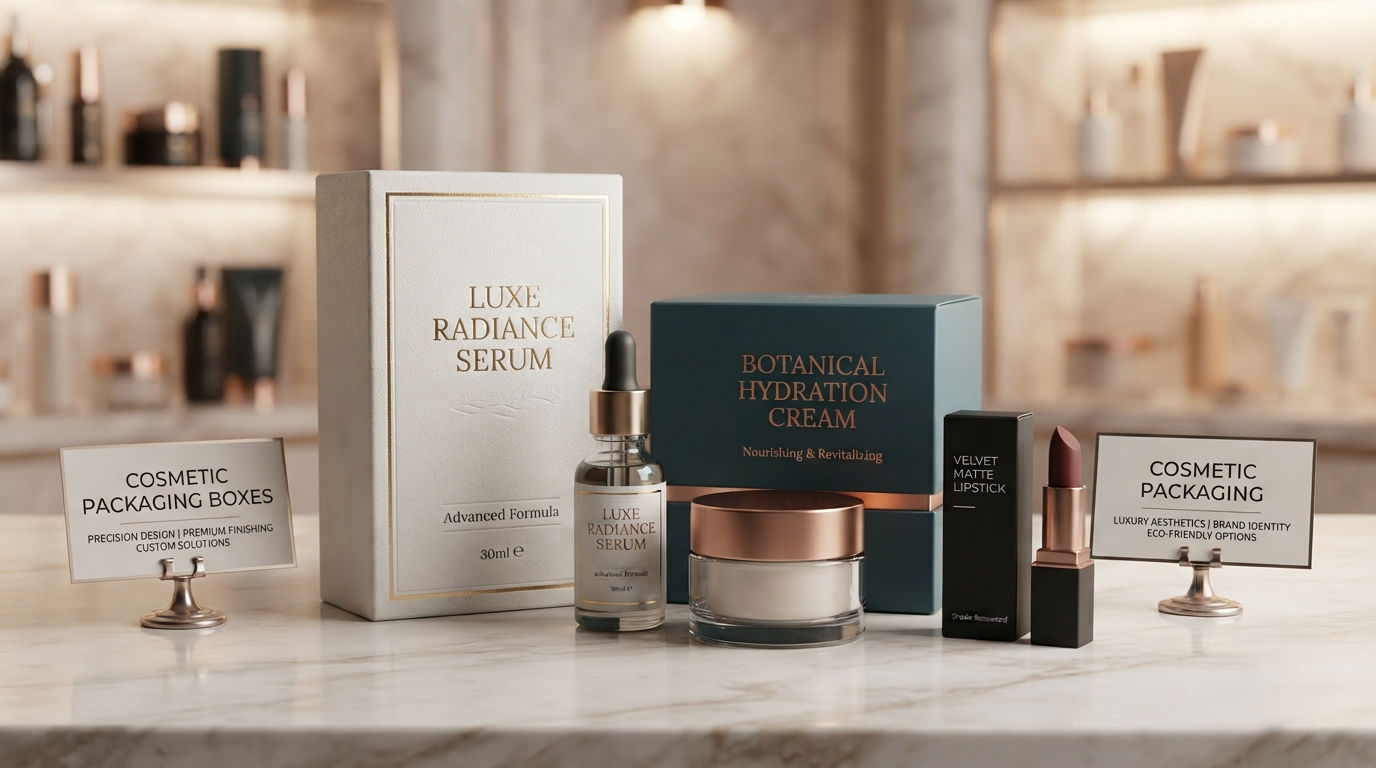
A major shift is taking place across the beauty and personal-care packaging sector as brands reconsider how products should be protected, presented, transported, and experienced. Cosmetic packaging boxes are increasingly moving from a conventional protective role toward a broader function that includes branding, sustainability, consumer communication, and digital engagement.
The change has developed over several decades. What began as simple containers for protecting cosmetics has evolved into an important part of product positioning. Today, packaging decisions can influence how consumers recognize a brand, evaluate product quality, experience an unboxing, and perceive a company’s environmental commitments.
Early Cosmetic Packaging Focused on Function
The history of cosmetic packaging began with relatively simple objectives.
Beauty products needed containers capable of holding and protecting their contents. Glass, ceramic, metal, wood, and basic paper were among the materials used in earlier packaging systems.
At the time, packaging generally carried limited branding. Its primary responsibility was to protect products from damage and contamination while allowing consumers to store and use them conveniently.
The expansion of commercial cosmetics gradually changed those priorities.
Printed Boxes Turn Packaging Into a Marketing Tool
As cosmetics moved into larger retail markets, paperboard cartons became increasingly valuable.
Manufacturers could print brand names, product descriptions, instructions, ingredients, graphics, and promotional messages directly onto the box. Packaging therefore became a new form of communication between the brand and the consumer.
This development helped establish cosmetic packaging boxes as an important retail marketing asset.
Brands began developing recognizable combinations of colors, typography, imagery, and structural designs. A product could become identifiable even before a shopper read its name.
Premium Packaging Changes Consumer Expectations
The beauty industry’s luxury segment pushed packaging innovation even further.
Premium companies began using advanced finishing and structural techniques to create packages that communicated exclusivity.
Modern luxury boxes may include:
- Rigid board construction
- Embossed logos
- Debossed patterns
- Metallic foil
- Textured papers
- Custom inserts
- Magnetic closures
- Specialty surface finishes
These details can make the package itself part of the luxury experience.
For fragrances, premium skincare, makeup collections, and gift sets, the process of opening a box can influence how consumers perceive the product inside.
Online Shopping Creates a New Packaging Challenge
The expansion of e-commerce has significantly changed packaging expectations.
Consumers increasingly discover beauty products through digital advertisements, websites, social media, videos, and online reviews. Packaging is therefore often viewed on a screen before it is handled in person.
This has made visual presentation a critical consideration.
At the same time, products purchased online must withstand handling, transportation, sorting, and delivery.
As a result, modern cosmetic packaging must balance appearance and durability.
The rise of unboxing videos has added another dimension. Packaging can now become content that customers voluntarily share with their audiences.
Sustainability Becomes a Key Packaging Story
Environmental responsibility is emerging as one of the strongest influences on packaging development.
Beauty companies are increasingly examining the quantity and type of materials used in their packages. Recyclability, recycled content, reuse, refill systems, and material efficiency are receiving greater attention.
Packaging developers are exploring:
- Recycled paperboard
- Recyclable cartons
- Responsibly sourced fiber
- Lightweight structures
- Refillable containers
- Reusable packaging
- Reduced material usage
However, sustainable packaging cannot compromise the basic requirements of product safety and protection.
The challenge is to develop solutions that minimize unnecessary environmental impact while maintaining appropriate strength, appearance, shelf life, and functionality.
Traditional and Future Packaging Show Different Priorities
| Feature | Traditional Model | Future-Oriented Model |
| Primary objective | Protection | Protection and experience |
| Materials | Conventional | Recycled and renewable options |
| Design | Standardized | Customized |
| Marketing | Physical retail | Retail and digital |
| Production | High-volume | Flexible |
| Information | Printed | Printed and digital |
| Sustainability | Limited focus | Integrated into design |
Customization Becomes More Accessible
Packaging customization is expected to remain an important growth area.
Advances in digital printing and flexible manufacturing can help brands develop specialized cosmetic packaging boxes for smaller campaigns and targeted releases.
Potential applications include:
- Seasonal collections
- Limited-edition products
- Festival campaigns
- Influencer collaborations
- Promotional launches
- Regional markets
- Special gift packaging
This allows brands to refresh their visual presentation without necessarily changing their entire packaging system.
Smart Packaging Could Connect Products With Consumers
Technology is expected to play a growing role in the next generation of cosmetic packaging.
QR codes, NFC features, and digital product identifiers can potentially provide customers with information that extends beyond the physical package.
For example, connected packaging could offer:
- Ingredient details
- Usage instructions
- Tutorials
- Authenticity verification
- Recycling information
- Product registration
- Loyalty rewards
- Brand information
This could transform the box from a static printed surface into a gateway to a wider digital experience.
Personalization May Influence Future Designs
Consumers increasingly respond to products that feel distinctive and relevant.
Packaging can support this trend through personalized graphics, special messages, limited-edition artwork, seasonal themes, and collaborations.
As manufacturing becomes more flexible, brands may have greater opportunities to create smaller batches of specialized packaging.
This could make personalized packaging useful not only for major companies but also for emerging beauty brands.
Packaging Efficiency Takes Center Stage
Future packaging development is also expected to focus on reducing unnecessary space and materials.
Optimizing box dimensions can potentially reduce material consumption while improving warehouse and transportation efficiency.
Designers may increasingly evaluate the entire lifecycle of a package before production, including sourcing, manufacturing, shipping, consumer use, and disposal.
This lifecycle approach can help brands make packaging decisions based on performance rather than appearance alone.
Design Trends Will Continue to Diversify
The beauty market is too diverse for one visual style to dominate.
Minimalist packaging can communicate modernity, purity, and sophistication through clean typography, subtle textures, and restrained graphics.
Bold packaging can create immediate visual impact through vibrant colors, unconventional shapes, artistic illustrations, and distinctive patterns.
The future will likely include both approaches, with design choices increasingly based on target audiences and brand positioning.
How Beauty Companies Can Prepare
Companies developing new cosmetic packaging boxes can strengthen their packaging strategies by evaluating:
- Product protection requirements
- Brand identity
- Target audience
- Material choices
- Sustainability objectives
- Manufacturing quantities
- Transportation conditions
- E-commerce requirements
- Customization possibilities
- Digital integration
These considerations can help create packaging that remains effective from the factory to the customer’s hands.
Frequently Asked Questions
What are cosmetic packaging boxes?
They are boxes or cartons designed to protect, present, and communicate information about cosmetics and beauty products.
Why is cosmetic packaging important?
It protects the product while helping brands communicate identity, quality, product information, and value.
How did cosmetic packaging evolve?
It progressed from simple protective containers to printed cartons and eventually to customized packaging focused on branding and consumer experience.
What is luxury cosmetic packaging?
It uses premium structures, materials, printing techniques, and decorative finishes to create an elevated product presentation.
What materials are used in cosmetic packaging?
Paperboard, cardboard, rigid board, glass, plastic, metal, recycled fibers, and specialized materials can be used depending on product requirements.
What does sustainable cosmetic packaging mean?
It generally refers to packaging designed to reduce environmental impact through efficient material use, recyclability, reuse, refill systems, or recycled content.
Can small businesses use custom packaging?
Yes. Modern printing and manufacturing options can make customized packaging increasingly accessible to smaller production quantities.
Why does e-commerce affect cosmetic packaging?
Packages must be attractive in digital marketing while also being strong enough to withstand transportation and delivery.
What is smart packaging?
Smart packaging incorporates digital technologies such as QR codes or NFC to provide additional information or services.
What will influence future cosmetic packaging?
Sustainability, personalization, technology, material efficiency, product protection, customization, and consumer experience are expected to remain important influences.