
Depression can affect far more than mood. It may influence sleep, concentration, relationships, motivation, work and everyday routines. For some people, symptoms gradually develop; for others, they can become overwhelming after a difficult life event or period of prolonged stress.
The good news is that depression can be treated, and psychological therapy is an important treatment option. Depending on a person’s symptoms, circumstances and preferences, therapy may be used on its own or alongside medication and other forms of support.
If you are considering psychological therapy for depression, understanding how therapy works, what to expect and how to choose the right professional can make the first step feel more manageable.
What Is Psychological Therapy for Depression?
Psychological therapy for depression involves working with a trained mental health professional to understand emotional difficulties, identify unhelpful patterns and develop practical strategies for managing symptoms.
Therapy does not simply involve talking about problems. A qualified therapist can help you explore the thoughts, behaviours, experiences and circumstances that may be contributing to difficulties and work collaboratively towards meaningful changes.
Common goals of therapy may include:
- Understanding persistent low mood or loss of interest
- Identifying negative or unhelpful thinking patterns
- Developing healthier coping strategies
- Improving emotional regulation
- Addressing relationship or communication difficulties
- Rebuilding confidence and daily routines
- Managing stress and difficult life experiences
- Developing strategies to reduce the likelihood of future difficulties
The most appropriate approach depends on the individual rather than a single diagnosis or set of symptoms.
How Does Therapy Help With Depression?
Therapy can provide a structured and supportive environment in which you can understand what you are experiencing and work towards practical changes.
For example, someone experiencing depression may begin avoiding social situations because they feel exhausted or believe other people do not want to be around them. Avoidance can temporarily feel easier but may also contribute to isolation and reinforce negative beliefs.
A therapist may help the person examine this pattern, consider alternative interpretations and gradually reintroduce manageable activities.
Therapy may therefore address both how you think and how you behave, while also providing space to understand the emotional experiences behind those patterns.
Which Types of Therapy Are Used for Depression?
There is no single therapy that is suitable for everyone. Different therapeutic approaches may be recommended depending on symptoms, circumstances, goals and professional assessment.
Cognitive Behavioural Therapy (CBT)
CBT explores the relationship between thoughts, feelings and behaviours.
It can help people recognise unhelpful thinking patterns and develop more balanced ways of responding to difficult situations. CBT may also include practical exercises between sessions.
Interpersonal Therapy
Interpersonal therapy focuses on relationships and life changes that may be connected with depression.
It can be particularly relevant when difficulties involve grief, conflict, relationship changes, isolation or major transitions.
Counselling and Talking Therapies
Counselling can provide a confidential space to explore emotions, experiences and concerns with a trained professional.
The style and structure of counselling can vary considerably, so it is important to understand the therapist’s qualifications, approach and areas of experience.
Other Therapeutic Approaches
Depending on the individual’s needs, a mental health professional may also use or recommend approaches such as behavioural activation, mindfulness-based approaches or other evidence-informed psychological interventions.
A qualified professional can help determine which approach is appropriate rather than expecting you to choose a treatment based solely on its name.
What Can You Expect From Depression Therapy?
Your first appointment will usually involve discussing what has brought you to therapy, your current difficulties and what you would like help with.
You may be asked about:
- Your mood and emotional wellbeing
- Sleep and daily routines
- Relationships and social circumstances
- Work or study
- Significant life events
- Current coping strategies
- What you hope to achieve through therapy
You do not need to have everything figured out before your first session.
Therapy is collaborative. You should have an opportunity to ask questions, discuss your goals and understand how sessions will work.
Can You See a Mental Health Therapist Online?
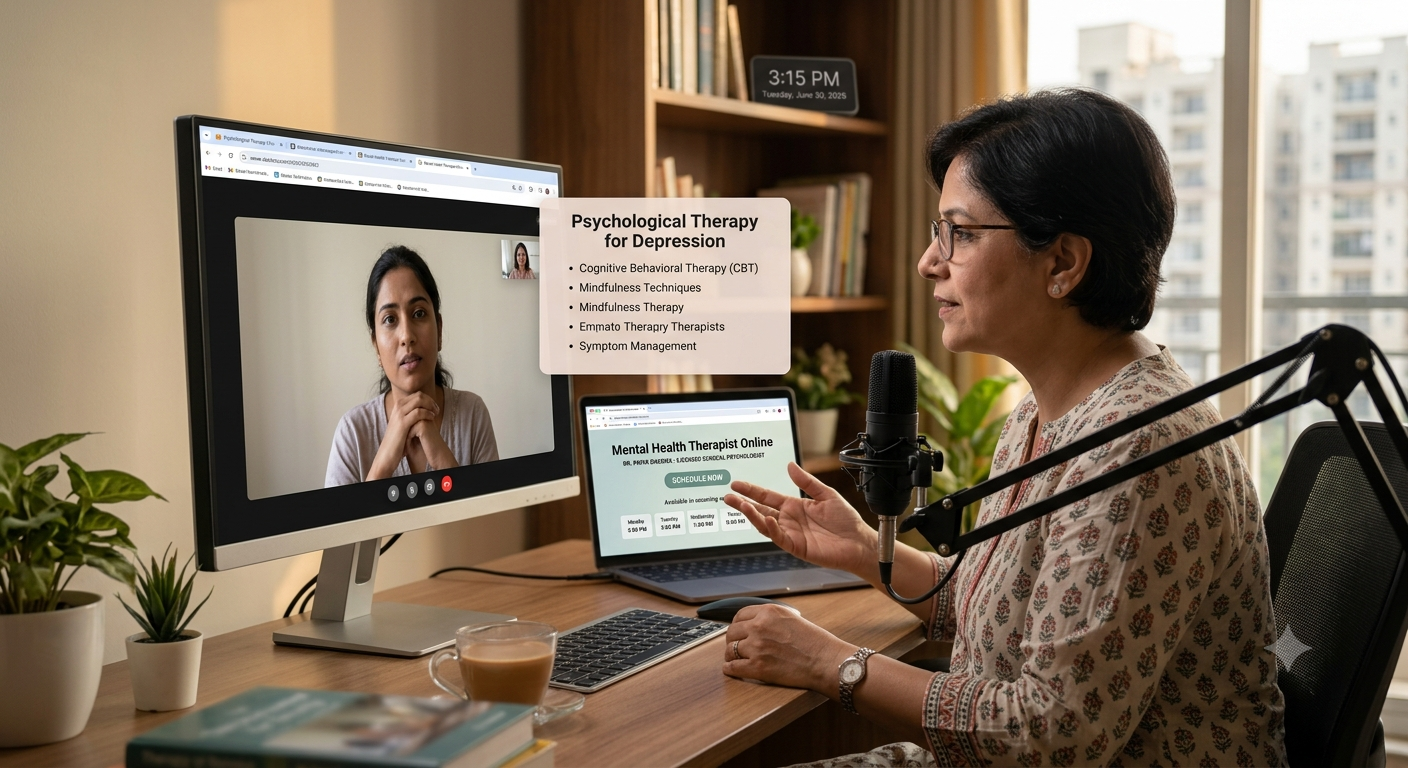
Yes. Mental health therapist online services can provide access to therapy through video calls and, depending on the service, other forms of remote communication.
Online therapy can be particularly convenient for people who have demanding schedules, prefer speaking from a familiar environment or have difficulty travelling to appointments.
Before choosing an online therapist, check:
- Their professional qualifications and relevant training
- Their experience with depression and related concerns
- Whether they offer secure online sessions
- Their availability and session arrangements
- Fees and cancellation policies
- How confidentiality is handled
- What support is available if you experience a mental health crisis
Online therapy is not automatically the best option for every situation. A qualified professional can help determine whether remote therapy is appropriate for your circumstances.
Online Therapy vs Face-to-Face Therapy
The choice between online and face-to-face therapy often comes down to personal circumstances and clinical suitability.
| Online therapy | Face-to-face therapy |
| Attend sessions remotely | Attend sessions at a clinic or practice |
| Convenient for many schedules | Provides an in-person therapeutic setting |
| No travel to appointments | May suit people who prefer direct interaction |
| Can offer access to therapists outside your immediate area | May be preferable where in-person support is clinically appropriate |
Neither option is universally better. The quality of the therapeutic relationship, the therapist’s expertise and the suitability of the treatment approach are important considerations.
How Do You Choose the Right Therapist for Depression?
Choosing a therapist is an important decision. You should feel comfortable asking about their qualifications, experience and approach before committing to ongoing sessions.
Consider asking:
- What qualifications and professional training do you have?
- What experience do you have working with depression?
- Which therapeutic approach do you use?
- How would we establish treatment goals?
- How frequently would sessions normally take place?
- How do online sessions work if therapy is provided remotely?
- What happens if I need additional or urgent support?
A good therapist should be willing to explain their approach clearly and discuss whether their service is appropriate for your needs.
Is Psychological Therapy Enough for Everyone?
Not necessarily.
Depression can range from relatively mild symptoms to severe and complex presentations. Some people benefit from psychological therapy alone, while others may need a combination of psychological treatment, medication, medical assessment or additional social support.
If symptoms are persistent, severe or interfering significantly with everyday life, speaking with a GP or appropriately qualified mental health professional is an important step.
Therapy should also not be viewed as a quick fix. Progress can vary between individuals, and treatment may involve identifying goals, practising new strategies and reviewing what is or is not helping over time.
When Should You Seek Professional Help?
Consider speaking to a qualified professional if low mood or other symptoms are persistent, affecting your relationships or work, or making everyday activities increasingly difficult.
You do not have to wait until symptoms become severe before asking for support.
A GP or mental health professional can help assess your situation and discuss appropriate treatment options.
If you are experiencing thoughts of suicide, self-harm or an immediate mental health crisis, seek urgent professional or emergency support rather than relying solely on an online therapy appointment.
Questions to Ask Before Starting Therapy
Before booking your first session, it can be useful to clarify practical details.
Is online therapy confidential?
Ask the provider how sessions are conducted and what measures they use to protect confidentiality and privacy.
How long does therapy take?
There is no universal number of sessions. Duration depends on the person’s circumstances, therapeutic approach and progress.
Will I need medication?
Not necessarily. Medication decisions should be discussed with an appropriately qualified medical professional.
Can I change therapists if it does not feel right?
You can discuss concerns with your therapist or provider. Finding a suitable therapeutic relationship matters.
Can therapy help with anxiety as well as depression?
Depression and anxiety can occur together. A qualified therapist can assess your concerns and discuss an appropriate approach.
Take the Next Step Towards Support
Finding the right psychological support does not mean you have to make every decision at once.
Start by identifying what you need help with, then look for a qualified professional with relevant experience. If you prefer the flexibility of remote appointments, exploring a mental health therapist online may be a practical option.
If you would like professional support, to discuss your concerns, treatment options and whether the service is suitable for you.
Suggested Internal Link Opportunities
For a mental health practice website, consider linking this article naturally to:
- Depression counselling services → dedicated depression treatment page
- Online therapy sessions → online therapy service page
- Anxiety therapy → anxiety treatment page
- Meet our therapists → therapist/team page
- Book a consultation → appointment/contact page
- Mental health resources → educational resources or blog hub
Frequently Asked Questions
What is the best psychological therapy for depression?
There is no single therapy that is best for everyone. CBT and other evidence-informed psychological therapies may be appropriate depending on the person’s symptoms, circumstances, preferences and treatment goals. A qualified professional can help identify a suitable approach.
Can therapy help with depression without medication?
For some people, psychological therapy may be used without medication. The appropriate treatment depends on the severity and nature of the person’s difficulties. A GP or qualified mental health professional can discuss available options.
Is an online mental health therapist effective?
Online therapy can be a suitable way for many people to access psychological support. Its suitability depends on the individual’s circumstances, the therapist’s qualifications and the type and severity of the difficulties being addressed.
How often should I see a therapist for depression?
Session frequency varies. Some people may attend weekly sessions, while others may have a different schedule based on their needs and treatment plan. Your therapist can discuss an appropriate frequency with you.
How do I know whether I need therapy for depression?
If low mood, loss of interest or other emotional difficulties are persistent or interfering with everyday life, relationships or work, it may be worth speaking with a qualified professional. You do not need to diagnose yourself before seeking an assessment.