
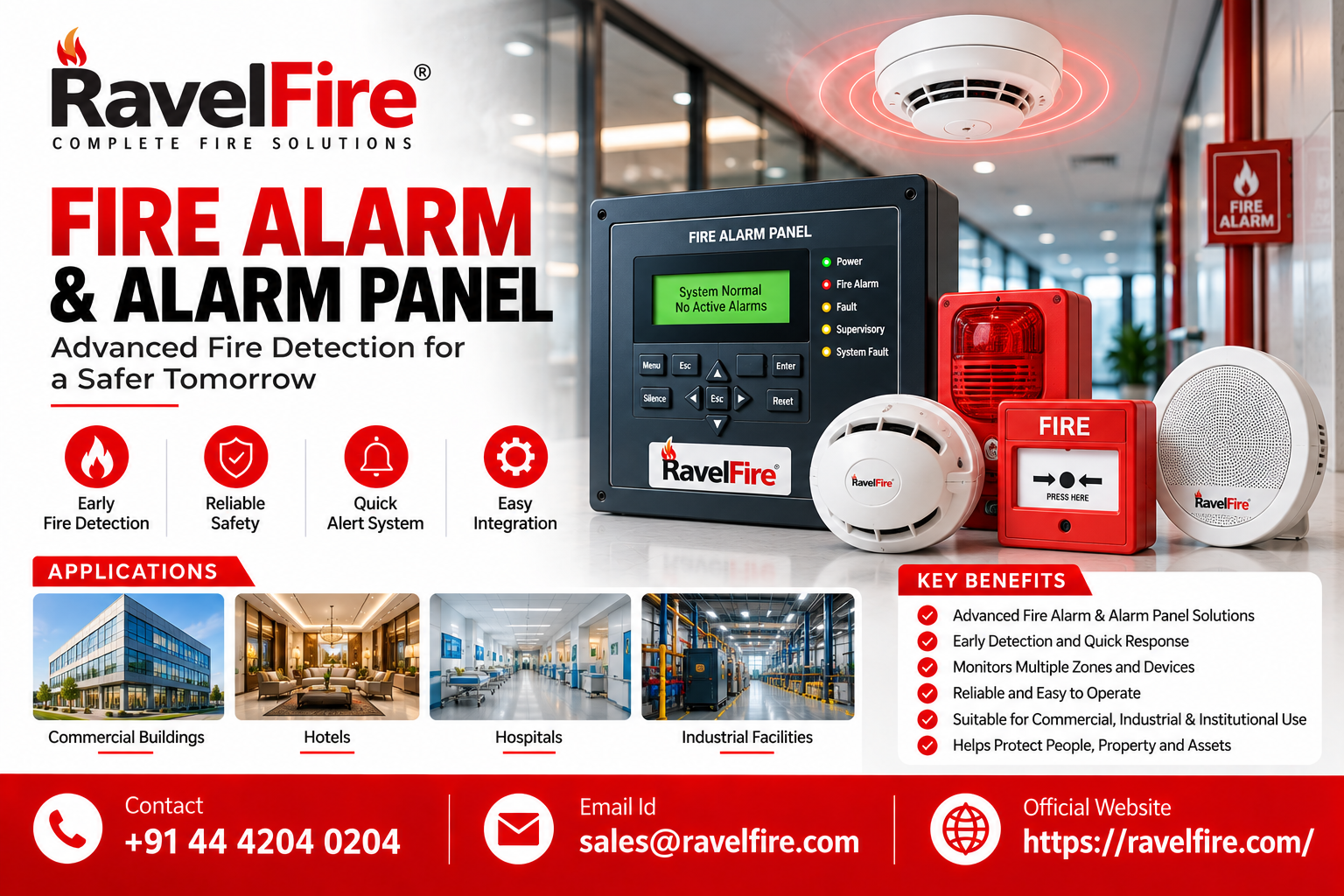
Modern buildings are becoming larger, smarter, and more interconnected, increasing the importance of reliable emergency detection and communication. From offices and hospitals to factories, hotels, educational campuses, warehouses, and infrastructure facilities, organizations are focusing on systems that can detect potential fire conditions early and communicate useful information to responsible personnel.
At the center of this strategy is the fire alarm system, supported by detectors, manual initiating devices, notification equipment, interfaces, and other compatible components. The alarm panel acts as the central point where system information can be received, processed, displayed, and managed according to the approved design.
This shift toward integrated protection reflects an important industry priority: fire safety is no longer only about sounding an alarm. It is about providing clear, actionable information throughout the lifecycle of a building.
Fire Alarm Systems Form the Foundation of Early Warning
A fire alarm system is designed to identify relevant emergency conditions and warn occupants or responsible personnel according to the system configuration.
Depending on the building and risk profile, detection may involve smoke detectors, heat detectors, beam detectors, manual call points, or other suitable technologies.
The appropriate solution varies from one facility to another.
An office building may have different detection requirements from a warehouse with high ceilings. Similarly, hospitals, factories, hotels, and educational buildings present their own operational and evacuation considerations.
Professional design therefore begins with understanding the building rather than simply selecting equipment.
Alarm Panel Serves as the System’s Central Control Point
The alarm panel is one of the most important components of a coordinated detection system.
It receives information from compatible initiating devices and presents system conditions to authorized personnel. Depending on the architecture, it can indicate alarms, faults, zones, individual devices, or other relevant information.
This centralized visibility becomes especially valuable in large facilities.
When numerous devices are installed across multiple floors or departments, personnel need an organized method of understanding what the fire alarm system is reporting.
Exact panel capabilities depend on the selected equipment, system architecture, programming, and connected devices.
Conventional and Addressable Systems Meet Different Needs
Fire detection projects can use different system architectures.
Conventional systems commonly organize devices into zones, allowing personnel to identify the general area associated with an alarm condition.
Addressable systems can provide more detailed identification of compatible devices, depending on the system design.
Neither architecture should be selected solely because it is newer or more familiar.
Building size, number of devices, required information, expansion plans, maintenance needs, budget, applicable requirements, and risk profile should all influence the decision.
The selected alarm panel must support the intended architecture and compatible field equipment.
Smarter Buildings Require Better Fire System Information
Building management has become increasingly data-driven.
Facility teams want clearer information about equipment status, maintenance requirements, faults, and emergency conditions. Fire-safety technology is evolving in the same direction.
A modern fire alarm installation can be designed to give authorized personnel a more structured view of system events.
This can be particularly useful across campuses, industrial sites, hospitals, hotels, and multi-storey commercial buildings where identifying the source of an event quickly can support established response procedures.
Technology, however, should complement—not replace—trained personnel and emergency planning.
Detector Selection Remains Critical
The performance of a fire detection system begins at field-device level.
Smoke, heat, beam, and other detector technologies respond to different fire-related conditions and environments.
Selecting an inappropriate detector can create operational difficulties.
Dust, steam, airflow, temperature, ceiling height, room geometry, machinery, and normal building activities should be considered during detector selection.
The alarm panel can only process the information it receives. Reliable system performance therefore depends heavily on suitable detection technology and correct placement.
Alarm Communication Must Reach the Right People
Detecting a potential fire condition has limited value unless the information is communicated effectively.
A fire alarm system may use audible and visual notification devices or other approved communication arrangements according to the building’s requirements.
Large or complex facilities may require different notification strategies across separate areas.
Occupancy is particularly important.
The emergency communication needs of a factory can differ considerably from those of a hospital, hotel, school, or office.
Designers should therefore consider both how a fire is detected and how occupants will receive and understand the warning.
Compatibility Is Essential for Reliable Operation
Fire-safety devices should be treated as parts of an engineered system.
A detector, module, sounder, interface, or other device should not be connected to an alarm panel simply because the physical connection appears possible.
System compatibility, electrical characteristics, software or protocol requirements where applicable, power calculations, circuit limitations, and manufacturer documentation should all be evaluated.
This becomes even more important when an existing fire alarm installation is expanded or modernized.
Project teams should review the existing architecture before introducing new equipment.
Commissioning Turns Design Into a Working System
Installation is not the final step.
Commissioning verifies that the installed system behaves according to its intended design.
This process can include checking detectors, manual initiating devices, panel indications, notification appliances, faults, interfaces, and programmed functions as applicable.
Testing should confirm not only that individual devices operate but also that the complete sequence performs correctly.
Accurate documentation is valuable as well.
Device locations, zones, system configuration, test information, and relevant records can help future maintenance teams understand the installation.
Maintenance Keeps Fire Protection Ready
A fire alarm system operates continuously, often without attracting attention until an event or fault occurs.
Routine inspection, testing, cleaning where appropriate, and preventive maintenance are therefore essential.
The alarm panel should also be monitored for faults or abnormal indications rather than treating them as minor inconveniences.
Building changes can affect detection performance.
New walls, modified ceilings, altered ventilation, relocated machinery, changes in storage arrangements, or different room uses may require the original system design to be reviewed.
Frequently Asked Questions
What is a fire alarm?
A fire alarm is part of a safety system designed to detect or receive indications of possible fire conditions and provide appropriate warning or system response.
What is an alarm panel?
An alarm panel is central control equipment that receives and processes information from compatible devices within the alarm system.
Why is a fire alarm system important?
It can provide early warning, helping occupants and responsible personnel begin established emergency procedures.
What information can an alarm panel display?
Depending on its design, it may display alarm, fault, zone, device, supervisory, or other system information.
What is the difference between conventional and addressable fire systems?
Conventional systems typically organize detection by zones, while addressable systems can provide more specific device identification when designed accordingly.
Can any detector connect to any alarm panel?
No. Compatibility should always be confirmed using relevant manufacturer documentation and system requirements.
Does a fire alarm automatically extinguish a fire?
Not necessarily. Detection, notification, and suppression are different functions, although appropriately designed systems may interact.
How often should a fire alarm system be tested?
Inspection and testing intervals should follow applicable regulations, standards, manufacturer instructions, and site requirements.
Can an existing alarm panel be expanded?
Expansion may be possible depending on panel capacity, architecture, compatibility, and project requirements. A technical assessment should be performed first.
Who should design and commission a fire alarm system?
Appropriately qualified professionals should design, install, commission, and maintain the system in accordance with applicable requirements and manufacturer guidance.
Media Contact
Fire Detection & Alarm System Enquiries
Phone: +91 44 4204 0204
Email: sales@ravelfire.com
Official Website: ravelfire.com