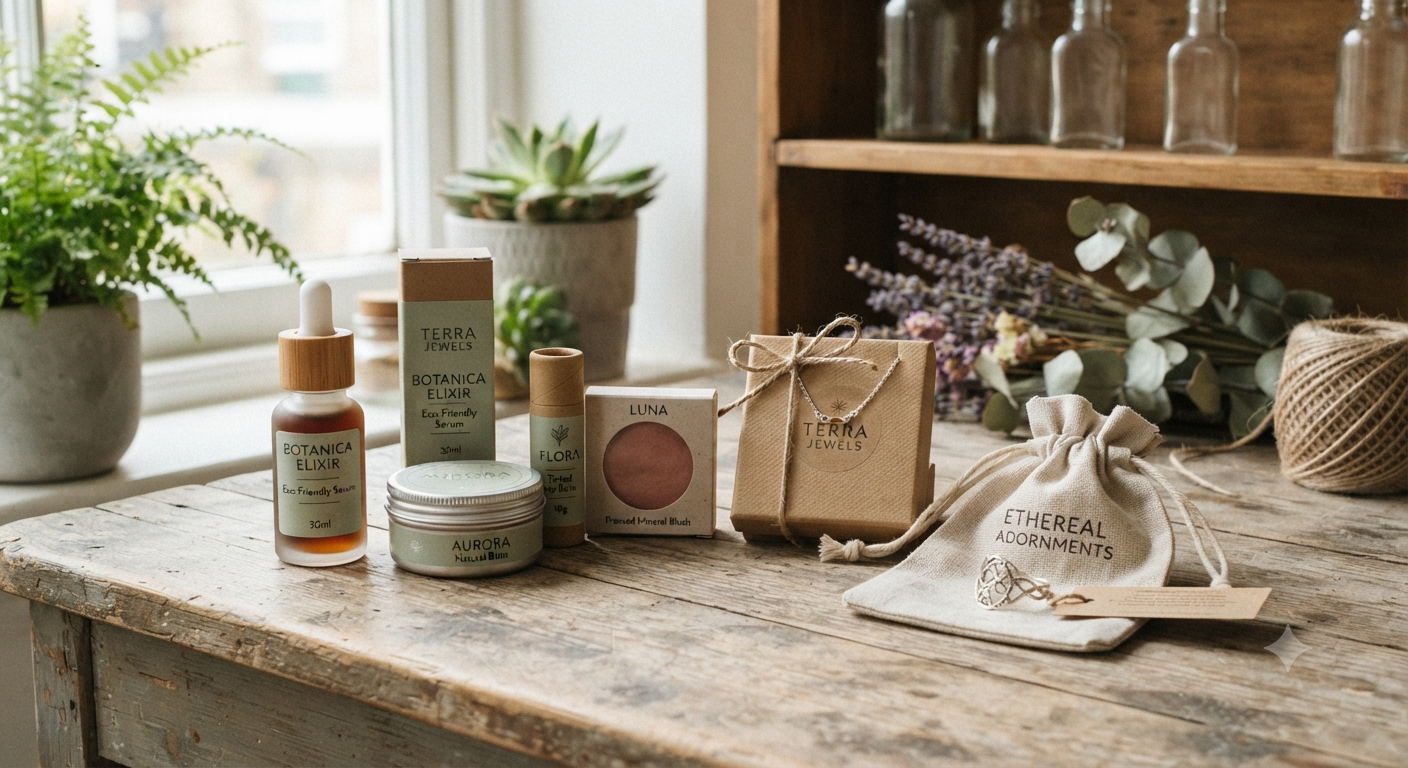
From recycled paper jewelry boxes to refillable beauty containers, companies are exploring new ways to reduce packaging waste without compromising the premium look customers expect.
The shift has created rising interest in eco friendly cosmetic packaging and innovative jewelry packaging, with brands increasingly looking for solutions that combine elegance, functionality, and environmental responsibility.
The Luxury Box Is Getting a Sustainable Makeover
For generations, luxury jewelry has been associated with elaborate presentation.
Large boxes, multiple layers, decorative inserts, plastic films, and synthetic materials have traditionally been used to create a sense of exclusivity.
But the modern consumer is asking a different question:
What happens to all of this packaging after the product is opened?
That question is pushing brands to reconsider the traditional luxury unboxing experience.
Today’s packaging designers are being challenged to create products that look premium while generating less waste. The result is a new generation of packaging that prioritizes efficient construction, recyclable materials, and longer product lifecycles.
The transformation is not happening in isolation.
Future Market Insights estimates that the global paperboard jewelry box market could grow from $84.5 million in 2024 to $118.6 million by 2034. The projected growth reflects increasing interest in paper-based packaging and the wider movement toward more sustainable solutions.
Paper-Based Packaging Takes Center Stage
One of the most practical changes taking place across the industry is the growing use of recycled paper and corrugated cardboard.
These materials offer brands significant flexibility.
They can be shaped into jewelry boxes, shipping packages, product sleeves, gift boxes, inserts, and promotional materials.
More importantly, sustainable paper packaging no longer has to look ordinary.
Modern finishing techniques can transform recycled materials into premium packaging through:
- Embossed logos
- Debossed branding
- Textured surfaces
- High-quality printing
- Elegant typography
- Custom structural designs
This allows jewelry companies to maintain a sophisticated presentation while reducing their reliance on conventional packaging materials.
For brands, it represents an important shift in thinking: sustainable packaging can be part of the luxury experience rather than a compromise to it.
Reusable Boxes Could Change the Unboxing Experience
The next major packaging trend may be one that refuses to disappear.
Reusable jewelry packaging is gaining attention as brands explore ways to keep boxes and pouches in circulation for longer periods.
A jewelry box can be designed as a permanent storage case.
A branded pouch can be used to carry accessories.
A premium package can become a keepsake rather than another item thrown away.
This approach creates an opportunity to extend the lifecycle of packaging while increasing customer interaction with the brand.
Instead of creating a package that serves its purpose for five minutes, designers can create one that remains useful for five years.
That change could have a significant impact on how consumers think about luxury packaging.
Minimalism Moves Into the Spotlight
Another trend gaining momentum is minimalist packaging.
The idea is straightforward: eliminate everything that doesn’t add meaningful value.
For jewelry companies, this could mean using smaller boxes that fit products more precisely. For cosmetic brands, it could involve removing unnecessary secondary packaging and reducing the number of individual components.
Minimalism can also create a stronger visual identity.
A simple package with a refined logo and carefully selected materials can communicate luxury more effectively than excessive decoration.
From an environmental perspective, reducing packaging can also help lower material consumption and potentially reduce shipping volume.
The result is a design philosophy that delivers both aesthetic and sustainability benefits.
Natural Materials Enter the Race
The search for sustainable packaging alternatives is also driving innovation in material science.
Mycelium is one example attracting attention.
Derived from fungal networks, mycelium-based materials are being explored for various packaging applications and have gained interest as companies investigate alternatives to conventional synthetic protective materials.
Seaweed is another emerging area of research.
As a renewable resource, seaweed is being studied for potential use in packaging materials that could provide alternatives to certain traditional plastics.
While these materials still face challenges related to scalability, production costs, durability, and manufacturing infrastructure, their development points toward a future in which packaging could rely increasingly on renewable resources.
The biggest innovations may not come from improving today’s materials—but from inventing entirely new ones.
Beauty Brands Embrace Eco Friendly Cosmetic Packaging
The sustainability movement is equally visible in the cosmetics industry.
Demand for eco friendly cosmetic packaging is increasing as consumers become more conscious of the environmental impact of beauty products.
Cosmetic companies are now exploring packaging options that include:
- Recycled materials
- Refillable containers
- Glass bottles
- Aluminum packaging
- Paper cartons
- Reusable components
- Biodegradable alternatives
- Reduced secondary packaging
Refill systems are particularly interesting because they can change the entire lifecycle of a cosmetic product.
Instead of replacing a complete container each time a product runs out, customers can keep the original package and purchase a refill.
This can potentially reduce waste while creating new opportunities for brands to build repeat purchasing habits.
The packaging becomes part of the product ecosystem rather than a disposable accessory.
Fabric Packaging Adds a Premium Touch
Not every sustainable packaging solution needs to look industrial.
Natural fabrics such as cotton, hemp, and linen are increasingly being considered for premium packaging applications.
In the jewelry sector, fabric pouches offer a simple way to combine protection, luxury, and reusability.
The pouch can protect jewelry during storage or travel and continue serving a purpose long after the original purchase.
For customers, this creates a more meaningful relationship with the package.
For brands, it provides another opportunity to remain visible in customers’ everyday lives.
Packaging Design Is Becoming More Intelligent
Sustainable packaging is not only about replacing one material with another.
The design itself is becoming smarter.
Brands are looking at how packages are manufactured, transported, opened, reused, and eventually discarded.
This has encouraged designers to explore solutions such as:
- Simplified packaging structures
- Fewer material combinations
- Recycled decorative components
- Low-impact printing methods
- Natural dyes
- Reusable inserts
- Reduced packaging dimensions
- Easier recycling processes
One of the biggest challenges is the use of mixed materials.
Packaging that combines several materials that cannot be easily separated may be difficult to recycle, even if the individual components are recyclable.
As a result, designers are increasingly considering what happens to packaging at the end of its useful life.
Sustainability Becomes Part of Brand Identity
The packaging conversation is also changing the way companies communicate with customers.
Sustainability is no longer limited to a statement on a company’s website.
Consumers can now see it directly through the materials and design choices used in packaging.
For a jewelry brand, a recycled paper box can communicate responsible luxury.
For a beauty company, a refillable bottle can demonstrate a commitment to reducing waste.
For both industries, packaging can become a physical representation of brand values.
This makes sustainable packaging a powerful storytelling tool.
Industry Leaders Continue to Experiment
The movement toward sustainable packaging can already be seen among established jewelry companies.
Brilliant Earth has incorporated responsible sourcing and sustainability into its brand positioning, including initiatives involving recycled materials.
Catori Life has emphasized environmentally conscious practices as part of its business identity.
Mejuri has explored recyclable and reusable packaging strategies while also highlighting responsible sourcing.
Their approaches demonstrate a broader industry trend: sustainability is increasingly being integrated into the complete customer experience.
Technology Could Accelerate the Transformation
The next chapter of sustainable packaging could be driven by technology.
Smart packaging, advanced biomaterials, improved recycling systems, digital product information, and refill technology are all areas attracting growing interest.
Future packaging could potentially help customers understand where materials came from, how products should be recycled, or how containers can be reused.
This could make sustainability more transparent and easier for consumers to participate in.
The combination of technology and responsible design could ultimately create packaging that is not only better for the environment but also more useful to customers.
A New Era for Luxury Packaging
The traditional idea of luxury packaging is changing.
Big boxes and excessive layers are no longer the only ways to create a premium experience.
The next generation of luxury may be defined by thoughtful design, responsible materials, reusability, and innovation.
For jewelry brands, the future of jewelry packaging could involve smaller, smarter, reusable, and recyclable designs.
For beauty companies, eco friendly cosmetic packaging could become a defining part of the customer experience, from refillable containers to innovative bio-based materials.
The transformation will not happen overnight, and no single material will solve the industry’s sustainability challenges.
https://newsgrow.blogspot.com/2026/07/wine-packaging-trends-that-turn-every.html
https://newsgrow.blogspot.com/2026/07/the-future-of-jewelry-packaging-is.html