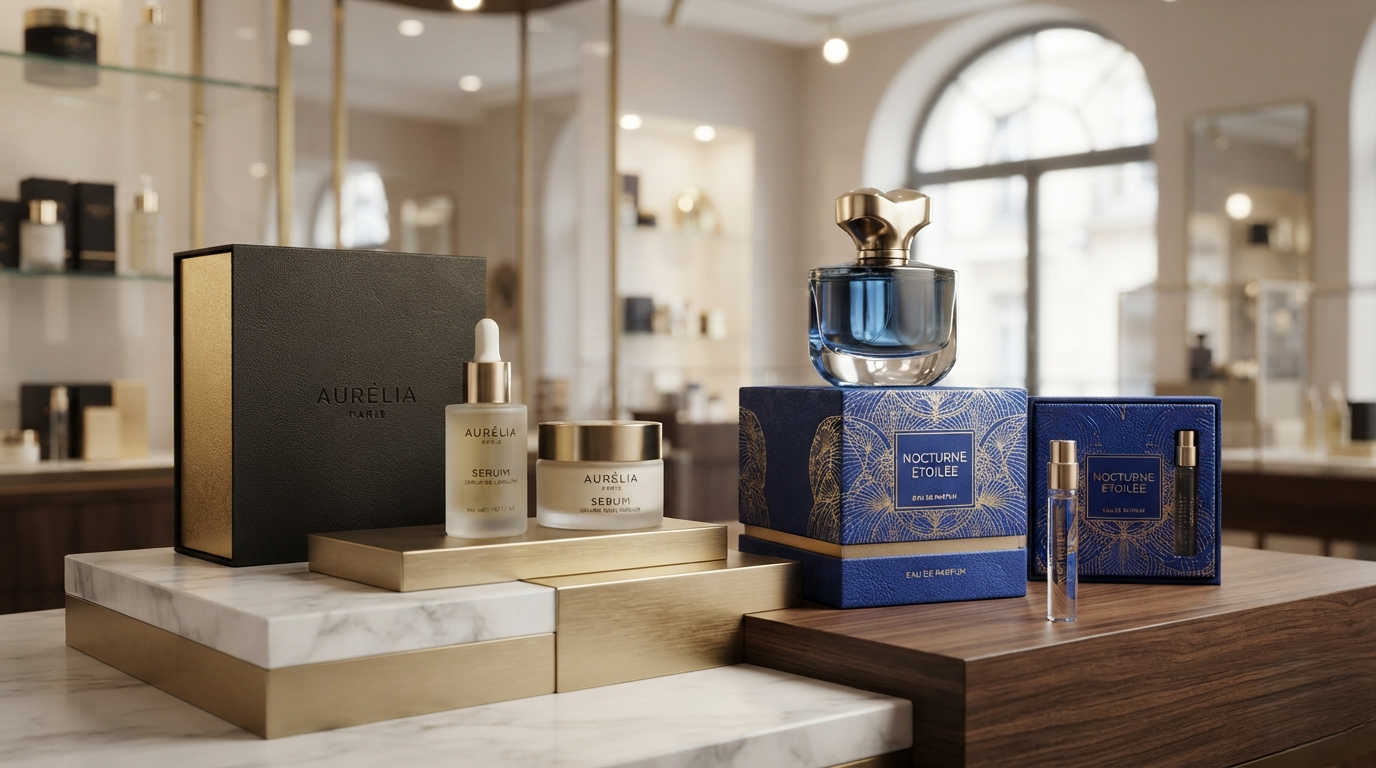
The beauty and fragrance industry is witnessing a fundamental shift in packaging philosophy as brands move from conventional presentation-led designs toward packaging built around sustainability, functionality, personalization, and long-term consumer value. The transformation is particularly visible across luxury cosmetic packaging and perfume packaging, two categories where appearance and brand identity have traditionally played a central role.
Market analysis published in May 2026 estimates that the global cosmetic packaging market could grow from USD 31.68 billion in 2026 to USD 40.33 billion by 2031. The analysis identifies sustainable materials, refillable formats, lightweight construction, smart dispensing systems, and customization as important market drivers.
The development reflects a broader change in how luxury is defined. Premium packaging is increasingly expected to deliver an attractive appearance while also providing functionality, durability, responsible material choices, and an improved end-of-life pathway.
A New Definition of Luxury Is Emerging
For many years, luxury beauty packaging was strongly associated with elaborate presentation. Heavy glass, multiple packaging layers, metallic decorations, intricate cartons, and elaborate closures were frequently used to create a sense of exclusivity.
That approach is changing.
Today’s packaging designers are increasingly exploring the idea that luxury can come from precision, craftsmanship, durability, tactile quality, and intelligent functionality rather than excessive material use.
This shift is creating opportunities for packaging that combines:
- Premium visual identity
- High-quality materials
- Refillable construction
- Functional dispensing
- Personalization
- Recyclability
- Digital connectivity
The result is a more considered version of luxury that places product experience and long-term value alongside appearance.
From Ancient Beauty Containers to Modern Packaging
The evolution of luxury cosmetic packaging began long before today’s global beauty brands.
Ancient cultures used specially crafted vessels to store oils, pigments, perfumes, balms, and other beauty preparations. Glass, ceramic, stone, and metal containers were valued not only for their practical function but also for their craftsmanship.
As the cosmetics industry expanded, packaging gradually became a commercial differentiator. Advances in manufacturing enabled companies to produce recognizable bottles, jars, cartons, labels, and closures at scale.
Brand identity became closely connected with packaging.
Today, that legacy remains visible in premium cosmetic containers, but the priorities have expanded considerably.
Perfume Packaging Develops Into a Brand Asset
Fragrance packaging has followed an equally distinctive path.
A perfume bottle is rarely treated as an ordinary container. Its shape, transparency, color, cap, weight, label, and finishing can communicate the character of a fragrance before a consumer experiences the scent.
Modern perfume packaging therefore serves several purposes simultaneously.
It protects the fragrance, supports product presentation, reinforces brand recognition, creates emotional appeal, and can even become a decorative object.
This emotional connection is one reason fragrance packaging continues to receive substantial attention from designers and brand strategists.
Sustainability Becomes a Design Requirement
Sustainable packaging is increasingly moving from a marketing feature to a technical design consideration.
A May 2026 analysis of sustainable cosmetic packaging highlights recycled materials, circular design, refill potential, consumer expectations, and performance validation as increasingly important factors in packaging decisions.
This means brands must look beyond whether a package appears environmentally responsible.
They also need to consider:
- Where the material comes from.
- How much material is required.
- Whether components can be separated.
- Whether the package can be refilled.
- Whether the material can realistically enter recycling systems.
- How well the package protects the product.
- What happens after consumer use.
This more technical approach is likely to influence packaging development throughout the coming decade.
Refillable Systems Gain Attention
Refillable packaging has become one of the most discussed developments in premium beauty.
The concept is simple: create a durable primary container that remains in use while the product inside can be replaced.
For cosmetics, this could involve refillable jars, cartridges, bottles, or compact systems.
For fragrance, refillable perfume packaging can allow consumers to retain a distinctive bottle and replenish the fragrance instead of replacing the complete package.
Market research also indicates growing interest in refillable packaging across cosmetics and personal care.
However, refillability alone does not guarantee environmental benefits. The overall impact depends on factors such as material selection, refill frequency, transportation, manufacturing, and consumer participation.
Materials Are Being Rethought
Material innovation is becoming another major area of packaging development.
Traditional materials such as glass, aluminum, paperboard, and plastic remain important, but manufacturers are increasingly investigating recycled content, bio-based materials, mono-material structures, and lightweight alternatives.
For premium products, glass and aluminum can remain attractive because they provide a strong combination of durability and sophisticated appearance.
At the same time, lightweighting can help reduce the amount of material required and potentially improve transportation efficiency.
The challenge is finding the right balance between appearance, performance, cost, recyclability, and environmental impact.
Personalization Brings a New Dimension
The next generation of packaging is expected to become more personalized.
Digital printing and flexible manufacturing can support customized labels, seasonal artwork, limited editions, personalized messages, and smaller production quantities.
This trend could be particularly valuable for perfume packaging, where fragrance is strongly associated with identity and gifting.
Cosmetic brands can also use personalization to create packaging for special campaigns, celebrations, product launches, and targeted consumer groups.
Packaging consequently becomes more than a brand identifier—it becomes part of the customer’s personal experience.
Technology Turns Packaging Into an Information Platform
Packaging is also gaining a digital dimension.
QR codes, NFC technology, authentication systems, and digital identifiers can connect physical packaging with online content.
A future package could potentially provide consumers with:
- Ingredient information
- Product instructions
- Authentication
- Manufacturing details
- Recycling guidance
- Refill instructions
- Brand history
- Product storytelling
This development could be especially valuable for premium products because consumers increasingly expect transparency and authenticity.
Technology can also allow brands to maintain communication with customers after the initial purchase.
The Future of Luxury Cosmetic Packaging
The future of luxury cosmetic packaging is likely to focus on intelligent design rather than unnecessary complexity.
A premium container may be expected to look sophisticated while also being refillable, lightweight, durable, recyclable, and easy to use.
Packaging designers will increasingly need to balance aesthetics with technical requirements.
Future development is likely to focus on:
- Refillable structures
- Circular material selection
- Improved dispensing systems
- Reduced material use
- Reusable outer containers
- Personalized components
- Digital product identification
- Better recycling compatibility
The most successful designs will be those where sustainability becomes an integrated part of the product experience rather than an afterthought.
The Future of Perfume Packaging
The fragrance industry faces a unique opportunity because perfume bottles already have strong emotional and aesthetic value.
Future perfume packaging can build on this advantage by turning the bottle into a long-term reusable component.
Instead of designing a bottle for one product cycle, brands can create recognizable containers intended to remain with consumers for multiple refills.
Future fragrance packaging may combine:
| Current Approach | Emerging Direction |
| Decorative bottle | Reusable design |
| Heavy construction | Lightweight engineering |
| Single-use format | Refillable system |
| Standard labeling | Personalized identity |
| Static information | Digital connection |
| Conventional materials | Recycled and responsible materials |
| Short life cycle | Extended product life |
This approach could preserve the artistic character of fragrance while responding to changing environmental expectations.
Challenges the Industry Must Address
The transition will not happen without challenges.
Refillable packaging needs convenient refill systems. Sustainable materials must still meet demanding product-protection requirements. Digital technologies must provide genuine value rather than simply adding features.
Cost is another consideration. Premium packaging requires precise manufacturing, and new materials or refill mechanisms can increase development complexity.
Brands will therefore need to evaluate packaging through a complete life-cycle perspective rather than focusing on a single sustainability characteristic.
What the Next Decade Could Bring
The coming years are likely to bring greater convergence between luxury design and circular packaging.
Consumers may increasingly expect premium products to provide reusable containers, responsible material choices, personalization, and digital transparency as part of the standard experience.
At the same time, craftsmanship will remain important. Luxury beauty packaging will still need to create desire and emotional connection.
The difference will be that future luxury is likely to be measured not only by how impressive packaging looks when purchased, but also by how intelligently it performs throughout its useful life.
Frequently Asked Questions
What is luxury cosmetic packaging?
Luxury cosmetic packaging is premium packaging designed to protect beauty products while communicating quality, exclusivity, functionality, and brand identity.
What does perfume packaging include?
Perfume packaging includes fragrance bottles, caps, closures, labels, cartons, and related presentation components.
How has luxury packaging changed?
It has evolved from primarily decorative containers toward packaging that combines aesthetics with functionality, sustainability, refillability, and technology.
Why is refillable packaging important?
Refillable packaging can extend the life of durable containers and reduce the need to replace the entire package when the product is finished.
Is refillable packaging automatically sustainable?
No. Its environmental performance depends on the complete system, including materials, manufacturing, refill frequency, transportation, and consumer behavior.
What materials are used for luxury cosmetic packaging?
Glass, aluminum, paperboard, plastic, recycled materials, and emerging bio-based materials can all be used depending on the product requirements.
Why is perfume packaging important for branding?
Bottle shape, color, material, closure, and finishing can communicate a fragrance’s personality and help consumers recognize the brand.
Can technology be incorporated into packaging?
Yes. QR codes, NFC features, digital identifiers, and authentication technologies can connect physical packaging with digital information.
Will personalized packaging become more common?
Yes. Digital printing and flexible manufacturing are making customized and limited-run packaging increasingly practical.
What is the future of luxury packaging?
The future is likely to combine premium aesthetics with refillability, responsible materials, circular design, personalization, functionality, and digital connectivity.
Read more – https://tandtlawassociates.com/cosmetic-packaging-boxes-and-cosmetic-packaging-past-present-and-future/
https://newsgrow.blogspot.com/2026/08/cosmetic-packaging-boxes-deep-guide-to.html
https://bhoomijanatural.info/beauty-packaging-enters-a-new-chapter-as-luxury-meets-sustainability/