
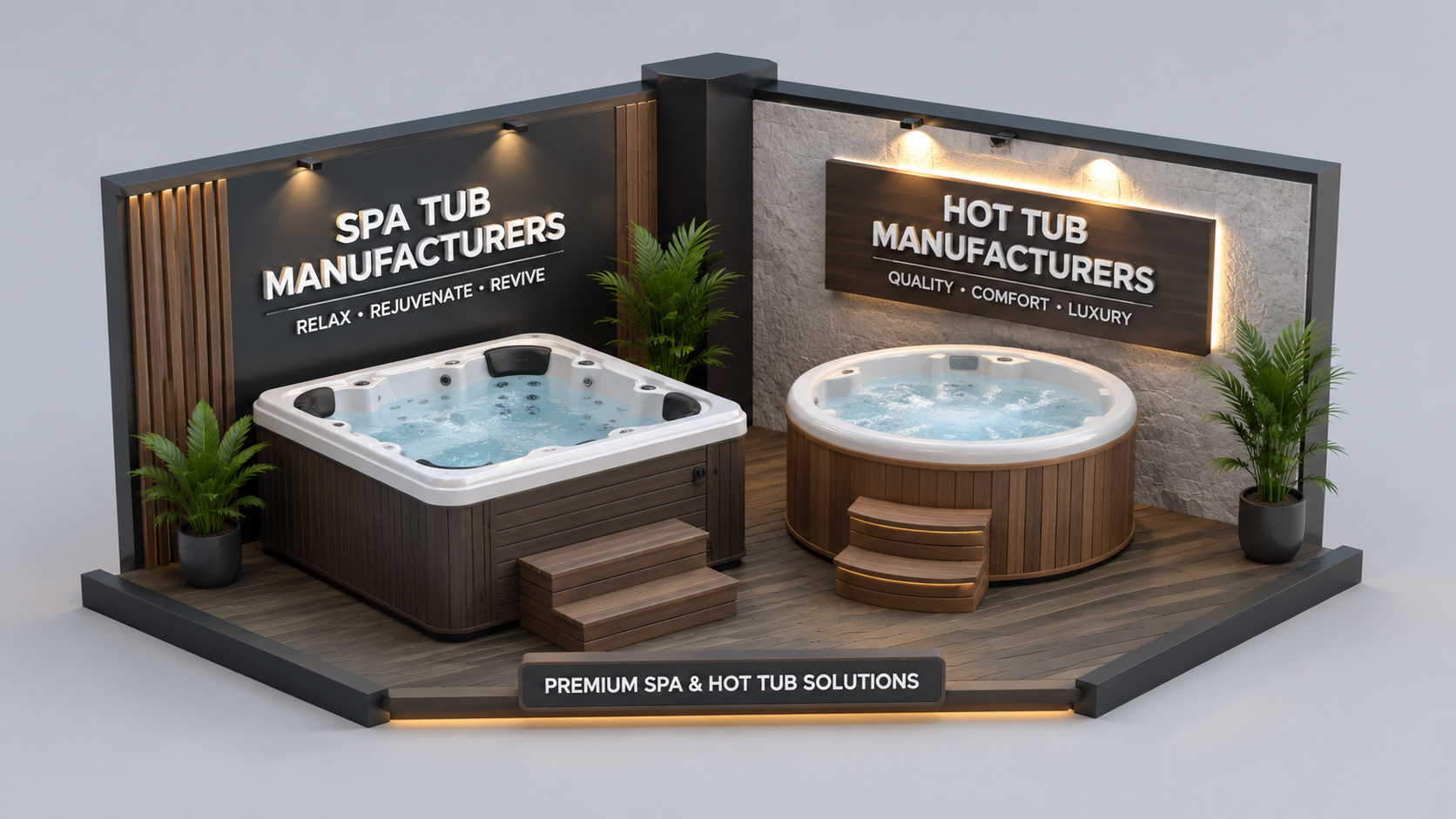
The demand for private wellness spaces has grown rapidly as homeowners, hotels, resorts, wellness centres, and luxury property developers look for comfortable ways to create relaxing hydrotherapy experiences. Choosing reliable spa tub manufacturers and hot tub manufacturers is therefore about much more than selecting an attractive design. Quality construction, water circulation, heating efficiency, seating ergonomics, safety, maintenance, and after-sales support can all determine how well a spa performs over its lifetime.
A professionally manufactured spa or hot tub combines hydrotherapy technology with durable engineering. Whether you need a compact residential spa, a luxury outdoor hot tub, or a commercial wellness installation, understanding what manufacturers provide will help you make a better investment.
What Do Spa Tub Manufacturers Do?
Professional spa tub manufacturers design and manufacture tubs equipped with water jets, circulation pumps, filtration systems, heating equipment, control panels, seating, and insulation.
Manufacturing involves considerably more than creating the shell. A dependable manufacturer carefully considers water pressure, plumbing layout, drainage, electrical safety, structural strength, user comfort, and energy consumption.
Modern spa tubs can include features such as:
- Adjustable hydrotherapy massage jets
- Ergonomic loungers and seating
- LED underwater lighting
- Digital temperature controls
- Water filtration and sanitisation
- Energy-efficient heating
- Headrests and cup holders
- Bluetooth entertainment systems
- Waterfalls and decorative fountains
- Custom colours, dimensions, and finishes
Good manufacturers balance luxury features with practical reliability.
What Makes Reliable Hot Tub Manufacturers Different?
Reputable hot tub manufacturers focus on the complete ownership experience rather than simply selling equipment. They consider installation conditions, expected usage, climate, number of users, maintenance requirements, and operating costs before recommending a suitable model.
Material and Structural Quality
A hot tub must continuously withstand water pressure, temperature changes, chemicals, moisture, and regular use. Manufacturers commonly use durable acrylic shells supported by reinforced structural systems.
The cabinet and supporting frame should also resist corrosion, moisture damage, and environmental exposure, particularly when the hot tub will be installed outdoors.
Efficient Hydrotherapy Systems
The massage experience depends heavily on pump capacity, jet placement, water pressure, and seating design. Simply installing more jets does not automatically create better hydrotherapy.
Why Jet Placement Matters
Jets positioned around the shoulders, back, legs, calves, and feet can provide targeted water massage. Experienced manufacturers design each seating position around specific body areas rather than positioning jets only for visual appeal.
Spa Tub vs Hot Tub: Understanding the Difference
The terms spa tub and hot tub are frequently used interchangeably, although buyers may encounter differences depending on the manufacturer and market.
| Feature | Spa Tub | Hot Tub |
| Primary Purpose | Hydrotherapy and relaxation | Relaxation, social use and hydrotherapy |
| Installation | Indoor or outdoor | Commonly outdoor |
| Seating | Seats or loungers | Multiple integrated seats |
| Jets | Usually hydrotherapy-focused | Massage jets with different configurations |
| Heating | Integrated in many models | Typically integrated |
| Applications | Homes, spas, hotels, wellness centres | Homes, resorts and hospitality properties |
Instead of focusing only on terminology, buyers should compare actual specifications, construction quality, capacity, hydrotherapy performance, warranties, and servicing options.
How to Choose Spa Tub Manufacturers
Selecting the right manufacturer requires evaluating technical competence alongside appearance and price.
First, identify your required capacity. A couple purchasing a private spa has very different requirements from a resort operating a hot tub throughout the day.
Second, examine manufacturing materials and internal components. Ask about shell construction, supporting frames, pumps, heaters, filtration, controllers, plumbing fittings, and insulation.
Third, evaluate customisation. Experienced spa tub manufacturers may provide choices in dimensions, seating arrangements, jet configurations, colours, cabinet finishes, lighting, and accessories.
Finally, understand warranty and servicing conditions before purchasing.
Important Features to Compare Before Buying
When evaluating products from different hot tub manufacturers, buyers should consider practical performance rather than selecting a model solely because it has numerous luxury features.
Important considerations include water capacity, seating capacity, pump specifications, heating system, filtration technology, insulation, control system, number and type of jets, electrical requirements, installation requirements, warranty coverage, replacement-part availability, and maintenance accessibility.
Energy efficiency deserves particular attention. Effective insulation helps retain heat, while an appropriately designed cover can reduce unnecessary heat loss when the tub is not being used.
Residential and Commercial Spa Tub Requirements
Residential spas typically prioritise comfort, appearance, manageable operating costs, privacy, and simple controls. Buyers may prefer two-person loungers, family-size hot tubs, or larger entertainment models.
Commercial installations require different planning. Hotels, resorts, clubs, rehabilitation facilities, and wellness centres may experience considerably greater usage. Equipment therefore needs suitable circulation, filtration, maintenance access, controls, and construction for the intended operating environment.
Professional spa tub manufacturers should clearly identify whether a model is designed for residential or commercial applications.
Custom Spa and Hot Tub Manufacturing
Customisation is especially valuable for luxury villas, boutique resorts, premium hotels, rooftop terraces, and architect-designed wellness spaces.
Custom hot tub manufacturers may offer different shell colours, cabinet finishes, seating layouts, massage configurations, dimensions, lighting arrangements, control systems, and decorative features.
However, customisation should never compromise engineering fundamentals. Accessibility for pumps, filters, heaters, and plumbing remains essential because components will eventually require routine maintenance or servicing.
Installation Considerations
Even a high-quality spa can perform poorly if installation is incorrect. Buyers should prepare the installation location before delivery.
The foundation must safely support the combined weight of the spa, water, equipment, and occupants. Electrical connections should satisfy applicable local requirements and be completed by suitably qualified professionals.
Indoor installations also require consideration of ventilation, drainage, humidity, waterproofing, and floor protection.
Outdoor installations require consideration of weather exposure, access, drainage, privacy, electrical supply, and service clearances.
Discuss these requirements with your manufacturer before placing an order.
Why After-Sales Support Matters
A spa tub contains mechanical, electrical, plumbing, heating, and filtration components that require routine care. Even premium equipment may eventually need consumables or replacement components.
Reliable manufacturers should provide clear guidance regarding maintenance, filters, cleaning, water treatment, troubleshooting, warranties, spare parts, and technical assistance.
A slightly cheaper spa with poor support can become more expensive over time if compatible components are difficult to obtain.
FAQs About Spa Tub Manufacturers and Hot Tub Manufacturers
1. What should I look for in spa tub manufacturers?
Look for manufacturing quality, durable materials, reliable pumps and heaters, proper filtration, good insulation, warranty coverage, technical support, and replacement-part availability.
2. Are spa tubs and hot tubs the same?
The terms are often used interchangeably. Product design and specifications are more important than the label used by a manufacturer.
3. Can hot tubs be customised?
Yes. Many hot tub manufacturers offer options for dimensions, colours, seating, jets, lighting, cabinet finishes, and accessories.
4. How many people can use a hot tub?
Capacity depends on the model. Options range from compact two-person tubs to larger models accommodating families or groups.
5. Can spa tubs be installed outdoors?
Yes. Many models are designed specifically for outdoor installation, provided the foundation, electrical supply, drainage, and environmental protection are properly planned.
6. Do spa tubs require regular maintenance?
Yes. Routine maintenance generally includes water testing, sanitisation, filter cleaning, surface cleaning, and periodic equipment inspections.
7. Are modern hot tubs energy efficient?
Energy performance varies considerably. Effective insulation, efficient heating systems, quality covers, and intelligent controls can help reduce unnecessary energy consumption.
8. How important are massage jets?
Jets are central to hydrotherapy performance, but placement, adjustability, pump capacity, and water flow are usually more important than simply having a high number of jets.
9. Can manufacturers supply commercial spa tubs?
Yes. Some manufacturers offer products specifically engineered for hotels, resorts, clubs, wellness facilities, and other commercial applications.
10. What warranty should a manufacturer provide?
Warranty terms vary between manufacturers and components. Buyers should review separate coverage for the shell, structure, plumbing, pumps, heating equipment, controls, and other components before purchasing.