The era of paper tickets, manual entry checks and time-consuming product scanning is rapidly giving way to smarter contactless technology. As businesses and event organisers look for faster ways to manage people, products and access, RFID solutions are gaining momentum across industries.
From the wristband used to enter a packed music festival to the smart label attached to a product moving through a warehouse, Radio Frequency Identification is creating new possibilities for seamless identification and data management.
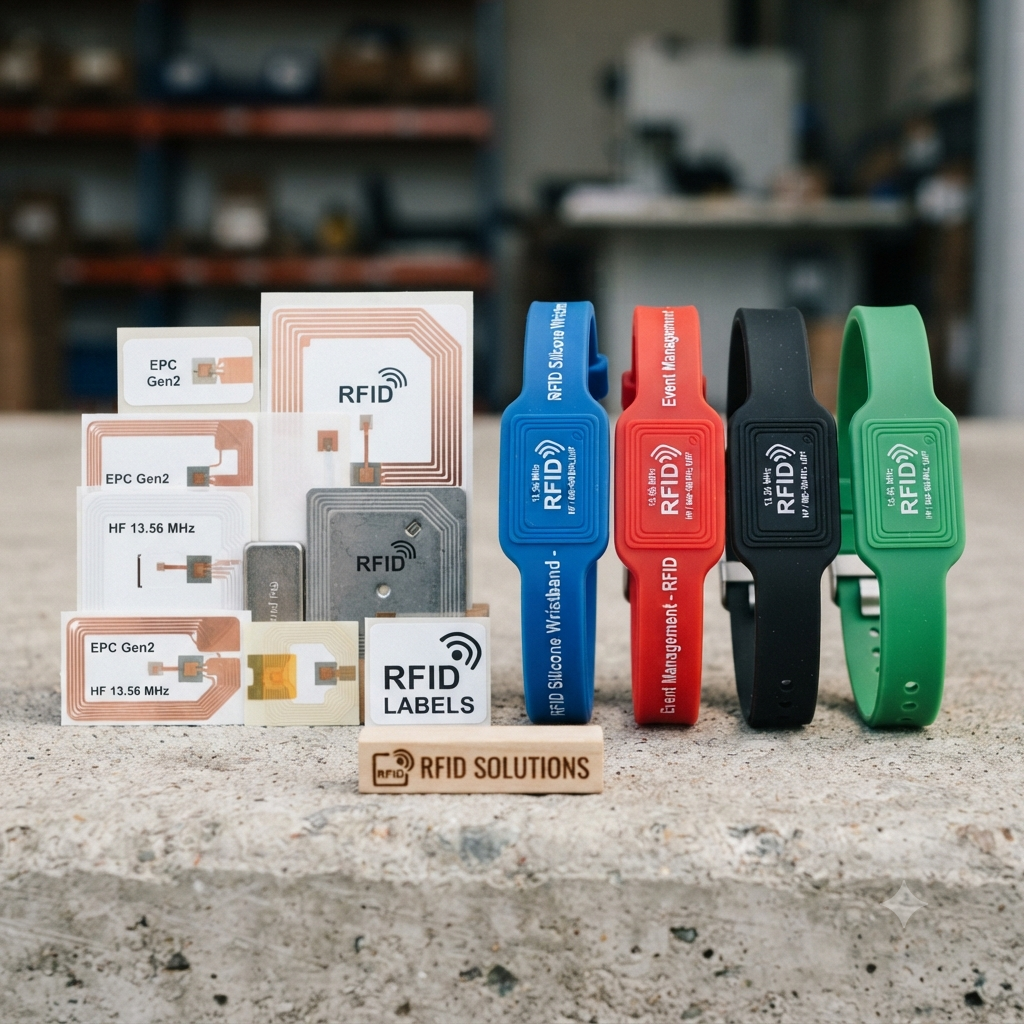
Among the solutions attracting growing interest are RFID labels and RFID silicone wristbands, which are being used in applications ranging from event management and cashless payments to inventory control and access management.
RFID Technology Moves From the Background to the Mainstream
RFID stands for Radio Frequency Identification, a technology that uses radio waves to exchange information between an electronic tag and a compatible reader.
Unlike conventional identification methods that often require direct contact or visual scanning, RFID systems can communicate wirelessly when a tag enters the appropriate reading range.
A typical RFID solution includes:
- RFID tag
- RFID chip
- Antenna
- RFID reader
- Data management software
When a reader detects a tag, its unique identification information can be transmitted to a connected system. The software can then use that information to perform an action or retrieve associated data.
The process takes place rapidly, helping organisations create smoother workflows in environments where speed and accuracy are essential.
From Festival Entry to Cashless Payments
The events industry has become one of the most visible examples of RFID adoption.
At a large concert or festival, thousands of visitors may need to enter within a short period. Traditional ticket checking can create queues, while cash transactions can slow down food and beverage services.
RFID-enabled wristbands offer an alternative.
A single wristband can potentially be connected to multiple event functions, including:
- Ticket validation
- Venue entry
- VIP access
- Cashless purchasing
- Attraction access
- Loyalty programs
- Visitor engagement
- Event analytics
Instead of carrying a physical ticket and wallet, visitors can use a wearable RFID device for selected activities throughout the event.
The result is a more convenient experience for attendees and greater operational visibility for organisers.
RFID Silicone Wristbands Bring Flexibility to Wearable Technology
The growing popularity of RFID silicone wristbands is closely connected to the practical advantages of silicone as a wearable material.
Silicone wristbands are flexible, comfortable and resistant to moisture, making them suitable for a wide variety of environments.
They can be used across:
- Outdoor festivals
- Water parks
- Theme parks
- Sporting venues
- Hotels
- Resorts
- Conferences
- Entertainment venues
- Corporate events
Because RFID technology can be embedded inside the wristband, the electronic component remains protected while the wearable device can be designed for everyday event use.
The wristband can also serve as a branding opportunity, allowing organisations to combine technology with customised designs.
RFID Labels Are Changing the Way Products Are Identified
The impact of RFID extends well beyond the events industry.
In retail, manufacturing, logistics and warehousing, businesses need to identify and manage thousands of products and assets every day.
This is where RFID labels can provide a valuable alternative to traditional identification methods.
An RFID label typically combines a printed label with an RFID inlay containing a chip and antenna. The label can be attached to a product, package or asset, allowing compatible RFID readers to identify it wirelessly.
Potential applications include:
- Inventory management
- Product tracking
- Warehouse operations
- Logistics
- Retail stock visibility
- Asset identification
- Supply chain management
- Manufacturing
By reducing reliance on manual scanning in suitable applications, RFID can help organisations explore more automated approaches to inventory and asset management.
RFID vs. Barcode: Why the Difference Matters
Barcodes remain an important identification technology, but RFID offers a different method of data capture.
A barcode generally requires a scanner to visually detect the printed code. The code must typically be visible and positioned correctly.
RFID communicates through radio frequency signals. Depending on the system, tags can be identified without direct line of sight, offering greater flexibility in certain environments.
| Capability | RFID | Barcode |
| Reading method | Radio frequency | Optical scanning |
| Direct line of sight | Often unnecessary | Generally required |
| Contactless operation | Yes | Yes, but requires visual scanning |
| Multiple tag reading | Possible with suitable systems | Typically individual scanning |
| Automation | Highly adaptable | More dependent on scanning workflow |
| Physical durability | Can be protected within materials | Printed surface can be damaged |
| Data capabilities | Vary by tag type | Usually limited to encoded identifier |
The right choice depends on the application, environment, budget and operational objectives.
Understanding Passive and Active RFID
Not all RFID technology operates in the same way.
Passive RFID
Passive tags do not have an internal battery. They draw energy from the reader’s signal when they are within range.
These tags are commonly used in high-volume identification applications.
Active RFID
Active tags contain an internal battery and can communicate across greater distances.
They may be suitable for applications that require longer-range identification or regular signal transmission.
Battery-Assisted Passive RFID
Battery-assisted passive systems use a battery to support specific tag functions while still communicating with a reader.
The selection of RFID technology should be based on the required reading range, application, environment and system design.
Does RFID Track People?
The answer depends on how the RFID infrastructure is deployed.
Most passive RFID wristbands used at events are not GPS tracking devices. They do not continuously transmit a person’s location over long distances.
However, RFID readers positioned at specific locations can record when a tag is detected.
For example, an event organiser could potentially understand when visitors:
- Entered the venue
- Accessed a specific zone
- Used a particular entrance
- Visited selected attractions
- Passed through designated checkpoints
This information can help organisers analyse visitor flow and identify areas where operational improvements may be needed.
Organisations should always implement appropriate privacy, consent and data security practices when collecting or processing visitor information.
A More Connected Experience for Visitors
Modern consumers increasingly expect frictionless experiences.
They want to enter venues quickly, make payments easily and access services without carrying multiple physical items.
RFID technology supports this shift by connecting physical interactions with digital systems.
A single tap can potentially trigger an access decision, identify a customer or connect an interaction to a digital account.
For event organisers, this can mean less friction at entry points and more opportunities to understand visitor behaviour.
For businesses, RFID can support more efficient approaches to identifying products and assets.
The Growing Role of RFID Across Industries
The adoption of RFID is no longer limited to one sector.
The technology is being explored across:
- Entertainment
- Hospitality
- Retail
- Logistics
- Healthcare
- Manufacturing
- Warehousing
- Transportation
- Access control
Each industry uses RFID differently, but the underlying goal remains similar: make identification faster, more convenient and easier to integrate with digital systems.
https://newsgrow.blogspot.com/2026/07/what-is-rfid-door-entry-system.html
https://newsgrow.blogspot.com/2026/07/rfid-labels-and-rfid-silicone.html
https://blogstream.net/the-tap-that-is-changing-events-how-rfid-technology-is-making-life-easier/