The identification technology landscape is entering a new phase as businesses increasingly explore contactless solutions for inventory, asset management, access control, events, hospitality, and customer engagement. Among the technologies attracting attention are RFID labels and RFID silicone wristbands, two formats that are helping organizations connect physical objects and people with digital systems.
While RFID is not a new technology, its applications continue to evolve. Falling component costs, improved readers, software integration, automation, and growing demand for real-time visibility are creating new opportunities for RFID across commercial and industrial environments.
RFID Technology Moves Beyond Traditional Tracking
Radio Frequency Identification uses radio-frequency communication to identify compatible electronic tags. A typical system includes an RFID tag, reader, antenna, and software platform.
Unlike conventional barcode systems, RFID can enable wireless identification without requiring the same direct visual scanning process. Depending on the technology, multiple tags may be detected within a reader’s operating area.
This capability has made RFID particularly relevant to organizations managing large volumes of products, assets, packages, or people.
The technology is now being considered across sectors including:
- Retail and e-commerce
- Warehousing and logistics
- Manufacturing
- Healthcare
- Hospitality
- Entertainment
- Sports
- Access management
RFID Labels Transform Product Identification
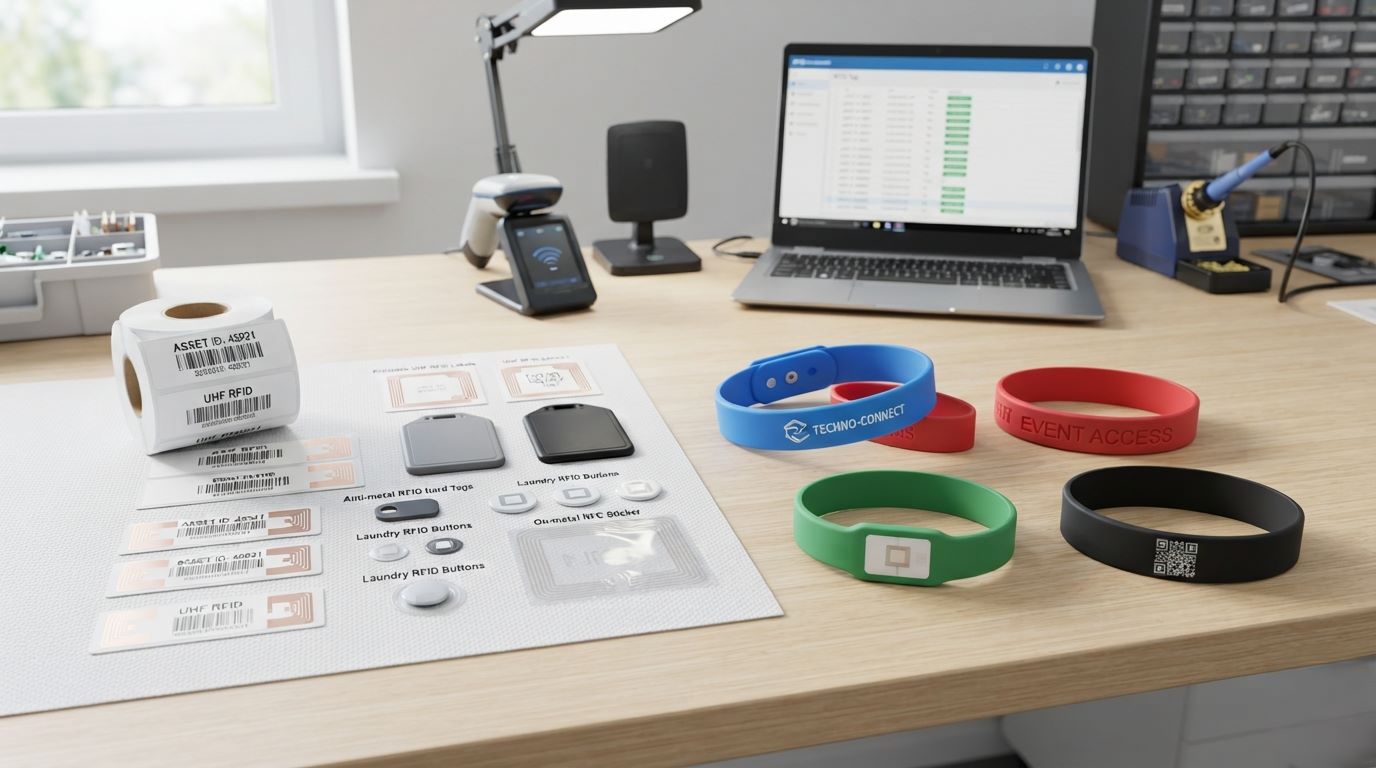
One of the most established RFID formats is the RFID label. These products integrate an RFID inlay into an adhesive label, allowing businesses to combine electronic identification with conventional printed information.
An RFID label may contain an RFID chip and antenna beneath a printable surface. Depending on the application, the label can also incorporate branding, barcodes, serial numbers, product information, or other variable data.
This format has become particularly useful for businesses seeking better inventory visibility without completely changing their existing labeling processes.
Demand for Automated Inventory Visibility
Retailers, manufacturers, warehouses, and logistics providers increasingly need accurate information about the movement and availability of products.
RFID labels can support applications such as:
- Inventory counting
- Warehouse receiving
- Shipment verification
- Asset identification
- Retail stock management
- Manufacturing workflows
- Document tracking
The technology can reduce repetitive identification tasks when properly integrated with readers and business software.
RFID Silicone Wristbands Expand Wearable Identification
Alongside product-focused RFID labels, wearable applications are creating another growth area. RFID silicone wristbands provide a way to place an RFID credential directly on the user.
The format is particularly relevant to environments where people need convenient identification throughout an event, visit, membership period, or recreational activity.
Silicone is widely used for wearable products because it is flexible and lightweight. Depending on the construction, RFID wristbands can also be designed for environments involving moisture, frequent movement, and repeated handling.
Events and Hospitality Explore Wearable RFID
Event organizers, resorts, entertainment venues, gyms, and other service providers can use RFID wristbands for a variety of applications.
Potential uses include:
- Event admission
- Access control
- Membership identification
- Guest management
- Visitor recognition
- Conference administration
- Resort services
For large events, a wearable credential can reduce the inconvenience of carrying paper tickets or separate access cards.
The technology can also provide a foundation for connecting physical credentials with event-management software.
RFID Labels and Wristbands Serve Different Markets
Although both products use RFID technology, their commercial purposes are distinct.
| Category | RFID Labels | RFID Silicone Wristbands |
| Main target | Products and assets | People and visitors |
| Physical design | Adhesive label | Wearable silicone |
| Common applications | Inventory and logistics | Events and hospitality |
| Branding | Printed graphics and information | Colors, logos and custom designs |
| Durability | Depends on label construction | Designed for wearable use |
| Key advantage | Automated object identification | Convenient human identification |
Industry specialists generally recommend selecting RFID products according to the application, rather than assuming that one tag format can serve every purpose.
Technology Selection Remains Critical
The growing availability of RFID products does not mean that every tag will perform equally in every environment.
RFID performance can depend on:
- Frequency
- Reader configuration
- Antenna design
- Tag orientation
- Reading distance
- Surrounding materials
- Metal exposure
- Liquid content
- Environmental conditions
- Software integration
For example, an RFID label designed for cardboard packaging may require a different construction from a tag intended for metal equipment.
Similarly, an RFID silicone wristband used for short-range access may have different technical requirements from a specialized long-range identification system.
The Next Phase: Smarter RFID Labels
The future development of RFID labels is expected to focus increasingly on automation and digital integration.
As supply chains adopt cloud platforms, robotics, artificial intelligence, and real-time analytics, RFID data can become an important input for automated decision-making.
Potential future developments include:
- Smaller RFID inlays
- Improved antenna performance
- Sustainable label materials
- Sensor-enabled identification
- Automated stock monitoring
- Cloud-connected inventory systems
- AI-supported inventory analysis
The industry is gradually moving toward a model in which RFID does more than identify an object. It can become part of a connected information system that supports business decisions.
Wearable RFID Moves Toward More Personalized Experiences
The future of RFID silicone wristbands is also expected to focus on integration.
Instead of functioning only as an entry credential, a wristband could become part of a larger digital experience when supported by compatible systems.
Potential developments include:
- Reusable wristband programs
- More ergonomic designs
- Enhanced authentication
- Personalized branding
- Mobile application integration
- Cloud-based event management
- Improved customer analytics
Hospitality and entertainment businesses may increasingly view wearable RFID as a platform for connecting visitors with services.
Sustainability Enters the RFID Conversation
Environmental considerations are also becoming more prominent.
Large-scale events and high-volume identification programs can generate substantial waste when disposable credentials are used. This is encouraging businesses and manufacturers to investigate reusable wristbands, efficient materials, and more sustainable label construction.
RFID silicone wristbands may provide an advantage in recurring applications where the same wearable credential can be reused.
However, organizations should evaluate sustainability throughout the product lifecycle, including production, cleaning, reuse, and disposal.
Businesses Prepare for the Next RFID Generation
As RFID becomes more sophisticated, organizations are being encouraged to approach implementation strategically.
A successful RFID project generally begins by identifying a specific operational problem.
Businesses should consider:
- What needs to be identified?
- What reading range is necessary?
- Which frequency is appropriate?
- What environmental conditions exist?
- Which readers are already available?
- How will RFID data enter existing software?
- Is the product intended for single or repeated use?
- What level of customization is required?
Testing RFID products in the real environment before full deployment can help identify performance and compatibility challenges.
FAQ: RFID Labels and RFID Silicone Wristbands
What are RFID labels?
RFID labels are adhesive labels containing an RFID inlay that enables wireless identification through compatible readers.
What are RFID silicone wristbands?
They are wearable silicone bands containing RFID technology for identification, access, membership, and event applications.
Why are RFID labels used in warehouses?
They can support automated identification, inventory visibility, receiving, shipment verification, and asset tracking.
Are RFID labels different from barcodes?
Yes. Barcodes rely on optical scanning, while RFID uses radio-frequency communication.
Do passive RFID products need batteries?
Many passive RFID products operate without an internal battery and obtain energy from a compatible reader.
Can RFID wristbands be customized?
Depending on the manufacturer, wristbands can be customized with colors, logos, graphics, numbering, and other design features.
Are RFID silicone wristbands suitable for events?
Yes. They can serve as wearable credentials for suitable access-control and event-management systems.
Can RFID work around metal?
Certain RFID designs are optimized for challenging materials, but metal can affect performance. Application-specific testing is recommended.
Are RFID wristbands reusable?
Some products can be reused, depending on construction, cleaning requirements, closure design, and the intended application.
What is the future of RFID?
RFID is expected to become increasingly integrated with automation, cloud computing, artificial intelligence, IoT platforms, analytics, and sustainable product development.
Read more – https://newsgrow.blogspot.com/2026/08/building-smarter-entry-systems-what.html
https://bhoomijanatural.info/rfid-cards-and-keyfobs-move-to-the-center-of-modern-access-security/