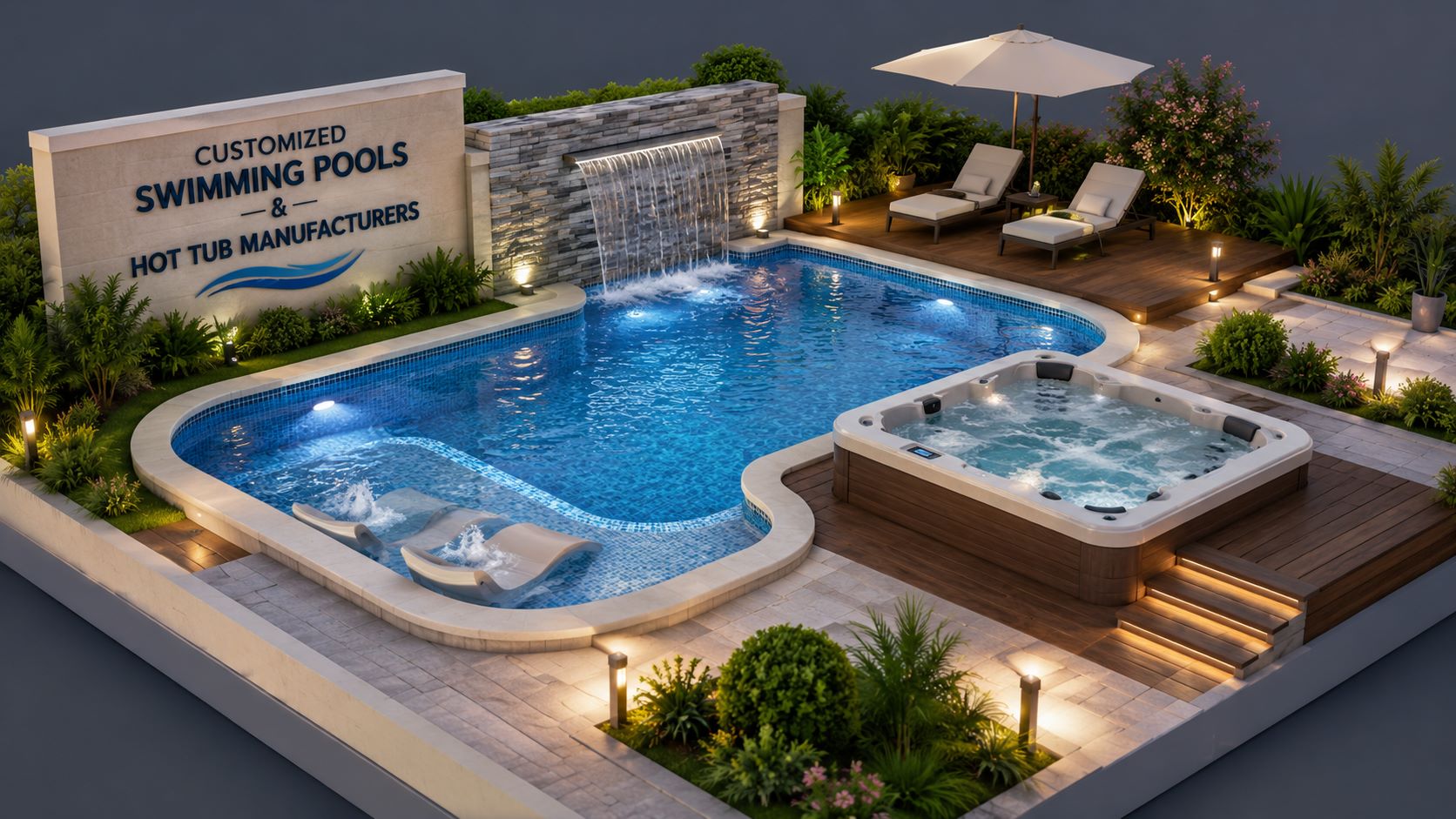
Homeowners, hotels, resorts, wellness centers, and commercial properties increasingly want recreational areas that combine relaxation, functionality, and architectural beauty. This growing demand has made customized swimming pools and professional hot tub manufacturers important partners in premium property development.
Instead of selecting a standard-size pool or pre-designed spa, property owners can now create water features around available space, personal preferences, lifestyle requirements, and architectural themes. From infinity-edge pools overlooking beautiful landscapes to compact hot tubs for private terraces, customization provides almost unlimited possibilities.
Why Customized Swimming Pools Are Becoming Popular
Every property has different dimensions, surroundings, and usage requirements. A standard swimming pool may not make the best use of available space. Customized swimming pools solve this problem by allowing designers to create a structure specifically for the property.
Customization may involve:
- Pool dimensions and depth
- Freeform or geometric shapes
- Infinity or overflow edges
- Integrated seating areas
- Underwater lighting
- Waterfalls and fountains
- Heating systems
- Automatic cleaning technology
- Kids’ swimming sections
- Spa and hydrotherapy zones
A thoughtfully designed pool can become an architectural feature instead of simply a recreational facility.
Residential owners may prefer privacy and relaxation, while hotels often require larger pools capable of handling many guests. Professional designers evaluate these requirements before developing the final concept.
Planning the Perfect Customized Swimming Pool
Successful swimming pool construction starts with careful planning. Designers generally evaluate the property before recommending the pool’s shape, materials, equipment, and location.
Several important factors should be considered.
- Available installation area
- Intended number of users
- Residential or commercial application
- Preferred swimming depth
- Local climate conditions
- Maintenance requirements
- Landscape design
- Safety considerations
- Energy consumption
- Available budget
Experienced specialists in customized swimming pools also consider plumbing routes, filtration equipment, drainage, structural stability, and water circulation.
Proper planning reduces construction complications and helps create a pool that remains practical for many years.
Choosing the Right Swimming Pool Design
Pool design should complement the architecture surrounding it. Contemporary properties often look attractive with rectangular pools featuring clean edges and subtle lighting.
Luxury resorts may prefer infinity pools that visually blend with landscapes, oceans, or skylines.
Popular design options include:
| Pool Design | Best Application | Main Advantage |
| Infinity Pool | Resorts and luxury villas | Premium visual appearance |
| Lap Pool | Fitness properties | Ideal for exercise |
| Freeform Pool | Gardens and landscapes | Natural appearance |
| Plunge Pool | Smaller properties | Space-efficient |
| Overflow Pool | Hotels and premium homes | Elegant edge design |
| Family Pool | Residential properties | Suitable for multiple users |
Selecting the correct design creates a balance between appearance, practicality, and maintenance.
Materials Used in Customized Swimming Pools
Material selection affects durability, maintenance, appearance, and overall construction cost.
Concrete remains popular because it offers excellent flexibility for unusual shapes and dimensions. Designers can create curves, varying depths, seating areas, and integrated water features.
Fiberglass solutions may provide faster installation and smooth surfaces, while premium tiles offer numerous visual possibilities.
Finishing materials may include:
- Mosaic tiles
- Ceramic tiles
- Natural stone
- Glass tiles
- Quartz finishes
- Waterproof coatings
- Decorative pool coping
Reliable customized swimming pools should use materials designed to tolerate continuous water exposure, chemicals, temperature variations, and outdoor weather conditions.
Role of Professional Hot Tub Manufacturers
Hot tubs provide relaxation, warm-water therapy, and comfortable seating within relatively compact spaces. Reliable hot tub manufacturers focus on designing tubs that offer comfort while maintaining efficient water circulation and temperature control.
Modern hot tubs may include ergonomic seating, hydrotherapy jets, adjustable water pressure, LED lighting, digital controls, filtration systems, and energy-efficient heating.
Manufacturers usually offer different models based on capacity and intended application.
Small hot tubs may accommodate two or three people, whereas larger models are suitable for families, wellness facilities, hotels, and commercial spa centers.
Working with experienced manufacturers also provides opportunities to customize dimensions, jet configurations, exterior finishes, seating layouts, and control systems.
Important Features of Modern Hot Tubs
Today’s hot tubs combine engineering with comfort. Instead of simply holding heated water, advanced designs create personalized spa experiences.
Common features offered by professional hot tub manufacturers include:
- Adjustable hydrotherapy jets
- Ergonomic headrests
- Digital temperature controls
- LED mood lighting
- Water filtration systems
- Energy-efficient insulation
- Anti-slip surfaces
- Massage seating
- Automated sanitation
- Protective covers
Hydrotherapy jets are especially important because their placement influences the massage experience. Carefully positioned jets may target the shoulders, back, legs, and feet.
Quality manufacturers therefore consider human body positioning while designing seating and water pressure systems.
Customized Swimming Pools Versus Hot Tubs
Swimming pools and hot tubs serve different purposes, although combining them can create a complete wellness environment.
| Feature | Customized Swimming Pool | Hot Tub |
| Primary Use | Swimming and recreation | Relaxation and hydrotherapy |
| Space Requirement | Medium to large | Small to medium |
| Water Temperature | Usually moderate | Warm or hot |
| User Capacity | Generally higher | Usually lower |
| Exercise Potential | Excellent | Limited |
| Massage Features | Optional | Usually standard |
Many luxury properties integrate both solutions. A swimming pool provides recreational space during the day, while a hot tub provides relaxation during evenings or colder weather.
Energy Efficiency and Smart Pool Technology
Energy consumption is becoming an important consideration for water recreation systems. Modern equipment can significantly improve efficiency.
Variable-speed pumps adjust water circulation according to actual requirements instead of constantly operating at maximum capacity. Efficient heaters reduce energy consumption, while insulated hot tub covers help retain heat.
Smart automation systems can also control:
- Water temperature
- Pool lighting
- Filtration schedules
- Cleaning cycles
- Water features
- Pumps
- Heating systems
Some systems allow owners to manage equipment through smartphones.
Reputable hot tub manufacturers and pool designers increasingly integrate intelligent controls to improve convenience while reducing unnecessary energy consumption.
Maintenance for Long-Term Performance
Even premium pools and hot tubs require regular maintenance.
Water chemistry should be monitored to maintain comfortable swimming conditions and protect equipment. Filtration systems must also be cleaned or replaced according to manufacturer recommendations.
Important maintenance activities include:
- Checking chlorine or sanitation levels
- Maintaining correct pH balance
- Cleaning filters
- Removing surface debris
- Inspecting pumps
- Checking heating systems
- Cleaning pool walls
- Examining water jets
- Inspecting seals and fittings
Preventive maintenance can identify minor problems before they become expensive repairs.
Professional companies offering customized swimming pools frequently provide maintenance packages alongside installation services.
How to Select the Right Pool or Hot Tub Company
Choosing an experienced supplier is essential because water systems involve structural engineering, plumbing, waterproofing, electrical equipment, and water treatment.
Before making a decision, evaluate the company’s previous projects, product quality, customization capabilities, warranty policies, installation process, and after-sales support.
For hot tubs, buyers should also evaluate insulation, jet quality, heater performance, seating comfort, and spare-parts availability.
Reliable hot tub manufacturers should clearly explain product specifications rather than focusing only on appearance.
Frequently Asked Questions
What are customized swimming pools?
They are swimming pools designed according to the specific dimensions, style, features, and requirements of a property.
Can I select my own pool shape?
Yes. Customized designs can include rectangular, circular, freeform, infinity-edge, and many other configurations.
How long does customized pool construction take?
The timeline depends on pool size, design complexity, materials, site preparation, and equipment requirements.
Can swimming pools include spa features?
Yes. Massage jets, heated seating, waterfalls, and integrated spa areas can be incorporated.
What should I look for in hot tub manufacturers?
Consider product quality, heating efficiency, jet performance, warranties, customization, technical support, and maintenance availability.
How many people can use a hot tub?
Models range from compact two-person tubs to larger versions accommodating six or more users.
Are hot tubs energy efficient?
Well-insulated modern systems with efficient heaters and covers can significantly reduce heat loss and operating costs.
Can hot tubs be installed outdoors?
Yes. Outdoor installation is common when the model and electrical systems are suitable for external conditions.
Do customized pools require regular maintenance?
Yes. Water treatment, filtration, cleaning, and equipment inspections are necessary for reliable performance.
Can a swimming pool and hot tub be combined?
Yes. Many luxury installations integrate both systems into one coordinated landscape and wellness area.