
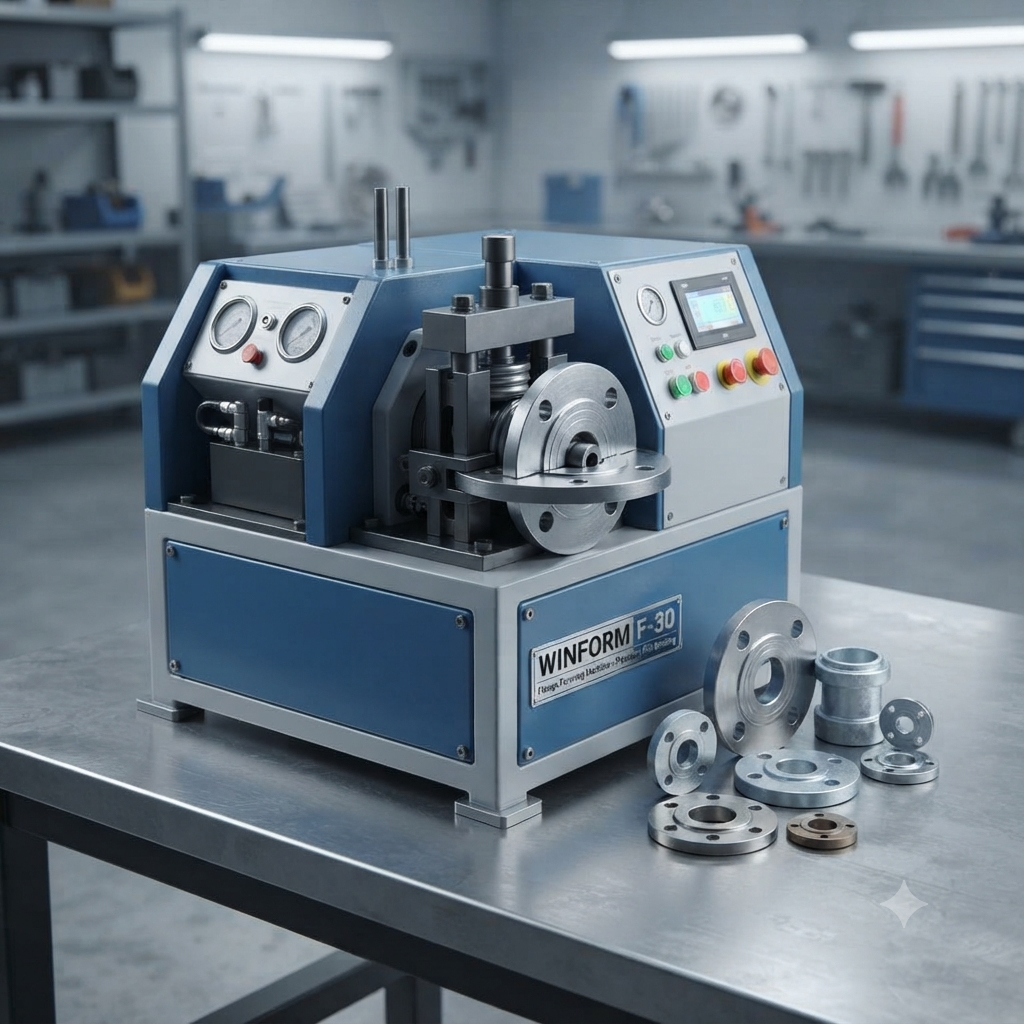
A flange forming machine is a specialized industrial machine used to create flanges on metal sheets, pipes, ducts, and cylindrical components. Flanges are raised edges or rims that improve strength, enable secure joining, and provide better sealing in manufacturing systems. These machines are widely used in HVAC duct production, automotive manufacturing, aerospace fabrication, metal furniture, and pipeline industries.
How a Flange Forming Machine Works
The machine reshapes the edge of a metal component through controlled rolling, pressing, or spinning operations. The process generally includes:
- Feeding: The metal sheet or pipe is positioned in the machine.
- Clamping: Rollers or dies hold the material firmly.
- Forming: The edge is bent outward or inward to the required flange profile.
- Finishing: The formed flange is checked for dimensional accuracy and surface quality.
Modern CNC flange forming machines use servo-controlled systems for high precision and repeatability, reducing material waste and improving production speed.
Main Types of Flange Forming Machines
| Type | Best Use |
| Manual | Small workshops |
| Hydraulic | Heavy-duty metal forming |
| Pneumatic | Medium-scale production |
| CNC Automatic | High-volume precision manufacturing |
Hydraulic vs CNC Flange Forming
| Feature | Hydraulic | CNC Automatic |
| Precision | Good | Excellent |
| Production speed | Moderate | High |
| Labor requirement | Higher | Lower |
| Initial cost | Lower | Higher |
| Automation level | Limited | Fully automated |
Key Components
A typical flange forming machine consists of:
- Forming rollers or dies
- Hydraulic or servo drive system
- Material feeding mechanism
- Control panel or CNC controller
- Safety guards and emergency stop system
- Calibration and measurement units
These components work together to ensure consistent flange dimensions and smooth operation.
Industrial Applications
HVAC Duct Manufacturing
Flanges are formed on rectangular and circular ducts for easy assembly and leak-proof connections.
Pipe and Tube Fabrication
Pipe flanges allow secure bolted connections in water, oil, gas, and chemical pipelines.
Automotive Industry
Used for exhaust systems, fuel tanks, and structural components requiring reinforced edges.
Aerospace and Heavy Engineering
Precision flanges are essential for lightweight yet strong assemblies that must meet strict safety standards.
Advantages of Using a Flange Forming Machine
- High dimensional accuracy
- Faster production cycles
- Reduced manual labor
- Lower material wastage
- Consistent product quality
- Improved joint strength and sealing performance
Factors to Consider Before Buying
When selecting a flange forming machine, evaluate:
- Material thickness range
- Flange diameter capacity
- Required production volume
- Automation level
- Power consumption
- Availability of spare parts and technical support
For high-volume manufacturing, CNC automatic machines provide better long-term productivity, while hydraulic models are suitable for smaller operations.
Frequently Asked Questions (FAQs)
What is a flange forming machine used for?
It is used to create flanges on metal sheets, pipes, and ducts for joining and reinforcement.
Which materials can be formed?
Mild steel, stainless steel, aluminum, galvanized steel, and some copper alloys.
What is the difference between flange forming and flange facing?
Flange forming creates the flange shape, while flange facing machines finish the flange surface for sealing.
Is CNC better than hydraulic?
CNC machines offer higher precision, automation, and productivity.
Can one machine handle different flange sizes?
Yes, most machines support multiple sizes through adjustable rollers or interchangeable dies.
What thickness can these machines process?
Typically from 0.5 mm to 12 mm, depending on the model.
Are flange forming machines energy efficient?
Modern servo-driven CNC machines are more energy efficient than older hydraulic systems.
How often should maintenance be performed?
Daily cleaning, weekly lubrication, and periodic inspection of rollers, hydraulics, and electrical systems.
What industries use these machines the most?
HVAC, automotive, aerospace, pipeline, and general metal fabrication industries.
Can the machine be integrated into an automated production line?
Yes, many CNC models support robotic loading and automated material handling.