
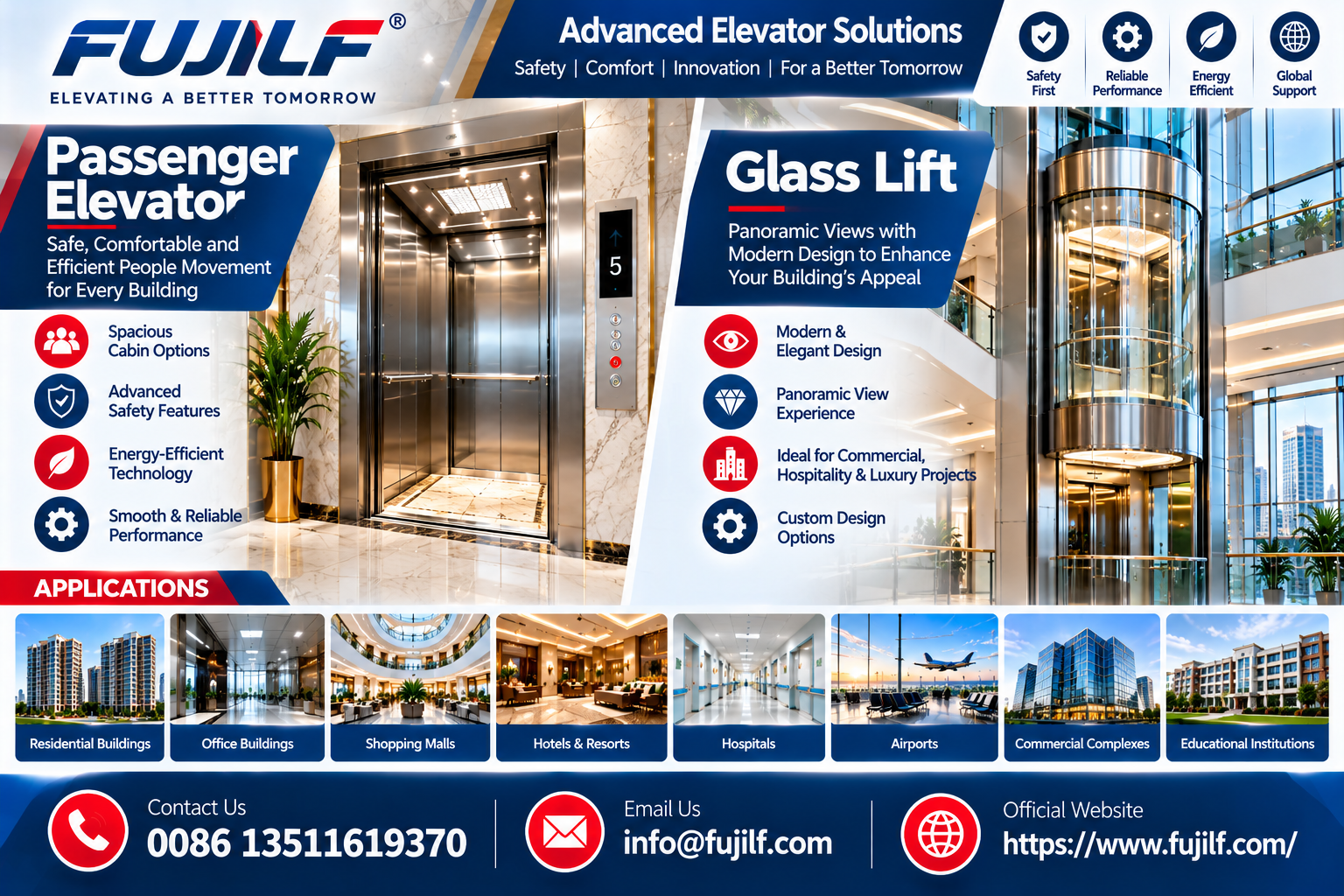
As residential towers, hotels, hospitals, office buildings, shopping centres and mixed-use developments become taller and more design-focused, demand for efficient vertical transportation continues to grow. The modern passenger elevator is increasingly expected to combine safety, ride comfort, energy efficiency and intelligent control, while the glass lift is gaining attention for projects that want vertical mobility to become part of the architectural experience.
Although both systems transport people between floors, their priorities can differ. Conventional passenger elevators typically emphasize capacity, traffic management and operational efficiency, while glass elevators add transparency, panoramic views and visual impact to the same fundamental mobility function.
Growing Importance of the Passenger Elevator
A passenger elevator is designed specifically to transport people safely and comfortably between different levels of a building.
Common installations include:
- Residential apartments
- Hotels and resorts
- Office buildings
- Hospitals
- Shopping malls
- Educational institutions
- Public buildings
- Mixed-use developments
In taller structures, elevators are essential infrastructure rather than optional conveniences.
Well-planned systems can reduce waiting times, improve accessibility and create smoother movement throughout the building.
What Makes a Modern Passenger Elevator Different?
Elevator technology has developed considerably from traditional up-and-down transportation.
Modern systems may incorporate advanced features such as:
Intelligent Control
Controllers can manage calls and optimize movement according to passenger demand.
Variable-Frequency Drives
Modern drive technology can support smoother acceleration and deceleration.
Energy-Efficient Motors
Efficient machines can help reduce electricity consumption over the equipment lifecycle.
LED Lighting
Low-energy cabin lighting supports both efficiency and modern aesthetics.
Standby Functions
Selected equipment may reduce power consumption during periods of low demand.
Passenger Capacity and Traffic Planning
Choosing a passenger elevator requires more than selecting a cabin that fits the available shaft.
Traffic analysis may consider:
- Number of building occupants
- Number of floors
- Peak-hour demand
- Building type
- Desired waiting time
- Travel distance
- Required cabin capacity
A residential property generally has different traffic patterns from an office tower or hotel.
For large buildings, multiple elevators may be coordinated as a group to improve passenger distribution.
Ride Comfort Matters
Ride quality influences how users perceive an elevator system.
Important factors include:
- Smooth starting
- Controlled acceleration
- Low vibration
- Minimal operating noise
- Accurate floor leveling
- Smooth door movement
These characteristics depend on equipment quality, installation accuracy and regular servicing.
Even premium equipment may perform poorly if installation or adjustment is inaccurate.
Safety Systems in Passenger Elevators
Passenger safety remains the central priority.
Modern systems can include various protective features, depending on the elevator design and applicable requirements.
Examples include:
- Door interlocks
- Overload detection
- Emergency stop or rescue functions
- Overspeed protection
- Braking systems
- Emergency lighting
- Communication systems
- Leveling controls
Routine maintenance is essential to keep these systems functioning correctly.
What Is a Glass Lift?
A glass lift is a passenger elevator incorporating transparent or partially transparent glass elements in the cabin, shaft enclosure or both.
It is commonly selected for projects where elevator design should complement the architecture.
Typical applications include:
- Luxury hotels
- Shopping centres
- Corporate offices
- Premium residences
- Atriums
- Exhibition centres
- Tourism developments
Glass elevators can transform a conventional transportation system into a visible architectural feature.
Why Architects Choose Glass Elevators
The visual appeal of a glass lift is one of its strongest advantages.
Panoramic Views
Transparent cabin walls can allow passengers to see surrounding architecture or external scenery.
Greater Sense of Space
Glass can make a cabin feel more open compared with fully enclosed finishes.
Architectural Integration
A transparent lift can become a design element in a lobby, atrium or façade.
Premium Brand Experience
Hotels, shopping centres and luxury developments may use panoramic elevators to reinforce a high-end environment.
Glass Lift Design Options
A glass elevator can be customized in several ways.
Possible options may include:
Full Glass Cabin
Large transparent surfaces create maximum visibility.
Partial Glass Design
Selected cabin panels may use glass while other surfaces use metal, stone or decorative finishes.
Glass Shaft
Transparent shaft enclosures can expose the moving cabin as part of the architectural composition.
Curved Glass
Certain projects may use curved or specially shaped glazing to create a distinctive visual appearance.
The final configuration depends on structural requirements, building design and project budget.
Passenger Elevator vs Glass Lift
A passenger elevator and glass lift are not competing technologies in a strict sense.
A glass elevator is generally a passenger transportation solution with enhanced architectural characteristics.
A standard passenger lift may be preferred where:
- Efficiency is the primary objective
- The elevator shaft is enclosed
- High passenger volumes are expected
- Cost control is important
A glass system may be preferred when:
- The lift is visible from public spaces
- Architecture is a priority
- Panoramic views are desirable
- Premium presentation matters
Both systems still require appropriate safety engineering and technical specifications.
Cabin Interior Customization
Modern elevators offer extensive interior design possibilities.
Options may include:
- Stainless-steel panels
- Decorative glass
- Mirrors
- Stone or stone-effect floors
- LED ceiling designs
- Handrails
- Custom control panels
- Colored finishes
For a glass lift, these details are especially important because the cabin may remain visible from outside.
Design should therefore balance aesthetics with durability and ease of maintenance.
Door Systems Influence Daily Performance
Doors are among the most frequently operated components of any elevator.
A good door system should provide:
- Smooth movement
- Reliable closing
- Accurate alignment
- Appropriate opening width
- Effective passenger detection
Door problems can be one of the most noticeable sources of inconvenience in heavily used buildings.
Quality installation and preventive servicing are therefore essential.
Accessibility in Modern Elevators
A modern passenger elevator should consider the needs of a broad range of users.
Depending on project requirements, accessibility features may include:
- Clearly positioned controls
- Braille markings
- Audible floor announcements
- Visual indicators
- Sufficient door width
- Suitable cabin dimensions
- Handrails
Accessible design improves usability while supporting more inclusive buildings.
Energy Efficiency and Sustainability
Vertical transportation is increasingly included in wider building-efficiency strategies.
Energy consumption can potentially be reduced through:
- Efficient traction systems
- Variable-frequency drives
- LED cabin lighting
- Standby operation
- Regenerative drive technology in suitable systems
- Intelligent dispatching
The most appropriate technology depends on building height, traffic and elevator configuration.
Installation Quality Is Critical
Correct installation can have a major impact on ride quality and equipment life.
Important considerations include:
- Guide-rail alignment
- Machine installation
- Shaft dimensions
- Door positioning
- Electrical connections
- Control calibration
- Commissioning tests
Experienced installation teams should follow the technical specifications for the selected system.
Preventive Maintenance Supports Reliability
Regular maintenance can help reduce unexpected downtime.
Typical service inspections may cover:
- Doors
- Guide systems
- Traction equipment
- Controllers
- Brakes
- Sensors
- Communication systems
- Cabin components
- Safety devices
For a glass lift, glass panels, structural supports and visible finishes may also require appropriate inspection and cleaning.
Frequently Asked Questions
What is a passenger elevator?
A passenger elevator is a vertical transportation system designed to move people safely between floors.
Where are passenger elevators commonly installed?
They are used in residential buildings, hotels, hospitals, offices, malls and public facilities.
What is a glass lift?
A glass lift is a passenger elevator featuring transparent or partially transparent glass cabin or shaft elements.
Are glass elevators suitable for commercial buildings?
Yes. They are commonly used in hotels, malls, corporate buildings and other design-focused commercial projects.
Can glass lifts be installed outdoors?
Certain systems may be designed for external applications, subject to structural, environmental and engineering requirements.
Are glass elevators safe?
They can be designed with appropriate safety systems and suitable glazing according to project specifications and applicable requirements.
How is passenger lift capacity selected?
Capacity is determined according to building occupancy, floor count, traffic patterns and expected passenger demand.
Can elevator interiors be customized?
Yes. Cabin finishes, lighting, floors, control panels, handrails and glass configurations can often be customized.
Do passenger elevators require regular maintenance?
Yes. Preventive servicing is essential for safety, reliability and long-term performance.
What information is needed for an elevator quotation?
Useful information includes building type, number of floors, travel height, shaft dimensions, required capacity, door configuration and preferred cabin design.
Media Contact
Passenger Elevator & Glass Lift Enquiries
Contact: 0086 13511619370
Email: info@fujilf.com
Official Website: https://www.fujilf.com/