
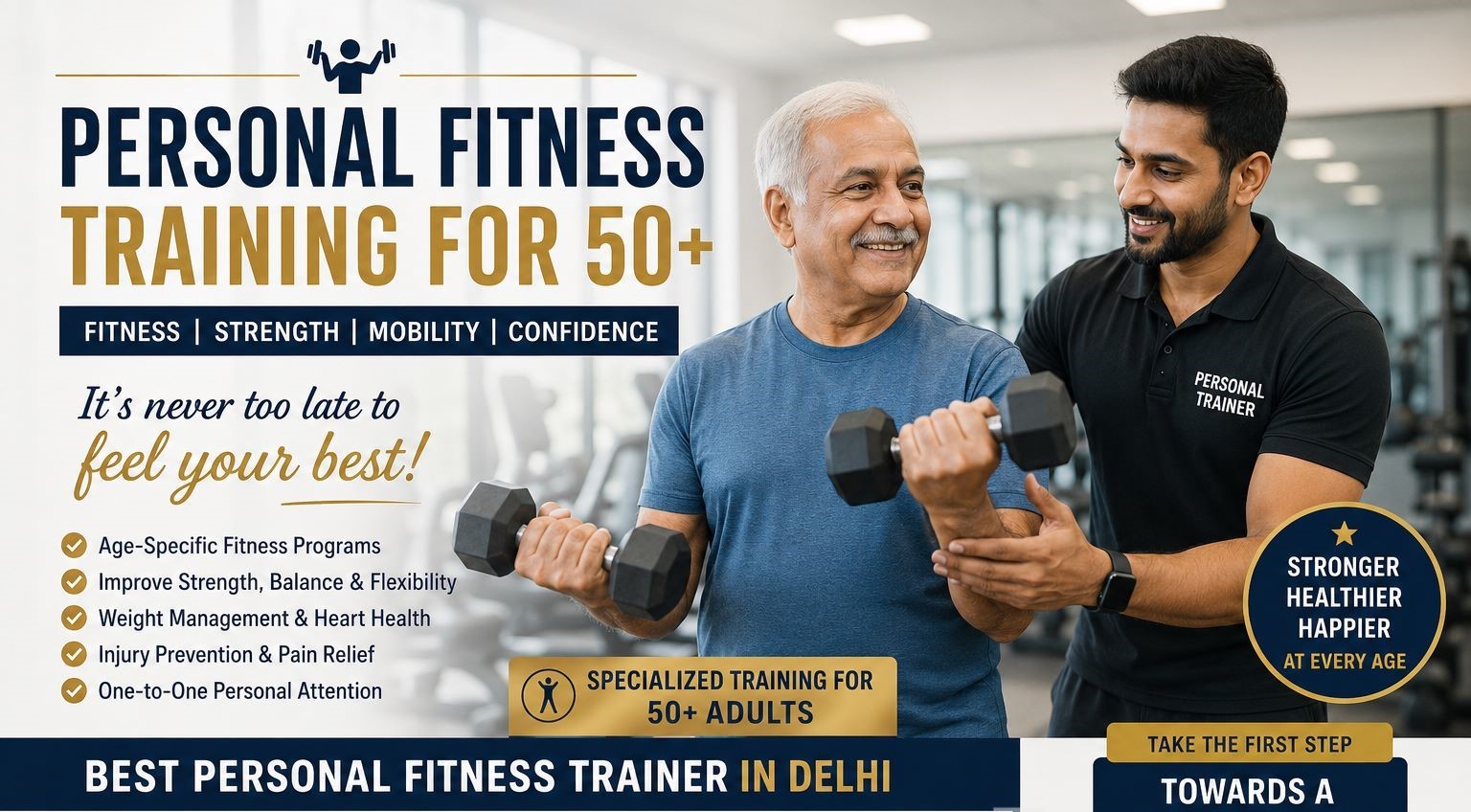
Reaching the age of 50 does not mean slowing down. In fact, it can be one of the most important stages of life to become more active, improve strength, protect mobility, and maintain independence. Personal fitness training for 50+ offers a structured and individualised approach that considers age, current fitness level, lifestyle, mobility, and personal goals.
Unlike general gym routines designed for younger adults, fitness training after 50 needs greater attention to joint health, muscle preservation, balance, flexibility, cardiovascular fitness, and recovery. Working with the best personal fitness trainer Delhi can help older adults exercise confidently while following a programme suited to their individual capabilities.
The objective is not simply to lift heavier weights or complete harder workouts. Effective training after 50 is about moving better, becoming stronger, staying energetic, and building physical confidence for everyday life.
Why Fitness Becomes More Important After 50
Physical capabilities naturally change with age. Muscle mass may gradually decline, recovery can become slower, and flexibility or balance may not be the same as they were during younger years.
However, regular physical activity can help maintain strength, movement quality, coordination, stamina, and overall functional fitness.
A professionally planned personal fitness training for 50+ programme may focus on:
- Maintaining and developing muscular strength
- Improving balance and coordination
- Supporting better posture
- Increasing flexibility and joint mobility
- Building cardiovascular endurance
- Improving functional movement
- Supporting healthy body composition
- Increasing energy for daily activities
The key is consistency rather than extreme intensity.
How Personal Fitness Training for 50+ Is Different
People over 50 often have very different training requirements from people in their twenties or thirties. Previous injuries, sedentary lifestyles, limited mobility, work habits, and individual fitness backgrounds need to be considered before creating a programme.
A good personal trainer generally begins by understanding movement ability, training history and fitness objectives. Exercises can then be selected according to the person’s current capabilities rather than following a standard routine.
For example, someone who has not exercised for ten years should not immediately begin demanding strength or high-impact workouts.
Progress should be gradual.
A suitable programme might combine resistance exercises, walking, mobility work, balance drills, core exercises and controlled cardiovascular activity.
This personalised structure is one reason many people search for the best personal fitness trainer Delhi instead of following random online workouts.
Important Components of Fitness Training After 50
A balanced programme should develop several areas of physical fitness rather than focusing only on weight loss.
Resistance training is especially valuable because maintaining muscle strength becomes increasingly important with age. Exercises may include controlled squats, resistance-band movements, rows, presses, step-ups and other functional movements.
Mobility training helps maintain comfortable movement around important joints such as the shoulders, hips and ankles.
Balance exercises can improve stability during daily activities.
Cardiovascular exercise can include walking, cycling or other suitable low-impact activities depending on individual ability.
A balanced weekly programme may therefore include:
- Two or three strength sessions
- Regular moderate cardiovascular activity
- Short mobility sessions
- Balance and coordination exercises
- Appropriate rest and recovery
Training frequency should always match individual fitness and recovery capacity.
Benefits of Working With a Personal Fitness Trainer
One of the biggest challenges in fitness is knowing what exercises to perform and how much training is appropriate.
A qualified trainer provides structure and helps maintain correct exercise technique.
When choosing the best personal fitness trainer Delhi, look for someone who understands mature adults rather than simply offering intense workouts.
A professional trainer can help with:
- Creating realistic fitness goals
- Selecting suitable exercises
- Teaching correct movement technique
- Adjusting training intensity
- Monitoring progress
- Maintaining workout consistency
- Modifying exercises when necessary
- Creating progressive training plans
Personal attention can be particularly useful for beginners who feel uncomfortable exercising independently in a gym.
Personal Training Versus General Gym Workouts
| Personal Training | General Gym Workout |
| Programme based on individual ability | Usually self-directed |
| Trainer monitors exercise technique | Limited supervision |
| Exercises can be modified | Standard exercise selection |
| Progress is regularly reviewed | Progress may not be measured |
| Suitable intensity can be planned | Risk of training too hard or too little |
| Greater accountability | Requires strong self-motivation |
Both approaches can be effective, but personal fitness training for 50+ provides additional guidance for people who prefer a structured and supervised routine.
How to Choose the Best Personal Fitness Trainer Delhi
Choosing a trainer should involve more than checking photographs or social media followers.
Training experience and communication skills are equally important.
Before hiring a trainer, consider the following factors:
- Experience training adults aged 50 and above
- Relevant fitness qualifications
- Ability to explain exercises clearly
- Knowledge of strength, mobility and functional training
- Willingness to understand your fitness history
- Personalised rather than generic workout plans
- Regular progress assessments
- Convenient training location and schedule
The best personal fitness trainer Delhi should make workouts challenging enough to create progress without turning every session into an exhausting competition.
Common Fitness Mistakes People Over 50 Should Avoid
Trying to exercise exactly as you did twenty years ago may not always be appropriate.
One common mistake is increasing workout intensity too quickly. Muscles, joints and connective tissues need sufficient time to adapt.
Another mistake is performing only cardiovascular exercise while ignoring strength training.
Other mistakes include:
- Skipping warm-ups
- Ignoring mobility exercises
- Using poor exercise technique
- Training intensely every day
- Following advanced online workouts
- Comparing progress with younger people
- Expecting immediate results
- Neglecting recovery
Sustainable improvement comes from gradual progression.
Strength Training Is Not Only for Young People
Many adults mistakenly believe strength training becomes unsuitable after a certain age.
In reality, resistance exercises can be adapted for many different fitness levels.
Training might begin with bodyweight movements, light dumbbells, resistance bands or supported exercises. As strength and confidence improve, resistance can gradually increase.
Personal fitness training for 50+ should focus on movement quality before increasing weight.
The goal is practical strength that supports activities such as climbing stairs, carrying shopping bags, standing from a chair and maintaining good posture.
Why Mobility and Balance Matter
Fitness is not measured only by muscle size or body weight.
Being able to move comfortably is equally important.
Mobility exercises can help people maintain useful ranges of motion, while balance exercises improve control and stability.
Simple training may include:
- Supported single-leg standing
- Heel-to-toe walking
- Controlled step-ups
- Shoulder mobility movements
- Hip mobility exercises
- Ankle mobility drills
A knowledgeable best personal fitness trainer Delhi can determine which movements are appropriate and modify them according to the client’s ability.
Setting Realistic Fitness Goals After 50
Fitness goals should be meaningful and measurable.
Instead of focusing entirely on appearance, consider goals connected with everyday performance.
Examples include:
- Walking comfortably for 30 minutes
- Improving strength during daily activities
- Completing controlled squats confidently
- Increasing flexibility
- Improving balance
- Exercising three times each week
- Maintaining better posture
Small improvements accumulated consistently can create significant long-term results.
FAQ About Personal Fitness Training for 50+
1. Is personal training suitable for people over 50?
Yes. Training can be adapted according to fitness level, movement ability and individual goals.
2. Can someone start exercising at 50 with no previous gym experience?
Yes. Beginners should start gradually with simple exercises and appropriate guidance.
3. How many workouts should people over 50 do each week?
The ideal frequency varies, but many programmes combine two or three structured sessions with regular moderate activity.
4. Is strength training appropriate after 50?
Strength exercises can be valuable when performed with appropriate resistance, technique and progression.
5. How do I find the best personal fitness trainer Delhi?
Look for relevant qualifications, experience with mature clients, personalised programming and clear communication.
6. Is walking enough for fitness after 50?
Walking is useful cardiovascular activity, but adding strength, balance and mobility work creates a more complete fitness programme.
7. Should workouts become less intense after 50?
Not necessarily. Appropriate intensity depends on individual fitness, training experience and recovery capacity.
8. Can personal training improve flexibility?
A programme containing mobility and flexibility exercises can gradually improve movement quality.
9. How quickly can fitness improve after starting training?
Progress differs between individuals. Consistent exercise, recovery and sensible progression matter more than rapid results.
10. Can a trainer provide home fitness sessions in Delhi?
Many trainers provide home, gym or outdoor sessions depending on their services and location.